Semantic associations restore neural encoding mechanisms
- Corresponding authors: ilm5fp{at}virginia.edu, niclong{at}virginia.edu
Abstract
Lapses in attention can negatively impact later memory of an experience. Attention and encoding resources are thought to decline as more experiences are encountered in succession, accounting for the primacy effect in which memory is better for items encountered early compared to late in a study list. However, accessing prior knowledge during study can facilitate subsequent memory, suggesting a potential avenue to counteract this decline. Here, we investigated the extent to which semantic associations—shared meaning between experiences—can counteract declines in encoding resources. Our hypothesis is that semantic associations restore neural encoding mechanisms, which in turn improves memory. We recorded scalp electroencephalography (EEG) while male and female human participants performed a delayed free recall task. Half of the items from late in each study list were semantically associated with an item presented earlier in the list. We find that semantic associations improve memory specifically for late list items and selectively modulate the neural signals engaged during the study of late list items. Relative to other recalled items, late list items that are subsequently semantically clustered—recalled consecutively with their semantic associate—elicit increased high-frequency activity and decreased low-frequency activity, a hallmark of successful encoding. Our findings demonstrate that semantic associations restore neural encoding mechanisms and improve later memory. More broadly, these findings suggest that prior knowledge modulates the orientation of attention to influence encoding mechanisms.
Fluctuations in attention impact what we will remember in the future (deBettencourt et al. 2018, 2021; Blondé et al. 2022). Imagine visiting an art gallery and recounting the experience a week later. You would likely be better able to recall the artworks seen at the beginning of your visit compared to artworks seen later in your visit. This primacy effect—better memory for items that occur in earlier positions (Murdock 1962)—may be due to an attentional gradient whereby items in early positions receive more attention than items in late positions (Page and Norris 1998; Brown et al. 2000; Azizian and Polich 2007; Unsworth and Miller 2021). The primacy effect is characterized by an electrophysiological pattern of high-frequency activity increases (HFAi > 28 Hz) and low-frequency activity decreases (LFAd < 28 Hz) (Sederberg et al. 2006; Serruya et al. 2014), a pattern which generally tracks successful memory encoding (Burke et al. 2014a; Long et al. 2014). A depletion in encoding and/or attentional resources—latent neural processes supporting the effective encoding of new memories (Tulving and Rosenbaum 2006; Lohnas et al. 2020)—across positions may thus account for the primacy effect. However, given evidence that semantic associations—shared meaning between events—can enhance subsequent memory for those events (Hintzman 2011; Jacoby and Wahlheim 2013; Tullis et al. 2014; McKinley et al. 2019; McKinley and Benjamin 2020; Antony et al. 2022), attention to semantic associations—which we term “semantic processing” for simplicity—has the potential to ameliorate these positional effects. The aim of this work is to investigate the extent to which semantic processing can restore successful encoding mechanisms to counteract attentional decline across positions.
Both attentional and interference-based accounts have been used to explain the primacy effect. Endel Tulving proposed the theory of camatosis, whereby the encoding of later events is diminished as a result of activity-dependent fatigue (Tulving and Rosenbaum 2006). Since then, converging evidence from behavioral, pupillometry, and electrophysiological measures provides strong support for a decline in attention across positions. Encoding new information, especially information low in pre-experimental familiarity, depletes a pool of working memory resources needed for successful encoding of items at later positions (Popov and Reder 2020). Increasing the time between items in serial recall benefits memory selectively for subsequent—as opposed to prior—items, suggesting the presence of an encoding resource which gradually recovers over time (Mizrak and Oberauer 2021). Pupil dilation, which predicts subsequent memory (Papesh et al. 2012) and tracks both working memory load (Kahneman and Beatty 1966) and arousal, decreases across serial positions (Unsworth and Miller 2021). Electrophysiological markers of successful memory formation, including the late positive component and HFA, are preferentially recruited for primacy positions (Sederberg et al. 2006; Azizian and Polich 2007; Serruya et al. 2014). Successful encoding of a prior item depletes the hippocampal resources needed to encode the current item, leading to memory deficits and reduced hippocampal HFA for an item if it is preceded by a successfully encoded item (neural fatigue hypothesis; Lohnas et al. 2020). However, there is also evidence to suggest that the primacy effect could arise from a buildup of proactive interference (PI) whereby performance decreases as more items are encountered (Underwood 1957; Postman and Keppel 1977; Szpunar et al. 2008). Specifically, the likelihood of remembering a given item is inversely related to the number of other items that are associated with the same retrieval cue (Watkins and Watkins 1975). Although our present work cannot directly adjudicate between these two alternatives, given the strong convergent evidence, we have opted to frame our work based on the attentional account. Insofar as attention declines across position, we investigate the extent to which semantic processing may mitigate or alter this decline.
There is a wealth of behavioral evidence showing that semantic processing during study promotes subsequent memory (Hintzman et al. 1975; Hintzman 2011; Jacoby and Wahlheim 2013; Tullis et al. 2014; McKinley et al. 2019; McKinley and Benjamin 2020; Antony et al. 2022). Viewing Dalì’s The Persistence of Memory at the beginning of the art gallery visit and later seeing his painting Birth of Liquid Desires may improve your memory for both paintings due to their shared association with Dalì. The presence of pairs of semantically associated words on a study list leads to enhanced memory for the first exemplar in both cued and free recall (Tullis et al. 2014). When studying word lists comprised of two exemplars from the same category, being reminded of the first exemplar while studying the second (e.g., judging whether it belongs to the same category as previously presented words) leads to better memory for both exemplars in cued recall (Jacoby and Wahlheim 2013). These findings suggest that being reminded of an earlier item by the occurrence of a later, semantically associated item can embed the memory for the earlier item (e.g., The Persistence of Memory) within the memory for the later item (e.g., Birth of Liquid Desires) to facilitate subsequent memory of both items (Hintzman et al. 1975; Hintzman 2011; Jacoby and Wahlheim 2013; Tullis et al. 2014; McKinley et al. 2019; McKinley and Benjamin 2020; Antony et al. 2022). Our central goal was to determine the extent to which semantic processing may impact the neural mechanisms recruited during study and thereby affect subsequent memory.
Evidence from the prior knowledge literature provides insights into the neural mechanisms underlying how semantic processing promotes subsequent memory. Accessing prior knowledge during study facilitates later memory (Bransford and Johnson 1972)—thinking about impressionist art while at the gallery will improve your memory for Edgar Degas’ The Dance Class. Information that is congruent with prior knowledge is better remembered than incongruent information (van Kesteren et al. 2010). Prior knowledge supports memory integration, a process by which the brain forms overlapping neural representations for two associated experiences (Schlichting and Preston 2015). Integration facilitates inference judgments and decision making (Wimmer and Shohamy 2012) and recruits brain regions that support successful memory formation (Bein et al. 2014, 2020). Thus, accessing prior semantic knowledge may promote engagement of the neural mechanisms that underlie successful encoding.
Accessing prior knowledge lies in contrast to attending to an event's spatiotemporal context. At the art gallery, instead of drawing on your knowledge of impressionist art, you may focus on when you saw particular artworks. This example illustrates two possible dimensions of an experience to which you may attend—semantic or temporal. Attention to these dimensions has been demonstrated in the laboratory via free recall. Semantic clustering—the consecutive recall of words that share meaning (Bousfield 1953; Howard and Kahana 2002b)—and temporal clustering—the consecutive recall of neighboring study words (Kahana 1996; Howard and Kahana 2002a)—reflect attention to semantic and temporal dimensions. Links between clustering and memory performance (Sederberg et al. 2010; Healey et al. 2014) suggest that attending to the semantic and/or temporal dimension of an event is beneficial for memory. Critically, the neural mechanisms of successful encoding—HFAi/LFAd—are engaged during the study of items that will later be clustered (Long and Kahana 2015, 2017). Whereas temporal clustering may arise from “default” attention to the temporal dimension of an experience (Healey 2018), semantic clustering may be the result of specific attentional focus on the semantic dimension of an event, given evidence that semantic clustering is most robust when participants perform an explicit semantic orienting task (Long and Kahana 2017) or when the semantic category of a stimulus is particularly salient (Becker et al. 1997). Here we asked whether the opportunity to attend to the semantic dimension can boost memory for late items that may be otherwise forgotten due to their position.
Our hypothesis is that semantic processing restores neural encoding mechanisms, which in turn improves memory. We conducted a human scalp electroencephalography (EEG) study in which participants performed a free recall task. We manipulated the degree to which “pairs” of individually presented words were semantically associated with one another while controlling the serial position of each word. Participants studied pairs of strongly semantically associated words (e.g., “dog” and “cat”) and pairs of weakly semantically associated words (e.g., “shore” and “road”). The second word in each of these pairs (cat, road) appeared in a later serial position than the first word in each pair (dog, shore). We measured behavioral performance and neural signals for the first and second words in each pair. To the extent that semantic processing restores encoding mechanisms, we should find increased memory performance and greater HFAi/LFAd selectively for late list items that are strongly semantically associated with early list items.
Results
Semantic associations improve memory for late list items
According to our hypothesis, semantic processing may promote subsequent memory for late list items. Thus, our first goal was
to test whether first and second associates are differentially remembered by virtue of their semantic association strength.
We ran a two-way repeated measures ANOVA (rmANOVA) to evaluate the effects of semantic association strength (strong, weak)
and associate (first, second) on probability of recall (Fig. 1A). We found a main effect of semantic association strength (F(1,37) = 29.16, P < 0.001,  = 0.44) driven by greater probability of recall for strong than weak semantic associates. We found a main effect of associate
(F(1,37) = 8.46, P = 0.006,
= 0.44) driven by greater probability of recall for strong than weak semantic associates. We found a main effect of associate
(F(1,37) = 8.46, P = 0.006,  = 0.19) driven by greater probability of recall for the first associate compared to the second associate. We found a significant
interaction between semantic association strength and associate (F(1,37) = 8.48, P = 0.006,
= 0.19) driven by greater probability of recall for the first associate compared to the second associate. We found a significant
interaction between semantic association strength and associate (F(1,37) = 8.48, P = 0.006,  = 0.19). The difference in probability of recall between strong and weak semantic associates was greater for second (M = 0.10, SD = 0.10) compared to first (M = 0.04, SD = 0.09) associates (t37 = 2.91, P = 0.006, d = 0.57). These results demonstrate that semantic association strength differentially affects probability of recall of early
versus late list items. Late list items are typically remembered less well than early list items in delayed free recall, potentially
due to attentional declines. The main effect of associate on the probability of recall is expected as first associates occupy
primacy positions on the study list and second associates do not, reflecting the serial position effect. The critical result
is the interaction between semantic association strength and associate, which suggests that strong semantic associations can
counteract the declines in the probability of recall typically found in late serial positions. Our behavioral findings support
our hypothesis that late list items may be protected from typical memory declines due to their semantic association with an
early list item.
= 0.19). The difference in probability of recall between strong and weak semantic associates was greater for second (M = 0.10, SD = 0.10) compared to first (M = 0.04, SD = 0.09) associates (t37 = 2.91, P = 0.006, d = 0.57). These results demonstrate that semantic association strength differentially affects probability of recall of early
versus late list items. Late list items are typically remembered less well than early list items in delayed free recall, potentially
due to attentional declines. The main effect of associate on the probability of recall is expected as first associates occupy
primacy positions on the study list and second associates do not, reflecting the serial position effect. The critical result
is the interaction between semantic association strength and associate, which suggests that strong semantic associations can
counteract the declines in the probability of recall typically found in late serial positions. Our behavioral findings support
our hypothesis that late list items may be protected from typical memory declines due to their semantic association with an
early list item.
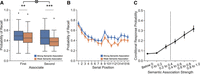
Recall performance and memory organization. (A) Probability of recall was greater for strong (blue) compared to weak (orange) semantic associates and was greater for first compared to second associates. There was a significant interaction between associate and semantic association strength (P = 0.006). The boxes denote the interquartile range, the horizontal bars denote median, and the whiskers denote minimum and maximum values. (B) Probability of recall was greater for strong than weak semantic associates across serial positions. Error bars denote standard error of the mean. (C) Participants were more likely to make transitions between strong compared to weak semantic associates. The vertical, dashed line denotes the boundary between weak semantic bins (below 0, 0.0–0.2, 0.2–0.4) and strong semantic bins (0.4–0.6, 0.6–0.8, 0.8–1.0). Error bars denote standard error of the mean. (**) P < 0.01, (***) P < 0.001.
Although probability of recall is greater for strong relative to weak second associates, the previous analysis does not indicate
whether this increase is consistent across all strong second associates. We expect semantic associations to benefit memory for late list items regardless of serial position.
However, semantic associations may selectively increase the salience of second associates from earlier serial positions (e.g.,
9) relative to second associates from later serial positions (e.g., 16). That is, semantic associations may produce surprise
or distinctiveness effects for initially encountered strong second associates. In this alternative account, the probability
of recall should vary across second associates as a function of serial position. To adjudicate between these possibilities,
we measured probability of recall as a function of semantic association strength and serial position. We ran a 2 × 16 rmANOVA
to evaluate the effects of semantic association strength (strong, weak) and serial position (1–16) on probability of recall
(Fig. 1B). As in the previous analysis, we found a main effect of semantic association strength (F(1,37) = 27.76, P < 0.001,  = 0.43) driven by greater probability of recall for strong than weak semantic associates. We found a main effect of serial
position (F(15,555) = 13.67, P < 0.001,
= 0.43) driven by greater probability of recall for strong than weak semantic associates. We found a main effect of serial
position (F(15,555) = 13.67, P < 0.001,  = 0.27) driven by greater probability of recall for early compared to late list items. We did not find an interaction between
semantic association strength and serial position (F(15,555) = 0.647, P = 0.836,
= 0.27) driven by greater probability of recall for early compared to late list items. We did not find an interaction between
semantic association strength and serial position (F(15,555) = 0.647, P = 0.836,  = 0.02). Bayes factor analysis revealed that a model without the two-way interaction term is preferred to a model with the
two-way interaction by a factor of 1367.27. There is an increase in the probability of recall for serial position 9, which
is likely due to the 4000 ms delay between the first and second associates. This finding is consistent with previous findings
from dual-list free recall paradigms in which there are primacy effects for the second of two studied word lists (Unsworth et al. 2013; Wahlheim and Huff 2015). The lack of an interaction between association strength and serial position suggests that semantic associations protect
all semantically associated late list items from declines in encoding resources, regardless of serial position.
= 0.02). Bayes factor analysis revealed that a model without the two-way interaction term is preferred to a model with the
two-way interaction by a factor of 1367.27. There is an increase in the probability of recall for serial position 9, which
is likely due to the 4000 ms delay between the first and second associates. This finding is consistent with previous findings
from dual-list free recall paradigms in which there are primacy effects for the second of two studied word lists (Unsworth et al. 2013; Wahlheim and Huff 2015). The lack of an interaction between association strength and serial position suggests that semantic associations protect
all semantically associated late list items from declines in encoding resources, regardless of serial position.
Our next goal was to directly link the recall improvement for strong second associates to semantic processing of those items. If semantic processing yields greater probability of recall specifically for strong second associates, then (1) participants should show a tendency to semantically cluster their recalls and (2) the degree to which a participant clusters their recalls should be positively correlated with probability of recall for strong semantic associates. We measured semantic clustering by performing a semantic conditional-response probability (sCRP) analysis (Howard and Kahana 2002b). Briefly, the sCRP analysis reveals the overall tendency to consecutively recall two items on the basis of their semantic association strength. We defined three strong and three weak semantic association strength bins based on Word Association Space (WAS) values (see Materials and Methods). Participants are more likely to make transitions between strong (M = 0.26, SD = 0.19) compared to weak semantic associates (M = 0.10, SD = 0.08; t37 = 9.15, P < 0.001) (Fig. 1C). We reduced the sCRP to a single semantic clustering score (average transition probability for strong bins—average transition probability for weak bins) (Long and Kahana 2017). We found a significant positive across-participant correlation between semantic clustering and probability of recall for strong semantic associates (r37 = 0.32, P = 0.049). These results indicate that higher levels of semantic clustering are associated with better recall for strong semantic associates, which suggests that semantic processing is related to improved memory for second associates.
Semantic associations modulate neural signals engaged during study
We first sought to establish that early list items recruit the neural mechanisms of successful encoding (HFAi/LFAd). To that end, we compared spectral power during the study of primacy items (serial positions 1–4; Sederberg et al. 2006) and middle items (serial positions 5–8). We selected serial positions 5–8 for the middle condition as these items do not
overlap with either the second associates or the primacy items. We ran a 2 × 2 × 6 rmANOVA to evaluate the effects of serial
position (primacy, middle), region of interest (ROI) (left frontal, left parietal/occipital), and frequency on zPower (Fig. 2). A two-way interaction between serial position and frequency would indicate that primacy and middle items elicit distinct
spectral signals and replicate prior results. We report the results of this ANOVA in Table 1 and highlight the key findings here. We find a two-way interaction between serial position and frequency (F(5,185) = 22.4, P < 0.001,  = 0.38), indicating a dissociation in the spectral signals recruited for primacy versus middle items.
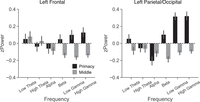
Differential univariate effects for primacy and middle items. zPower is shown for six frequency bands (low θ: 3–4 Hz, high θ: 6–8 Hz, α: 10–14 Hz, β: 16–26 Hz, low γ: 28–42 Hz, high γ: 44–100 Hz) across two ROIs, left frontal and left parietal/occipital. zPower is averaged across the stimulus interval (2000 ms). zPower for primacy items (serial positions 1–4) are shown in black and middle items (serial positions 5–8) are shown in gray. Error bars denote standard error of the mean.
Analysis of variance results for frequency, region of interest (ROI), and serial position (primacy, middle) on zPower
To specifically test whether the HFAi/LFAd pattern is recruited for primacy items, we performed a series of 1 × 6 rmANOVAs to evaluate the effects of frequency band
on zPower for primacy and middle items in each ROI. In both ROIs, we find a significant main effect of frequency for primacy
items (left frontal: F(5,185) = 4.72, P < 0.001,  = 0.11, left parietal/occipital: F(5,185) = 29.43, P < 0.001,
  = 0.44), broadly driven by decreases in LFA and increases in HFA activity (Table 2). We similarly find a significant main effect of frequency for middle items in both ROIs (left frontal: F(5,185) = 11.07, P < 0.001,
  = 0.23, left parietal/occipital: F(5,185) = 2.47, P = 0.034,
  = 0.06). However, unlike the pattern for primacy items, the middle items were characterized by a decrease in zPower for high frequencies (Table 2). Thus, whereas primacy items showed the HFAi/LFAd pattern associated with successful encoding, middle items did not.
T-test versus 0: effects of frequency band on zPower by region of interest
We hypothesized that semantic processing modulates the neural encoding mechanisms recruited during the study of late list items. To test this hypothesis, we compared spectral power during the study of strong second associates that were subsequently semantically clustered (SClusts) and weak second associates that were subsequently recalled but not clustered (NClustw). We selected this contrast as it holds constant the serial position of the items and the overall memory for the items—both conditions include only second associates that are subsequently recalled—while varying the potential influence of semantic association strength on the encoding mechanisms recruited during study of those items. Importantly, although strong associates may be easier to recall due to retrieval mechanisms engaged during the test phase, differences observed with the current contrast of strong and weak items are unlikely due to overall recall differences as all items compared are subsequently recalled.
To the extent that semantic processing impacts encoding mechanisms for late list items, the spectral signals during SClusts versus NClustw items will differ. We ran a 2 × 2 × 6 rmANOVA to evaluate the effects of condition (SClusts, NClustw), ROI (left frontal, left parietal/occipital), and frequency on zPower (Fig. 3A). A two-way interaction between condition and frequency would indicate that semantic processing modulates the encoding of
late list items. We report the results of this ANOVA in Table 3 and highlight the key findings here. We find a two-way interaction between condition and frequency (F(5,185) = 4.856, P < 0.001,  = 0.12). Because we find no interactions with ROI—Bayes factor analysis revealed that a model without the three-way interaction
term between condition, frequency, and ROI is preferred to a model with the three-way interaction term by a factor of 29.03—we
averaged zPower across the left frontal and left parietal/occipital ROIs. We performed post hoc paired t-tests to investigate SClusts versus NClustw dissociations for each frequency band. Low γ zPower was significantly greater for SClusts compared to NClustw items (t37 = 3.04, P = 0.004, Cohen's d = 0.50; false discovery rate [FDR] corrected). α zPower was significantly lower for SClusts compared to NClustw items (t37 = −3.47, P = 0.001, Cohen's d = 0.71; FDR corrected). The remaining four frequency bands did not show significant dissociations between SClusts and NClustw that survived multiple comparisons correction. Numerically, high θ zPower was lower for SClusts compared to NClustw items (t37 = −0.9698, P = 0.3384, Cohen's d = 0.20) and zPower in the low θ, β, and high γ bands was greater for SClusts compared to NClustw items (low θ: t37 = 0.2077, P = 0.8366, Cohen's d = 0.04; β: t37 = 0.6495, P = 0.5201, Cohen's d = 0.11; high γ: t37 = 2.325, P = 0.0257, Cohen's d = 0.40). Thus, relative to NClustw items, SClusts items showed increased HFA and decreased LFA. These results suggest that late list items are processed differently based
on their semantic association with an early list item.
= 0.12). Because we find no interactions with ROI—Bayes factor analysis revealed that a model without the three-way interaction
term between condition, frequency, and ROI is preferred to a model with the three-way interaction term by a factor of 29.03—we
averaged zPower across the left frontal and left parietal/occipital ROIs. We performed post hoc paired t-tests to investigate SClusts versus NClustw dissociations for each frequency band. Low γ zPower was significantly greater for SClusts compared to NClustw items (t37 = 3.04, P = 0.004, Cohen's d = 0.50; false discovery rate [FDR] corrected). α zPower was significantly lower for SClusts compared to NClustw items (t37 = −3.47, P = 0.001, Cohen's d = 0.71; FDR corrected). The remaining four frequency bands did not show significant dissociations between SClusts and NClustw that survived multiple comparisons correction. Numerically, high θ zPower was lower for SClusts compared to NClustw items (t37 = −0.9698, P = 0.3384, Cohen's d = 0.20) and zPower in the low θ, β, and high γ bands was greater for SClusts compared to NClustw items (low θ: t37 = 0.2077, P = 0.8366, Cohen's d = 0.04; β: t37 = 0.6495, P = 0.5201, Cohen's d = 0.11; high γ: t37 = 2.325, P = 0.0257, Cohen's d = 0.40). Thus, relative to NClustw items, SClusts items showed increased HFA and decreased LFA. These results suggest that late list items are processed differently based
on their semantic association with an early list item.
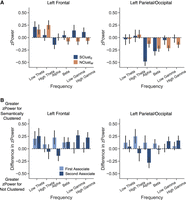
Differential univariate effects for semantically clustered second associates. zPower is shown for six frequency bands (low θ: 3–4 Hz, high θ: 6–8 Hz, α: 10–14 Hz, β: 16–26 Hz, low γ: 28–42 Hz, high γ: 44–100 Hz) across two ROIs, left frontal and left parietal/occipital. zPower is averaged across the stimulus interval (2000 ms). Error bars denote the standard error of the mean. (A) The top panel shows zPower for second associates that were strongly semantically associated and subsequently semantically clustered (blue, SClusts) and second associates that were weakly semantically associated and subsequently recalled but not clustered (orange, NClustw). (B) The bottom panel shows the difference in zPower between strong items that were subsequently semantically clustered and strong items that were subsequently recalled, but not clustered, for first (light blue) and second associates (dark blue). Positive values indicate greater zPower for items later semantically clustered, negative values indicate greater zPower for items later recalled, but not clustered.
Analysis of variance results for frequency, region of interest (ROI), and condition (SClusts, NClustw) on zPower
To directly test the extent to which the HFAi/LFAd pattern recruited during strong semantically clustered second associates mirrors the pattern that we observed for primacy items, we performed a template similarity analysis (Smith et al. 2022). Briefly, we generated two 46 frequency × 7 electrode “templates” of zPower, averaged across all participants and all trials within condition (primacy or middle). We assigned each second associate a label of either 1 or 0 based on whether the trial correlated more strongly with the primacy template (1) or the middle template (0) (Fig. 4). Given that we expect strong second associates to be more similar to primacy items, SClusts items should be assigned 1 more often than NClustw items. In the left frontal ROI, SClusts second associates were significantly more likely to be assigned 1 (M = 0.47, SD = 0.24) than NClustw second associates (M = 0.37, SD = 0.24; t37 = 2.50, P = 0.017) (Fig. 4A). In the left parietal/occipital ROI, SClusts second associates were numerically more likely to be assigned 1 (M = 0.43, SD = 0.27) than NClustw second associates (M = 0.35, SD = 0.17; t37 = 1.61, P = 0.116) (Fig. 4B). To ensure that the observed similarity effect is driven by semantic clustering rather than serial position, we performed two post hoc paired t-tests. First, we found that average serial position did not differ between strong (M = 12.55, SD = 0.22) and weak second associates (M = 12.45, SD = 0.22; t37 = 1.38, P = 0.177, Cohen's d = 0.45), meaning that participants were equally likely to encounter strong associates at “earlier” and “later” serial positions. Next, we found that average serial position did not differ between SClusts (M = 12.18, SD = 1.20) and NClustw second associates (M = 12.63, SD = 0.64; t37 = 1.91, P = 0.064, Cohen's d = 0.47), meaning that the similarity effect is likely driven by semantic processing, rather than serial position, of second associates. Together, these results suggest that the spectral signals recruited during SClusts items are more similar to primacy items, and thus the HFAi/LFAd pattern, than NClustw items.
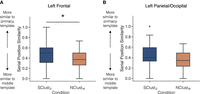
Template similarity analysis for second associates. We generated two templates, one for primacy items (serial positions 1–4) and one for middle items (serial positions 5–8) across all participants. Templates were based on zPower across 46 frequencies and seven electrodes from either the left frontal ROI (A) or the left parietal/occipital ROI (B). We correlated each second associate with each template. A trial was labeled “1” if it correlated more strongly with the primacy template and “0” if it correlated more strongly with the middle template. The boxes denote interquartile range, the whiskers denote minimum and maximum values. (A) The template includes left frontal electrodes. We find that SClusts second associates are significantly more likely to be assigned a “1” or primacy label compared to NClustw second associates (P = 0.017). (B) The template includes left parietal/occipital electrodes. We find that SClusts second associates are numerically more likely to be assigned a “1” or primacy label compared to NClustw second associates (P = 0.116).
The difference in neural signals between strong versus weak second associates may be the result of either semantic-specific processing or a more general binding mechanism that links items to their spatiotemporal context (Howard and Kahana 2002b; Sederberg et al. 2008; Polyn et al. 2009; Lohnas and Kahana 2014). During study, the HFAi/LFAd pattern predicts both subsequent memory (Sederberg et al. 2006; Burke et al. 2013; Long et al. 2014) and subsequent clustering (Long and Kahana 2015, 2017) and is thought to reflect item-context binding. Hence, the dissociation that we observe between second associates may be driven by increased item-context binding during strong compared to weak associates, rather than selective semantic processing of the strong associates. To test these alternatives, we directly compared the subsequent semantic clustering effect (SCEs) across first and second strong associates. The SCEs is the difference in zPower between strong associates that are subsequently semantically clustered (SClusts) and strong associates that are subsequently recalled but not clustered (NClusts). We used a contrast, rather than directly testing first versus second subsequently clustered strong associates, in order to specifically identify the effects of semantic clustering while controlling for serial position effects. If the SCEs differs between first and second associates, this would support our hypothesis that semantic processing differentially impacts late list items. If the SCEs is the same across first and second associates, this would support the alternative interpretation that a general item-context binding mechanism underlies encoding of both early and late list items that are subsequently semantically clustered.
To test the hypothesis that selective semantic processing modulates the neural mechanisms recruited during study of second
strong associates, we ran a 2 × 2 × 2 × 6 rmANOVA to evaluate the effects of associate (first, second), ROI (left frontal,
left parietal/occipital), condition (SClusts, NClusts), and frequency on zPower (Fig. 3B). A two-way interaction between condition and frequency, with no three-way interaction between condition, frequency, and
associate, would indicate that the SCEs is the same for both first and second associates. A three-way interaction would indicate that the SCEs differs across first and second associates. We report the results of this ANOVA in Table 4 and highlight the key findings here. We find a three-way interaction between associate, frequency, and condition (F(5,185) = 3.63, P = 0.004,  = 0.09) and no interaction between condition and frequency (F(5,185) = 0.89, P = 0.490,
  = 0.02). These results demonstrate that the SCEs varies across first and second associates, providing support for our hypothesis that semantic processing differentially impacts
late list items.
= 0.02). These results demonstrate that the SCEs varies across first and second associates, providing support for our hypothesis that semantic processing differentially impacts
late list items.
Analysis of variance results for associate (first, second), frequency, region of interest (ROI), and condition (SClusts, NClusts) on zPower
The SCEs dissociation across first and second associates indicates that semantic processing impacts the neural signals during the study of late list items. However, as our hypothesis is that semantic processing specifically alters encoding mechanisms, we should observe a subsequent semantic clustering effect characterized by the HFAi/LFAd pattern exclusively for second associates and we should observe no subsequent semantic clustering effect for first associates. Although we label them “strong,” first strong associates cannot be systematically processed semantically because when these items are presented, participants do not know that a semantic associate will be presented later in the list. Both conditions in the SCEs contrast, SClusts and NClusts, constitute subsequently remembered items. Thus, for first associates, both of these conditions should recruit HFAi/LFAd. As a result, there should be no SCEs for first associates once the two conditions are subtracted.
To test the specificity of the SCEs to second associates, we ran two 2 × 2 × 6 rmANOVAs to evaluate the effects of condition (SClusts, NClusts), ROI (left frontal, left parietal/occipital), and frequency on zPower. A two-way interaction between condition and frequency
for second associates would indicate that semantic processing modulates the encoding of late list items. We report the results
of this ANOVA in Table 5 and highlight the key findings here. We find an interaction between condition and frequency for second associates (F(5,185) = 3.36, P = 0.006,  = 0.07), but not for first associates (F(5,185) = 0.70, P = 0.627,
  = 0.02). Bayes factor analysis revealed that for first associates, a model without the two-way interaction term is preferred
to a model with the two-way interaction by a factor of 93.05. Thus, the condition by frequency interaction is specific to
second associates. As we do not find a three-way interaction between condition, frequency, and ROI (Bayes factor analysis
revealed that a model without the three-way interaction term is preferred to a model with the three-way interaction term by
a factor of 81.53), we averaged zPower across ROIs. We performed post hoc paired t-tests to assess frequency-specific dissociations between SClusts versus NClusts second associates. Low and high γ zPower was significantly greater for SClusts compared to NClusts items (low γ: t37 = 2.61, P = 0.013, Cohen's d = 0.57; high γ: t37 = 2.37, P = 0.023, Cohen's d = 0.52; FDR corrected). α zPower was significantly lower for SClusts compared to NClusts items (t37 = −2.89, P = 0.007, Cohen's d = 0.54; FDR corrected). Low θ and β zPower were numerically higher for SClusts than NClusts items (low θ: t37 = 1.386, P = 0.1739, Cohen's d = 0.29, β: t37 = 0.7920, P = 0.4334, Cohen's d = 0.16), whereas high θ zPower was numerically lower for SClusts than NClusts items (t37 = −0.5625, P = 0.5771, Cohen's d = 0.14). That we find an SCEs for second associates, but failed to find an SCEs for first associates, provides support for our hypothesis that semantic processing modulates neural encoding mechanisms.
Importantly, we find that this selective SCEs is characterized by the HFAi/LFAd pattern—a marker of successful encoding—suggesting that semantic processing can enhance encoding for items that may otherwise
be poorly encoded due to their position in the study list.
= 0.02). Bayes factor analysis revealed that for first associates, a model without the two-way interaction term is preferred
to a model with the two-way interaction by a factor of 93.05. Thus, the condition by frequency interaction is specific to
second associates. As we do not find a three-way interaction between condition, frequency, and ROI (Bayes factor analysis
revealed that a model without the three-way interaction term is preferred to a model with the three-way interaction term by
a factor of 81.53), we averaged zPower across ROIs. We performed post hoc paired t-tests to assess frequency-specific dissociations between SClusts versus NClusts second associates. Low and high γ zPower was significantly greater for SClusts compared to NClusts items (low γ: t37 = 2.61, P = 0.013, Cohen's d = 0.57; high γ: t37 = 2.37, P = 0.023, Cohen's d = 0.52; FDR corrected). α zPower was significantly lower for SClusts compared to NClusts items (t37 = −2.89, P = 0.007, Cohen's d = 0.54; FDR corrected). Low θ and β zPower were numerically higher for SClusts than NClusts items (low θ: t37 = 1.386, P = 0.1739, Cohen's d = 0.29, β: t37 = 0.7920, P = 0.4334, Cohen's d = 0.16), whereas high θ zPower was numerically lower for SClusts than NClusts items (t37 = −0.5625, P = 0.5771, Cohen's d = 0.14). That we find an SCEs for second associates, but failed to find an SCEs for first associates, provides support for our hypothesis that semantic processing modulates neural encoding mechanisms.
Importantly, we find that this selective SCEs is characterized by the HFAi/LFAd pattern—a marker of successful encoding—suggesting that semantic processing can enhance encoding for items that may otherwise
be poorly encoded due to their position in the study list.
Analysis of variance results for frequency, ROI, and condition (SClusts, NClusts) on zPower for first and second associates
Discussion
The goal of the current study was to investigate the extent to which semantic processing, defined here as attention to semantic associations, modulates encoding resources, and promotes subsequent memory. We recorded scalp EEG while participants performed a delayed free recall task in which each study list was comprised of words that were strongly and weakly semantically associated. We report three key findings. First, we find that a strong semantic association with a prior list item improves memory for items presented late in the study list. Second, we find differential spectral signals during the study of late list items; subsequently semantically clustered items are distinct from weakly semantically associated items that are subsequently recalled but not clustered. Finally, we find a subsequent semantic clustering effect (SCEs) selectively for late list items, but not early list items. The SCEs for late list items is characterized by high-frequency activity increases and low-frequency activity decreases (HFAi/LFAd)—a hallmark of successful encoding. Taken together, these results suggest that semantic processing can restore neural encoding mechanisms to ameliorate memory declines.
We find that late list items are better remembered if they are strongly—as opposed to weakly—semantically associated with an early list item. In delayed free recall tasks in which no words are semantically associated, recall performance decreases over serial position (Murdock 1962). Consistent with previous research, we find a decrease in probability of recall for late list items that are weakly semantically associated with prior list items. The decrease in probability of recall may arise from camatosis—activity-dependent fatigue that diminishes the encoding of later events (Tulving and Rosenbaum 2006). This attentional decline account is supported by evidence from behavioral (Popov and Reder 2020; Mizrak and Oberauer 2021), pupillometry (Madore et al. 2020; Unsworth and Miller 2021), and electrophysiological literature (Sederberg et al. 2006; Azizian and Polich 2007; Serruya et al. 2014; Madore et al. 2020). Alternatively, the decrease in performance across serial positions may be the result of a buildup of PI (Underwood 1957; Watkins and Watkins 1975; Postman and Keppel 1977; Szpunar et al. 2008). Although the current work cannot clearly adjudicate between these mechanisms, a depletion in encoding resources could account for both attentional declines and the buildup of PI whereby encoding success of a prior item depletes the HFA resources needed to encode the current item. Specifically, because semantically associated words share semantic features (by definition), they will make repeated, similar demands on the neural resources necessary for encoding, thereby depleting those resources (Lohnas et al. 2020). The semantic associations that we used in the present study may have enabled the restoration of encoding resources that typically diminish across study list items.
Semantic processing typically, though not always, confers benefits on later memory. Our results are in line with previous work showing that subsequent memory is improved when, during study, participants access prior knowledge (Bransford and Johnson 1972), encounter semantic associates (Jacoby and Wahlheim 2013; Tullis et al. 2014; McKinley et al. 2019; McKinley and Benjamin 2020; Antony et al. 2022), and/or process information that is congruent (as opposed to incongruent) with prior knowledge (van Kesteren et al. 2010). However, there are instances in which semantic processing can negatively impact memory. We have found that free recall performance suffers when participants perform an explicit semantic orienting task on study items that are not strongly associated with other list items (Long and Kahana 2017). Our interpretation is that attending to the semantic dimension comes at the expense of attending to the temporal dimension, only the latter of which is effective for later memory for the nonassociated items. Thus a very small number of semantic associates coupled with a semantic orienting task may be detrimental. Similarly, studying a very large number of semantic associates also can have a negative impact on memory. The buildup of PI that occurs across lists and impairs memory (Underwood 1957; Watkins and Watkins 1975; Postman and Keppel 1977; Szpunar et al. 2008) is observed specifically across lists of words drawn from the same semantic category. Thus, semantic associations may be most beneficial when they are selective, as in the present study. A select amount of semantic processing may be sufficient to reorient attention to the semantic dimension and restore encoding resources, whereas excessive semantic processing may suffer the same depletion in encoding resources observed across nonassociated study items. Determining the optimal number of semantic associations to benefit memory is an important avenue for future work.
Participants semantically clustered their responses, suggesting that they specifically engaged in semantic processing for the semantically associated late list items. Our use of the term “semantic processing” is intended to broadly capture multiple avenues through which participants may leverage semantic associations. In particular, the presence of strong semantic associates may “prime” participants to attend to the semantic features of a stimulus (e.g., attention to animacy, four legs, and pet for the word “cat” if paired with “dog”) or may lead to study-phase retrieval and integration (Schlichting and Preston 2015; Bein et al. 2020), whereby the first associate (“dog”) is explicitly retrieved during presentation of the second associate (“cat”; Wahlheim and Jacoby 2013). Being reminded of an earlier item by the occurrence of a later item can enable the integration of the two items such that the memory for the earlier item is embedded within the memory for the later item, facilitating memory for both items (Jacoby and Wahlheim 2013; Wahlheim and Jacoby 2013; Tullis et al. 2014; McKinley et al. 2019; McKinley and Benjamin 2020; Antony et al. 2022). Integration of such study items would enable semantically associated items to be semantically clustered during recall, consistent with our finding that participants semantically cluster their responses and that the degree of semantic clustering is positively related to memory for strong semantic associates. Future work is necessary to characterize the mechanism, or combination of mechanisms, that underlie semantic processing.
Prior work suggests that participants do not automatically engage in semantic processing and instead suggests that the degree of semantic clustering is modulated by both top-down and bottom-up factors. Participants tend to only engage in semantic processing either when performing an explicit semantic orienting task during study (Long and Kahana 2017)—e.g., they judge whether an item is animate or inanimate, a top-down demand—or when semantic associations are particularly salient via categorized lists, a bottom-up influence (Becker et al. 1997). Given the lack of explicit instructions to attend to the semantic dimension in the current study—we did not include a semantic orienting task or instruct participants to relate first and second associates—and the relatively low number of strong semantic associates, it may be surprising that we observe robust semantic clustering. However, a large percentage (92%) of participants reported an awareness of the strong semantic associates in our post-task questionnaire, suggesting that participants were likely attending to the semantic dimension of the stimuli. Furthermore, we show that participants’ tendency to semantically cluster is positively related to subsequent memory for strongly semantically associated items. Together, these findings suggest that even without explicit task demands, participants are able to engage in semantic processing to benefit later memory.
Semantic processing altered the neural mechanisms recruited during the study of late list items. We find that subsequently semantically clustered second associates (SClusts) elicit greater HFAi/LFAd relative to weak second associates that were subsequently recalled but not clustered (NClustw). In particular, we find significantly increased low γ power and decreased α power for SClusts compared to NClustw items. Late list items typically suffer from reduced HFAi/LFAd whereby HFA tends to decrease and LFA tends to increase across serial positions (Sederberg et al. 2006; Serruya et al. 2014), an effect that we replicate here. Although we do not find a significant difference in high θ power, numerically the effect mirrors that observed in the α band. As low θ does not follow the same pattern as high θ and α, this may appear to contradict our interpretation that semantically clustered second associates are characterized by the HFAi/LFAd pattern. However, there is a growing body of work which suggests that low θ represents a functional state distinct from high θ (Miller et al. 2018; Goyal et al. 2020). Given that we find increases in low θ power across almost all of our conditions of interest, we speculate that the low θ effects reflect a fundamentally different mechanism from the remaining frequency bands, though we acknowledge that future investigation into the specific periodic and aperiodic components underlying subsequent semantic clustering effects is necessary to support this claim (Donoghue et al. 2020). Importantly, we find that compared to NClustw items, the spectral pattern across SClusts items is more similar to the spectral pattern for primacy items, that is, the HFAi/LFAd pattern. Thus, semantic processing may enable the recruitment of beneficial encoding mechanisms for late list items.
Semantic processing specifically leads to a restoration of neural encoding mechanisms. We found that the subsequent semantic clustering effect (SCEs)—the difference in spectral power between strong associates that are subsequently semantically clustered and strong associates that are subsequently recalled but not clustered—was selective for the late list items, meaning that there were no differences in spectral power between early list items that were versus were not subsequently semantically clustered. Critically, the selective SCEs for late list items was characterized by the HFAi/LFAd pattern that is emblematic of successful memory formation. Specifically, HFAi/LFAd predicts both subsequent memory (Burke et al. 2014a; Long et al. 2014) and subsequent clustering (Long and Kahana 2015, 2017), which suggests that it may reflect the degree to which items are bound to their spatiotemporal context (Polyn et al. 2009). However, as the HFAi/LFAd pattern has also been observed in auditory perception (Crone et al. 2001), spatial attention (Bauer et al. 2006), and attentive reading (Lachaux et al. 2007; Dalal et al. 2009), it may instead reflect task or attentional demands rather than memory per se (Long and Kuhl 2019). That we observe HFAi/LFAd selectively for the late list item SCEs and not for early list items suggests that the observed dissociations cannot reflect a general item-context binding mechanism promoting subsequent semantic clustering. Instead, the selectivity of the HFAi/LFAd pattern is consistent with the interpretation that semantic associations direct attention to the semantic dimension of the late list items, facilitating later memory of those items. Our interpretation is that semantic processing changes how an item is encoded, specifically by increasing the attention directed to the semantic dimension of an experience.
As the present work highlights the impact of semantic processing on neural encoding mechanisms, it also raises questions about how processing differences at retrieval could further contribute to the behavioral effects that we observe. Specifically, in addition to the differential mechanisms recruited during the encoding of SClusts and NClustw items, there may also be differences in neural activity preceding the recall of those items. Before successful recall, high γ power tends to increase (Burke et al. 2014b; Long et al. 2017), whereas θ and α power tend to decrease (Kragel et al. 2017). Recent work (Solomon et al. 2019) has shown that θ power and connectivity in the medial temporal lobe code semantic distances between words. Thus, we might anticipate recall-phase dissociations between SClusts and NClustw characterized by differential θ band engagement. Similarly, semantic, as opposed to temporal, reinstatement, recruits anterior versus posterior brain networks (Kragel et al. 2021), suggesting that in addition to recruiting distinct spectral patterns, recall of SClusts and NClustw items may rely on different anatomical substrates. Investigating how semantic processing impacts the neural mechanisms underlying retrieval in addition to encoding is an important avenue for future work.
Together, these results show that semantic processing can counteract memory declines by restoring neural encoding mechanisms. Specifically, our results suggest that attending to the semantic dimension can be selectively beneficial when items that might otherwise be forgotten due to their serial position are strongly semantically associated with a prior list item. More broadly, our findings suggest that prior knowledge can modulate the recruitment of successful encoding mechanisms. An avenue for future research will be to investigate the extent to which these effects generalize to other dimensions beyond semantic associations. These findings are highly relevant to a growing body of literature characterizing the relationship between memory and attention.
Materials and Methods
Participants
Forty (22 female; mean age 20.63 yr) native English speakers from the University of Virginia community participated. We selected a sample size of N = 40 based on previous scalp EEG studies that we have conducted (Long and Kuhl 2019; Smith et al. 2022). A sensitivity analysis with α = 0.05, power = 0.80, and N = 40 produces an effect size of 0.45 for a paired-samples t-test. All participants had normal or corrected-to-normal vision. Informed consent was obtained in accordance with the University of Virginia's Social and Behavioral Sciences Institutional Review Board and participants were compensated for their participation. Two participants were excluded from the final data set: one whose EEG recording was not started until the third run, and one whose verbal responses were not recorded. Thus, data are reported for the remaining 38 participants. The raw, deidentified data and the associated experimental and analysis codes used in this study will be made available via the Long Term Memory lab website (https://longtermmemorylab.com) upon publication.
Experimental design and statistical analysis
Free recall task
Stimuli consisted of 1602 words, drawn from the Toronto Noun Pool (Friendly et al. 1982). From this set, 192 words were randomly selected for each participant. Words were presented in lists of 16 words across a total of 12 runs.
Study phase
During each trial, participants viewed a single word presented for 2000 ms followed by a 1000 ms interstimulus interval (ISI) (Fig. 5). Participants were instructed to study the presented word in anticipation of a later memory test; participants did not make any behavioral responses. Each study run was comprised of 16 words split into two lists (“first associates” and “second associates,” respectively) separated by a 2000 ms get ready screen and a 2000 ms delay. The critical manipulation was the strength of semantic association between first and second associates. Semantic association strength was determined using WAS values (Nelson et al. 2001); “strong” semantic associates had a WAS value of 0.4 or greater and “weak” semantic associates had a WAS value <0.4 (Long and Kahana 2017). Each first associate (serial positions 1–8) was “paired” with a second associate (serial positions 9–16) and separated by seven intervening items (a lag of eight). As an example, in Figure 5A, the dog–cat pair is comprised of strong semantic associates (WAS = 0.86); dog is the first associate and cat is the second associate. In comparison, the shore-road pair is comprised of weak semantic associates (WAS = 0.017). Both strong and weak semantic associates were weakly semantically associated with all other study words. Word lists were generated for each participant such that half of the pairs were strongly semantically associated and half were weakly associated. This design was accomplished by randomly drawing a word from the pool of 1602 and selecting either a strong or weak associate from the word pool and then removing the selected word, selected associate, and all other strong semantic associates of the selected word, from the pool. We iteratively repeated this process until a total of 192 words were selected. Study word selection was randomized, and we conducted a post hoc paired-samples t-test to verify that a given word was equally likely to be a strong or weak semantic associate across participants. From the word pool of 1602 words, 1509 words were randomly selected across participants. For each of these words, we calculated the proportion of times that a given word (e.g., “bike”) was strongly semantically associated with another study word (e.g., “pedal”; M = 0.51, SD = 0.29) compared to the proportion of times that it was weakly semantically associated with another study word (e.g., “lightning”; M = 0.49, SD = 0.29) and found no difference between the two (t1508 = 1.59, P = 0.113).
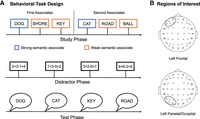
Experiment methods. (A) During the study phase, participants studied a series of words one at a time in anticipation of a later memory test. Each run was split into two word lists: “first associates” (e.g., “dog,” “shore,” “key”) and “second associates” (e.g., “cat,” “road,” “ball”), which were paired with one another. Half of the associate pairs were strongly semantically associated (e.g., “dog” and “cat”), and the other half were weakly semantically associated (e.g., “shore” and “road”). Strong semantic associates are shown here in blue, and weak semantic associates are shown in orange for demonstration purposes only; participants were not given any indication of semantic association strength. In between the study and test phases, participants completed a math distractor phase in which they saw a three-digit math problem and verified whether the solution shown was correct. During the test phase, participants verbally recalled any words that they could remember from the immediately preceding study phase, in any order. (B) ROIs: We analyzed two ROIs, left frontal and left parietal/occipital.
Although the task instructions did not direct participants to attend to any particular dimension of the stimuli, participants were aware of the strong semantic associations across the two lists. 35/38 participants reported the presence of strong semantic associates in response to the question “What specific patterns did you notice?” in a post-task questionnaire.
Math distractor phase
On each trial, participants saw a three-digit math problem with a solution (of the form, “X + Y − Z = A”). Participants had 4 sec to verify whether the solution shown was correct. Each math problem was followed by a minimum 1000 ms ISI. If a response was made under 4 sec, then the ISI was 1000 ms plus the remaining time. Participants saw a total of four math problems, randomly generated, such that the distractor phase was always 20 sec in duration, which is consistent with previous task designs (Sederberg et al. 2006, 2010; Long et al. 2014; Long and Kahana 2015).
Free recall phase
Following the math distractor, an auditory beep cued the participant to verbally recall any words that they could remember from the immediately preceding study phase. Participants were given 45 sec to recall as many words as possible in any order. Participants were encouraged to continue trying to recall throughout the interval. Participants’ utterances were recorded on the computer and later processed offline.
EEG data acquisition and preprocessing
EEG recordings were collected using a BrainAmp system (Brain Products, Inc.) and an ActiCap equipped with 64 Ag–AgCl active electrodes positioned according to the extended 10–20 system. All electrodes were digitized at a sampling rate of 1000 Hz and were referenced to electrode FCz. Offline, electrodes were later converted to an average reference. Impedances of all electrodes were kept below 50 kΩ. Electrodes that demonstrated high impedance or poor contact with the scalp were excluded from the average reference. Bad electrodes were determined by voltage thresholding (see below).
Custom Python codes were used to process the EEG data. We applied a high pass filter at 0.1 Hz, followed by a notch filter at 60 Hz and harmonics of 60 Hz to each participant's raw EEG data. We then performed three preprocessing steps (Nolan et al. 2010) to identify and correct electrodes with severe artifacts separately for each participant. First, we calculated the mean correlation between each electrode and all other electrodes as electrodes should be moderately correlated with other electrodes due to volume conduction. We z-scored these means across electrodes and rejected electrodes with z-scores <−3. Second, we calculated the variance for each electrode as electrodes with very high or low variance across a session are likely dominated by noise or have poor contact with the scalp. We then z-scored variance across electrodes and rejected electrodes with a |z| ≥ 3. Finally, we expect many electrical signals to be autocorrelated, but signals generated by the brain versus noise likely have different forms of autocorrelation. Therefore, we calculated the Hurst exponent, a measure of long-range autocorrelation, for each electrode and rejected electrodes with a |z| ≥ 3. Rejected electrodes were excluded from the average re-reference. We found the average voltage across all of the remaining electrodes for each time sample and re-referenced the data by subtracting the average voltage from the filtered EEG data. We used wavelet-enhanced independent component analysis (Castellanos and Makarov 2006) to remove artifacts from eyeblinks and saccades.
EEG data analysis
To perform spectral decomposition, we applied a family of Morlet wavelet transforms (wave number = 6) to all electrode EEG signals across 46 logarithmically spaced frequencies (2–100 Hz) (Long and Kahana 2015). After log-transforming the power, we downsampled the data by taking a moving average across 100 ms time intervals from −4000 to 4000 ms relative to stimulus onset and sliding the window every 25 ms, resulting in 317 time intervals (80 nonoverlapping). Power values were then z-transformed by subtracting the mean and dividing by the standard deviation power. Mean and standard deviation power were calculated across all trials and across time points for each frequency. We divided the z-transformed power (zPower) into six frequency bands: low θ (3–4 Hz), high θ (6–8 Hz), α (10–14 Hz), β (16–26 Hz), low γ (28–42 Hz), and high γ (44–100 Hz) (Long and Kahana 2017).
Regions of interest
We selected two ROIs, left frontal (Fp1, F3, F7, AF7, AF3, F1, F5) and left parietal/occipital (P3, P7, O1, P1, P5, PO7, PO3), based on our prior work (Fig. 5B; Long and Kahana 2017).
Behavioral data analysis
We assessed study items based on associate (first or second) and semantic association strength (strong or weak). Strong semantic associates could be subsequently recalled and semantically clustered (SClust), whereby the study item was recalled preceding or following its semantic associate. By definition, weak semantic associates could not be semantically clustered. Any study item could be subsequently recalled and not clustered (NClust), whereby the study item was recalled, but not consecutively with either a study neighbor or a semantic associate. We assessed the tendency of participants to semantically cluster their responses by performing an sCRP analysis (Howard and Kahana 2002b), in which we calculated the probability of recalling an item as a function of having just recalled an item with a given level of semantic association strength (WAS value) to the current item. We grouped words into six semantic association strength bins based on WAS values: below 0, 0–0.2, 0.2–0.4, 0.4–0.6, 0.6–0.8, and 0.8–1.0, where “below 0” is the lowest semantic association strength bin and “0.8–1.0” is the highest semantic association strength bin. We also reduced the sCRP to a single semantic clustering score by finding the difference between the average sCRP value for the low semantic association strength bins (below 0–0.4) and the high semantic association strength bins (0.4–1.0) for each participant (Long and Kahana 2017).
Univariate data analysis
We performed three univariate contrasts. First, we compared spectral signals during the study of primacy items, words studied in serial positions 1–4 (Sederberg et al. 2006), and middle items, words studied in serial positions 5–8. We selected positions 5–8 for the “middle” condition as these do not overlap with either the primacy items or the second associates. Second, we compared spectral signals during the study of strong second associates that were subsequently semantically clustered (SClusts) and weak second associates that were subsequently recalled but not clustered (NClustw). Finally, we compared the subsequent semantic clustering effect (SCEs) between first and second strong associates. The SCEs is the difference in zPower between subsequently recalled associates that are versus are not semantically clustered. For each contrast, participant, electrode, and frequency, we calculated zPower in each of the two conditions, averaged over the 2000 ms stimulus interval for each ROI.
Template similarity analysis
We conducted a template similarity analysis, as in our prior work (Smith et al. 2022), to compare activity patterns during the study of primacy and middle items to activity patterns during the study of SClusts and NClustw second associates. Specifically, we calculated the average zPower across all participants and trials within a condition separately for 46 frequencies and electrodes within each ROI (left frontal = 7, left parietal/occipital = 7) to create two activity “templates” (primacy, middle). We performed a Pearson correlation to assess the similarity of the activity patterns elicited by each second associate with the two templates. If a given trial correlated more strongly with the primacy template, it was assigned a label of “1.” If a trial correlated more strongly with the middle template, it was assigned a label of “0.” We then compared the average label assignment across conditions (SClusts, NClustw). We performed separate template similarity analyses for the left frontal and left parietal/occipital ROIs.
Statistical analyses
We used paired-sample t-tests and an rmANOVA to assess the effects of semantic association strength (strong, weak) and associate (first, second) on probability of recall. We used an rmANOVA to assess the effects of semantic association strength (strong, weak) and serial position (1–16) on probability of recall. We used paired-sample t-tests to compare the sCRP for strong and weak semantic bins. We used a Pearson correlation to measure the relationship between semantic clustering score and probability of recall for strong semantic associates. We used rmANOVAs to assess the effects of serial position (primacy, middle) and frequency on zPower. We used rmANOVAs to assess the effects of subsequent clustering condition (SClusts, NClustw) and frequency on zPower and to assess the effects of associate and frequency on the SCEs. We used paired t-tests to test for dissociations in the labels assigned to SClusts and NClustw second associates in the template analysis. We used post hoc paired t-tests to test for frequency-specific dissociations in zPower between SClusts and NClustw items and between SClusts and NClusts second associates. We used FDR (P = 0.05) correction (Benjamini and Hochberg 1995) to correct for multiple comparisons.
Competing interest statement
The authors declare no competing financial interests.
Acknowledgments
We thank Yuju Hong for assistance with data collection. Nicole Long is an iTHRIV Scholar. The iTHRIV Scholars Program is supported in part by the National Center for Advancing Translational Sciences of the National Institutes of Health under award numbers UL1TR003015 and KL2TR003016.
Footnotes
-
Article is online at http://www.learnmem.org/cgi/doi/10.1101/lm.053996.124.
- Received January 29, 2024.
- Accepted February 19, 2024.
This article is distributed exclusively by Cold Spring Harbor Laboratory Press for the first 12 months after the full-issue publication date (see http://learnmem.cshlp.org/site/misc/terms.xhtml). After 12 months, it is available under a Creative Commons License (Attribution-NonCommercial 4.0 International), as described at http://creativecommons.org/licenses/by-nc/4.0/.