Emotional intensity produces a linear relationship on conditioned learning but an inverted U-shaped effect on episodic memory
- 1Department of Psychiatry and Behavioral Sciences, University of Texas at Austin, Austin, Texas 78712, USA
- 2Department of Psychology, University of Texas at Austin, Austin, Texas 78712, USA
- 3Department of Neuroscience, University of Texas at Austin, Austin, Texas 78712, USA
- Corresponding author: joseph.dunsmoor{at}austin.utexas.edu
Abstract
Emotional intensity can produce both optimal and suboptimal effects on learning and memory. While emotional events tend to be better remembered, memory performance can follow an inverted U-shaped curve with increasing intensity. The strength of Pavlovian conditioning tends to increase linearly with the intensity of the aversive outcome, but leads to greater stimulus generalization. Here, we combined elements of episodic memory and Pavlovian conditioning into a single paradigm to investigate the effects of varying outcome intensities on conditioned fear responses and episodic memory. Participants encoded trial-unique images from two semantic categories as conditioned stimuli (CS+ and CS−) before (preconditioning), during, and after (extinction) acquisition. We systematically varied the intensity of the unconditioned stimulus (US) during acquisition between-groups as a nonaversive tone, a low-intensity electrical shock, or a high-intensity electrical shock paired with a loud static noise. Results showed that conditioned skin conductance responses scaled linearly with US intensity during acquisition, with a high-intensity US leading to greater resistance to extinction and stronger 24 h fear recovery. However, 24 h recognition memory produced an inverted U-shaped relationship, with better recognition memory for CSs encoded before (retroactive), during, and following conditioning using a low-intensity US. These findings suggest a dissociation between optimal levels of emotional intensity on explicit and implicit learning and memory performance.
The intensity of an emotional event can determine how well that event is remembered. This applies to both explicit and implicit forms of memory. Indeed, emotional intensity has long been a major component of associative learning models (Rescorla and Wagner 1972; Pearce and Hall 1980), studies of autobiographical memory (Talarico et al. 2004), and research on stress and memory (Roozendaal et al. 2009). However, the bearing of intensity on learning and memory can vary according to the type of learning paradigm and how memory is assessed. For example, in Pavlovian fear conditioning, the intensity of an aversive unconditioned stimulus (US) affects the ability to form associations between a conditioned stimulus (CS) and the US; but while a low-intensity threat leads to discrimination to the CS that directly predicts the US, a high-intensity threat leads to robust generalization to an array of other cues or contexts (Baldi et al. 2004; Ghosh and Chattarji 2015). In the realm of episodic memory, emotional events are often better remembered than neutral events; but intense emotional events can have complex effects on determining what aspects are remembered (Bisby and Burgess 2017) and, in the extreme case of traumatic memory, may lead to disorganization between the memory for contextual and sensory details (Brewin et al. 2010). Here, we combined Pavlovian conditioning with tests of episodic memory in a hybrid design to investigate the effect of low- versus high-intensity threat on conditioned learning and episodic memory.
Outcome intensity is an important determinant for different aspects of Pavlovian fear conditioning. While even a fairly low-intensity US is often sufficient to produce a conditioned response (CR) to the CS that predicts the US, a high-intensity US can lead to greater generalization of conditioned fear (Laxmi et al. 2003; Baldi et al. 2004; Dunsmoor et al. 2017). These findings accord with an ethological model of predator–prey interactions, whereby prey balance between discrimination of a known predator versus generalization to other potential predators based on the level of threat posed by the known predator (Ferrari et al. 2008). In this way, animals determine the appropriate cost of defensive behavior—in terms of expenditure of energy resources and missing out on potential mating and foraging opportunities—by the level of risk. These empirical findings have explanatory power for describing how highly emotional events contribute to widespread overgeneralization of fear, anxiety, and avoidance in anxiety-related disorders (Cooper et al. 2022), such as posttraumatic stress disorder (Kheirbek et al. 2012; Dunsmoor et al. 2022) or specific phobias (Öhman and Mineka 2001).
There have been only limited efforts to systematically investigate the effect of US intensity on different components of conditioned fear learning in humans (Lonsdorf et al. 2017). One important but surprisingly unaddressed question is whether intensity impacts the ability for humans to extinguish, as well as to recover, learned fear. The strength of acquisition is presumably determined in many respects by the intensity of the US (Annau and Kamin 1961; Davis and Astrachan 1978; Shors and Servatius 1997; Cordero et al. 1998; Ghosh and Chattarji 2015; Ruiz-López et al. 2021), which should in turn affect the extinction of the CR once the US is omitted. For instance, based on animal studies and associative learning models, a weak US should produce a weak CR that is quickly extinguished; while a strong US should produce a more robust CR that is more resistant to modulation after learning (Rescorla and Wagner 1972; Pearce and Hall 1980; Wagner 1981). It is less obvious from the empirical literature, or from classic associative learning models, whether the strength of initial learning will predict the magnitude of recovered CRs after extinction. For example, is postextinction recovery proportional to the original strength of high- or low-intensity fear conditioning? While there is a history of animal research examining the effects of strong versus weak electric shocks on components of conditioned fear (Gazarini et al. 2023), these questions have not received systematic empirical attention in human fear conditioning preparations. In other words, does a weak versus strong US impact the extinction and spontaneous recovery of CRs in humans?
The nature of an emotional event will also have nuanced effects on different aspects of episodic memory. Laboratory studies of emotional memory overwhelmingly show better memory for intrinsically negative or positive memoranda versus neutral material (LaBar and Cabeza 2006), accompanied by stronger confidence and vividness in recollection (Sharot et al. 2004). Interconnections between the basolateral amygdala and the hippocampus help promote consolidation of these arousing stimuli in memory (McGaugh 2004). Emotionally intense stimuli are also more likely to demand processing resources at the moment of encoding (Mather and Sutherland 2011; Mather et al. 2016), helping ensure these stimuli are later remembered. However, high levels of emotional intensity might impede memory formation, at least on difficult learning tasks (Yerkes and Dodson 1908; Broadhurst 1957). This idea of an inverted U-shaped function of arousal and memory performance has been translated to human research measuring endogenous glucocorticoid release from a postencoding stress manipulation (Andreano and Cahill 2006), and this idea has been refined in terms of its explanatory power for highly intense emotional memories in humans (Diamond et al. 2007). Interestingly, while there is evidence of an inverted U-shaped effect on hippocampus-dependent memory, animal studies of fear conditioning suggest a linear relationship between learning and outcome intensity (Sandi and Pinelo-Nava 2007).
Emotional events can also have mixed effects on memory when emotional stimuli are linked to the encoding of neutral material (Mather and Sutherland 2011; Bisby et al. 2016). For example, Schwarze et al. (2012) found that electrical shocks paired with different neutral pictures improved memory selectively for shock-paired stimuli. Bauch et al. (2014) showed that scenes paired with a cue that signaled shock at varying probabilities produced a linear increase in familiarity ratings (“knowing” the item), but an inverted U-shaped effect on recollection (“remembering” the item) for the scenes embedded within those shock probability cues. However, in another study, pairing random (i.e., unrelated) everyday objects that have no predictive value for delivery of low-intensity, high-intensity, or no electrical shocks did not differentially affect later recognition for those objects (Dunsmoor et al. 2019).
We have previously used a hybrid Pavlovian conditioning and episodic memory protocol to investigate how a moderately aversive electrical shock US affects recognition memory for items from a semantic category paired with shock (CS+) versus a semantic category never paired with shock (CS−) (Dunsmoor and Kroes 2019). We find a consistent selective enhancement in high-confidence recognition for exemplars from the CS+ category encoded during fear conditioning, including items from the same category that were encoded but not paired with shock during fear conditioning (Dunsmoor et al. 2012; Starita et al. 2019). Moreover, semantically related exemplars encoded during extinction, following acquisition, also tend to be better remembered than exemplars from the CS− category, but at a lower rate than items encoded during acquisition, indicating a relatively weakened episodic memory trace of extinction-specific information (Dunsmoor et al. 2018; Keller and Dunsmoor 2020; Laing and Dunsmoor 2023). This memory advantage has also been shown to spread retroactively to exemplars semantically related to the CS+ category that were encoded prior to fear conditioning (Dunsmoor et al. 2015b; Hennings et al. 2021). This retroactive memory enhancement accords with the behavioral tagging hypothesis, whereby weakly learned events that are prone to forgetting are consolidated through temporal convergence with a strong event that occurs close in time (Viola et al. 2024).
Notably, the aversive electrical shock US in these category-conditioning experiments has always been calibrated individually to reach a moderately intense level of subjective intensity for each participant. Whether episodic memory performance for items encoded before, during, or after conditioning is sensitive to varying levels of US intensity used during the acquisition of conditioned fear is unknown.
In the present study, we adapted the hybrid Pavlovian conditioning and episodic memory protocol using varying levels of outcome intensity during the fear conditioning phase. We used a multi-day category-conditioning protocol, which involves participants learning that trial-unique (i.e., nonrepeating) basic-level category exemplars from a superordinate object category predict a US during fear conditioning. This experiment included three groups where the US was parametrically varied in intensity between groups. Prior to fear conditioning, all the groups encoded category exemplars in the absence of a US (preconditioning). Next, during acquisition, one category (CS+; animals or tools, counterbalanced between participants) predicted the US, while another category (CS−; tools or animals, respectively) was never paired with the US. Importantly, one group received an extremely low-intensity outcome that consisted of a low-volume tone (nonaversive group). A second group received a very mild electrical shock to the wrist, calibrated to just above the level of detection (low-intensity group). The third group received a multimodal US consisting of a much stronger shock combined with an aversive 93 dB static white noise (high-intensity group). Participants then underwent extinction to novel exemplars from these categories, followed the next day by a test of extinction recall to a new set of category exemplars. Finally, participants completed a recognition memory test followed by a test of temporal source memory for each item encoded the previous day.
We predict that the strength of conditioned learning, measured by 24 h recovery and spontaneous recovery index, will increase linearly with US intensity. We test two alternative hypotheses concerning episodic memory; that is, whether memory performance also scales linearly with US intensity, or whether there is an inverted U-shaped function with diminishing performance using a nonaversive and high-intensity US.
Results
As depicted in Figure 1, this study occurred across two consecutive days separated by ∼24 h. On Day 1, each of the three groups encoded basic-level category exemplars from two superordinate semantic categories (animals and tools) during three phases: preconditioning, conditioning (i.e., acquisition), and extinction. During preconditioning, participants viewed pictures of animals and tools without electrical shocks (for the low- and high-intensity groups; referred to as LI and HI hereafter) and simply classified each image as either an animal or a tool. Following preconditioning, the electrical shock was calibrated (for the LI and HI group). During conditioning, the CS+ category (animals or tools, counterbalanced between participants) coterminated with either a low volume tone (∼50 dB; nonaversive group, NA) through computer speakers, a mild electrical shock (low-intensity group, LI), or a higher intensity shock combined with loud (∼93 dB) white noise (high-intensity group, HI) presented binaurally over headphones. Following a short break (< 1 min) after conditioning, participants underwent extinction in which the CS+ and CS− category was presented without the US. On Day 2, participants returned for a test of extinction recall (i.e., spontaneous recovery) composed of new exemplars from the CS+ and CS− category. They then completed a surprise recognition memory test, composed of exemplars from Day 1 and novel (new) category exemplars. Finally, participants completed a temporal source memory test, where they were presented with each exemplar from Day 1 and asked whether it was encoded before, during, or after fear conditioning.
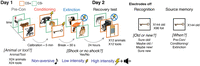
Experimental design. Participants viewed 48 trial-unique images of animals and tools during preconditioning (Pre-Con), conditioning, and extinction (24 during recovery). First, during Pre-Con, they categorized images as animals or tools. The US was then calibrated (low- and high-intensity group); the nonaversive group listened to a tone (∼50 dB) 5 times. Calibration was followed by fear conditioning, each group received their corresponding US coterminating with CS+ on 50% of trials; the high-intensity group also received a compound US of a loud (93 dB) noise with shock. Fear conditioning was followed by extinction. Participants returned ∼24 h later for a test of fear recovery (i.e., extinction recall). Participants rated trial-by-trial expectancy to shock/tone during conditioning, extinction, and recovery test. Finally, participants completed a recognition and a source memory task.
Skin conductance responses
Conditioning
Skin conductance response (SCR) results are presented in Figure 2A,B. Results from fear conditioning are separated by early (first half of trials, 12 trials of each CS) and late (second half of trials, 12 trials of each CS) phases to account for variations in physiological arousal over the course of training. Repeated-measures ANOVA using CS-type (CS+, CS−) and phase (early, late) as within-subjects factors and Group (NA, LI, HI) as between-subjects factor showed a main effect of Group (F(2,65) = 28.48, η2 G = 0.39, P < 0.001), CS-type (F(1,65) = 38.79, η2 G = 0.07, P < 0.001), phase (F(1,65) = 39.05, η2 G = 0.05, P < 0.001), a Group*CS-type interaction (F(2,65) = 11.73, η2 G = 0.05, P < 0.001), a Group*phase interaction (F(2,65) = 8.22, η2 G = 0.023, P < 0.001), and a three-way interaction (F(2,65) = 8.58, η2 G = 0.01, P < 0.001). In early acquisition, only HI and LI groups showed discriminative arousal between the CS+ and CS− (LI: t65 = 3.92, P < 0.001, d = 0.68, CI95 = [0.05, 0.16], HI: t65 = 5.14, P < 0.001, d = 0.71, CI95 = [0.08, 0.18], NA: t65 = 1.65, P = 0.1, d = 0.29, CI95 = [−0.01, 0.09]). However, by late acquisition (second half of trials), only the HI group maintained differential arousal between the CS+ and CS− (HI: t65 = 7.11, P < 0.001, d = 1.15, CI95 = [0.17, 0.29], see Supplemental Tables S1–S3 for full breakdown of SCR results and Supplemental Figure S2 for trial-by-trial SCR data).
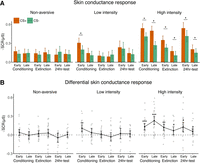
Square-root transformed SCR. For trial-by-trial SCR data, see Supplemental Figure S2. Bars and error bars denote mean and 95% CI from planned comparison. (A) SCR to both CS+ and CS− remained high in the HI group. LI showed higher SCR during early conditioning and test than NA group. (B) HI group maintained differential arousal (CS+–CS− > 0) during all three phases. LI group only showed differential arousal during early acquisition, while NA group never showed discrimination. Dashed line indicates no difference. Gray points denote trial-averaged data of individual subjects. Black lines connect the mean of early and late time points of each phase to demonstrate the trend. (*) P < 0.05, (**) P < 0.01, (***) P < 0.001.
Extinction
Results from extinction are separated by early (first half of trials, 12 trials of each CS) and late (last four trials of each CS, 12 trials of each CS) phases to account for the decrease in physiological arousal over the course of extinction. Repeated-measures ANOVA of extinction SCRs showed a main effect of Group (F(2,65) = 5.32, η2 G = 0.09, P = 0.007), CS-type (F(1,65) = 10.14, η2 G = 0.01, P = 0.002), phase (F(1,65) = 6.69, η2 G = 0.02, P = 0.01), a Group*CS-type interaction (F(2,65) = 6.87, η2 G = 0.02, P = 0.002) and a Group*phase interaction (F(2,65) = 10.07, η2 G = 0.06, P < 0.001). Physiological arousal to the CS+ and CS− was low and undifferentiated in the first half of extinction (early phase) in both the NA and the LI group (both P’s > 0.3), indicating the decline in arousal observed in late acquisition in these groups persisted into extinction. However, the HI group maintained elevated and differentiated SCRs between the CS+ and CS− during the early phase of extinction (t65 = 5, P < 0.001, d = 0.67, CI95 = [0.07, 0.17]). While arousal diminished over the course of extinction, this group maintained elevated SCRs to the CS+ versus the CS− by the late trials of extinction (t65 = 2.18, P = 0.03, d = 0.39, CI95 = [0.01, 0.13]), indicating resistance to full extinction following high-intensity fear conditioning.
24h recovery test
Results from the recovery test on Day 2 were separated by early (first four trials of each CS) and late (last eight trials of each CS) phases to account for the early recovery of CRs before re-extinction given the absence of the US. Repeated-measures ANOVA of recovery test SCRs showed a main effect of Group (F(2,63) = 9.91, η2 G = 0.17, P < 0.001), CS-type (F(1,63) = 5.38, η2 G = 0.006, P = 0.02), phase (F(1,63) = 38.17, η2 G = 0.11, P < 0.001), a Group*CS-type interaction (F(2,63) = 6.71, η2 G = 0.02, P = 0.002) and a Group*phase interaction (F(2,63) = 16.66, η2 G = 0.10, P < 0.001). The NA and LI groups did not show evidence of recovery in the early trials (first four trials of each CS), as assessed through differences in arousal between the CS+ and CS− on Day 2. However, the HI group showed heightened arousal on CS+ versus CS− trials throughout the recovery test, including early (t63 = 3.38, P = 0.0012, d = 0.44, CI95 = [0.05, 0.20]) and late trials (t63 = 2.66, P = 0.0099, d = 0.3, CI95 = [0.01, 0.10]).
To get a more comprehensive estimate of recovery (i.e., spontaneous recovery, extinction retention/recall), we adopted a multiverse approach toward quantifying recovery of SCRs based on individual participants' arousal revealed at different phases from Day 1 (Lonsdorf et al. 2019). Results are presented in Figure 3. We used four different methods (see Table 1 below for a direct comparison of these methods) to derive an extinction retention index (ERI), described by Lonsdorf et al. (2019), that have been used in prior studies measuring extinction retention in humans (see Table 1 below for a direct comparison of their formulas). The rationale for taking this multiverse approach is to provide a more complete view of whether the recovery of extinguished CRs is commensurate with the magnitude of CRs evoked on Day 1.
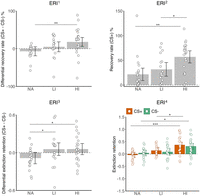
Results of four extinction recall indexes. (NA) Nonaversive group, (LI) low-intensity group, and (HI) high-intensity group. Circles denote trial-averaged data over individuals. Bars and error bars denote mean and 95% CI from planned comparison. Dashed line indicates 0. (*) P < 0.05, (**) P < 0.01, (***) P < 0.001.
ERI (extinction retention index) definitions
ERI1 involved calculating a differential index using the first four CS+ and CS− trials during the 24 h recovery test and correcting for acquisition as the maximum differential SCR between paired (i.e., corresponding in trial order) CS+ and CS− trials from acquisition. There was a main effect of intensity on recovery (F(2, 61) = 4.77, η2 G = 0.14, P = 0.01). The HI group demonstrated higher differential recovery than the NA group (t(61) = 3.08, P = 0.003, CI95 = [8.24, 41.68], d = 0.9). However, there was no difference between HI and LI, or LI and NA groups (P's > 0.12, see Supplemental Tables S4–S9 for full extinction recall results breakdown).
ERI2 involved a nondifferential index as the mean of the first four CS+ during the recovery test, normalized over the largest SCR to CS+ during acquisition. There was a main effect of intensity on recovery (F(2, 62) = 5.67, η2 G = 0.15, P = 0.005). Planned comparisons showed the HI exhibited significantly higher recovery than the LI group (t(62) = −2.43, P = 0.02, CI95 = [−46.02, −4.52], d = −0.89) and the NA group (t(62) = 3.2, P = 0.002, CI95 = [11.58, 50.06], d = 0.85). There was no difference in recovery between the LI and NA groups (P = 0.59).
ERI3 involved subtracting the differential SCR of the first four CSs in test from the differential SCR of last four CSs in extinction. There was a main effect of intensity on recovery (F(2,61) = 3.78, η2 G = 0.11, P = 0.03). The HI group was not different from the LI group (P = 0.99), but both LI and HI showed higher recovery than the NA group (LI: t(61) = 2.27, P = 0.03, CI95 = [0.02, 0.28], d = 0.66, HI: t(61) = 2.43, P = 0.02, CI95 = [0.03, 0.28], d = 0.76)
ERI4 involved subtracting SCRs of the first CS trial in the recovery test from the last CS trial in extinction, separately for CS+ and CS−. This analysis showed a main effect of intensity (F(2,64) = 8.32, P < 0.001, η2 G = 0.16), but no effect of CS-type or CS-intensity interaction (all P’s > 0.2). Planned comparison showed the HI group expressed more recovery than the LI group to CS+ (t(64) = 2.31, P = 0.02, CI95 = [0.04, 0.59], d = 0.69), and trending difference in CS− (t(64) = 1.9, P = 0.06, CI95 = [−0.01, 0.60], d = 0.53). The HI group also expressed more recovery than NA for both CS+ (t(64) = 4.28, P < 0.001, CI95 = [0.23, 0.78], d = 1.2) and CS− (t(64) = 2.62, P = 0.01, CI95 = [0.09, 0.65], d = 0.81).
US expectancy ratings
Conditioning
Participants responded on each trial whether or not they expected the US using a two-alternative forced-choice response (Yes or No). A multilevel Bayesian logistic regression was fit to each encoding context to estimate the probability of selecting “yes,” with subject as random effect, and CS-type, phase and group as fixed effect. Significance was determined by comparing the 95% highest posterior density interval (HDI) of the distribution with 0. If HDI does not include zero, then we conclude the coefficient is significant. The coefficients were reported in the format of median (95% HDI). Summary statistics of selecting “yes” were reported as mean ± standard error.
Mean US expectancy ratings in late conditioning confirmed successful acquisition during late conditioning (CS+: NA: 0.67 ± 0.04, LI: 0.66 ± 0.04, HI: 0.62 ± 0.04; CS−: NA: 0.03 ± 0.01, LI: 0 ± 0, HI: 0.05 ± 0.02). The LI group exhibited more discrimination compared to the HI group in early (β = −1.14 [−1.85, −0.43]) and late (β = 8.03 [−18.65, −2.06]) conditioning. In addition, both HI (early: β = 0.88 [0.16, 1.58], late: β = 7.85 [1.48, 18.08]), and NA (late: β = 7.60 [1.41, 17.91]) groups had higher US expectancy to CS− than LI groups. There was no difference between groups regarding expectancy to CS+.
Extinction
At late extinction, US expectancy to CS+ decreased (NA: 0.18 ± 0.07, LI: 0.14 ± 0.06, HI: 0.13 ± 0.05). LI (β = 0.99 [−0.05, 2.11]) and HI (β = 1.06 [−0.06, 2.25]) group showed no CS+ versus CS− discrimination, suggesting full extinction of expectancy, while the NA group continued to show discrimination (β = 2.81 [1.36, 4.70]). There was no difference between groups regarding expectancy to CS+ or CS− at late extinction (all HDI includes 0, see Supplemental Tables S10–S12 for full expectancy results breakdown and Supplemental Fig. S3).
24 h extinction recall
All groups demonstrated some recovery of US expectancy to CS+ in early extinction recall (NA: 0.3 ± 0.04, LI: 0.43 ± 0.06, HI: 0.44 ± 0.07) and discriminatory expectancy (NA: β = 1.32 [0.55, 2.16], LI: β = 4.97 [3.12, 7.82], HI: 2.92 [1.98, 3.98]). During both early and late phases, the HI (β = 1.62 [0.37, 2.91]) and LI (β = 3.65 [1.35, 6.35]) groups showed more discriminatory expectancy (CS+–CS−) compared to the NA group. The LI group also had a lower expectancy to CS− in early recall compared to the NA group (β = −3.01 [−5.81, −0.79]).
Episodic memory
Recognition memory
Following the extinction recall test, the shock electrodes were removed (for the LI and HI groups) and participants completed a surprise recognition memory test for the CSs encoded in each phase the previous day. We calculated corrected recognition as the proportion of high-confidence hits minus high-confidence false alarms. Results from the recognition memory test are shown in Figure 4.
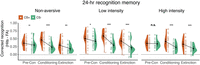
24 h corrected recognition memory (high-confidence hits minus high-confidence false alarms). Retroactive enhancement (recognition for CS+–CS− > 0 for Pre-Con) was present in LI and trending in NA, but absent in HI group. All groups showed selective enhancement for stimuli encoded during conditioning and extinction. Circle and error bars denote mean and 95% CI from planned comparison. Points denote trial-averaged data of individual participants. (*) P < 0.05, (**) P < 0.01, (***) P < 0.001, (∼) P = 0.086, (n.s.) P < 0.05.
Repeated-measures ANOVA showed a main effect of CS-type (F(1,69) = 74.74, η2 G = 0.18, P < 0.001), phase (F(1.89,130.36) = 28.98, η2 G = 0.08, P < 0.001), and Group (F(2,69) = 5.79, η2 G = 0.074, P = 0.005), and a Phase*CS-type interaction (F(1.81,124.6) = 29.88, η2 G = 0.05, P < 0.001). Each group showed enhanced memory for the CS+ versus CS− exemplars encoded during conditioning: NA: t(69) = 5.81, P < 0.001, CI95 = [0.15, 0.31], d = 1.55; LI: t(69) = 7.23, P < 0.001, CI95 = [0.22, 0.38], d = 1.69; HI: t(69) = 4.48, P < 0.001, CI95 = [0.10, 0.27], d = 1.09. Thus, regardless of the intensity of the US, there was selectively enhanced memory for the CS+ items encoded during the conditioning phase, replicating prior studies using moderately aversive electrical shock USs (e.g., Dunsmoor et al. 2012). Interestingly, this selective memory advantage for the CS+ versus the CS− extended into extinction for each group: NA: t(69) = 3.26, P = 0.002, CI95 = [0.05, 0.19], d = 0.8; LI: t(69) = 5.79, P < 0.001, CI95 = [0.14, 0.29], d = 1.14; HI: t(69) = 3.71, P < 0.001, CI95 = [0.07, 0.22]. Finally, we observed a selective retroactive memory enhancement for the CS+ versus CS− related exemplars encoded prior to conditioning in the LI group: t(69) = 2.37, P = 0.02, CI95 = [0.01, 0.16], d = 0.42). This retroactive memory enhancement was absent in the HI group (t(69) = 0.44, P = 0.66, CI95 = [−0.06, 0.09], d = 0.12), but was trending in the NA group (t(69) = 1.74, P = 0.086, CI95 = [−0.01, 0.13], d = 0.38).
Between-groups planned comparisons showed better corrected recognition in the LI group compared to the HI group for CS+ items encoded during preconditioning (t(69) = 2.99, P = 0.004, CI95 = [0.05, 0.25], d = 0.82), conditioning (t(69) = 3.29, P = 0.002, CI95 = [0.07, 0.28], d = 0.92), and trending during extinction (t(69) = 1.96, P = 0.054, CI95 = [–0.002, 0.21], d = 0.58). Memory for the CS+ was greater in the LI compared to the NA group during preconditioning (t(69) = 2.8, P = 0.007, CI95 = [0.04, 0.24], d = 0.75), conditioning (t(69) = 2.29, P = 0.03, CI95 = [0.02, 0.22], d = 0.68), and extinction (t(69) = 2.44, P = 0.02, CI95 = [0.02, 0.23], d = 0.7). There was no difference in memory for the CS+ or CS− between the NA and HI groups (all P’s > 0.2, see Supplemental Text S2 and Supplemental Tables S13–S16 for full recognition memory results). Lastly, there were no differences in memory for the CS− between groups in each phase (all P’s > 0.1), with the exception that the LI group had better corrected recognition for CS− exemplars encoded during preconditioning than the NA group, t(69) = 2.37, P = 0.02, CI95 = [0.02, 0.21], d = 0.62).
Source memory
Following the recognition memory test, participants were asked to make temporal source memory judgments for when each item encoded on Day 1 was viewed: three-alternative forced-choice either before, during, or after acquisition (see Methods for further details). A multilevel Bayesian regression was run to estimate the probability of attributing an item as encoded in each temporal context, with subject as random effect, and encoding context, CS-type, and group as fixed effect. Significance was determined by comparing the 95% HDI of the outcome distribution with 1/3 (i.e., randomly selecting one of the three contexts). If the HDI of a temporal context is above 1/3, then we conclude such context is reliably chosen by the participants.
In all groups, participants attributed CS+ related exemplars to the conditioning phase regardless of when the CS+’s were actually encoded (all HDI > 1/3, Fig. 5; see Supplemental Table S17 for full source memory and contrast results), replicating previous findings (Hennings et al. 2021). In contrast, only LI group was above chance at correctly attributing the CS− encoded during extinction to the extinction phase, but were at chance for attributing CS− related exemplars encoded during preconditioning or acquisition to any particular phase. There were no differences between groups in conditioning-source bias. These results suggest a strong bias in attributing the CS+ category to the most salient phase of the experiment (i.e., conditioning), regardless of the intensity of the outcome used during conditioning.
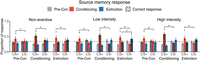
All three groups demonstrated a bias to endorse a CS+ as seen during conditioning, regardless of when it was actually encoded. Correct source memory response is marked by hatched bars and black outlines. Responses are shown as the proportion of items for each CS type and encoded in each temporal context (1.0 = 24 items). Bars and error bars denote the average proportion of item attributed to each context and 95% HDI of the posterior distribution of probability. Dashed line indicates chance level (1/3). (*) 95% HDI is above 1/3.
Association between selective memory enhancements and source memory bias
Prior findings using this category conditioning paradigm showed that individual participants’ selective (CS+ > CS−) recognition enhancement is correlated with source memory bias to endorse more CS+ than CS− items as having been encoded during the conditioning phase, regardless of when they were actually encoded (Hennings et al. 2021). Here, we investigated whether this relationship was affected by the intensity of the US used during conditioning. We ran a multiple regression, with group, differential source memory response, phase, and all possible interactions between these three terms as predictors, and differential corrected recognition as outcome (estimated marginal means of the coefficients were reported in Fig. 6A,B).
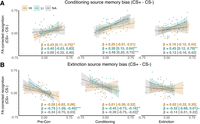
Correlation between differential source memory and differential corrected recognition. (HI) High intensity, (LI) low intensity, (NA) nonaversive. (A) Differential conditioning source memory bias is positively related to differential corrected recognition in selected phases: HI: Pre-Con, LI: conditioning and extinction, NA: conditioning. (B) Differential extinction source memory bias is negatively related to corrected recognition in selected phases: LI: Pre-Con and conditioning, NA: conditioning. Points denote trial-averaged subject data. A simple linear regression was fit within each phase to demonstrate trend. Shaded region denotes 95% CI of the simple regression. Estimated marginal means of coefficients from the model are presented alongside the figure. (*) P < 0.05, (**) P < 0.01, (***) P < 0.001, (∼) P = 0.056.
In the LI group, participants’ biased source judgment to the conditioning context (the bias to attribute more CS+ than CS− to the conditioning phase) was positively related to selective enhancement for items encoded in conditioning (t(198) = 3.14, P = 0.002) and extinction (t(198) = 2.64, P = 0.009). This association was present in the NA group for items encoded during conditioning (t(198) = 3.45, P < 0.001), and in the HI group for items encoded during preconditioning (t(198) = 2.67, P = 0.008).
In the LI group, an extinction source memory bias (the bias to attribute more CS+ than CS− to the extinction phase) was negatively related to selective enhancement in LI for items encoded in preconditioning (t(198) = −4.27, P < 0.001), conditioning (t(198) = −3.07, P = 0.003) and marginally significant in extinction (t(198) = −1.92, P = 0.056). In the NA group, this negative relationship was present for items encoded during conditioning (t(198) = −2.12, P = 0.04), but there was no relationship between extinction source judgments and differential recognition memory for the HI group (all P’s > 0.1, see Supplemental Tables S18 and S19 for full coefficients).
The interaction of source and item memory
We next compared the association between source judgments and recognition memory for individual items. In other words, is item memory affected by participants’ endorsement of a CS+ item as having been encoded during the most salient phase of the experiment, regardless of source memory accuracy, as shown previously (Hennings et al. 2021).
A multilevel Bayesian logistic regression was fit in each encoding context to estimate the probability of high-confidence hit, with subject as random effect, and source memory response, CS-type and group as fixed effect. If the HDI is above 0, then we conclude subjects reliably recognized the item (participants chose definitely old); if it's below 0, we conclude the item is forgotten (participants preferred the three other options). Results are depicted in Figure 7.
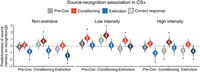
Source memory-recognition association for CS+ differs between groups. Only in LI group, associating a CS+ with conditioning led to high-confidence hits. Correct response was marked by hatched bars and black outlines. Dashed line indicates no association. Bayesian multilevel logistic regression was run for each phase. Violins depict posterior distribution of coefficients from 8000 Monte Carlo Markov Chain draws. White bars denote median and 95% HDI from the posterior distribution. (*) 95% HDI excludes 0.
We first assessed if attributing a CS+-related item to the conditioning context predicted that the item was remembered in the recognition memory test (95% HDI > 0). In the LI group, attributing a CS+ to the conditioning phase predicted recognition independent of when the CS+-related item was actually encoded: CS+ preconditioning: β = 1.19 [0.75, 1.62]; conditioning: β = 1.63 [1.22, 2.06]; extinction: β = 0.86 [0.40, 1.29]. In the HI and NA groups, this relationship between source and item memory was only observed for CS+ items encoded during conditioning that were successfully attributed to the conditioning phase.
We next examined whether attributing a CS+ to the extinction context predicted that the item was forgotten in the recognition memory test (95% HDI < 0). In the LI group, attributing a CS+ (encoded at any phase) to the extinction temporal context was not associated with forgetting regardless. However, in the HI and NA groups, attributing a CS+ to the extinction context led to forgetting for items encoded during preconditioning and extinction, except for CS+ items encoded during conditioning (see Supplemental Table S19 for coefficients from three phases).
Discussion
We parametrically varied the intensity of the US during Pavlovian conditioning to investigate the effects on conditioned learning, extinction, 24 h recovery, as well as item and source memory for the conditioned stimuli. In agreement with animal learning protocols (Annau and Kamin 1961; Boroczi et al. 1964; Davis and Astrachan 1978; Shors and Servatius 1997; Morris and Bouton 2006; Ghosh and Chattarji 2015), and popular associative learning models (Rescorla and Wagner 1972), a high-intensity US produced greater initial acquisition that resisted extinction and was more prone to postextinction recovery of CRs than a low-intensity or nonaversive US. However, while measures of conditioned learning scaled linearly with US intensity, recognition memory produced an inverted U-shape with better 24 h episodic memory for CS+ exemplars in a group that received a low-intensity US (depicted in Fig. 8A,B).
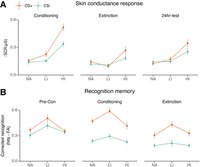
Effect of US intensity on SCR and corrected recognition. Figures representing the (A) linear and (B) inverted U-shaped relationship between US intensity and the arousal/selected memory enhancement. In (A), points denote participant average SCR during three phases. In (B), points denote participant average corrected recognition (hits − FA) for images encoded during three phases. Error bar denotes 95% CI from the data. Lines connect the mean to demonstrate trend.
Human conditioning research investigating the effect of US intensity is extremely limited. A prior study (Dunsmoor et al. 2017) revealed similar levels of acquisition of conditioned SCRs using a low- and high-intensity US paired with an auditory tone CS, but more widespread generalization to tones of varying frequencies in a group who received a high-intensity US. It is therefore notable that the present study showed greater acquisition of conditioned SCRs using a high-intensity US. Here, we used a trial-unique category-conditioning protocol, in which acquisition is itself a form of generalization (as the exact CS never repeats), whereby participants infer threat probability based on the concept underlying the CS–US association. In this way, the generalization produced by a high-intensity US, seen in prior studies (Laxmi et al. 2003; Baldi et al. 2004; Ghosh and Chattarji 2015; Dunsmoor et al. 2017), may be involved in the acquisition of category-level conditioned fear seen here. A high-intensity US also led to greater resistance to extinction, as participants failed to reach floor and retained differentiated SCRs between the CS+ and CS− even by late extinction trials. This indicates that extinction in human conditioning is sensitive to the strength of the US used during acquisition.
We used multiple approaches to quantify postextinction recovery of CRs, as there is no consensus on the best method to assess extinction retention in human conditioning research (Lonsdorf et al. 2019). These results showed that recovery is proportional to the original strength of acquisition in humans. Assessing recovery as a function of arousal by the end of extinction produced less clear results between the high- versus low-intensity group, likely because extinction did not reach floor in the high-intensity group despite numerous (24) unpaired CS+ trials. Differential indices of extinction retention (controlling for responses to the CS− across days) are also challenging to directly compare across groups, as there was heightened arousal to the CS− in the high-intensity group during acquisition likely driven by some amount of generalization or nonassociative sensitization.
While all three groups showed selective recognition memory for CS+ versus CS− items encoded during conditioning and extinction, participants’ memory for the CS+ exemplars was superior in the low-intensity group. Interestingly, there were minimal differences in recognition memory for the CS− exemplars between groups across the three phases of encoding on Day 1, suggesting this inverted U-shaped function was specific to the CS+. These findings are noteworthy for several reasons.
First, one hypothesis could be that episodic memory would scale linearly with US intensity in a similar fashion as measures of conditioned arousal, leading to a greater memory for exemplars associated with a high-intensity US. Indeed, most emotional memory studies show memory advantages for memoranda of negative-valence and high-arousal, compared to neutral memoranda. Better memory in the low versus high-intensity group might therefore seem surprising. However, there is evidence of inverted U-shaped patterns in episodic memory for stimuli associated with higher probability shocks (Bauch et al. 2014) or higher reward magnitude (Cheng et al. 2020). It is possible that a high-intensity US produced “too much arousal” that led to relatively less optimal memory than a milder low-intensity US, possibly through interfering with encoding of neutral stimuli associated with the high-intensity US.
We did not a priori hypothesize that a nonaversive tone US would benefit 24 h memory for CS+’s encoded during or after conditioning. Yet, nonaversive conditioning led to selective memory enhancements for the CS+, including exemplars encoded after conditioning that were never paired with a tone, and a trend toward significance for CS+ exemplars encoded before (retroactive) conditioning. This finding may be related to findings showing that simple actions (like a Go-response; Yebra et al. 2019) or the simple act of choosing (Murty et al. 2019) is sufficient to enhance episodic memory. In this way, overt trial-by-trial expectancy ratings could be sufficient to engage noradrenergic mechanisms to facilitate selective memory even for a nonaversive US. Future studies could attempt to replicate these effects without the use of trial-by-trial ratings to tease out the role of subjective expectancy ratings from the outcome itself.
Finally, only in the low-intensity group was there evidence of a selective retroactive memory enhancement, seen in prior studies using this protocol (Dunsmoor et al. 2015b; Hennings et al. 2021). In this way, it is worth noting that the low-intensity US more closely approximates the typical US we have used in our prior studies showing this retroactive memory enhancement (albeit calibrated here to a much lower subjective intensity level) than the multimodal US (shock + static noise) used here as the high-intensity US. It is notable that we did not observe a retroactive enhancement in the high-intensity group. However, this result may fit with recent findings that high-intensity acute stress can impair behavioral tagging in rats under certain learning situations (Lopes da Cunha et al. 2022); although, this study showed that administering stress prior to training diminished memory, while stress after learning improved memory. The lack of differential retroactive memory in the high-intensity group may simply be owed to overall weaker CS+ item memory in this group relative to the low-intensity group.
Although this investigation did not collect neural or hormonal measures, we briefly speculate on mechanisms underlying the inverted U-shaped relationship between US intensity and episodic memory. One possibility is that a high-intensity outcome more effectively serves as a stressor than the US commonly used in human fear conditioning. The impact of stress on memory is complex (Rodrigues et al. 2009; Roozendaal et al. 2009), but prior studies have found U-shaped effects on hippocampus-dependent memory with greater stressor intensity (Salehi et al. 2010). Both low and elevated glucocorticoid levels have been associated with weaker memory performance (Andreano and Cahill 2006) as well as more generalization (dos Santos Corrêa et al. 2021).
One question was whether US intensity affects item and source (i.e., temporal context) memory differently, as prior emotional memory research suggests a tradeoff between item and associative memory (Rimmele et al. 2011; Bisby et al. 2016). Across the three groups, the CS+ was more likely to be attributed to the moment of conditioning regardless of when it was actually encoded; indeed, even conditioning that involved a nonaversive outcome produced a source memory bias to endorse items as having been encoded when participants experienced the tone. Interestingly, only in the low-intensity group, memory for the CS+ exemplars encoded across all three phases of the experiment was predicted by the attribution of the item to the conditioning temporal context, which replicates previous findings using a moderately aversive US (Hennings et al. 2021). These findings raise new questions on whether emotional intensity, per se, impacts the relationship between item and associative memory, which prior studies have shown to be differentially modulated by emotion (Yonelinas and Ritchey 2015; Bisby and Burgess 2017).
An overarching question concerns the nature of what constitutes high or low intensity in human laboratory protocols. To a large degree, intensity is inherently subjective. Anticipating an event of any magnitude could modulate attention, and may be sufficient to produce some elevation in arousal and effects on memory. While human research cannot ethically reproduce intense emotional distress akin to real-world situations, or analogous intensity levels used in animal research, parametrically increasing threat intensity seems to lead to changes in behavior consistent with animal research on conditioning and hippocampus-dependent memory (Sandi and Pinelo-Nava 2007). Importantly, individual differences in how humans perceive or interpret a negative life event could be an important determinant of how fear is later expressed, generalized, and remembered (van Wingen et al. 2011).
Some limitations merit consideration. First, we did not include an immediate memory test, thus we cannot confirm if emotional memory was enhanced immediately across all three groups, but was relatively better maintained over a delay in the low-intensity US group. Second, the source memory task only incorporated old items, thus future studies could consider adding new items (foils) to investigate false memory for having seen conceptually related items at the moment of fear conditioning. This may reveal interesting effects of emotional intensity on false temporal memory. Lastly, we used a two-alternative forced-choice measure of US expectancy, which limits the ability to see more nuanced effects. A continuous measure may have revealed more subtle differentiation in US expectancy across groups during different phases of learning and test.
To conclude, we demonstrated in humans that increasing threat intensity produces dissociable results on conditioned learning and episodic memory. Such processes could be adaptive, insofar as it is important to quickly learn, generalize, and retain conditioned behavior when a potential threat is intense (better safe than sorry). While explicitly remembering an emotional event also serves an adaptive function, remembering the precise details of an emotionally intense event may be less critical when facilitating rapid defensive responses that prioritize threat over safety.
Materials and Methods
Power analysis
Sample size was calculated using results from our prior study on shock intensity in human fear conditioning (Dunsmoor et al. 2017). The effect size η2 G of the interaction between CS-type and shock intensity was 0.08. It was transformed to Cohen's f by the formula f =  (Cohen 1988). Power analysis found that n = 25 per group yielded 98% power in a two-group, two-measurement, repeated-measures within-between design (software G*power
3.1, Faul et al. 2009).
(Cohen 1988). Power analysis found that n = 25 per group yielded 98% power in a two-group, two-measurement, repeated-measures within-between design (software G*power
3.1, Faul et al. 2009).
Participants
This experiment was approved by the Institutional Review Board at the University of Texas at Austin (IRB #: STUDY00005547). Participants were from the local Austin, TX community and undergraduate UT Austin students who participated for payment or fulfillment of an introductory psychology class. All participants provided informed consent. A total of 78 subjects were recruited and completed the 2-day task. Fifty-two subjects were randomly assigned to the high-intensity or low-intensity group. An additional 26 subjects were recruited for the NA group. Inclusion criteria were no current or prior diagnosis of mental or neurological disorders (self-reported). One subject was excluded prior to analysis due to equipment failure. One participant was excluded from all analyses due to extremely poor memory performance (defined as high-confidence hits less than high-confidence false alarm); one participant was excluded for not following task instructions for an extended period of time; and two participants were excluded for not learning the CS-shock contingencies by the late phase of fear conditioning [mean p(selecting yes) > 0.5 for CS−, cross-checked with post-survey where they indicated they never learned CS–US contingencies]. After exclusions, the final sample was N = 24 in the LI (mean age: 20.3 ± 2.97, 18–30, 17 F), N = 23 in the HI (20.5 ± 3.63, 18–31, 16 F), and N = 25 (20.4 ± 3.34, 18–33, 18F) in the NA groups. We additionally removed four subjects from the SCR analysis only from the LI group, as these participants had no measurable electrodermal activity throughout the entire conditioning phase (exclusion criteria are detailed in Physiological Recordings and Analysis section).
Conditioned and US
The conditioned stimuli were the same set used in other studies from our lab (e.g., Hennings et al. 2020). These included 144 trial-unique pictures of animals and tools on a white background collected from http://www.lifeonwhite.com or publicly available resources on the internet. Each CS was a basic-level exemplar with a unique name (e.g., there were not two different pictures of a dog). The order of the stimuli was pseudorandomized such that no more than three pictures from the same semantic category appeared in a row. The US for the low-intensity group was a 50 msec electrical shock delivered to the right wrist by a constant voltage stimulator (STM200) from BIOPAC. For the high-intensity group, the shock was delivered simultaneously with an unpleasant 93dB, 500 msec white noise, delivered via stereo headphones (Panasonic, RP-HT161) and calibrated by a sound level meter (note the sound and shock began at the same time, but the sound persisted for a longer duration than the shock). The US for the nonaversive group was a ∼ 50 dB, 500 msec 440 Hz tone, delivered via computer speaker, which was located ∼ 15 cm to the left of the subject. All tasks were coded and presented by Psychopy (version 2022.2.1, Peirce et al. 2019).
Procedures
The experiment occurred in a dimly lit sound attenuated testing room with the overhead lights turned off. A white-noise machine was playing in the background throughout the experiment. CS duration throughout all phases of preconditioning, conditioning, extinction, and extinction recall was 5 sec with a 7–9 sec waiting period between trials with a fixation cross on a blank screen.
Day 1: Preconditioning
During preconditioning, participants categorized each image as an animal or tool (two-alternative forced choice). To ensure subjects could not anticipate any shocks (in the HI and LI groups), shock wires were not connected to the electrodes. Both the high- and low-intensity groups wore headphones. There were a total of 48 trials during preconditioning (24 animals and 24 tools).
Day 1: Shock calibration
Shock calibration was conducted immediately following preconditioning and just prior to conditioning, and took < 5 min. We used a modified pain intensity scale (0–9) to individually calibrate the intensity level between groups. Participants in LI were told the shock should be “mild and not unpleasant, it should feel like 1–2,” while subjects in HI were told the shocks should be “highly annoying but not highly painful, it should feel like 7–8.” For the NA group, to best equate the procedure to that of HI and LI groups and to minimize the surprise of the tone, we played the tone five times prior to the conditioning session. The tone was meant to be at a low volume, but loud enough to be heard over the background white-noise machine. See Supplemental Text S1 and Figure S1 for manipulation check results.
Day 1: Conditioning
During fear conditioning, 12/24 CS+ trials coterminated with the US, while 24 CS− trials were unpaired with the US. Participants rated US expectancy (Yes/No). The CS+ was counterbalanced between participants as either animals or tools.
Day 1: Extinction
During extinction, participants viewed 48 trials (24 animals, 24 tools) without any US delivery. Participants continued to rate US expectancy. After extinction, participants in the LI and HI groups completed surveys about how many shocks they received, any noticeable pattern between the pictures and the shock, retrospective ratings of shock intensity, and their affect (positive and negative) when anticipating the shock.
Day 2: Extinction recall
After ∼24 h, participants returned for a test of extinction recall. Participants wore headphones and shock and SCR electrodes were reattached if they were in HI/LI group, and only SCR electrodes were reattached if they were in the NA group. On Day 2, the shock was not recalibrated, and participants did not receive any shocks. They were purposefully given the ambiguous instruction that “the task will continue like the day before.” The first trial on Day 2 was always a CS− trial that was used to capture the initial orienting response and was discarded from analysis (Kroes et al. 2017). Participants continued to rate shock expectancy.
Day 2: Recognition memory
After the extinction-recall test, all electrodes were removed, and participants completed a self-paced surprise memory recognition task. The task contained all 144 stimuli from Day 1, and 96 (48 animals, 48 tools) new images of basic-level category exemplars. For each trial, participants judged each stimulus as “definitely old,” “maybe old,” “maybe new,” and “definitely new.”
Day 2: Source memory
Lastly, participants made a temporal source memory judgment for each CS they had seen the previous day; that is, whether the item was seen during preconditioning, fear conditioning, or extinction. The encoding phases were renamed to Phases 1, 2, and 3, and participants were given a refresher about each phase of the experiment in order to make these temporal source memory judgements (e.g., Phase 1 was when you were classifying images as animals or tools). See Hennings et al. (2021) for further details on the source memory task.
Analysis
All analyses were conducted in R (R Core Team 2024). The SCR and recognition memory data were first submitted to repeated measures of analysis of variance (ANOVA) using package “afex” (Singmann et al. 2024), followed by planned comparisons using estimated marginal means analysis via the “emmeans” (Lenth et al. 2024) package. ANOVA effect size was reported as generalized η2 (Bakeman 2005). Planned comparison effect size was calculated using Cohen's d (Cohen 1988) from t-tests via “rstatix” (Kassambara 2023) package. Greenhouse–Geisser correction (Greenhouse and Geisser 1959) was used when assumptions of sphericity were violated. P-values are reported as two-tailed, with a 95% confidence interval (CI).
We applied Bayesian multilevel regression to estimate shock expectancy, source memory, and source-memory-recognition association, to account for these binary/categorical data. “Rstanarm” (Goodrich et al. 2024) and “brms” (Bürkner 2017) packages were used to perform logistic regression and multinomial regression, respectively. In Bayesian inference, instead of gaining a single estimate, the whole distribution of the variable is estimated by making draws from the posterior distribution of the variable. This procedure was carried out by the Hamiltonian Monte Carlo method (Betancourt and Girolami 2013). We used default weakly informative priors for each model. To improve the robustness of the samples, we performed multiple independent sampling processes (“chains”). Four chains with 4000 iterations each (2000 discarded as warm-up) were used to construct the posterior distribution. Chain convergence was decided by Rhat (between- and within-chain difference) between 1 and 1.01 (Vehtari et al. 2021) and effective sample size (estimated number of independent draws) bigger than 900 (Gelman and Rubin 1992). Posterior draws were reorganized by package “emmeans” to create marginal distribution of variables for planned comparisons. For each coefficient, we report the median and 95% highest density interval (HDI) of its posterior distribution. This interval defines the values of the coefficients that are most likely to occur given the data.
Physiological recordings and analysis
SCR was acquired using pregelled snap electrodes (BIOPAC EL509) to the hypothenar eminence of the left palmar surface, recorded at 200 Hz using the BIOPAC MP150 System. SCR was processed by using Autonomate 2.8 (Green et al. 2014). An SCR was considered related to CS presentation if the trough-to-peak deflection occurred between 0.5 and 5.5 sec after stimuli onset and lasted no longer than 5 sec. SCR was considered related to the US if the trough-to-peak deflection occurred between 0 and 4 sec after shock presentation and lasted no longer than 5 sec. Values below 0.02 µS in the output were coded as 0 (4.6% in CS-related SCR, 3.8% in shock-related SCR). After such processing, four subjects from the LI group were excluded from the SCR analysis due to all-zero response during fear conditioning to all CS and nearly all US (three participants had no SCR to the shock, and one had a response to just half of shocks). As a last step, data were square-root transformed prior to analysis.
Acknowledgments
We thank Rithvik Pakala for support with data collection and participant scheduling, and Samuel Cooper and Alexander Etz for valuable suggestions on statistical analysis. This work was supported by the National Science Foundation Career 1844792 and National Institutes of Health R01 MH122387 to J.E.D. Data and analysis code used in this research are available on the Open Science Framework (doi: https://doi.org/10.17605/OSF.IO/TJUKP).
Footnotes
-
[Supplemental material is available for this article.]
-
Article is online at http://www.learnmem.org/cgi/doi/10.1101/lm.053982.124.
- Received June 3, 2024.
- Accepted September 24, 2024.
This article is distributed exclusively by Cold Spring Harbor Laboratory Press for the first 12 months after the full-issue publication date (see http://learnmem.cshlp.org/site/misc/terms.xhtml). After 12 months, it is available under a Creative Commons License (Attribution-NonCommercial 4.0 International), as described at http://creativecommons.org/licenses/by-nc/4.0/.