The impact of extinction timing on pre-extinction arousal and subsequent return of fear
- 1Department of Clinical Psychology and Psychotherapy, University of Siegen, 57072 Siegen, Germany
- 2Bender Institute of Neuroimaging, Justus Liebig University, 35394 Giessen, Germany
- 3Department of Psychotherapy and Systems Neuroscience, Justus Liebig University, 35394 Giessen, Germany
- 4Center for Mind, Brain, and Behavior (CMBB), University of Marburg, 35032 Marburg, Germany and Justus Liebig University, 35394 Giessen, Germany
- Corresponding author: miriam.kampa{at}psychol.uni-giessen.de
Abstract
Exposure-based therapy is effective in treating anxiety, but a return of fear in the form of relapse is common. Exposure is based on the extinction of Pavlovian fear conditioning. Both animal and human studies point to increased arousal during immediate compared to delayed extinction (>+24 h), which presumably impairs extinction learning and increases the subsequent return of fear. Impaired extinction learning under arousal might interfere with psychotherapeutic interventions. The aim of the present study was to investigate whether arousal before extinction differs between extinction groups and whether arousal before extinction predicts the return of fear in a later (retention) test. As a highlight, both the time between fear acquisition and extinction (immediate vs. delayed) and the time between extinction and test (early vs. late test) were systematically varied. We performed follow-up analyses on data from 103 young, healthy participants to test the above hypotheses. Subjective arousal ratings and physiological arousal measures of sympathetic and hypothalamic pituitary adrenal axis activation (tonic skin conductance and salivary cortisol) were collected. Increased pre-extinction arousal in the immediate extinction group was only confirmed for subjective arousal. In linear regression analyses, none of the arousal measures predicted a significant return of fear in the different experimental groups. Only when we aggregated across the two test groups, tonic skin conductance at the onset of extinction predicted the return of fear in skin conductance responses. The overall results provide little evidence that pre-extinction arousal affects subsequent extinction learning and memory. In terms of clinical relevance, there is no clear evidence that exposure could be improved by reducing subjective or physiological arousal.
Confronting a fearful event, which can range from a mild stressor to a life-threatening situation, can lead to the development of an anxiety disorder. Psychotherapeutic interventions for the treatment of anxiety disorders use exposure-based therapy, in which the patient is confronted with the feared stimulus to build a new safety memory (Vervliet et al. 2013; Craske et al. 2014). Exposure-based therapy, based on the extinction of conditioned Pavlovian fear, is effective in reducing anxiety, but relapse is common (Bouton 2004; Craske et al. 2014). Many researchers have assumed that the timing of extinction is a crucial factor for its success (Maren and Chang 2006; Lonsdorf et al. 2017). It has been hypothesized that pre-extinction arousal influences extinction learning and memory, particularly in immediate extinction which directly follows fear acquisition (Schiller et al. 2008; Maren 2014; Merz et al. 2016). This finding is often explained by the elevated stress level induced by fear acquisition which might interfere with subsequent extinction (Maren 2014, 2022). Memory impairments have also been found after high levels of negative arousal (Zlomuzica et al. 2016). Resistance to extinction under stress can be highly adaptive when still in a dangerous situation; however, it can also interfere with therapeutic interventions such as exposure-based therapy (Maren 2022).
Physiological stress responses can have different effects on learning and memory. They are mediated by a first- and a second-wave stress response (Stockhorst and Antov 2016). The first-wave response involves the release of the neurotransmitters noradrenaline and corticotropin-releasing hormone from the hypothalamus, activation of the sympathetic nervous system, and secretion of adrenaline and noradrenaline from the adrenal medulla (Stockhorst and Antov 2016). The hypothalamic pituitary adrenal axis (Charmandari et al. 2005) releasing cortisol corresponds to the second-wave response. There is conflicting evidence regarding the impact of the first-wave stress response on extinction learning and memory. On the one hand, noradrenergic signaling is needed for successful extinction learning and memory as indicated by lesion and neuropharmacological studies (Stockhorst and Antov 2016). In addition, the first-wave stress response can increase extinction learning and reduce the return of fear (Antov et al. 2015; Meir Drexler et al. 2017). On the other hand, stress-induced noradrenergic signaling in the locus coeruleus can impair extinction learning by activating the amygdala and inhibiting the medial prefrontal cortex (Giustino and Maren 2018; Maren 2022). The medial prefrontal cortex is a critical structure for extinction learning in both animals and humans (Phelps et al. 2004; Kim et al. 2010). Further evidence for the relationship between sympathetic arousal during extinction and the return of fear is provided by studies on the beta-blocker propranolol, which reduces sympathetic fear responses. Two studies found that the subsequent return of fear decreased when propranolol was administered before extinction (Fitzgerald et al. 2015; Kroes et al. 2016), whereas in two other studies, the opposite result occurred and extinction learning and memory were impaired (Do-Monte et al. 2010; Bos et al. 2012). If reducing sympathetic arousal before extinction improves learning and memory, this could be a pharmacological target in the treatment of anxiety (Kroes et al. 2016).
Regarding the second-wave stress response, the stress hormone cortisol facilitates the consolidation of arousing emotional memories, but at the same time impairs memory retrieval (de Quervain et al. 2009). Consequently, the administration of hydrocortisone before delayed extinction facilitated extinction learning and memory by interfering with fear memory retrieval (Merz et al. 2018a), whereas learning during immediate extinction was impaired since fear memory consolidation is enhanced (Merz et al. 2014).
In the following manuscript, we have analyzed arousal data from a recent conditioning and extinction study that has not been processed yet (Kampa et al. 2023). We hypothesized that immediate extinction leads to increased pre-extinction arousal. In the analyses, we used subjective and physiological arousal measures. Tonic skin conductance was assessed as a marker of sympathetic arousal and salivary cortisol as a marker for the hypothalamic pituitary adrenal axis. In a second step, we tested if a higher individual pre-extinction arousal predicted a higher return of fear. In the present study, we systematically examined the impact of different pre-extinction arousal measures on the return of fear while considering the time of extinction and test.
Results
Previous study findings
As reported in Kampa et al. (2023), fear acquisition was successful in both extinction groups indicated by online fear ratings and skin conductance responses (SCR; significant effects of the conditioned stimulus [CS] and trial; CS × trial interaction in online fear ratings). There was no significant effect or interaction with the extinction group. Successful extinction learning was indicated by a trial effect in SCR and online fear ratings as well as a CS effect and a CS × trial interaction in online fear ratings. Again, no significant effect or interaction with the extinction group emerged except a higher initial SCR to the CS+ compared to the CS− in the immediate extinction group. Return of fear was evident in online fear ratings in both extinction groups (CS × trial interaction). In addition, there was a CS effect in online fear ratings and a trial effect in both fear ratings and SCR. There was an effect of the test group on SCR, meaning participants in the early test showed higher responses. Statistical results can be found in the supporting information in Supplemental Table S1.
Subjective arousal
Concerning subjective arousal, repeated measures analyses of variance (ANOVAs) revealed a significant effect of time (F(2,198) = 14.563, P < 0.001, η2 part. = 0.128) and a significant group by time interaction (F(2,198) = 13.394, P < 0.001, η2 part. = 0.119). Figure 1 shows violin plots for the two groups. Post hoc t-tests indicated a higher pre-extinction subjective arousal for the immediate extinction group (t(99) = 4.411, P < 0.001, Cohen's d = 0.878). Subjective arousal significantly decreased from pre-acquisition to pre-extinction in the delayed extinction group (t(48) = −3.405, P < 0.001, Cohen's d = −0.486) and from pre-extinction to pre-test in the immediate extinction group (t(51) = −6.137, P < 0.001, Cohen's d = −0.851).
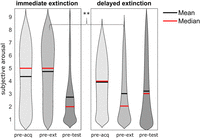
Violin plots for subjective arousal in immediate (n = 52) and delayed extinction (n = 49) revealed a significant time effect and a significant group by time interaction. Participants in the immediate extinction group reported significantly higher subjective arousal before extinction. Subjective arousal significantly decreased from pre-acquisition (pre-acq) to pre-extinction (pre-ext) in the delayed extinction group and from pre-ext to pre-test in the immediate extinction group. (**) P < 0.001. All violin plots were created using the Matlab-function violin.m (Hoffmann 2015).
Tonic skin conductance
For tonic skin conductance, we observed a time effect (F(2,180) = 22.440, P < 0.001, η2 part. = 0.200) implying a decrease from the onset of acquisition to the onset of the test. In rmANOVA there was no group effect (F(1,90) = 0.183, P = 0.670, η2 part. = 0.002) and no group by time interaction (F(2,180) = 2.976, P = 0.054, η2 part. = 0.032). Post hoc t-tests revealed no pre-extinction group differences (t(55) = 1.225, P = 0.224, Cohen's d = −0.256). See the violin plots in Figure 2.
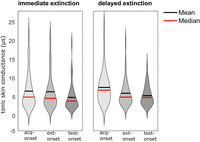
Violin plots for tonic skin conductance in immediate (n = 49) and delayed extinction (n = 43) revealed a significant time effect. Tonic skin conductance decreased from the onset of acquisition (acq-onset) to the onset of the test (test-onset). Pre-extinction tonic skin conductance did not differ between groups.
Salivary cortisol
We found a significant effect of time in salivary cortisol (F(1.375,75.608) = 7.346, P = 0.001, η2 part. = 0.118), meaning salivary cortisol levels decreased from pre-acquisition to post-extinction. There was no group effect (F(1,55) = 1.427, P = 0.237, η2 part. = 0.025) and no group by time interaction (F(2,110) = 0.943, P = 0.393, η2 part. = 0.017). Post hoc t-tests revealed no pre-extinction group differences (t(55) = −0.934, P = 0.354, Cohen's d = −0.247). See the violin plots of the two extinction groups in Figure 3.
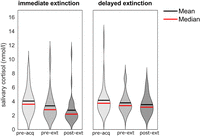
Violin plots for salivary cortisol in immediate (n = 28) and delayed extinction (n = 29) revealed a significant time effect. Salivary cortisol decreased from pre-acquisition (pre-acq) to post-extinction (post-ext). Post hoc t-tests revealed no pre-extinction group differences.
Regression analyses
A central aspect of the study was to investigate whether arousal before or at the onset of extinction predicted the return of fear. Scatter plots for pre-extinction arousal measures and return of fear are given in Figure 4. Regression model results and regression coefficients can be found in Tables 1 and 2. Pre-extinction subjective arousal did not significantly predict the return of fear in online fear ratings in any of the four experimental groups (see Fig. 4A). The linear regressions for return of fear explained <7% of variance (range: <0.001–0.062) and were not significant. Tonic skin conductance at the onset of extinction did not predict the return of fear in SCR in any of the four experimental groups (see Fig. 4B). The explained variance ranged from 0.003 to 0.178. However, when aggregating across the early and late test groups, tonic skin conductance significantly predicted the return of fear in the delayed extinction group only. Pre-extinction salivary cortisol did not predict a return of fear in either immediate or delayed extinction (see Fig. 4C). In post hoc regression analyses, we included CS type in the first test trial as a covariate, as this could have influenced the extent to which fear returned in SCR. The results remained largely unchanged (see Supplemental Tables S3 and S4).
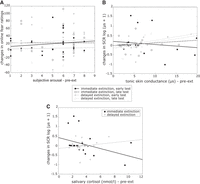
Scatter plots for pre-extinction arousal measures and return of fear. The return of fear corresponds to an increase in CS discrimination (CS+ minus CS−). Pre-extinction subjective arousal did not predict (A) a return of fear in the online fear ratings of either immediate extinction (early test: n = 27, late test: n = 25) or delayed extinction (early test: n = 24, late test: n = 25). (B) There was a trend for tonic skin conductance at the onset of extinction to predict the return of fear in skin conductance responses at delayed extinction (early test: n = 20, late test: n = 18). Tonic skin conductance at the onset of extinction did not predict the return of fear in immediate extinction (early test: n = 24, late test: n = 20). (C) Pre-extinction salivary cortisol did not predict the return of fear in any group (immediate: n = 23, delayed: n = 24).
Regression model results
Regression coefficients
Discussion
The present study systematically examined pre-extinction arousal between immediate and delayed extinction and used individual pre-extinction arousal to predict a subsequent return of fear. In the current data set, we found a return of fear in online fear ratings and MRI but not in SCR in both immediate and delayed extinction (Kampa et al. 2023). This fits well with previous studies (Alvarez et al. 2007; Schiller et al. 2008; Klucken et al. 2016; Redondo et al. 2018) and can be related to the high rate of clinical relapse (Craske et al. 2014; de Jong et al. 2019). To gain a detailed insight into pre-extinction arousal, we included several measures of arousal, namely, ratings of subjective arousal, tonic skin conductance as a marker of sympathetic activation, and salivary cortisol as a marker of hypothalamic pituitary adrenal axis activation. As expected, arousal at the onset of extinction was increased in immediate extinction as indicated by UCS expectancy ratings (Norrholm et al. 2008), but there were no clear effects in the physiological measures. In a series of rat studies, increased freezing was observed as a sign of elevated arousal before immediate extinction (Maren and Chang 2006). In contrast to our findings of nonsignificant pre-extinction differences in physiological measures, several studies in humans including one of ours found elevated skin conductance and startle responses during immediate extinction, implying increased arousal (Golkar and Öhman 2012; Merz et al. 2016; Kampa et al. 2023). However, contrary to the tonic skin conductance as examined here, elevated responses in the aforementioned studies rather point to a differential arousal to the CS+ and thus an increased retrieval of fear memory (Haaker et al. 2014; Scharfenort and Lonsdorf 2016).
As a main finding of regression analyses, none of the pre-extinction arousal measures predicted the return of fear; neither did subjective arousal predict the return of fear in the online fear ratings, nor did tonic skin conductance and salivary cortisol predict the return of fear in SCR. The only significant finding was that when we aggregated across the two test groups, we found a significant relationship in the delayed extinction group, such that tonic skin conductance at the onset of extinction predicted the return of fear in SCR. If this finding could be replicated, a reduction in sympathetic arousal before an exposure session, which is usually delayed, might be a target for improving its efficacy (Kroes et al. 2016).
Regarding the influence of arousal on extinction learning and memory, empirical evidence is mixed. In line with our findings, arousal can lead to impaired learning and memory (Zlomuzica et al. 2016; Giustino and Maren 2018). In contrast to our findings, two empirical studies that directly manipulated arousal before extinction in humans found a lower return of fear in the stress groups (Meir Drexler et al. 2017, 2018), suggesting that arousal during extinction improved extinction memory. Furthermore, theoretical assumptions state that some form of arousal is necessary for exposure-based interventions to be effective (Foa and Kozak 1986). This is supported by a clinical study that found a long-term fear reduction in participants anxious about public speaking when excitatory stimuli were included during exposure (Culver et al. 2012). In conclusion, the inhibitory retrieval model assumes that sustained arousal can enhance extinction learning; also, extinction learning can be effective when occasionally reinforced (Craske et al. 2014, 2022). On the contrary, two other clinical studies reported no beneficial effects of arousal during exposure in spider-phobic adults and anxious children (McCormack et al. 2020; Raeder et al. 2023). An intriguing finding from a recent study on patients with spider phobia even showed effective fear reduction at follow-up with unconscious experimental exposure without sympathetic arousal (Siegel et al. 2022), implying that successful exposure may be possible without arousal. To reconcile the conflicting results, the relationship between pre-extinction arousal and subsequent return of fear might depend on moderating variables, such as level of arousal, consciousness of exposure, awareness of contingencies, as well as individual characteristics such as anxiety sensitivity. Thus, differences in the study results can be partly explained by the fact that arousal was directly manipulated versus only recorded and that healthy participants versus anxious patients were examined.
Limitations
A limitation of the study is the small sample sizes for the regression analyses on salivary cortisol and the subgroups, which results in a low achieved power. Assuming a medium effect size (f2= 0.15) with an α threshold of 0.05, the following picture emerges for the regression analyses. With a sample size of 18–27 participants, the obtained power was between 0.34 and 0.49. When aggregating across the two test groups, the power for tonic skin conductance and arousal ratings increased to 0.64 and 0.78, respectively. A second limitation is that salivary cortisol was only collected in a subsample of 58 participants. Third, return of fear was defined as a difference score which is associated with lower reliability (Trafimow 2015). Reliabilities for online fear ratings and SCR were good to excellent for CS+ and CS− for extinction and test, but reliabilities for difference scores, while excellent for online fear ratings, were only poor to acceptable for SCR.
Another limitation is the relatively low cortisol level in comparison to stress induction or pharmacological studies. Consistent with an earlier study in humans, fear acquisition did not lead to an increase in salivary cortisol (Merz et al. 2013). When comparing the mean cortisol level after fear acquisition in our study (3.70 ± 2.30 nmol/L) with the cortisol levels reached after administration of hydrocortisone (194 ± 178 nmol/L) (Merz et al. 2018a) and a stress induction task (22.5 ± ∼10 nmol/L) (Herhaus and Petrowski 2018), they were low. Another issue to be considered is that cortisol belongs to the second-wave stress response reaching its peak ∼20–30 min after stressor onset (Stockhorst and Antov 2016). Saliva samples were collected ∼16 min after the onset of fear acquisition in both extinction groups, there is thus a risk that the peak of the salivary cortisol response did not fall within the time window we covered.
A final limitation is that we did not consider sex-dependent effects and we did not assess intake of oral contraception and menstrual cycle in all female participants. Empirical evidence suggests that sex hormones affect fear acquisition and extinction learning. Low estradiol levels during extinction learning predict poorer extinction memory (Milad et al. 2010; Graham and Milad 2013; Merz et al. 2018b) and estradiol interacts with the stress hormone cortisol which might affect learning under stress in a sex-dependent manner (Meir Drexler et al. 2016; Hertel et al. 2017; Raeder et al. 2023). Post hoc analyses revealed no sex-dependent effects except a higher basal cortisol level in men (sex × time interaction, F(2,52) = 4.680, P = 0.014), which is consistent with another recent study and a meta-analysis on levels in hair cortisol (Stalder et al. 2017; Klinger-König et al. 2021).
Conclusions
The present study confirmed a higher subjective arousal in immediate extinction, but there were no clear effects in the physiological measures. In regression analyses, subjective arousal and salivary cortisol did not predict the return of fear in any of the groups. The only significant finding was that tonic skin conductance at the onset of extinction predicted the return of fear in delayed extinction when aggregating across the two test groups. If this result can be replicated, reducing sympathetic arousal before an exposure-based intervention could be a target for improvement. Overall, our study found no strong support that pre-extinction arousal affects the subsequent return of fear.
Materials and Methods
Participants
One hundred three participants (56 women, mean age 23 yr ± 3.1 SD) without current psychiatric or neurologic illness according to self-report were recruited via online bulletin boards and internal mailing lists. Saliva samples were collected in a subsample of 58 participants (29 women, mean age 23 yr ± 3.2 SD). Oral contraception and menstrual cycle of the participants who provided saliva samples (n = 29) showed that 37.9% were using oral contraception, 20.7% were in the follicular phase, 24.1% were in the luteal phase, and the data of 17.3% were invalid. A comparison of the subsamples with and without cortisol assessment is given in the supporting information (Supplemental Table S2), revealing no significant differences in demographic or psychological characteristics. Two participants had to be excluded from the analysis of subjective arousal, 11 from the analysis of tonic skin conductance, 21 from the analysis of SCR, and one participant was excluded from the analysis of salivary cortisol. The reasons for exclusion were missing data (n = 2) for subjective arousal, technical failure of the equipment (n = 10) and artifacts (n = 1) for both tonic and phasic skin conductance, a procedural error (n = 1), and being a nonresponder (n = 9) for the SCR, and a procedural error (n = 1) for salivary cortisol. Ethical approval was obtained from the ethics committee of the University of Siegen (reference number: ER_4/2017). The study was conducted in accordance with the Declaration of Helsinki and all participants gave written informed consent. The data were collected at the Bender Institute of Neuroimaging at the Justus Liebig University in Giessen (Germany) between July 2019 and February 2022. Table 3 gives an overview of the demographic and psychological characteristics assessed with questionnaires. The only significant difference between the two samples was found in openness to experience which did not survive Bonferroni correction.
Demographic and psychological characteristics of the two extinction groups
Experimental design and procedure
We investigated the effects of immediate versus delayed extinction of conditioned fear while simultaneously varying the time of the (retention) test in a fully combined two-factorial between-subject design (Kampa et al. 2023). We here focus on the factor time of extinction (training). Immediate extinction was conducted directly after (fear) acquisition (N = 53), whereas delayed extinction (N = 50) was conducted with a delay of 24 h. Between acquisition and immediate extinction, saliva samples were taken from a subsample (see salivary cortisol), and subjective arousal was assessed. The test was conducted either 1 d (early test) or 7 d after extinction (late test). Participants were placed in an MRI scanner during acquisition, extinction, and test. A Pavlovian differential fear acquisition and extinction task was applied using two colored squares (yellow and blue) as conditioned stimuli (CS). The unconditioned stimulus (UCS) was an unpleasant, but not painful electro-tactile stimulation given at CS+ offset. Each experimental phase (acquisition, extinction, test) consisted of 32 trials (16 per CS). Ten out of 16 CS+ trials were reinforced during acquisition, whereas the CS− was never reinforced. The reinforcement rate during acquisition was 62.5%, consistent with other human studies (Milad et al. 2007, 2009; Merz et al. 2016). The assignment of stimuli and the type of the first trial (CS+, CS−) in all experimental phases were counterbalanced across participants. Before each experimental phase, participants were instructed that they may or may not receive electric stimulation which would be delivered at CS offset (Milad et al. 2007). The Coulbourn E13-22 finger stimulator (Coulbourn Instruments) was used for stimulation. Two Ag/AgCl electrodes used for stimulation were attached to the left shin during all experimental phases. The current amplitude for electro-tactile stimulation was determined individually with a gradually increasing calibration procedure (Bach et al. 2023). Stimulation was given for 500 ms. During the first 4 sec of the trial, participants were presented with the CS alone, in the last 4 sec they had to rate their fear of the UCS (online fear ratings) with a two-finger response keypad on a visual analog scale from 0 (no fear) to 100 (strong fear). The average inter-trial interval (ITI) was 10.75 sec (range: 9.5–12 sec). CSs were presented in pseudorandom order so that no more than two trials of a kind (CS+ either reinforced or unreinforced, CS−) followed each other. The experiment was programmed, and answers were logged in the software Presentation (Version 18.1, Neurobehavioral Systems, Inc.). The design of the study is illustrated in the supporting information in Supplemental Figure S1A and the trial structure of the extinction and conditioning task in Supplemental Figure S1B (Kampa et al. 2023).
Subjective arousal
Subjective arousal was assessed at three time points: pre-acquisition, pre-extinction, and pre-test. The nine-point self-assessment manikins scale for arousal was used for assessment (Bradley and Lang 1994). Participants were asked to rate how excited they felt at this moment on a scale from 1 (not arousing at all) to 9 (very arousing). An additional arousal rating was collected in the delayed extinction group post-acquisition.
Skin conductance
Skin conductance was measured during all experimental phases using two reusable Ag/AgCl electrodes filled with isotonic (0.05 M NaCl) electrolyte medium attached to the nondominant left hand to avoid movement artifacts. Skin conductance was acquired with a sampling rate of 1 kHz using the BrainAMP ExG MR amplifier with the GSR MR module (Brain Products GmbH). Skin conductance data were analyzed in Matlab 2021b (The Mathworks Inc.) using continuous decomposition analysis in Ledalab 3.4.9 (Benedek and Kaernbach 2010). Continuous decomposition analysis separates phasic from tonic skin conductance data thereby ensuring that SCR and tonic skin conductance are unaffected by one another. For preprocessing, data were down-sampled to 10 Hz, smoothed with a 32-sample FWHM Gaussian kernel, and visually screened. SCR were estimated in the analysis window of 1–8 sec after stimulus onset. Responses smaller than 0.01 μS were scored as zero responses. SCR were log (μS + 1) transformed to achieve normal distribution. To be considered a responder, participants had to show at least two responses >0.015 μS to the UCS. In contrast to phasic SCR, tonic skin conductance varies over several minutes rather than seconds, therefore, Ledalab estimates tonic skin conductance as the average over 10 sec intervals excluding phasic SCR (Benedek and Kaernbach 2010). For the present analyses, tonic skin conductance (in μS) was estimated for three time points (acquisition-onset, extinction-onset, test-onset) based on the interval ±5 sec around the onset of the first trial of each phase.
Salivary cortisol
The “Salivette Cortisol, code blue” was used as a sampling device (Sarstedt). Participants had to chew on the synthetic swab to stimulate saliva production. Three single samples were collected in all participants at the following time points: pre-acquisition, pre-, and post-extinction; an additional sample was gained in the delayed extinction group post-acquisition. Salivary cortisol is a biomarker for hypothalamic pituitary adrenal axis activation (Kirschbaum and Hellhammer 1989) since it correlates with cortisol levels in serum and plasma. Testing sessions took place after 1 p.m. taking into account the diurnal profile of cortisol release. In addition, participants were instructed not to eat the hour before testing and not to do sports earlier on the testing day. Saliva samples were stored at −20°C until the assay. Salivary cortisol was assayed in an external laboratory (Dresden LabService GmbH). Salivary cortisol concentrations were measured using commercially available chemiluminescence immunoassays with high sensitivity (IBL International). The intra- and inter-assay coefficients for cortisol were below 9%.
Statistical analyses
Statistical analyses were performed in SPSS 27 for Windows (IBM Corp.). First, repeated measures ANOVAs with the within-subjects factor time and the between-subjects factor extinction group (immediate vs. delayed) were performed to test for group differences in arousal measures. Post hoc t-tests were conducted to further investigate group differences. Second, separate regression analyses were performed in the four experimental groups to predict the return of fear in online fear ratings from pre-extinction subjective arousal and the return of fear in SCR from tonic skin conductance at the onset of extinction and pre-extinction salivary cortisol. Because subjective ratings and physiological responses assess different dimensions of fear and arousal and do not necessarily converge (Lonsdorf et al. 2017), we decided to perform separate regression analyses for subjective and physiological variables. Post hoc, we performed regression analyses for the two aggregated test groups (immediate vs. delayed) to increase sample sizes and the respective power of the analyses. We compared immediate with delayed extinction in salivary cortisol because we did not have data for all four experimental groups. Return of fear was operationalized as the difference score between CS+ and CS− in the first trial of the test subtracted by the last trial of extinction (Schiller et al. 2013; Klucken et al. 2016; Kampa et al. 2023).
Data access
Data and materials are available from the corresponding author upon reasonable request.
Competing interest statement
The authors declare no conflict of interest.
Acknowledgments
We would like to express our gratitude to Lukas Bille, Nagehan Durmuskaya, Celia Ittner, Henrike Jaroschek, Kseniya Krikova, Johanna Rechmann, and Leon Rosenplänter for their engagement in the recruitment of participants, data acquisition, and study organization. Further help was provided by Axel Schäfer, Carlo Blecker, Bertram Walter, Ulrich Ott, and Andrea Hermann. This work was funded by the German Research Foundation (DFG grant no. KL2500/8-1).
Author contributions: M.K.: Conceptualization, data curation, formal analysis, investigation, methodology, project administration, software, writing—original draft. R.S.: Conceptualization, resources, writing—review and editing. T.K.: Conceptualization, funding acquisition, supervision, resources, writing—review and editing.
Footnotes
-
[Supplemental material is available for this article.]
-
Article is online at http://www.learnmem.org/cgi/doi/10.1101/lm.053902.123.
- Received November 17, 2023.
- Accepted March 7, 2024.
This article is distributed exclusively by Cold Spring Harbor Laboratory Press for the first 12 months after the full-issue publication date (see http://learnmem.cshlp.org/site/misc/terms.xhtml). After 12 months, it is available under a Creative Commons License (Attribution-NonCommercial 4.0 International), as described at http://creativecommons.org/licenses/by-nc/4.0/.