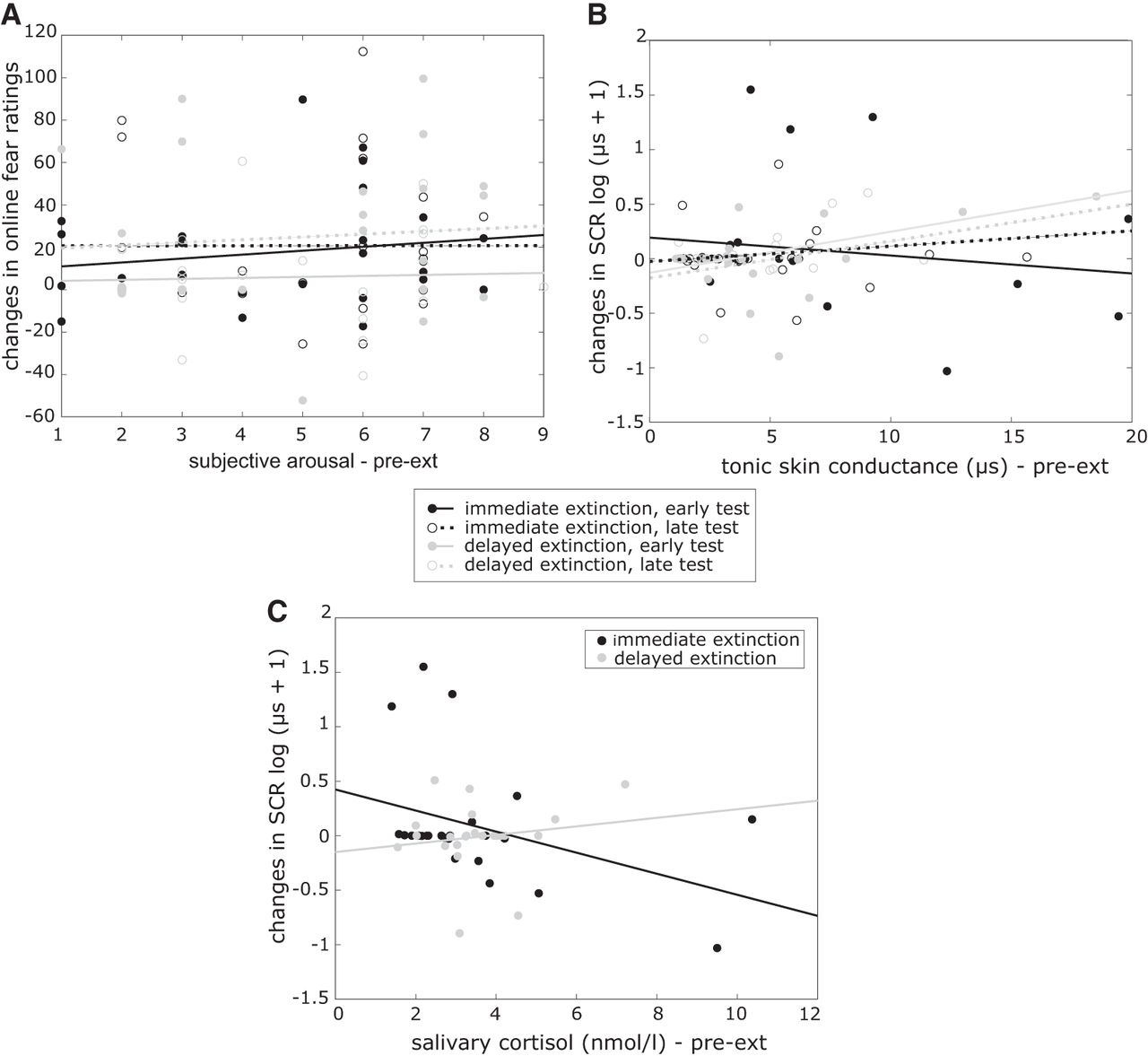
Scatter plots for pre-extinction arousal measures and return of fear. The return of fear corresponds to an increase in CS discrimination (CS+ minus CS−). Pre-extinction subjective arousal did not predict (A) a return of fear in the online fear ratings of either immediate extinction (early test: n = 27, late test: n = 25) or delayed extinction (early test: n = 24, late test: n = 25). (B) There was a trend for tonic skin conductance at the onset of extinction to predict the return of fear in skin conductance responses at delayed extinction (early test: n = 20, late test: n = 18). Tonic skin conductance at the onset of extinction did not predict the return of fear in immediate extinction (early test: n = 24, late test: n = 20). (C) Pre-extinction salivary cortisol did not predict the return of fear in any group (immediate: n = 23, delayed: n = 24).