How emotional contexts modulate item memory in individuals with high and low negative affect and worry
- 1Department of Clinical Neuroscience, Karolinska Institutet, Stockholm, Sweden
- 2Department of Psychiatry and Psychotherapy, University Medical Center Hamburg-Eppendorf, Hamburg, Germany
- 3Lise Meitner Group for Environmental Neuroscience, Max Planck Institute for Human Development, Berlin, Germany
- Corresponding author: nina.becker.phd{at}gmail.com
Abstract
Emotional stimuli are usually remembered with high confidence. Yet, it remains unknown whether—in addition to memory for the emotional stimulus itself—memory for a neutral stimulus encountered just after an emotional one can be enhanced. Further, little is known about the interplay between emotion elicited by a stimulus and emotion relating to affective dispositions. To address these questions, we examined (1) how emotional valence and arousal of a context image preceding a neutral item image affect memory of the item, and (2) how such memory modulation is affected by two hallmark features of emotional disorders: trait negative affect and tendency to worry. In two experiments, participants encoded a series of trials in which an emotional (negative, neutral, or positive) context image was followed by a neutral item image. In experiment 1 (n = 42), items presented seconds after negative context images were remembered better and with greater confidence compared to those presented after neutral and positive ones. Arousal ratings of negative context images were higher compared to neutral and positive ones and the likelihood of correctly recognizing an item image was related to higher arousal of the context image. In experiment 2 (n = 59), better item memory was related to lower trait negative affect. Participants with lower trait negative affect or tendency to worry displayed higher confidence compared to those with high negative affect or tendency to worry. Our findings describe an emotional “carry-over” effect elicited by a context image that enhances subsequent item memory on a trial-by-trial basis, however, not in individuals with high trait negative affect who seem to have a general memory disadvantage.
Episodic memory, the remembrance of events situated in time and place, entails the ability to link together elements of an event and to integrate them into a cohesive memory episode (Tulving 1972). Episodic memory enables us to mentally travel in time, to build a sense of self-identity, and importantly to guide current and future behavior based on previous experiences (Tulving 2002). Interestingly, we form lasting, vivid, and detailed memories for only a subset of our experiences, and one factor that substantially influences the fate of our memories is emotion. Emotions have a well-established impact on memory processes: Emotional information is more robustly and accurately remembered, with higher levels of confidence, vividness, and detail (Kensinger and Corkin 2003; LaBar and Cabeza 2006; Murty et al. 2010). These beneficial effects of emotion on episodic memory are thought to arise from deeper processing of sensory information during encoding, their strengthening over time, and greater reactivation of such information at retrieval (Murty et al. 2010). The facilitated encoding and efficient retrieval of emotional information can be driven by either the stimulus valence (how emotionally negative or positive the stimulus is perceived) or the arousal it elicits (Kensinger 2004). Importantly, previous studies have shown that memory is not only increased for emotional material per se but that the presence of an emotional event can modulate and sometimes increase memory even for neighboring neutral items (emotional oddball; see Schlüter et al. 2019). Imagine, for example, shopping for groceries, and while packing the items in your bag, the cashier makes a very flattering comment on how nice your outfit looks. You might remember the items you bought that day much better compared to any other regular grocery shopping situation. On the other hand, imagine walking home alone at night and suddenly hearing a strange noise that scares you. You might remember the shape and color of store signs further along your way much better compared to the ones you encountered before the noise. Thus, emotional events play a crucial role in guiding how surrounding neutral items will be remembered. Yet, findings on such emotional carry-over effects have been mixed, and it remains unknown to what extent and under which conditions memory encoding can be critically influenced by a single emotional event preceding a stimulus (Schlüter et al. 2019). Critically, to understand the extent to which emotional events affect memory for neutral items, we still need to investigate how close in time a neutral stimulus needs to follow an emotional event to modulate memory encoding.
Addressing this, we examined whether a single emotional image can prospectively enhance memory formation for an unrelated neutral image encountered in close temporal proximity, i.e., a couple of seconds (i.e., 1 sec, 4 sec, and 6 sec) later, thereby following up on previous studies investigating emotional carry-over effects with varying interstimulus intervals (ISI) (Anderson et al. 2006; Schmidt and Schmidt 2016) and evidence that memory of a stimulus can be modulated by brain activity triggered by a stimulus preceding a couple of seconds earlier (Otten et al. 2006). We further investigated the interplay between emotional stimuli and hallmark features of affective dispositions, i.e., sustained negative affect and worry, and their impact on memory encoding of subsequent neutral images.
Effects of emotional stimuli on memory encoding
Emotional stimuli are not only remembered more accurately and vividly themselves but emotion has been shown to (1) modulate recollection of previously encoded neutral information (Strange et al. 2003; Anderson et al. 2006; Sakaki et al. 2014; see Schlüter et al. 2019) and (2) to prospectively enhance memory formation for neutral information encountered many minutes later (Tambini et al. 2017). More precisely, Tambini et al. (2017) found that neutral stimuli encountered 9–33 min after exposure to extended blocks of emotionally arousing stimuli led to higher recollection compared to stimuli studied before emotional and after neutral stimulus exposure, suggesting that the impact of emotion carried over into, and biased, subsequent stimulus processing and encoding. Another study found that increased arousal (measured by noradrenergic activation) induced by a series of emotional images was associated with enhanced ability to discriminate neutral images presented shortly after the emotional images from visually similar images presented later during retrieval (Segal et al. 2012). While the above-mentioned studies focused on the effects of sustained negative arousal triggered by a succession of emotional stimuli on subsequent memory encoding, it remains unknown whether memory encoding can be critically influenced by a single emotional event preceding a stimulus. In one study, Otten et al. (2006) found that subsequent memory of a stimulus was modulated by the brain activity triggered by its preceding stimulus (or context). Importantly, this context-related activity fluctuated over a short timescale and influenced subsequent stimulus encoding on a trial-by-trial basis (Otten et al. 2006). In the current study, we examined whether a single emotional stimulus can prospectively modify memory formation for subsequent unrelated neutral information, and thus to what extent emotions are capable of enhancing memory formation for information encountered in close temporal proximity to an emotional stimulus.
In the stress literature, most studies investigating the effect of stress on memory have put a strong emphasis on how acute stress enhances memory consolidation (Roozendaal et al. 2006), and fewer have examined its effects on memory encoding. In one study, memory for pictures that were encoded after a stress manipulation was increased compared to pictures encoded in the control condition, suggesting that stimuli presented after stress were encoded more effectively (Henckens et al. 2009). In line with this, a study by Meier and colleagues (Meier et al. 2020) provided evidence that a stress manipulation changed the neural activity of encoding, reflecting a specific readiness to form new memories. However, one study found different effects of acute stress on the item and associative memory such that pre-encoding stress enhanced associative memory of pairs rated as high arousing, whereas post-encoding stress enhanced item memory (Goldfarb et al. 2019). Results of a meta-analysis on how stress can impact memory revealed that if the delay between the stressor and encoding was short and the study materials were directly related to the stressor memory, encoding was improved. However, all studies included in the meta-analysis that included stressor-relevant items included only very short delays between stress and encoding. Therefore, it remains unclear whether beneficial effects of stress were observed due to a short stress-encoding delay or due to the relevance of the items to the stressor (Shields et al. 2017).
The aforementioned studies provide support for the idea that stress enhances memory encoding of subsequent stimuli, which is in line with findings from studies using emotional images to investigate the effects of emotion on subsequent memory encoding (Segal et al. 2012; Tambini et al. 2017). However, stress paradigms often entail social stress interventions that involve evaluation and/or pain (e.g., the Trier social stress test or the socially evaluated cold pressor test), which trigger sustained arousal throughout an entire encoding period. Thus, taking the stress literature into account, it remains unknown how moment-to-moment fluctuations in stress and emotion affect memory encoding of subsequent stimuli.
Effects of emotional disorders on memory encoding
Apart from the emotion triggered by the to-be-encoded stimuli, individual differences in affective dispositions can also impact episodic memory formation and retrieval, which is often studied in individuals with emotional disorders such as anxiety or depression. For example, both disorders are characterized by a failure to adaptively process emotional information and by biased interpretations of the environment, which lets individuals favor negative interpretations of ambiguous stimuli (Mathews and MacLeod 2005; Gotlib and Joormann 2010). Past studies investigating the effects of emotional disorders, i.e., depression and anxiety, on episodic memory have reported mixed results (Zlomuzica et al. 2014; Gonda et al. 2015). On the one hand, evidence suggests that negative (e.g., threatening) stimuli capture the attention of depressed and anxious individuals, facilitating encoding and processing (Mitte 2008). Indeed, the preferential recall of negative compared to positive stimuli in individuals with emotional disorders is one of the most robust emotional memory findings reported in the literature (for review, see Mathews and MacLeod 2005). Results of a meta-analysis on memory biases in anxiety indicated that high-anxious individuals seemed to exhibit better recall for negative and poorer recall for positive material compared with low-anxious individuals, although the impact of anxiety on recognition was negligible (Mitte 2008). Hence, individuals with emotional disorders seem to selectively encode and retrieve information that perpetuates their negative beliefs about their environment (Saunders 2013; Zlomuzica et al. 2014; Bolton and Robinson 2017).
At the same time, evidence suggests that individuals with emotional disorders are characterized by overgeneralized autobiographical memory and tend to show reduced memory specificity even in episodic memory tasks, i.e., when retrieving specific contextual details or in tasks including source memory (Ramponi et al. 2004; Raes et al. 2006; Williams et al. 2007; Zlomuzica et al. 2014). Again, other studies investigated general episodic memory impairments in healthy individuals when manipulating negative affect within the participants. For example, in one recent study, a stronger reduction of individuals’ negative affect via transcranial direct current stimulation (tDCS) during memory encoding of neutral words resulted in better memory retrieval (Peter et al. 2019). In contrast, in a study by Butters et al. (2011) individuals with generalized anxiety disorder had significantly reduced immediate and delayed memory compared to controls (Butters et al. 2011). These reports illustrate that although numerous studies have looked into the effects of emotional disorders on cognitive functioning, it remains unknown how emotional disorders and specific core characteristics such as sustained negative affect and increased tendency to worry are related to biased and/or impaired episodic memory processes (Mor and Winquist 2002; Zlomuzica et al. 2014; Hsu et al. 2015).
Taken together, sustained negative arousal triggered by emotional stimuli seems to impact the subsequent encoding of neutral information; however, it is unclear how a single emotional stimulus affects the encoding of neutral information encountered seconds later. Moreover, it is unclear how characteristics of emotional disorders, such as increased negative affect and increased worrying, interact with such potentially biased encoding processes.
The current study
In the current study, we aimed to investigate across two experiments how (1) the emotional valence and arousal of a context image preceding a neutral item image affect memory of the neutral image and (2) how a potential memory modulation is affected by participant's trait negative affect or tendency to worry, two hallmark features of emotional disorders. Based on previous literature, we hypothesized a selective memory enhancement for images of neutral items presented after emotionally negative images compared to positive and neutral scene images. Further, we hypothesized this effect to be enhanced in participants with high negative affect. We used a novel paradigm, in which participants first incidentally encoded 72 trials consisting of an emotional context image which was followed by the presentation of a neutral everyday object shown either 1, 4, or 6 sec after. A surprise memory task was conducted 6 h after the encoding task and consisted of 144 trials (72 old object images and 72 foils). Participants were asked to indicate whether they had seen an object image at encoding or not and further how confident they were with their response. After the recognition task, participants were shown all 72 context images again and asked to rate each one on emotional valence and arousal (see Fig. 1A–C). Participants from experiment 2 included a subsample of adults that completed the trait measure of the State-Trait Anxiety Inventory (STAI) (Spielberger et al. 1983) and scored above the 80th percentile (group with high negative affect) or below the 20th percentile (group with low negative affect).
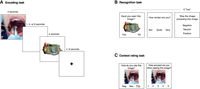
(A) Experimental design and exemplar trial from the encoding task. During incidental encoding, participants were presented with 72 trials consisting of an emotional context image shown for 4 sec, followed by a blank screen shown for 1, 4, or 6 sec, and a neutral everyday object image shown for 4 sec. At the end of each trial, a fixation cross was shown before the next emotional context image was presented. Participants were told to pay attention to all images presented on the screen. (B) Exemplar trial from the recognition task. The surprise memory task was conducted 6 h after the encoding task and consisted of 144 trials (72 old items and 72 foils). Participants were asked to indicate whether they had seen an item image at encoding or not via a button press. Further, they were asked to indicate how confident they were with their response. If participants answered with “yes,” they were prompted to indicate the context valence preceding the item image at encoding. (C) Exemplar trial from the context rating task. After the recognition task, participants were shown all 72 context images again and asked to rate each one on emotional valence and arousal.
Results
Experiment 1
Since source memory performance, as well as skin conductance response (SCR) data, showed floor effects, we excluded these measures from the analyses (Table 1; Fig. 2A). The proportion of hits–false alarms for item memory was 59% for items presented after negative, 53% for items presented after neutral, and 54% presented after positive context images (Table 1; Fig. 3). The proportion of false alarms was 8%. Context memory was at 35% for neutral context images and below 22% for emotional ones. Our manipulation check revealed that none of the participants expected a memory test; hence, they did not actively try to remember the images during encoding. On average, participants rated 24 context images as negative (SD = 5.038, min = 10; max = 35), 27 context images as neutral (SD = 7.752, min = 8; max = 45), and 21 context images as positive (SD = 6.196, min = 12; max = 33).
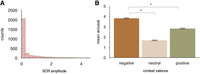
(A) Distribution of raw squared SCR for all context images and participants. (B) Mean-rated context image arousal (max = 5) across context valences. Emotionally negative context images were rated as more arousing than emotionally positive and neutral context images. Error bars represent 1 SEM.
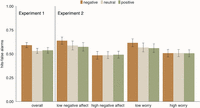
Behavioral results. Mean item memory (proportion of hits–false alarms) across experiments 1 and 2. In experiment 1, recognition performance for items presented after negative contexts was significantly greater than for those presented after neutral and positive contexts. In experiment 2, participants with low negative affect had overall better memory performance compared to participants with high negative affect. No differences in recognition performance were found between the worry groups.
Behavioral results: mean proportions of hits–false alarms (SD) for item and context memory across experiments 1 and 2
Negative emotional contexts enhance memory for subsequent neutral items
A repeated measures ANOVA showed a main effect of emotional valence (F(2,82) = 4.343, P = 0.016). Post hoc t-tests revealed that recognition performance for items presented after negative contexts was significantly greater than for those presented after neutral (t(82) = 2.679, P = 0.009) and positive contexts (t(82) = 2.403, P = 0.019). Neutral and positive context images did not differ with regard to their modulatory effect on item memory (t(82) = −0.276, P = 0.783) (see Fig. 4A). Importantly, a repeated measures ANOVA investigating memory for the preceding neutral items showed no effect of emotional valence (F(2,82) = 2.426, P = 0.095). Hence, the modulatory effect of negative context images was exclusive for the subsequently presented item.
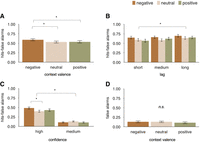
(A) Item memory performance (proportion of hits–false alarms) in the recognition task across context valences. Recognition performance for items presented after negative contexts was significantly greater than for those presented after neutral (P = 0.009) and positive contexts (P = 0.019). (B) Item memory performance across context valences and the time lag between context and item images (short = 1 sec, medium = 4 sec, long = 6 sec). Long lags between context and item image presentations increased item recognition performance compared to short lags (P = 0.012). (C) Item memory performance across context valences and memory confidence. Items presented after negative contexts showed more high-confidence answers compared to neutral contexts (P = 0.004). (D) False alarm rate for foils perceptually similar to item images presented during encoding across context valences. There were no differences in the number of false alarms of items presented at retrieval that were perceptually similar to items presented during encoding. Error bars represent 1 SEM.
Longer lags enhance memory for neutral items across emotional and nonemotional contexts
Results of the 3 × 3 repeated measures ANOVA revealed a main effect of lag (F(2,328) = 3.358, P = 0.036) and a main effect of valence (F(2,328) = 4.480, P = 0.012). The interaction between lag and valence turned out to be nonsignificant (F(2,328) = 0.329, P = 0.859). Post hoc t-tests revealed that long lags (i.e., 6 sec) between context and item image presentations increased item recognition performance compared to short lags (i.e., 1 sec; t(328) = −2.543, P = 0.012). There were no differences in item recognition between short and medium (i.e., 4 sec) and long and medium lags (Ps > 0.089) (see Fig. 4B).
Negative emotional versus neutral contexts lead to a more confident memory for neutral items
Results of the 2 × 3 repeated measures ANOVA revealed a main effect of confidence (F(2,205) = 377.116, P < 0.001) and a significant interaction between valence and confidence (F(2,205) = 3.591, P = 0.029). Post hoc t-tests revealed more high-confidence answers for items presented after negative contexts compared to neutral contexts (t(205) = 2.943, P = 0.004) and a trend toward significantly more high-confidence answers for items presented after negative contexts compared to positive contexts (t(205) = 1.866, P = 0.064). Within the medium-confidence answers, item recognition did not differ between items presented after negative, neutral, and positive contexts (Ps > 0.380) (see Fig. 4C).
No evidence that emotional contexts lead to an increase in false alarms compared to nonemotional ones
A repeated measures ANOVA with false alarms as a dependent variable revealed no main effect of valence (F(2,42) = 0.734, P = 0.486), i.e., there were no differences in the number of false alarms of items presented at retrieval that were perceptually similar to items presented during encoding (see Fig. 4D).
Context arousal predicts correct recognition of neutral item images
Results of the mixed-effects logistic regression can be found in Table 2. Context images with neutral valences were associated with a lesser likelihood of correctly recognizing the item image presented right after compared to context images with negative valences. However, when adding rated arousal to the model, that association was no longer significant, and instead higher arousal of a context image was associated with a greater likelihood of correctly recognizing the item image presented after. A model comparison revealed that including arousal as fixed effect in model 2 significantly reduced residual deviance compared to model 1 (χ2(1) = 3.962, P = 0.046).
Results of mixed-effects logistic regression for predicting the likelihood of correctly recognizing an item image (hit)
Summary of main findings
In experiment 1, we found that memory was enhanced for neutral items presented seconds after negative as compared to neutral and positive context images, suggesting an emotional “carry-over” effect that biased subsequent stimulus processing and encoding. Consistent with this, neutral item images presented after negative context images were recognized with higher confidence as compared to those presented after neutral and positive ones. The time lag between context and item image presentation did not differentially affect item memory. Finally, the emotional valence of context images did not affect the number of false alarms for perceptually related foils presented during retrieval. On a trial level, the likelihood of correctly recognizing an item image was related to higher arousal levels of the context image.
In line with our hypothesis, the emotional valence of a context image preceding a neutral item image affects the memory of that respective item image. In experiment 2, we examined how this emotional memory modulation might be affected by participants’ trait negative affect or tendency to worry, two hallmark features of emotional disorders that have previously been linked to enhanced memory for negative information.
Experiment 2
The proportion of hits–false alarms for item memory in the low negative affect group was 64% for items presented after negative, 59% for items presented after neutral, and 57% for items presented after positive context images with 9% for false alarms overall. In the high negative affect group, item memory performance was ∼50% across all three valences with 12% false alarms. Similarly, item memory in the low-worry group was 62% for items presented after negative, 57% for items presented after neutral, and 56% for items presented after positive context images with 9% false alarms, while item memory in the high worry group was at 51% across the three valences (12% false alarms overall) (see Table 1; Fig. 3). The correlation between the STAI trait and Penn State Worry Questionnaire (PSWQ) score was highly significant (r = 0.857, P < 0.001). On average, participants rated 22 context images as negative (SD = 3.807, min = 13; max = 30), 24 context images as neutral (SD = 6.956, min = 16; max = 43), and 24 context images as positive (SD = 7.284, min = 7; max = 36).
Lower negative affect is associated with better recognition performance overall
Negative affect group
A 2 × 3 mixed ANOVA showed a main effect of group (F(1,57) = 4.415, P = 0.04), such that participants with low negative affect had overall better memory performance compared to participants with high negative affect. There was no main effect of emotional valence and no interaction between emotional valence and group (Ps > 0.131) (see Fig. 5A). To examine whether we could replicate the effect of valence from experiment 1, we conducted an exploratory repeated measures ANOVA within the low negative affect group only. Results revealed a main effect of valence (F(2,58) = 3.463, P = 0.038). Post hoc t-tests revealed that recognition performance for items presented after negative contexts was significantly greater than for those presented after positive contexts (t(58) = 2.499, P = 0.015). The difference in recognition performance between items presented after negative and items presented after neutral contexts approached significance (t(58) = 1.962, P = 0.055), while there was no difference between items presented after neutral and items presented after positive contexts (P = 0.593).
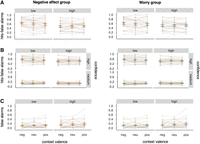
(A) Item memory performance (proportion of hits–false alarms) in the recognition task across context valences for the negative affect and worry groups. Participants with low negative affect had overall better memory performance compared to participants with high negative affect (P = 0.04). No differences in recognition performance were found between the worry groups. (B) Item memory performance across context valences and memory confidence for the negative affect and worry groups. There were significantly more high-confidence compared to medium-confidence answers in both groups (Ps < 0.001), but participants with low negative affect had significantly more high-confidence answers compared to participants with high negative affect (P = 0.001). (C) False alarm rate for foils perceptually similar to item images presented during encoding across context valences. No differences in the number of false alarms of items presented at retrieval were found. Error bars represent 1 SEM.
Worry group
A 2 × 3 mixed ANOVA with item memory as dependent variable revealed no main effect of valence, no main effect of group, and no interaction between the two factors (Ps > 0.179) (see Fig. 5A).
Negative emotional contexts compared to neutral ones lead to a more specific memory for neutral items
Negative affect group
Results of the 2 × 2 × 3 mixed ANOVA revealed a main effect of confidence (F(1,285) = 713.858, P < 0.001) and a significant main effect of group (F(1,57) = 4.415, P = 0.040), such that participants with low negative affect had higher recognition performance than those with high negative affect. Further, the analysis revealed a significant interaction between group and confidence (F(1,285) = 9.644, P = 0.002) (see Fig. 5B). Post hoc t-tests revealed that there were significantly more high-confidence compared to medium-confidence answers in both groups (tlow_negative_affect(285) = 21.270, P < 0.001; thigh_negative_affect(285) = 16.557, P < 0.001), but that participants with low negative affect had significantly more high-confidence answers compared to participants with high negative affect (t(96.5) = 3.351, P = 0.001), while both groups did not differ with regard to the amount of medium-confidence answers (P = 0.75).
Worry group
Results of the 2 × 2 × 3 mixed ANOVA revealed a main effect of confidence (F(1,285) = 723.556, P < 0.001) and a significant interaction between group and confidence (F(1,285) = 13.570, P < 0.001) (see Fig. 5B). Post hoc t-tests revealed that there were significantly more high-confidence compared to medium-confidence answers in both groups (tlow_negative_affect(285) = 21.810, P < 0.001; thigh_negative_affect(285) = 16.278, P < 0.001), but that participants with low worry had significantly more high-confidence answers compared to participants with high worry (t(94.2) = 2.958, P = 0.004), while both groups did not differ with regard to the amount of medium-confidence answers (P = 0.572).
No evidence that emotional contexts lead to an increase in false alarms compared to nonemotional ones
Negative affect group
A 2 × 3 mixed ANOVA with false alarms as the dependent variable revealed no main effect of valence, no main effect of group, and no interaction between the two factors (Ps > 0.140) (see Fig. 5C).
Worry group
A 2 × 3 mixed ANOVA with false alarms as the dependent variable revealed no main effect of valence, no main effect of group, and no interaction between the two factors (Ps > 0.229) (see Fig. 5C).
Negative affect predicts correct recognition of neutral item images
Negative affect groups
Results of the mixed-effects logistic regression can be found in Table 3. Only high negative affect was associated with a lesser likelihood of correctly recognizing an item image compared to low negative affect. A model comparison revealed that including arousal as a fixed effect to the model did not significantly reduce residual deviance (P = 0.468).
Results of mixed-effects logistic regression for predicting the likelihood of correctly recognizing an item image (hit)
Worry groups
The mixed-effects logistic regression revealed no significant associations between context valence, context arousal, and group with correctly recognizing an item image (see Table 4).
Results of mixed-effects logistic regression for predicting the likelihood of correctly recognizing an item image (hit)
Summary of main findings
In experiment 2, we grouped participants based on their STAI-trait scores (high vs. low negative affect group) and PSWQ scores (high vs. low worry group). Overall, better item memory performance was related to lower negative affect. Participants with lower negative affect had more high-confidence answers compared to those with high negative affect and the same effect was found within the worry group, i.e., the low worry was associated with high-confidence answers. On the trial level, high negative affect was associated with a lesser likelihood of correctly recognizing an item image compared to low negative affect.
Discussion
In the current study, we showed that emotional valence and arousal of a context enhanced memory of a subsequently presented neutral item (experiment 1), and that memory for neutral items was affected by participants’ trait negative affect (experiment 2). The findings reveal the role of individual differences in trait negative affect in how emotional salient items can modulate memory for neighboring neutral ones. Hence, results of the current study might shed further light on why previous findings on emotional carry-over effects have been mixed (Schlüter et al. 2019).
Emotional valence effects on the encoding of neutral items
Previous studies have shown that emotional stimuli prospectively enhance memory formation for neutral information (Henckens et al. 2009; Segal et al. 2012; Sakaki et al. 2014; Tambini et al. 2017). For example, Tambini and colleagues found that the presentation of extended blocks of emotional images enhanced later retrieval of neutral images that were encountered minutes later (Tambini et al. 2017). Here, we extend these findings by showing that even a single emotional image can enhance retrieval of a neutral item image presented seconds later. This suggests that the impact of emotion carries over even to temporally close stimuli and biases their processing and encoding by potentially imbuing them with emotional properties that enhance their recollection, even when the images are unrelated in terms of content. Importantly, the observed effects, i.e., increased memory retrieval for items presented after an emotional context, cannot be explained by increased distinctiveness or salience of the stimuli themselves, since the emotional context images were presented preceding and not simultaneously to the neutral item images (Talmi and McGarry 2012). Our findings are not in line with a study from Sakaki et al. (2014), who found that emotionally arousing images impaired memory for subsequent neutral objects. However, these conflicting results could be reconciled considering the different retention intervals used. Indeed, memory effects for emotional stimuli are known to increase after a couple of hours (Knight and Mather 2009). Whereas Sakaki and colleagues (2014) used an immediate memory task, recognition task followed after 6 h in our experiment. Other previous studies investigating the carry-over effects of single emotional events to neighboring items found an anterograde and/or retrograde amnesic effect for neutral stimuli presented immediately after or before the emotional item (Strange et al. 2003; Hurlemann et al. 2005; Schmidt and Schmidt 2016). However, their findings have been mixed and shown to vary with task properties including stimulus onset asynchrony (SOA), retention intervals, and arousal characteristics of the items (Schlüter et al. 2019). In the current study, we did not find amnesic effects on neutral items. A potential explanation for this could be that the context images used in the current paradigm did not elicit the same levels of arousal as items in previous experiments to produce amnesic effects (Mather and Sutherland 2011; Schmidt and Schmidt 2016). Moreover, Schmidt and Schmidt (2016) found that attention capture negatively impacted memory for surrounding items only when they occurred within 2 sec of the emotional item. In the current paradigm, 2/3 of the items following emotional context images exceeded SOAs of 2 sec, which might explain the lack of amnesic effects overall.
We found an increase in memory performance for neutral items when comparing between the valences of their preceding context images. More specifically, we found the effects of the negative valences of emotional context images during the encoding of neutral item images. These findings are in line with previous observations in the literature that especially negative events tend to be related to increased memory retrieval compared to neutral or positive ones (Ochsner 2000; Bowen et al. 2018). There is still an ongoing debate as to what extent reported valence effects on memory can be attributed to confounds unrelated to valence, specifically arousal-related confounds (Clewett and Murty 2019). According to the NEVER model proposed by Bowen and colleagues (2018), there are theoretically relevant differences in the ways that positive and negative information are processed and remembered (Bowen et al. 2018). For example, successful encoding of negative stimuli has been shown to rely more heavily on the engagement of sensory processes compared to positive stimuli, which has been related to a more detailed, recollection-based memory (Mickley and Kensinger 2008; Mickley Steinmetz and Kensinger 2009; Mickley Steinmetz et al. 2010). Moreover, sensory-amygdala connectivity has been shown to be stronger during the successful encoding of negative compared to positive stimuli (Mickley and Kensinger 2008). Further, there is evidence that scene images with negative valences lead to stronger attentional responses than scene images with positive valences, even when they were matched for arousal and visual complexity (Simola et al. 2013). Thus, it seems possible that visuo-sensory and attentional processes that are activated by an emotionally negative stimulus stay active past the time this stimulus leaves the environment benefitting the encoding of neutral stimuli that follow in close temporal proximity.
Emotionally negative context images not only increased memory performance of neutral item images presented seconds after but also led to higher memory confidence of such items. Participants were explicitly instructed to indicate that they were quite confident with their answer when they had a feeling of having seen the item image before without remembering specific details (familiarity-based recognition), while indicating that they were very confident with their answer only when they could recall certain details of having seen the item image before (recollection-based recognition). The finding that items that followed negative context images were retrieved with significantly higher confidence (i.e., more recollection-based recognition) compared to items following neutral and positive context images fits well within the idea of high memory confidence or vividness being hallmark characteristics of emotional memory (Talarico and Rubin 2003; Phelps and Sharot 2008). Importantly though, studies have found that the subjective quality of an emotional memory (i.e., vividness or confidence) is not always related to the accuracy of specific contextual details of this memory (Rimmele et al. 2011; Bisby and Burgess 2014). Instead, details of highly emotional memories reported with high confidence are often incorrect (Phelps and Sharot 2008) and the enhanced subjective sense of recollection with emotion is thought to serve faster and less ambiguous decision making for future behavior. Yet, examining how memory for stimulus details (intrinsic details) versus details not inherent to the stimulus (extrinsic details, e.g., thoughts the stimulus triggered) and emotional reactions underlie the enhanced subjective sense of remembering, Mihaylova and colleagues (2019) could show that remembered responses for negative stimuli were more often linked to memory for intrinsic details versus details related to external associations (extrinsic details) or emotional reaction at encoding (Mihaylova et al. 2019). Their findings suggest that memory for intrinsic details underlies the enhanced subjective sense of remembering of negative stimuli.
In our study, we measured accuracy by examining memory for the occurrence of the event itself. In contrast, we did not examine specific details, e.g., perceptual details of the items themselves. Thus, it might be that the observed increase in memory confidence of neutral items following negative context images underlies a subjective sense of recollection and did not occur because participants objectively recollected more details of the items. This could also explain the lack of differences in the number of false alarms for items perceptually similar to items that followed emotional context images during encoding. It seems somewhat surprising that the observed effects on memory accuracy and memory confidence were not reflected in the number of false alarms for perceptually similar items. If participants had a stronger memory representation for perceptual details of items following negative context images compared to neutral or positive ones, one would have expected to find a lower number of false alarms for items perceptually similar to those items. However, if the subjective sense of recollection were increased without an increase of objective accuracy, one could have expected a higher number of false alarms for items perceptually similar to items presented after negative contexts leading to a generalization across many stimuli (see Starita et al. 2019). However, our study included only 36 perceptually similar foils in total, thus we might have had too few trials to detect any effects since the overall number of false alarms was relatively low. Future studies should investigate further the effects of generalization and memory accuracy across neutral items or the modulatory effects of emotional valence and arousal on pattern separation.
Emotional arousal effects on encoding of neutral items
When investigating the combined effects of arousal and valences we found that context image arousal varied with valence, i.e., emotionally negative context images were rated as more arousing than emotionally positive and neutral context images (see Figs. 2B and 6A,B). This finding is in line with the very commonly observed arousal-related confounds that often hamper the interpretation of valence differences reported across many studies of emotional memory (Clewett and Murty 2019). Indeed, when investigating the impact of valence and arousal on the likelihood of correctly recognizing an old item image (i.e., the likelihood of a “hit”), higher context arousal significantly increased the likelihood of a hit while the effect of valence disappeared. It is widely assumed that when experiencing arousal, rapidly unfolding neurochemical events have immediate effects on attentional, sensory, and mnemonic processes (de Kloet et al. 2005). Numerous studies have reported the effects of arousal on the selectivity of memory (see Mather and Sutherland 2011) by facilitating the perception and encoding of information (Mather and Sutherland 2011; Talmi and McGarry 2012) and by affecting memory processes including neurohormonal activation in the amygdala. More precisely, arousal is thought to induce neurohormonal alterations (McGaugh 2000; Rimmele et al. 2016) that again influence amygdala function and amygdala modulation of the hippocampus leading to enhanced memory accuracy for emotional stimuli (McGaugh 2004; Dunsmoor et al. 2015; Yonelinas and Ritchey 2015). These arousal effects are thought to happen early in memory formation. We can assume that the physiological arousal level induced by emotional context images in our experiment was probably still elevated during the presentation of the neutral item image, likely facilitating the encoding, and perhaps consolidation of those neutral stimuli, resulting in increased levels of subjective recollection 6 h later. Indeed, physiological arousal measured as electrodermal response was on average higher at the presentation of negative context images (F(2,2472.9) = 26.603, P < 0.001) compared to neutral (t(2472.7) = 5.1570, P < 0.001) and positive (t(2472.7) = −1.9706, P = 0.048) ones. This could explain increased memory accuracy for neutral item images presented 1–6 sec after the presentation of negative context images. However, the data on electrodermal response were heavily skewed and should therefore be interpreted with caution. Interestingly though, we found no differential effect of lag, i.e., memory performance for items presented after negative context images was not differentially higher when the time lag between the context and item image was shorter. Instead, longer lags between the context and item images led to better item memory performance overall. This finding contradicts our hypothesis that context-induced valence or arousal effects should carry over to items presented closer in time rather than further apart. Thus, it remains unknown how close in time an emotional experience needs to occur to the neutral stimulus in order to bias its encoding.
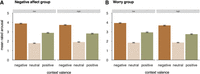
(A) Mean-rated context image arousal across context valences in the (A) negative affect and (B) worry groups. In all groups, emotionally negative context images were rated as more arousing than emotionally positive and neutral context images. Error bars represent 1 SEM.
Effects of negative affect and worry on emotional memory
In light of the findings from experiment 1 and previous studies linking negative affect to enhanced memory for negative information, in experiment 2, we compared memory performance for neutral items presented after emotional contexts between participants with high and low negative affect and high and low tendency to worry measured with the STAI trait measure and PSWQ, respectively. In this experiment, participants with high negative affect had overall significantly worse memory performance compared to those with low negative affect. This finding is in line with previous observations that individuals’ affective responses modulate memory processing and that affect can directly influence memory storage and retrieval (Phelps 2004; Brosch et al. 2013). Numerous studies have reported episodic memory deficits in individuals with emotional disorders, such as depression or anxiety disorders that are characterized by higher negative affect and worry or rumination (Airaksinen et al. 2005; Zlomuzica et al. 2014; Gonda et al. 2015). For example, one study found recollection to be impaired in individuals in a dysphoric state, i.e., dysphoric participants remembered fewer words than matched controls, while both groups did not differ in the number of familiarity-based responses (Ramponi et al. 2004). Similarly, in our study participants with lower negative affect displayed higher confidence (or recollection-based) answers compared to those with high negative affect, and the same effect was found within the worry group. In another study by Peter et al. (2019), the negative affect of the participants was reduced via anodal tDCS to the left dorsolateral prefrontal cortex, and this reduction was related to enhanced episodic memory retrieval of neutral words. The authors concluded that the modulation of affective responses directly improved memory performance (Peter et al. 2019). In line with this, in our experiment, negative affect was related to the likelihood of correctly recognizing an item image on the trial level over and above valence and arousal of the stimulus material.
However, our results suggest that there seems to be a differential effect depending on whether negative affect is elicited by a stimulus or the disposition of negative affect of an individual. That is, when a stimulus elicits an arousal response, it seems to increase overall memory performance and increases the likelihood that an item is retrieved as shown in experiment 1. This effect was further replicated in experiment 2 when investigating the effects of valence in the low-negative affect group only. In contrast, negative affect as a trait tendency to experience negative feelings such as worry and anxiety seems to have a detrimental effect on memory performance overall as shown in experiment 2. Although the literature on how emotional disorders modulate emotional memory encoding and retrieval is mixed (Mitte 2008; Zlomuzica et al. 2014; Gonda et al. 2015), the lack of interaction between the emotionality of a stimulus and the affective and worrying tendencies of the participants remains surprising, as the literature suggests that negative arousal engages sensory processes and enhances attention toward intrinsic details of negative events (Kensinger 2009). One underlying reason for the observed null effects could be potential over-general memories in individuals with emotional disorders. Patients with emotional disorders who are characterized by over-general memories typically tend to retrieve more general and less specific details in tests on autobiographical memory, and this lack of autobiographical memory specificity has been related to episodic memory deficits, specifically in retrieving specific details of the context in which a memory was acquired (Ramponi et al. 2004; Raes et al. 2006; Williams et al. 2007). This effect has been related to cognitive avoidance behavior since by being overgeneral at retrieval, individuals with high negative affect avoid conscious processing of emotional material, which protects against further negative affect (Williams et al. 2007).
Limitations and conclusion
Since in our experiment all neutral item images stemmed from the same super-category (i.e., everyday objects), it might be that participants with high negative affect generalized across everyday items. Hence, memory for the specific item following a negative-arousal context was less precise. Although there is evidence for a memory advantage for aversive stimuli in emotional disorders, similar to our study, previous work often failed to find memory biases for negative stimuli in episodic memory tasks, specifically in anxious individuals (Coles and Heimberg 2002; Airaksinen et al. 2005; for review, see Zlomuzica et al. 2014). It has been suggested that these biases have not been detected because of a poor match between the aversive stimuli used and individuals’ concerns (Coles et al. 2007). Hence, it might be that the stimuli used in our experiment—although rated as negative and arousing—were simply not relevant enough to the participants’ affective triggers and domains of worries. This might also explain the lack of differences in item memory performance between participants with low and high worry. Our null findings further illustrate that the interplay between emotion and memory is highly complex and that different aspects of emotional disorders like those characterized by the tendency for negative thoughts and feelings or the amount of worrying differentially affect episodic memory performance. Future studies would benefit from expanding these findings to patients to delineate the differences between adaptive and maladaptive memory encoding. Moreover, our design did not allow us to fully disentangle the role of attention from emotion per se. To test the possibility that attentional processes activated by an emotional stimulus stay active past the time the stimulus leaves the environment, future studies could implement salient but nonemotional stimuli (i.e., an oddball or a surprising stimulus) into the design to test whether a beneficial modulation of memory through attention for the subsequent neutral item would become evident.
To conclude, our findings describe an emotional carry-over effect that can bias subsequent item memory on a trial-by-trial basis, however, not in individuals with high trait negative affect who seem to have a general memory disadvantage. Hence, there seems to be a differential effect depending on whether emotion is elicited by a stimulus or related to the individual disposition of negative affect. Previous failures to observe a positive carry-over effect of emotionally negative stimuli on subsequent neutral ones could in part be explained by individual differences in negative affect and worry. As such, the current results may help to bring clarity to some of the mixed findings seen in prior studies.
Materials and Methods
Experiment 1
Participants
Written informed consent was obtained from healthy, right-handed adults. All participants were compensated with cinema tickets for their participation. The final sample consisted of 42 adults with normal or corrected-to-normal vision (22 females, Mage = 26.50 yr, SDage = 3.83 yr). The sample size was considered appropriate based on a simulation-based power calculation for the ANOVA using the ANOVApower package for R (Lakens and Caldwell 2021). The study was approved by the regional ethical review board in Stockholm.
Materials
Item images consisted of 144 photographs of common objects from various categories depicting nonliving things (e.g., kitchen tools, clothing, decoration) taken from the Bank of Standardized Stimuli (Brodeur et al. 2010). Half of the object images (i.e., 72 images) were presented once during encoding and once during retrieval, while the other half served as novel foils and were presented only once during retrieval. Of those novel foils, half of the object images (i.e., 36 images) depicted a variant of one object image presented during encoding (i.e., a yellow fire lighter was presented during encoding and retrieval, and a pink fire lighter served as novel foil during retrieval). This manipulation was implemented to test how a potential memory enhancement would generalize across perceptually similar objects. Object images were of equal size (i.e., so that they would fit into a 15 cm × 15 cm big square) and presented on a white background in the center of the screen (see Fig. 1A).
In addition, we used 72 scene images taken from the International Affective Picture System (IAPS) (Lang et al. 2008), the Nencki Affective Picture System (NAPS) (Marchewka et al. 2014), and partly taken from online resources. Scene images were chosen based on the normative ratings and served as the emotional context images. Negative context images had valence values <4 and arousal values >6. Neutral context images had valence values between 4.5 and 6 and arousal values <4.5 and positive context images had valence values >6.5 and arousal values >6. Pictures were only taken from online resources when the resolution of database images was too low and or its size too small. Pictures from online resources were in such cases matched to the images from picture databases with regard to their content and visual appearance. Emotional context images were rendered equal in size and shown in full screen. Experimental trials belonged to one of three task conditions (i.e., negative, neutral, and positive emotional context images).
Experimental procedure
Encoding phase
For the encoding phase, one-third of the item images were paired with a neutral context, the remaining two-thirds were paired with context images containing positive and negative valences, respectively. Context images always preceded the presentation of neutral item images to investigate how a negative, neutral, or positive image, and the respective emotion elicited would bias subsequent item encoding.
At the start of each trial, a black fixation cross (that served as a boundary to isolate one event from the other; Dunsmoor et al. 2018) was presented on a white background, jittered between 4 and 6 sec. After that, a context image containing emotional valence (i.e., positive, negative, or neutral) was presented for 4 sec, followed by a white screen shown for either 1, 4, or 6 sec. The ISI was pseudorandomized such that there was an equal distribution of ISIs for negative, neutral, and positive context images. Finally, an item image was presented for 4 sec (see Fig. 1A). Context-ISI-item combinations per trial were randomized across participants, and the order of context images was pseudorandomized across participants with maximal three consecutive trials of the same valence. Participants were instructed to pay attention to all images presented on the screen. Importantly, they were not informed that they were to retrieve the second item shown later on. To measure SCR as a physiological measure of arousal response to the emotional context images, two electrodes were attached to the distal phalange of the index and middle fingers of the participants’ left hand.
Memory task
Six hours after the encoding task participants returned to the laboratory for a memory task, which all participants were surprised by as revealed by a later manipulation check. The delay between the encoding phase and the memory task was chosen based on the observation that memory effects for emotional stimuli increase after a couple of hours (Knight and Mather 2009; Yonelinas and Ritchey 2015). On each trial, a black fixation cross was presented on a white background for 1 sec. After that, an item image was presented and placed on the center of the screen and participants had to indicate whether they had seen the respective item during the associative study phase or not by pressing one of two buttons. Next, the participants were prompted to indicate the confidence of their answer on a three-point scale ranging from “not sure” to “quite sure” and “very sure.” Participants were instructed to press “quite sure” when the item felt familiar and “very sure” when they could recollect having seen the item image before. If participants answered that they had seen the item image before, a source recognition question followed, in which participants were asked to indicate if the neutral item was presented in a negative, positive, or neutral context (see Fig. 1B). All 72 previously presented item images were randomly intermixed with 72 foils (i.e., novel items) of which half were visually similar to items presented before. The memory task was self-paced. After completing the tasks, participants were asked whether they were surprised by or expecting the memory test to make sure all participants incidentally encoded the item images.
Context rating task
Right after the memory task, participants were asked to rate all 72 context images presented during the encoding task with regard to their emotional valence and arousal. On each trial, a black fixation cross was presented on a white background for 1 sec before a context image was presented and placed on the center of the screen. First, participants had to rate the emotional valence of the image by indicating with a button press whether they perceived the content of the image as “negative,” “neutral,” or “positive.” Second, they were asked to indicate with a button press the emotional arousal they felt while looking at the image on a scale from 1 to 5 (see Fig. 1C). The context rating task was self-paced.
Statistical analyses
The hypotheses and analysis plan were preregistered online before data analysis (https://osf.io/3w7q9). All statistical analyses were performed using RStudio (RStudio Team 2019) in the R programming environment.
All 72 item images were categorized as negative, neutral, and positive based on the participants’ individual emotional valence rating of the item's preceding context image. Similarly, all 36 foils that were perceptually similar to an item presented during encoding were categorized as negative, neutral, or positive based on the respective item image's preceding context image they resembled. Only items and foils that participants responded to with “quite sure” or “very sure” were included in the analyses as “not sure” responses reflected guessing. Indeed, memory performance for low-confidence answers ranged from mean = 0.003 to mean = 0.028 across experiments, hence participants seemed to have followed the instructions to indicate “not sure” when they indeed had no memory of the item image. Recognition performance was measured as the proportion of hits minus false alarms (discrimination index Pr [p(hits) − p(false alarms)]; Snodgrass and Corwin 1988).
To investigate differences in recognition performance for items that were presented after emotional or neutral context images, we conducted a repeated measures ANOVA with emotional valence (negative, neutral, positive) as within-subjects factor and recognition performance as dependent variable. Next, to investigate whether the time lag between context and item presentation modulated item recognition, we conducted a 3 × 3 repeated measures ANOVA with emotional valence (negative, neutral, positive) and lag (1 sec, 4 sec, 6 sec) as within-subjects factor and recognition performance as dependent variable. Third, to investigate differences in item memory confidence modulated by context valence, we conducted a 2 × 3 repeated measures ANOVA with confidence (high and medium) and emotional valence (negative, neutral, positive) as within-subjects factor and recognition performance as dependent variables. To investigate whether emotional contexts led to an increased number of false alarms for perceptually similar items, we conducted a repeated measures ANOVA with emotional valence (negative, neutral, positive) as within-subjects factor and number of false alarms as dependent variable. Finally, to understand the contributions of arousal and valence to memory performance, we conducted a mixed-effects logistic regression. Response to an item presented during encoding (i.e., hit = 1; miss = 0) was entered as dependent variable. In model 1, context valence was entered as fixed and participant as random effect. In model 2, arousal (rated on a scale from 1 to 5) was added as fixed effect.
Raw SCR data from negative, neutral, and positive context images were square root transformed to normalize the distribution before further analysis.
Experiment 2
Participants
One hundred and sixty adults completed the trait measure of the STAI (Spielberger et al. 1983) over a period of 6 mo. Participants with scores above the 80th percentile (group with high negative affect) and participants with scores below the 20th percentile (group with low negative affect) were continuously invited to participate in the study. Three participants who were partaking in the study had to be removed because of missing data. The final sample consisted of 59 adults with normal or corrected-to-normal vision (39 females, Mage = 26.98 yr, SDage = 4.95 yr). All participants were compensated with cinema tickets for their participation. The sample size was considered appropriate based on a simulation-based power calculation for the ANOVA using the ANOVApower package for R (Lakens and Caldwell 2021). The study was approved by the regional ethical review board in Stockholm.
First, participants were grouped into low- and high-negative affect groups based on a median split. The average score of the STAI trait scale was 29.73 ± 5.80 in the low-negative affect group (n = 30), and 52.83 ± 8.08 in the high-negative affect group (n = 29). The group with low negative affect was composed of 19 women and 11 men (Mage = 27.77 yr, SD = 5.76), while the group with high negative affect was composed of 20 women and 9 men (Mage = 26.12 yr, SD = 3.89).
Second, participants were grouped into low and high-worry groups based on a median split of the PSWQ (Meyer et al. 1990) scores. The average score of the PSWQ scale was 34.17 ± 7.66 in the low-worry group (n = 30), and 61.04 ± 9.31 in the high-worry group (n = 29). The group with low worry was composed of 17 women and 13 men (Mage = 27.60 yr, SD = 5.49), while the group with high worry was composed of 22 women and seven men (Mage = 26.35 yr, SD = 4.34).
Materials and experimental procedure
The materials and key experimental procedures were identical to that of experiment 1. Additionally, participants filled out two questionnaires, namely, the STAI trait measure and the PSWQ after completing the context rating task according to which participants scores were grouped into high and low, respectively. No SCR response was assessed. Moreover, due to the outbreak of the COVID-19 global pandemic, more than half of the participants of experiment 2 had to be tested online. That is, all experiments were made available online via pavlovia.org. Before each task, recruited participants received oral instructions by an experimental leader via telephone before they were given a link to access the respective task (i.e., encoding, memory, or context rating task and questionnaires). Participants were asked to perform each task in front of a computer screen in a quiet room without any disturbances to create an environment as similar as possible to the laboratory. Of all participants, 22 performed the experimental tasks in the laboratory (Mage = 28.23 yr, SD = 5.46, 11 low, 11 high) and 37 online (Mage = 26.24 yr, SD = 4.54, 19 low STAI group, 18 high STAI group). Eleven participants from the laboratory sample and 19 participants from the online sample were in the high negative affect and high-worry group. Eleven participants from the laboratory sample and 18 participants from the online sample were in the low-negative affect and low-worry group. The laboratory and online sample did not significantly differ with regard to age, gender, and group distributions (Ps > 0.160).
Statistical analyses
All statistical analyses were performed using RStudio (RStudio Team 2019) in the R programming environment. In line with experiment 1, all 72 item images were categorized as negative, neutral, and positive based on the participants’ individual emotional valence rating of the item's preceding context image. All 36 perceptually similar foils were categorized as negative, neutral, or positive based on the respective item image's preceding context image they resembled. Only items and foils that participants responded to with “quite sure” or “very sure” were included in the analyses. Recognition performance was measured as the proportion of hits minus false alarms and collapsed across lags.
To investigate differences in recognition performance for items that were presented after emotional or neutral context images between participants with low and high negative affect and low and high worry, respectively, we conducted two 2 × 3 mixed ANOVAs with group (low, high) as between-subjects factor, emotional valence (negative, neutral, positive) as within-subjects factor and recognition performance as dependent variable. Next, to investigate differences in item memory confidence modulated by context valence between participants with low and high negative affect and low and high worry, we conducted two 2 × 2 × 3 mixed ANOVAs with confidence (high and medium) and emotional valence (negative, neutral, positive) as within-subjects factor, group (low, high) as between-subjects factor and recognition performance as dependent variable. To investigate whether emotional contexts differentially affected the number of false alarms for perceptually similar items in participants with low and high negative affect and low and high worry, we conducted two 2 × 3 mixed ANOVAs with group (low, high) as between-subjects factor, emotional valence (negative, neutral, positive) as within-subjects factor and number of false alarms as dependent variable. Finally, to understand the contributions of arousal and valence to memory performance, we conducted a mixed-effects logistic regression. Response to an item presented during encoding (i.e., hit = 1; miss = 0) was entered as dependent variable. In model 1, context valence and group were entered as fixed and participant as random effect. In model 2, arousal (rated on a scale from 1 to 5) was added as fixed effect.
Data access
Data and materials from this study are available upon request from Nina Becker.
Acknowledgments
This study was financially supported by the Swedish Research Council (Vetenskapsrådet; 2017-06146). The hypotheses and analysis plan of experiment 1 were preregistered online before data analysis (https://osf.io/3w7q9).
Author contributions: N.B.: conceptualization, methodology, formal analysis, investigation, writing—original draft, writing—review and editing, visualization, project administration, and funding acquisition; S.K.: mentorship, writing—review and editing; A.O.: supervision, resources, funding, and writing—review and editing.
Footnotes
-
Article is online at http://www.learnmem.org/cgi/doi/10.1101/lm.053891.123.
- Received September 28, 2023.
- Accepted April 11, 2024.
This article is distributed exclusively by Cold Spring Harbor Laboratory Press for the first 12 months after the full-issue publication date (see http://learnmem.cshlp.org/site/misc/terms.xhtml). After 12 months, it is available under a Creative Commons License (Attribution-NonCommercial 4.0 International), as described at http://creativecommons.org/licenses/by-nc/4.0/.