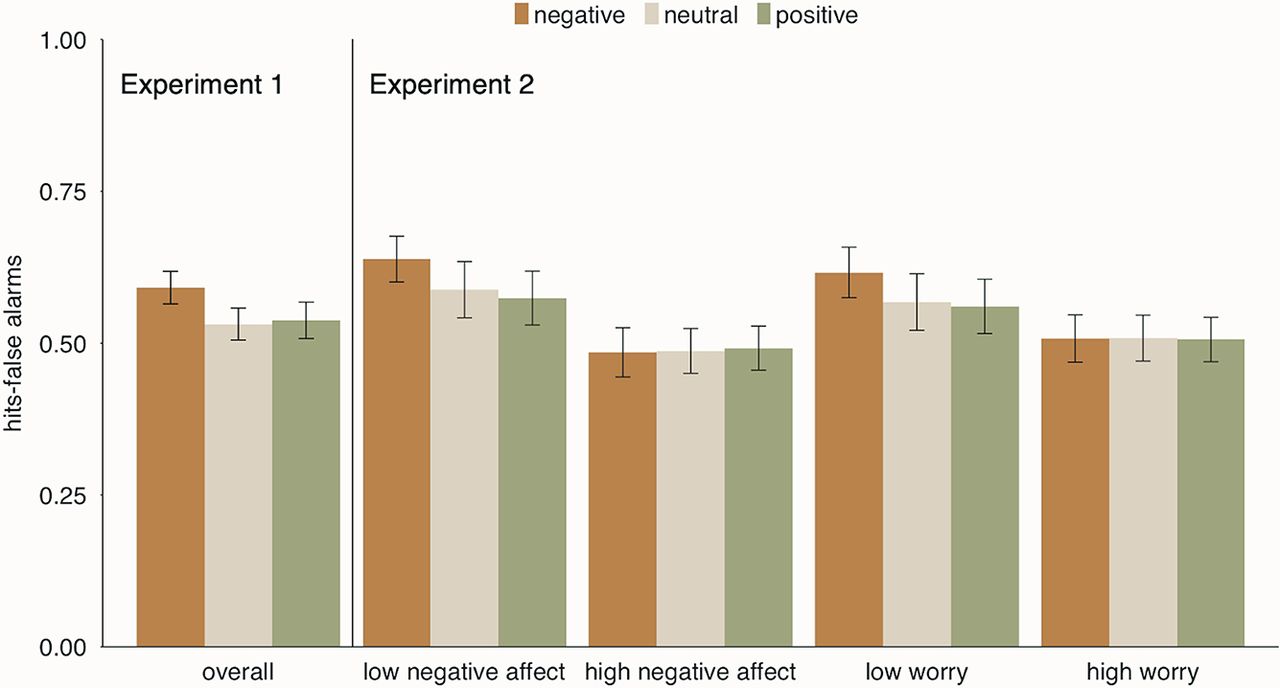
Figure 3.
Behavioral results. Mean item memory (proportion of hits–false alarms) across experiments 1 and 2. In experiment 1, recognition performance for items presented after negative contexts was significantly greater than for those presented after neutral and positive contexts. In experiment 2, participants with low negative affect had overall better memory performance compared to participants with high negative affect. No differences in recognition performance were found between the worry groups.