No effect of partial reinforcement on fear extinction learning and memory in C57BL/6J mice
- Department of Psychology, Neuroscience Program, Williams College, Williamstown 01267, Massachusetts, USA
- Corresponding author: vac1{at}williams.edu
Abstract
Partial reinforcement schedules, wherein a conditioned stimulus (CS) is intermittently paired with an unconditioned stimulus (US) during associative learning, have been widely studied and found to affect the extinction and recall of learned behaviors. Notably, behaviors conditioned under partial (as opposed to consistent) reinforcement are more resistant to extinction, an effect known as the partial reinforcement extinction effect (PREE). The present study initially aimed to examine the effects of partial reinforcement on the acquisition and recall of fear extinction (FE) when altering the contextual environment. However, our systematic investigation of partial reinforcement using C57BL/6J mice challenges the well-established PREE within the domain of FE learning. Across multiple experimental setups altering CS duration, US intensity, and reinforcement schedules, we consistently found no significant impact of partial reinforcement on the acquisition, consolidation, or recall of FE. Mice exhibited similar patterns of extinction and spontaneous recovery of conditioned fear responses regardless of reinforcement schedule. These findings suggest that partial reinforcement during fear acquisition may not confer resistance to extinction of conditioned freezing, challenging the established understanding of the PREE and prompting a reexamination of how reinforcement schedules affect learning and memory of fear-related behaviors.
Extinction learning is a basic form of behavioral change. Following the acquisition of a learned behavior, extinction emerges upon the omission of a reinforcer and is characterized by the progressive loss of conditioned responding. Mechanistically, it is believed that extinction is a form of inhibitory learning; that is, extinction learning represents a new association that competes with a previously acquired association (Mackintosh 1974; Capaldi 1994; Craske et al. 2014; Bouton et al. 2020). Because extinction training mainly suppresses previous learning—rather than causing its decay or erasure—the return, or relapse, of conditioned behavior is possible and likely (Dalton et al. 2008; An et al. 2017; Lacagnina et al. 2019). This is a problematic feature of extinction in clinical settings, where extinction training forms the foundation of exposure therapy, a type of cognitive-behavioral therapy. In clinical settings, repeated exposure is used to inhibit anxious thoughts or feelings, phobias, drug cravings, or obsessive behaviors; susceptibility to relapse is both undesirable and costly (McNally 2007; Torregrossa and Taylor 2013).
The efficacy of extinction depends on many factors, including the contingency between stimuli when learning was first established. In associative learning paradigms, a conditioned stimulus or CS, will elicit a conditioned response after it has been paired with an unconditioned stimulus or US. Whether the CS is always (i.e., consistent reinforcement) or only sometimes (i.e., partial reinforcement) paired with the US can affect acquisition and extinction of the behavior. Specifically, partial reinforcement schedules often result in slower acquisition of the conditioned response because the CS–US association is less reliable, and yet they have been found to make conditioned responses resistant to extinction training, a phenomenon called the “partial reinforcement extinction effect” (PREE) (Bouton et al. 2020).
The PREE is paradoxical. Partial reinforcement schedules are predicted to lower the strength of the CS–US association relative to consistent reinforcement, as the CS does not reliably predict the occurrence of the US. However, operant learning studies have shown partial reinforcement to lead to less efficacious extinction, despite this typically being associated with a stronger initial association (Gibbs et al. 1978; Gibbon et al. 1980; Rescorla 1998; Haselgrove et al. 2004; Xia et al. 2017; Harris et al. 2019). In contrast to these findings, several rodent fear learning studies have shown that while partial reinforcement results in diminished acquisition and recall of a conditioned fear response, the effects on extinction have been mixed. For example, several studies report a PREE (Brimer and Dockrill 1966; Hilton 1969; Huh et al. 2009), whereas others found a small, inconsistent or enhanced extinction (Thomas and Wagner 1964; Wagner et al. 1967; Scheuer 1969). In the case of human fear learning studies, partial reinforcement during fear conditioning (FC) consistently results in a PREE (Hilton 1969; Dunsmoor et al. 2007; Grady et al. 2016; Xia et al. 2017), and is associated with cognitive biases that promote negative affect, including threat stimulus generalization and overexpectancy (Dunsmoor et al. 2007; Grupe and Nitschke 2011; Dieterich et al. 2016; Zhao et al. 2022; Mitra and Asthana 2024).
One explanation for the PREE relies on the notion that animals cease responding during extinction when they no longer generalize the associations formed during conditioning to the extinction context (Mackintosh 1974; Capaldi 1994; Bouton et al. 2020). In other words, reduced responding occurs as a function of context generalization, or lack thereof, between conditioning and extinction (termed “generalization decrement”) (for review, see Sec. 2.5.2 in Bouton et al. 2020). A partial reinforcement schedule is like an extinction schedule because both schedules involve some experience of nonreinforcement, unlike consistent reinforcement schedules. This similarity makes it more challenging to differentiate between partial reinforcement and extinction, resulting in the response generalizing from the partial reinforcement to the extinction context (Harris et al. 2019). Accordingly, partial reinforcement schedules lead to lower, whereas consistent reinforcement schedules lead to greater generalization decrement.
Our previous work shows that when a fear CS is extinguished in distinct contexts across sessions, versus the same context, mice exhibit enhanced discrimination between CS paired with versus those unpaired with the US, as well as improved memory consolidation across learning sessions in mice (Cazares et al. 2019), also see studies in humans (cf. Bouton et al. 2006; De Jong et al. 2019; Hennings et al. 2020; Hermann et al. 2020). Here, we sought to identify the effects of partial reinforcement on extinction acquisition and recall when changes in context are implemented across extinction sessions, enabling us to further evaluate the notion of generalization decrement. First, we aimed to replicate the PREE in cued fear learning in mice. We hypothesized that mice in the partially reinforced group would exhibit resistance to extinction acquisition and poor recall compared to the consistently reinforced group. To our surprise, we found no effect of partial reinforcement on fear extinction (FE) acquisition within or between training sessions for male and female C57BL/6 mice. This failure to show an effect of partial reinforcement on FE was evident when the CS duration was 10 sec as well as when it was 25 sec. To investigate whether the lack of PREE was a consequence of a low number of conditioning trials (six trials, 50% CS:US), we repeated our experiments using double the number of trials (12 trials, 50% CS:US). Again, we found no effect of partial reinforcement on FE acquisition or consolidation. We then tested whether the lack of PREE resulted from a ceiling effect caused by the US strength (0.75 mA) or by a lack of range in the CS:US contingency; we repeated the experiments using a lowered US strength (0.3 mA) and added a lower CS:US contingency (10%). We found that lower US strength (0.3 mA) and the inclusion of a 10% contingency also did not affect FE acquisition, consolidation, or recall. Furthermore, we discovered that the lack of a PREE was not due to overtraining during the cued-FC phase by lowering the number of FC sessions (from two to one). We also evaluated whether increasing the contribution of nonreinforced trials (by interpolating a session of unreinforced CS between FC training days) would increase resistance to extinction training. Again, we found no differences between groups treated with different reinforcement contingencies. Taken together, our data suggest that partial reinforcement does not attenuate FE acquisition of conditioned freezing in C57BL/6 mice.
Results
No effect of partial reinforcement on FE acquisition or consolidation
To characterize the PREE in fear learning, we exposed mice to consistent reinforcement (3:3, CS:US pairs; 100% contingency) or partial reinforcement (6:3, CS:US pairs; 50% contingency) for 2 days followed by extinction training across 3 days and recall tests at 2 and 30 days after the last day of extinction (Fig. 1A). To account for potential CS duration-reinforcement schedule interaction effects, mice received CS durations of either 10 or 25 sec during the 2-day cued-FC protocol (Urushihara and Miller 2007). First, we evaluated the effects of contingency (50% vs. 100%) on within (Fig. 1B1) and between (Fig. 1B2) FC sessions. To assess the effect of contingency and CS duration on within-session FC (Fig. 1B1), we compared freezing levels for CS paired with the US (three total) on each conditioning day (FC1 and FC2). The results indicated no effects of contingency (P = 0.538) or CS duration (P = 0.144) on FC1, though we did observe a main effect of CS (F[1.75, 103.49]= 101.73, P < 0.001), suggesting effective FC to the CS:US pairs. On FC2, we again found a main effect of the CS:US pairs (F[1.84, 108.30] = 6.69, P = 0.002) and observed greater freezing levels in mice from the 25 sec CS duration group (F[1, 59] = 6.11, P = 0.016). Similarly, when comparing freezing levels between-sessions, averaging freezing by all CS (i.e., three CS in 100% contingency, six CS in 50% contingency, see Fig. 1B2), we found that freezing was higher on FC day 2 (relative to day 1, F[1, 59] = 78.14, P < 0.001), suggesting FC acquisition across days. Though, no effect of contingency was observed (P = 0.172). As in the within-session analysis, mice exposed to the 25 sec CS exhibited higher freezing levels on FC2 (F[1, 59] = 6.54, P = 0.013). Statistical tables for all figures can be found in the supplemental information and in the data availability section.
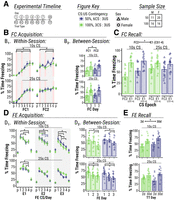
No effect of partial reinforcement on fear extinction acquisition or consolidation. (A) Mice were fear conditioned (FC) in context A for 2 days. One group of mice received consistent reinforcement (100%: 3CS:3US), while another received partial reinforcement (50%: 6CS:3US). Mice were then trained on FE in context B, where they experienced 12 unreinforced CS presentations, once per day, for 3 days. Tone tests (TT) consisting of four unreinforced CS presentations were conducted in context B at 2 and 30 days following the last extinction training day (day 5). (B1) The effect of partial reinforcement on within-session FC acquisition. Comparisons of average percent time freezing for CS–US pairs (pink shaded regions) revealed no effect of contingency (P > 0.05). Freezing increased as a function of CS presentations on both FC1 (P < 0.001) and FC2 (P = 0.002), individual differences between CS shown in the graph. (B2) The effect of partial reinforcement on between-session FC acquisition. Average freezing across all CS was higher for FC2 than FC1 (P < 0.001), with no effect of contingency (P > 0.05). A 25 sec CS elicited greater freezing than 10 sec CS on FC2 (P = 0.013). (C) No effect of partial reinforcement on FC recall. Despite no effect of CS contingency (P > 0.05), all animals showed a significantly higher percent time freezing during the first four CS presentations on FE1 than during FC2 (P < 0.001). (D) The effect of partial reinforcement on FE acquisition. Each number (1–4) along the x-axis represents a bin of three CS (for a total of 12 on each day of extinction); “P” denotes pretone and posttone periods, respectively. Significant differences (P < 0.05) between CS-bins are denoted by an asterisk. (D1) Effects of partial reinforcement on within-session FE acquisition. Percent time freezing decreased across CS bin on each FE day (P < 0.001, each). There were no differences between CS contingencies or CS duration at any CS bin (P > 0.05). (D2) The effect of partial reinforcement on between-session FE acquisition. Average freezing across all CS per day showed reduced levels of freezing as a function of FE training day (P < 0.001), yet there was no effect of contingency. (E) All groups exhibited spontaneous recovery of fear. All groups demonstrated greater levels of freezing at 30 days as compared to 2 days postextinction, regardless of contingency or CS duration, indicating spontaneous recovery (P < 0.05). Four animals were removed from FE recall analysis due to experimenter error. Error bars represent ±standard error of mean (SEM).
Next, we examined the effects of contingency on FC recall (Fig. 1C). This was evaluated by comparing percent time freezing between two CS epochs: (1) mean freezing across all CS on FC day 2 and (2) the first four CS presentations on FE day 1 (4CS-FE1). We found no effect of contingency on FC recall (P = 0.209). We did discover a significant effect of CS epoch (F[1, 59] = 53.57, P < 0.001), where freezing levels at 4CS-FE1 were greater than freezing levels at FC2. In addition, we identified an interaction between CS epoch and CS duration (F[1, 59] = 8.18, P = 0.006). Post hoc t-tests indicated that the mice in the 25 sec CS duration exhibited higher freezing levels than those in the 10 sec CS duration on FC2, but not 4CS-FE1.
To evaluate the effect of partial reinforcement on FE acquisition (Fig. 1D), mice were exposed to 12 unreinforced CS presentations for three consecutive FE days (FE1, FE2, and FE3). To isolate changes in conditioned freezing to the cue (rather than cue + context), extinction was carried out in a novel context (context B) (see Materials and Methods). As in our analyses of fear acquisition, we examined FE acquisition within- (Fig. 1D1) and between-sessions (Fig. 1D2). To evaluate within-session FE, percent time freezing was compared across bins composed of 3CS presentations on each FE day. We found a main effect of CS-bin for each day of FE (FE1, F[2.68, 157.83] = 15.70, P < 0.001; FE2, F[2.61, 154.01] = 28.67, P < 0.001; FE3, F[2.81, 165.68] = 57.00, P < 0.001), indicating effective FE within-session. There were no differences in percent time freezing between reinforcement contingency groups at any CS-bin (to see all contrast tests, see Supplemental Material). We also found no effect of contingency on the slope of the extinction acquisition curves on any FE day (P > 0.05). For the between-sessions extinction analysis, we compared average percent time freezing across all CS presentations per extinction training day (Fig. 1D2). While there was no effect of contingency on between-session extinction (P = 0.782), a significant interaction between CS duration and FE day was observed (F[1.77, 104.44] = 3.99, P = 0.026). Post hoc t-test revealed that except for FE1-FE2 comparison for the 10 sec CS duration group, all other FE days were significantly different from one another (see Fig. 1D2).
Next, we examined whether partial reinforcement affects FE recall at recent (2 day) or remote (30 day) time points (Fig. 1E). Mice were returned to context B and received a tone test (four CS presentations) 48 and 30 days after the last day of extinction training. We found that all groups, independent of reinforcement contingency or CS duration, exhibited greater freezing 30 days postextinction relative to 2 days postextinction (F[1, 44] = 38.62, P < 0.001) (see Supplemental Material for simple contrasts), consistent with a spontaneous fear recovery phenotype. In sum, our results suggest that partial reinforcement does not have a significant effect on fear learning, extinction learning, or recall.
No effect of partial reinforcement on FE acquisition with increased CS:US trials during cued-FC
Because we did not observe a PREE, we tested whether an increased number of CS:US trials was necessary to reveal extinction resistance using partial reinforcement, as this has been shown to affect PREE (Brimer and Dockrill 1966). To do this, we repeated the experiments (as in Fig. 1A) using the 10 sec CS duration but doubled the number of CS:US trials (12:6 CS:US pairs for 50% contingency; 6:6 CS:US pairs for 100% contingency) (Fig. 2A). All statistical analyses were performed as in Figure 1.
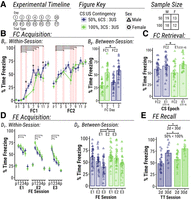
Increasing CS:US trials during FC does not result in PREE. (A) Experimental procedures were carried out as in Figure 1A except for the number of CS:US trials per group. The group exposed to consistent reinforcement (100%) received 6CS:6US pairs, while the partial reinforcement group (50%) received 12CS:6US pairs. (B1) The effect of partial reinforcement on within-session FC acquisition. Partial reinforcement (50%) resulted in higher levels of freezing than consistent reinforcement (100%) during CS:US pairings 2 (P = 0.044), 3 (P < 0.001), and 6 (P = 0.026) on FC1. There was no effect of contingency on FC2 (P > 0.05). Both contingency groups increased freezing relative to baseline (P < 0.001) on both days. (B2) The effect of partial reinforcement on between-session FC acquisition. Conditioned freezing was higher overall in the 50% contingency group (P = 0.048), and both groups exhibited greater freezing on FC2 than FC1 (P < 0.001). (C) Comparison of contingency and CS epoch on FC retrieval. There was a significant effect of CS epoch (P < 0.05), yet no effect of contingency on fear retrieval. (D) No effect of partial reinforcement on FE acquisition. There were no differences in conditioned freezing in any CS-bin between contingencies (P > 0.05). Each number (1–4) along the x-axis represents a bin of three CS; “P” denotes pretone and posttone periods, respectively. (D1) No effect of partial reinforcement on within-session FE acquisition. All groups reduced conditioned freezing within each session (P < 0.001, each). There was no effect of contingency on freezing at any CS bin (P > 0.05). (D2) No effect of partial reinforcement on between-session FE. Freezing decreased across FE days (P < 0.001) without any effect of reinforcement contingency (P > 0.05). (E) The effect of partial reinforcement on FE recall. Consistently reinforced mice displayed greater levels of freezing than those with partial reinforcement (P = 0.038), while freezing increased between 2 and 30 days in both conditions (P < 0.001). Error bars represent ±SEM. Red shaded regions represent CS–US pairings.
Analysis of within-session fear acquisition for FC1 resulted in main effects of contingency (F[1, 60] = 11.17, P = 0.001), CS (F[3.91, 234.31] = 54.46, P < 0.001), and a significant interaction effect (F[3.91, 234.31] = 5.32, P < 0.001). As shown in Figure 2B1, mice in the 100% contingency showed reduced freezing at CS:US pairings 2, 3, and 6 (P < 0.05) relative to the 50% contingency group. Nonetheless, both contingency groups showed significant increases in freezing relative to baseline (i.e., CS1 vs. CS6, P < 0.001). On FC2, differences between reinforcement contingency disappeared; we observed only a main effect of CS (F[4.50, 270.00] = 7.33, P < 0.001), indicating acquisition of the conditioned fear response. The analysis of the between-session data (Fig. 2B2) resulted in main effects of contingency (F[1, 60] = 4.06, P = 0.048) and of FC day (F[1, 60] = 115.11, P < 0.001), indicating greater conditioned fear on FC2 compared with FC1, and overall higher freezing by the 50% group. Next, we measured fear retrieval (using the same methods as in Fig. 1C), and discovered greater CS freezing during CS1–4 in FE1 versus FC2 (F[1, 60] = 13.29, P < 0.001), but no main effect of contingency (P = 0.561) (Fig. 2C).
On all days of FE, all groups showed significant reductions in conditioned freezing within-session as a function of CS-bin (E1, F(2.77, 166.14) = 13.77; F(2.59, 155.21) = 51.59; F(2.90, 174.11) = 74.37, P < 0.001) (Fig. 2D1). We did not observe differences in freezing between reinforcement contingency groups at any CS bin. In addition, contingency did not affect the slope of FE acquisition on any FE day (P > 0.05). Similarly, when evaluating differences in between-session consolidation, we found that freezing reduced as a function of FE day (F[1.92, 115.35] = 33.79, P < 0.001) and that there was no effect of contingency (Fig. 2D2). Finally, we assessed for differences in FE recall 2 and 30 day tone tests (Fig. 2E). The results showed that all mice exhibited greater conditioned freezing at 30 day compared to the 2 day tone test (t[21] = 7.212, P < 0.001) and we also observed greater freezing in the 50% reinforcement group (t[21] = 2.21, P = 0.038). Taken together, these results once again lead us to conclude that there are minimal to no effects of partial reinforcement on fear learning and extinction.
Lower US strength (0.3 mA) and partial reinforcement alter fear learning but do not affect FE
The previous experiments failed to establish a PREE in fear learning in mice despite varying CS duration and the number of trials. One possible explanation for this was that the US strength used in previous protocols (0.75 mA) may have resulted in a ceiling effect, masking any effects of partial reinforcement on extinction. To avert this, we implemented a weaker US footshock (0.3 mA; Jo et al. 2018). To further maximize the possibility to detect PREE, we also widened the range of contingencies in our study by introducing a 10% contingency protocol (Fig. 3A; Scheuer 1969). Our experimental design incorporated three groups with varying contingencies: a consistent reinforcement group (a 100% contingency: 3CS:3US pairing) and two partial reinforcement groups: a 50% contingency (6CS:3US pairing) and a 10% contingency (30CS:3US). All statistical analyses were performed as in Figures 1 and 2.
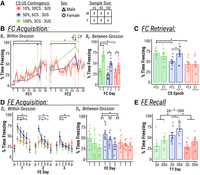
Lower US strength (0.3 mA) and partial reinforcement alter fear learning but do not affect FE. (A) Mice were placed into an FC chamber (context A) across 2 days and received CS-tones that were either paired or unpaired with a 0.30 mA US footshock. One group of mice received consistent reinforcement (100%: 3CS:3US,) while two other groups received partial reinforcement (50%: 6CS:3US; 10%: 30CS:3US). (B1) The effect of partial reinforcement (50%; 10%) on within-session FC acquisition. Conditioned freezing increased across both FC trials (P < 0.001). Partial reinforcement (50% and 10%) led to decreased freezing at CS2 (P < 0.001) and CS3 (P = 0.007) relative to CS1 during FC2. (B2) The effect of partial reinforcement (50%; 10%) on between-session FC acquisition. All conditions displayed increased freezing on FC2 relative to FC1 (P < 0.001). The consistently reinforced (100%) group demonstrated higher levels of freezing on FC2 than partially reinforced group (50%, P = 0.014; 10%, P = 0.001). (C) The effect of partial reinforcement on FC retrieval. 50% reinforcement led to higher levels of freezing during FE1 (CS1–4) than FC2 (P = 0.013). (D1) The effect of partial reinforcement on within-session FE acquisition. On FE1, percent time freezing decreased across CS bin (P < 0.001) without any effect of CS contingency at any CS bin (P > 0.05). On FE2, freezing during CS bin 1 was greater in the 50% reinforcement group than 100% or 10% (P = 0.05). On FE2, the 50% reinforcement group exhibited lower levels of freezing during CS bins 2–4 than CS bin 1 (P < 0.01). On FE3, freezing decreased across bins (P < 0.001), yet contingency had no effect on freezing (P > 0.05). (D2) No effect of partial reinforcement on between-session FE acquisition. Freezing decreased across FE days (P < 0.001). There was no effect of contingency on freezing between FE days (P > 0.05). (E) The effect of reinforcement contingency on FE recall. Conditioned freezing was greater at the 30 days tone test than the 2 day test (P = 0.019). Conditioned freezing was significantly lower for both the 100% (P = 0.002) and 10% (P < 0.001) contingency groups relative to the 50% group. Error bars represent ± SEM. Red shaded regions represent CS–US pairings.
First, in fear acquisition, we found a main effect of CS on within-session freezing on FC1 (F[1.90, 39.94] = 75.96, P < 0.001 (Fig. 3B1)), whereas on FC2, we observed main effects of CS and reinforcement contingency (F[1.72, 36.08] = 15.27, P < 0.001; F(2, 21) = 5.77, P = 0.01, respectively). Post hoc contrasts demonstrated that consistent reinforcement (100%) led to significantly increased freezing on CS2 and CS3 (see Fig. 3B1; Supplemental Material). Next, analysis of between-session freezing (Fig. 3B2) showed a significant interaction between FC training day and contingency (F[2, 21] = 15.47, P = 0.012). All groups demonstrated significantly increased freezing on FC2 relative to FC1 (P < 0.01). In addition, groups receiving 100% reinforcement exhibited higher freezing levels on FC2 compared to the partial reinforcement groups (10, 50%, P < 0.05). When examining FC recall (Fig. 3C), we found that only the 50% reinforcement group exhibited greater conditioned freezing in the 4CS-FE1 epoch compared with FC2 (t[21] = 2.7, P = 0.013).
As before, we evaluated the effects of the reinforcement contingency on FE acquisition within- (Fig. 3D1) and between-sessions (Fig. 3D2) for each FE day. On FE1, we found a main effect of CS-bin on within-session freezing (F[2.24, 46.97] = 12.81, P < 0.001) but no effect of contingency (P = 0.244). Similarly, when we compared the slope of FE acquisition on FE1, we found no effect of contingency (P = 0.238). On FE2, the analysis results showed a significant interaction between reinforcement contingency and CS-bin (F[4.42, 46.39] = 2.69, P < 0.038). This interaction was driven by the fact that freezing levels on CS bin 1 were significantly higher in the 50% reinforcement contingency group relative to 100% and 10% (P = 0.05). In addition, the 50% group exhibited lower freezing levels on CS bins 2–4 compared with CS bin 1 (P < 0.01); the other reinforcement contingencies did not show this effect. We also discovered that the acquisition curve on FE2 for the 50% had a greater slope than the 100% group, opposite to what is predicted by PREE (t[21] = 2.87, P = 0.023). Finally, on FE3, there was no effect of contingency or significant interaction. Similarly, analysis of between-session extinction (Fig. 3D2) showed a main effect of FE day (F[1.61, 33.71] = 12.76, P < 0.001), but not of a contingency (P = 0.408). Finally, in the FE recall analysis (Fig. 3E), we observed a main effect of tone-test day, which demonstrated greater freezing at the 30 day tone test relative to the 2 day test (t[21] = 2.53, P = 0.019) and a main effect of contingency, showing that the 50% group exhibited greater freezing levels than the 10 (t[21] = 4.28, P < 0.001) and 100% (t[21] = 3.93, P = 0.002) groups. Altogether, these data show that decreasing the US strength altered fear acquisition and FE recall patterns; however, we were yet again unable to identify a PREE.
Reducing the number of cued FC sessions does not result in PREE; extinction of a reinstated conditioned freezing response is also not altered by partial reinforcement
Previous studies have found that the over-training may occlude the PREE (Sutherland et al. 1965; Hilton 1969). To address the possibility that this was occurring in our experiments, we reduced the cued-FC protocol from 2 days to one (see Fig. 4A). As in Figures 1 and 2, mice were conditioned using three (100%) or six (50%) CS which were paired with 3 US (0.75 mA). When evaluating changes in within-session freezing to the CS:US pairs, we found an interaction effect between CS:US exposure and reinforcement contingency (F[1.99, 37.84] = 3.30, P = 0.048) (Fig. 4B1). The 100% contingency group exhibited greater freezing to the reinforced CS-3 (relative to CS1, P = 0.001), whereas the partial reinforcement group showed greater freezing at the reinforced CS2 and 3 relative to CS1 (P < 0.001) (see Fig. 4B1). We did not observe an effect of contingency when comparing overall FC session freezing (averaging all CS exposures except for CS1, P = 0.07). Finally, no differences between contingency were observed in extinction training (P = 0.174) (Fig. 4C). These results are consistent with our findings from experiments in Figures 1 and 2, which used 2 days of FC acquisition training.
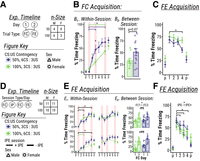
Less FC training and blocks of nonreinforcement do not result in PREE. (A) Mice were FC in context A for one trial, during which they received consistent reinforcement (100%; 3CS:3US) or partial reinforcement (50%; 6CS:3US). They underwent one FE trial in context B on the following day, where they were exposed to 12 unreinforced CS presentations. (B1) The effect of partial reinforcement on within-session 1-day FC acquisition. The consistently reinforced (100%) group demonstrated higher levels of freezing to CS3 than CS1 (P = 0.004). The partially reinforced (50%) group displayed greater freezing to reinforced CS2 (P < 0.001) and CS3 (P < 0.001) relative to CS1. (B2) No overall effect of reinforcement contingency on overall FC session freezing (P > 0.05). (C) No effect of reinforcement contingency on FE acquisition (P > 0.05). (D) Mice experienced 2 days of FC in context A; one group received consistent reinforcement and the other received partial reinforcement (see above). In addition, some mice received a session of 20 unreinforced CS exposures in context A interpolated (+IPE) between FC day 1 and FC day 2. The control group (−IPE) was placed in context A for the same amount of time without any CS exposures. Twenty-four hours after FC day 2, one FE trial was conducted in context B, consisting of 12 unreinforced CS. (E1) The effect of partial reinforcement on within-session FC acquisition ± interpolated extinction (IPE). During FC1, freezing increased across the trial in both contingency groups (P < 0.001), with an interaction between contingency and CS (P = 0.009). There was no effect of reinforcement contingency on freezing during FC2 (P > 0.05). (E2) No effect of partial reinforcement or IPE on between-session FC acquisition (P > 0.05). Freezing increased from FC1 to FC2 regardless of group (P < 0.001). (F) The effect of partial reinforcement and IPE on FE acquisition. +IPE groups demonstrated attenuated freezing overall (P = 0.033), but contingency had no effect (P > 0.05). P along the x-axis represents pretone and posttone periods, respectively. Error bars represent ± SEM. Red shaded regions represent CS–US pairings.
Finally, we attempted to stimulate a PREE using an IPE session (Fig. 4D). We based this approach on a previous study that inflated the PREE by interpolating a block of nonreinforced trials (20 CS) in the conditioning phase with the rationale of enhancing the effect of nonreinforcement (Hilton 1969). Recently, Harris (2023) also observed greater resistance to extinction among rats that experienced long sequences of nonreinforced trials of a CS (Harris 2023). As shown in Figure 4D, mice were exposed to the interpolated CS session (+IPE) on day 2 of the paradigm, in between FC training days (days 1 and 3); mice in the control group (−IPE) were placed in the chamber for an equal amount of time but were not exposed to CS. When evaluating changes in within-session freezing as a function of the CS paired with the US, we found an interaction between contingency and CS on FC1 (F[1.89, 75.44] = 5.24, P = 0.008), but not FC2, which took place after the IPE session (Fig. 4E). Furthermore, beyond finding greater freezing on FC2 relative to FC1 (F[1, 38] = 75.75, P < 0.001), we found no significant differences between any groups when comparing between-session freezing. Importantly, despite implementing the IPE protocol we again found no effect of reinforcement contingency on extinction acquisition. We did find a main effect of CS exposures, consistent with effective extinction (F[2.67, 85.53] = 18.23, P < 0.001) and we also found a main effect of IPE, indicating that the presence of IPE led to lower freezing values, opposite to what was expected (F[1, 32]= 4.96, P = 0.033). Taken together, these results suggest that the absence of PREE was not a result of overtraining and that a large block of nonreinforced (20 CS) trials was not sufficient to stimulate the PREE.
Discussion
PREE is one of the most extensively studied phenomena in learning theory. This is partly because accounting for the factors that drive PREE can inform the fundamental mechanisms underlying behavioral change during extinction training. More recently, partial reinforcement has been used in behavioral neuroscience to identify the neural correlates of prediction-error effects on associative learning (i.e., learning that is driven by the discrepancy between expected and actual outcomes [Huh et al. 2009; Tronson et al. 2012; Berg et al. 2014; Walker et al. 2020]). Furthermore, the PREE specifically has been incorporated into computational models for how neural circuit activity might instantiate such prediction error-based Pavlovian FC and extinction (Li et al. 2016). However, no previous studies have addressed whether partial reinforcement affects the extinction of cue-conditioned freezing in rodents, one of the most frequently used response measures for fear learning. From a translational perspective, understanding the effects of partial reinforcement is important because it may be more ecologically representative of the human experience, where exposure to fear- or anxiety-inducing stimuli are more often intermittent than consistent events. In fact, partial reinforcement in associative fear learning paradigms is associated with cognitive biases that support negative affect and thus may be critical aspects of anxiety-related disorders (Grupe and Nitschke 2011; Dieterich et al. 2016). In this study, we initially aimed to investigate interactive effects of partial reinforcement in the presence of changes to contextual elements in the training environment on FE acquisition, consolidation, and recall in mice. However, despite conducting several experiments using various contingencies, CS durations, number of trials, US strengths, number of cued FC sessions, and extinction paradigms, we failed to demonstrate a PREE. Altogether, these studies provide compelling evidence that partial reinforcement does not lead to resistance to extinction of conditioned freezing in C57BL/6J mice.
Our study yielded a few notable findings: (1) we observed an increase in freezing between the cued-FC protocol (2 days of three tone–shock pairings) and the first four CS presentations in extinction (see Figs. 1 and 2C). This effect resembles a short-term fear incubation and was only reliably exhibited by mice exposed to the 0.75 mA US. (2) Similarly, we observed evidence for the spontaneous recovery of fear with greater levels of conditioned freezing present during a 30 day tone test, relative to the 2 day tone test (Figs. 1⇑–3E). (3) Most importantly, we did not find evidence to support the hypothesis that partial reinforcement leads to extinction resistance. Across all our experiments, which besides varying the reinforcement contingency also varied CS duration, number of trials and fear or extinction training sessions, US strength, and the number of nonreinforcement trials (i.e., IPE), we failed to detect any significant effects of reinforcement contingency on the acquisition or consolidation of extinction memory.
Only one other study has assessed the effects of partial reinforcement on the extinction of conditioned freezing. Huh et al. (2009), using contextual FC, found that partial reinforcement across sessions (where mice were exposed to a shock US on 50% of the daily context exposures) exhibited higher freezing after 5 days of extinction training relative to groups receiving reinforcement on 100% of the daily FC sessions. Among the studies using partial reinforcement to assess changes in cue-conditioned freezing, none have evaluated the differences on extinction (focusing on acquisition or recall instead). For example, Cain et al. (2005), who also used tone CS (though considerably longer duration tones), found that partial reinforcement (10% or 50%) led to lower levels of fear recall (assessed 24 h after training), though, as mentioned, the effects of contingency on extinction learning were not assessed. Similarly, recent studies employing discrimination paradigms, where distinct CS are paired with consistent versus partial reinforcement, found that rats effectively reduce fear responses (conditioned suppression) to the partially reinforced CS while maintaining high fear responding to consistently reinforced CS during fear acquisition training trials. These studies posit that the neural mechanisms leading to suppression of fear for a probabilistic CS during cued FC are the same or like those engaged during extinction training for the consistently reinforced CS (as they both rely on negative prediction error; e.g., expecting a footshock, but receiving none). Indeed, neurons in the dorsal raphe nucleus and the periaqueductal gray have been found to activate specifically in response to US omission in extinction or partial reinforcement (Berg et al. 2014; Walker et al. 2020). However, once again, differences in extinction acquisition between reinforcement contingencies were not assessed.
The absence of a PREE in our study is not entirely unexpected since the evidence for a PREE of aversively conditioned responses in rodents is mixed. Wagner et al. found that in rats, shock conditioned startle in the presence of a light CS did not differ between partial (50%) and consistent (100%) reinforcement groups; whereas conditioned suppression of leverpressing results in a sizable PREE (Brimer and Dockrill 1966; Wagner et al. 1967; Hilton 1969). One study measuring changes in the conditioned reflex of the rabbit's nictitating membrane found that partial reinforcement (50%) led to significant attenuation of extinction, though another study using a lower US strength found no effect of partial reinforcement in the same rabbit preparation (Thomas and Wagner 1964; Leonard 1975).
The presence or absence of the PREE could be accounted for by several factors. For example, experiencing a high number of training trials with consistent reinforcement tends to abrogate the PREE (Hilton 1969; Scheuer 1969). We attempted to address this by reducing the amount of conditioning (Fig. 4A–C) and by implementing an IPE session that might bolster the effect of nonreinforcement (Fig. 4D–F), though in neither case did we observe a PREE (Harris et al. 2019). One possibility for the failure to detect PREE in these conditions is that our training was not spaced enough. Studies using a single trial per session but more training sessions (five to 13) show more clear evidence of PREE (Hilton 1969; Huh et al. 2009). Thus, future work should assess whether spaced training is more favorable for stimulating a PREE in cued FC. Another possibility is that associative strength of the context differentially alters the effectiveness of the CS depending on the schedule of reinforcement (partial or continuous) and thereby affects the PREE. However, Bouton and King found that a history of partial reinforcement alone is not sufficient to produce a CS whose fear is augmented by contextual fear (Bouton and King 1986). In this regard, the duration of the CS may also play a role in the subject's ability to discriminate the tone cue from context thus altering the impact of partial reinforcement. Our study found minimal effects of cue duration on extinction when comparing 10 and 25 sec tones (Fig. 1), whereas Cain et al. (2005), who used 2 min tone CS, found an effect of contingency on FC recall. This raises the possibility that longer CS may be more favorable to the PREE in conditioned freezing. Although one study comparing 30 sec with 3 min CS found that the longer, 3 min CS produced less resistance to extinction in a conditioned suppression task (Hilton 1969).
If indeed extinction of a cued freezing response is not susceptible to PREE, there may be evolutionary explanations for this. For example, a defensive posture such as freezing, which evolved as means of evading predators in rodents, might be highly stereotyped and less sensitive to reinforcement schedules than, for example, food seeking, given its immediate relationship to survival probability (i.e., predatory imminence) (Fanselow 2022). In that sense, cue-conditioned freezing might be less translatable to anxiety states than other responses, such as conditioned suppression, which seem to more reliably result in PREE (Perusini and Fanselow 2015). Another possible explanation for the absence of a PREE in CS freezing relates to the type of learning engaged. For example, a classically conditioned response such as freezing to a cue is more proximal to the reinforcer and thus less susceptible to the effects of reinforcement contingency relative to an operant response that involves behavior chains, or freezing to a context where there is no distinct cue signaling reinforcer delivery (Sutherland et al. 1965; Mackintosh 1974). In summary, our study provides substantial evidence that partial reinforcement does not produce resistance to extinction in cue-conditioned freezing behavior suggesting that extinction mechanisms may differ based on the learning paradigms employed or the nature of the affective behavior under study.
Materials and Methods
Animals
All experiments were approved by the Institutional Animal Care and Use Committee at Williams College and were performed in accordance with the guidelines described in the National Institutes of Health Guide for the Care and Use of Laboratory Animals. Male and female C67BL/6J mice were purchased from The Jackson Laboratory (000664) or bred in-house using experimentally naive breeders from the same source. Up to six same sex mice were group-housed in large (11 × 9 × 6.5 in) cages with ad libitum access to food and water. The animal colony was maintained in a temperature-controlled facility (22°C, 35%–45% humidity) on a 12/12 h light/dark cycle. All behavioral experiments were done in the daytime during the light phase of the cycle.
Pavlovian fear learning apparatus
Cued-FC was conducted in 9.5 × 12 × 8.25 in chambers (Med-Associates VFC2-USB-M) housed in 24.25 × 22 × 28.75 in sound attenuated boxes. Each chamber has clear acrylic backs and doors, aluminum sides, stainless steel rod floors (spaced 0.31 in apart), stainless steel drop pans, and is illuminated by overhead full spectrum and near-infrared (940 nm) light. Footshocks were administered through the rods via solid-state shock scramblers. Tone stimuli were delivered via a programmable speaker. Video was captured at a frame rate of 30 Hz using a monochrome front-facing camera equipped with a near-infrared pass filter. VideoFreeze (Med-Associates) running on a desktop PC was used to acquire images and to program delivery of all stimuli.
Behavioral testing
Mice did not receive any habituation to tones prior to conditioning. All experiments consisted of one or 2 days of delayed FC, during which 10 or 25 sec tones (50 db, 4.0 kHz), serving as conditioned stimuli (CS), immediately preceded 0.75 or 0.3 mA footshocks, the unconditioned stimuli (US). Following FC, mice received between one and three consecutive days of FE training, each day of which consisted of 12 unreinforced exposures to the CS. To assess the strength of recent and remote FE memory, mice were exposed to four CS at 2 and 30 days after extinction training (see Fig. 1A). Mice that were consistently reinforced during FC received 3:3 or 6:6 CS:US pairings. Mice in the partial reinforcement group received 6:3 or 12:6 CS:US pairs (50% contingency), or 30:3 CS:US pairs (10% contingency). In all experiments, we matched the number of US per group (rather than the total number of CS trials). The rationale for this was based on the idea that an equal number of US would result in more similar levels of freezing at the end of training; and that previous studies showing a PREE of a classically conditioned response matched the US rather than the number of CS (e.g., Wagner et al. 1964, 1967; Hilton 1969; Mackintosh 1974, though Brimer and Dockrill 1966 and Huh et al. 2009 show otherwise). FC training took place in context A: a metal rod floor grid, scented and cleaned with 30% white vinegar in water, standard walls (see apparatus details above), and lights on. FE and the 4 CS tone-tests were conducted in context B: a semicircular white acrylic wall and white acrylic flooring, scented and cleaned with 75% ethanol in water, lights off. In experiment 4 (Fig. 4D), interpolated 20 CS exposures occurred in context A.
Data analysis and statistics
Freezing was defined as the absence of movement except for breathing in 1 sec bins. In brief, a motion index was determined based on the variance of pixel intensity across video frames (differences between pixels in the current frame relative to a reference sample, taken before the animal is in the chamber, are interpreted as animal movement). Freezing is defined as any motion that falls below a motion index threshold that is held constant across all experiments and trials (Anagnostaras et al. 2010). Percent time freezing was calculated from segmented data based on the presence of a CS-tone, and the pretone and posttone periods; however, only CS periods were used for statistical analyses. To evaluate differences between experimental groups, we employed mixed multifactor ANOVA. Acquisition of FC and extinction was evaluated using separate analyses for within-session and between sessions. For within-session analysis of FC, only CS paired with a US were considered (which were an equal number of pairs for each contingency since the number of US was held constant). For between-sessions experiments, mean freezing values per session were generated by averaging all CS in a particular training session. Moreover, for extinction acquisition, we created statistical contrast comparing mean freezing per group, and also the mean slope of acquisition curves (Rosenthal et al. 2011). Our original statistical models included sex as a grouping variable; however, this factor was dropped from analysis when no statistically significant effects were observed. Nonetheless, wherever possible data are depicted by sex and when not possible, the data is separated by sex in Supplemental Figures S1, A–C; S2, A–C; S3, A–C; and S4, A–E. Post hoc t-tests were employed to assess basic contrasts (i.e., comparing the levels of one factor while holding the other two fixed) using Tukey's correction for multiple comparisons. All data analysis and graphing were carried out using R and Rstudio.
Data deposition
All data analysis and graphing were carried out using R and RStudio (to access all raw data and code used for analysis see https://github.com/neurovaclab/Su-etal-2024). Complete statistical results are shown in: https://neurovaclab.github.io/Su-etal-2024/.
Acknowledgments
We thank the animal husbandry team, including Jack Snyder, Jonathan Gillig, and Tor Bashista. In addition, we are very grateful to Dr. Noah Sandstrom and Dr. Shannon Moore for valuable feedback on earlier versions of this manuscript. We also acknowledge our grant funding from the National Institutes of Health (R15MH129947).
Footnotes
-
[Supplemental material is available for this article.]
-
Article is online at http://www.learnmem.org/cgi/doi/10.1101/lm.054033.124.
- Received June 12, 2024.
- Accepted December 12, 2024.
This article is distributed exclusively by Cold Spring Harbor Laboratory Press for the first 12 months after the full-issue publication date (see http://learnmem.cshlp.org/site/misc/terms.xhtml). After 12 months, it is available under a Creative Commons License (Attribution-NonCommercial 4.0 International), as described at http://creativecommons.org/licenses/by-nc/4.0/.