Monoubiquitination of histone H2B is a crucial regulator of the transcriptome during memory formation
- Shaghayegh Navabpour1,6,
- Kayla Farrell2,
- Shannon E. Kincaid2,
- Nour Omar3,
- Madeline Musaus3,
- Yu Lin4,
- Hehuang Xie3,4,5 and
- Timothy J. Jarome1,2,3
- 1Translational Biology, Medicine and Health Graduate Program, Virginia Polytechnic Institute and State University, Blacksburg, Virginia 24061, USA
- 2School of Animal Sciences, Virginia Polytechnic Institute and State University, Blacksburg, Virginia 24061, USA
- 3School of Neuroscience, Virginia Polytechnic Institute and State University, Blacksburg, Virginia 24061, USA
- 4Department of Biomedical Sciences and Pathobiology, Virginia-Maryland College of Veterinary Medicine, Blacksburg, Virginia 24061, USA
- 5Fralin Life Science Institute at Virginia Tech, Blacksburg, Virginia 24061, USA
- Corresponding author: tjjarome{at}vt.edu
Abstract
Posttranslational modification of histone proteins is critical for memory formation. Recently, we showed that monoubiquitination of histone H2B at lysine 120 (H2Bub) is critical for memory formation in the hippocampus. However, the transcriptome controlled by H2Bub remains unknown. Here, we found that fear conditioning in male rats increased or decreased the expression of 86 genes in the hippocampus but, surprisingly, siRNA-mediated knockdown of the H2Bub ligase, Rnf20, abolished changes in all but one of these genes. These findings suggest that monoubiquitination of histone H2B is a crucial regulator of the transcriptome during memory formation.
Over the last five decades, strong evidence has emerged that gene transcription is necessary for memory formation in the hippocampus (Phillips and LeDoux 1992; Ramirez et al. 2013; Alberini and Kandel 2015). It is established that histone posttranslational modifications, such as histone H2B monoubiquitination at lysine 120 (H2Bub), the only known site of H2B ubiquitination in mammalian cells, regulate, alone or in concert (histone cross talk), the transcription of genes essential for normal cellular functions, such as memory formation (Levenson et al. 2004; Gupta et al. 2010; Gupta-Agarwal et al. 2012; Zovkic et al. 2013; Jarome and Lubin 2014; Navabpour et al. 2020). Yeast and in vitro studies have portrayed a critical role for H2Bub in transcription initiation and elongation along with transcriptional silencing by altering chromatin structure and accessibility to the transcription machinery (Minsky et al. 2008; Shema et al. 2008; Chandrasekharan et al. 2010; Cao and Yan 2012). This is achieved by changing the local chromatin environment to either promote or inhibit the binding of RNA polymerase and other transcriptional machinery, thereby altering the rate of transcription initiation and elongation (Chandrasekharan et al. 2010; Bourbousse et al. 2012; Cao and Yan 2012). This modification leads to changes that affect the binding of other histone modifications and transcriptional regulatory proteins to DNA. For example, H2Bub has been shown to lead to histone H3 lysine 4 and lysine 79 trimethylation (H3K4me3 and H3K79me3), and the loss of H2Bub by knocking down its ligase, Rnf20, results in a wide-scale loss of both of these markers (Sun and Allis 2002; Lee et al. 2007; Shema et al. 2008; Ma et al. 2011; Bourbousse et al. 2012; Jarome et al. 2021). Recently, we found that H2Bub is necessary for synaptic plasticity and memory formation in the hippocampus through regulation of H3K4me3 (Jarome et al. 2021). Nevertheless, there remains a lack of information on the role of this epigenetic marker in the brain, especially in the context of memory formation where the transcriptome regulated by H2Bub remains unknown. In the present study, we tested the hypothesis that H2Bub regulates a broad transcriptional network necessary for memory formation.
Male 8–9 wk old Sprague Dawley rats (Envigo, Indianapolis, IN) weighing 250–300 g at the time of arrival were used in these experiments. Rats were housed two per cage with free access to water and rat chow and were maintained on a 12:12 h light:dark cycle. All procedures were approved by the Virginia Polytechnic Institute and State University Institutional Animal Care and Use Committee (Protocol #21-233) and conducted within the ethical guidelines of the National Institutes of Health. Animals were handled for 2 d in the animal housing room followed by 2 d of acclimation to the transport procedure before the start of the surgical procedures. Rats were then bilaterally injected with Control (Scr-siRNA) or Rnf20-targeting (Rnf20-siRNA) Accell siRNAs (Dharmacon, Lafayette, CO) into their dorsal CA1 of the hippocampus using stereotaxic coordinates (AP −3.6 mm, ML ±1.7 mm, DV −3.6 mm) relative to bregma as described previously (Navabpour et al. 2020). Rnf20 was targeted as this is the only ubiquitin ligase for H2Bub where it specifically targets the K120 site and we have previously shown that loss of this gene in the hippocampus results in significant impairments in learning-dependent increases in H2Bub, synaptic plasticity, and memory formation (Jarome et al. 2021). Surgeries were performed under deep anesthesia with 2%–4% isoflurane and the infusion was given over a 10 min period (0.1 µL/min) for a total volume of 1 µL per hemisphere. Animals were left in their home cage to recover for 5 d after Accell siRNA injection before undergoing contextual fear conditioning in our previously described Habitest chambers (Orsi et al. 2019). During training, animals received three shock presentations (1.0 mA, 2 sec, 120 sec ITI) over a 7 min session in a novel context. Following the completion of training, rats were returned to their home cages and euthanized 1 h later (Fig. 1A). Separate animals were injected with the Scr-siRNA and euthanized at an equivalent time as the fear-conditioned animals but without undergoing training. The dorsal CA1 area of the hippocampus was dissected from all animals and RNA was collected using the RNeasy Mini Kit (Qiagen).
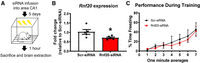
Knockdown of the H2Bub ligase Rnf20 does not alter performance during training. (A) Experimental time line. Male rats were injected with control (Scr-siRNA) or Rnf20-targeting (Rnf20-siRNA) Accell siRNAs into the CA1 region of the dorsal hippocampus. Five days later, animals were trained to a contextual fear conditioning procedure, euthanized 1 h later, and the dorsal CA1 region was collected for whole genome transcriptomic analysis. Separate animals were injected with Scr-siRNA and euthanized at an equivalent time without undergoing training and served as the naive control (n = 5 per group). (B) RT-PCR analysis confirmed a successful reduction in Rnf20 expression in the dorsal CA1 region 5 d after siRNA infusion. (C) Knockdown of Rnf20 did not impact performance during the contextual fear conditioning training session. (*) P < 0.05 from Scr-siRNA.
RNA was then converted into a strand-specific library using Illumina's TruSeq Stranded mRNA HT Sample Prep Kit (Illumina, RS-122-2103) for subsequent cluster generation and sequencing on Illumina's NovaSeq 6000. The libraries were enriched by 14 cycles of PCR, validated using Agilent TapeStation and quantitated by qPCR. Individually indexed cDNA libraries were pooled and sequenced on NovaSeq 6000 S1 300 cycle PE to achieve a minimum of 40 million reads/sample. The BCL files were converted to FASTQ files, adapters trimmed and demultiplexed using bcl2fastq Conversion Software. Transcriptome files were deposited into the Gene Expression Omnibus (GEO) archive with accession #GSE235611. RNA sequencing (RNA-seq) data analysis was performed using in-house scripts. Trim Galore (v0.6.5) was used to filter short reads, low-quality reads and trim adapter sequences from raw reads. Clean reads were mapped to the Rattus norvegicus genome (v6.0.99) and quantified using STAR (v2.7.3a). The raw counts were used to identify differentially expressed genes (DEGs) by R package DESeq2 (v1.36.0). Genes with larger than 1.2-fold change and adjusted P-value <0.05 were considered significant. The results were visualized using the R package EnhancedVolcano (v1.14.0) and ComplexHeatmap (v2.12.1). For candidate-gene analysis, RNA was converted to cDNA using the iScript DNA synthesis kit (Bio-Rad). Quantitative real-time PCR (qRT-PCR) amplifications of the cDNA were performed on the Bio-Rad CFX96 Real-Time System with the following primers: Rnf20 (F: GCGCTTTCCTTCAAGTTGC, R: AGAAACGCGACCATCACGAG) and Gapdh (F: GGGCTGAGTTGGGATGGGGACT, R: ACCTTTGATGCTGGGGCTGGC), which was used as an internal control and the results were analyzed with the comparative Ct method.
As this was a different batch of siRNA that was used in our prior study (Jarome et al. 2021), we first used qRT-PCR to confirm that our approach was able to significantly reduce the expression of Rnf20 5 d after infusion (two-tailed unpaired t-test, t(8) = 2.385, P < 0.05; Fig. 1B). Further, consistent with our prior report (Jarome et al. 2021), this reduction in Rnf20 expression did not impact performance during the training session relative to control-injected animals (two-way mixed variable ANOVA, Time: F(6,48) = 9.771, P < 0.0001; Group: F(1,8) = 0.2112, P = 0.6581; Interaction: F(6,48) = 0.2047, P = 0.9737; Fig. 1C). Next, we examined the learning-related transcriptome and how this was impacted by Rnf20 knockdown. Whole genome RNA-seq showed a total of 86 DEGs in the control-injected fear-conditioned animals compared to the control-injected naive group (Fig. 2A); all significantly altered genes are shown in Table 1. Among those, 57 genes were up-regulated (66.3%), while transcripts of 29 genes were down-regulated (33.7%). Surprisingly, the Rnf20 knockdown almost completely abolished these transcriptome changes except for one gene that remained up-regulated, Period 1 (Per1, log2 fold change = 0.7319, P = 0.0144) (Fig. 2B), though its overall expression was reduced in comparison to control trained animals. Collectively, as essentially all learning-related gene expression changes were lost following Rnf20 knockdown, these data show that H2Bub is a crucial regulator of the transcriptome in the dorsal CA1 region of male rats during memory consolidation.
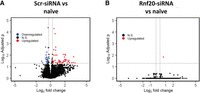
Loss of the H2Bub ligase Rnf20 abolishes the learning-related transcriptome in the hippocampus. Volcano plot of RNA-seq expression data 1 h following training in the dorsal hippocampus with Scr-siRNA (A) and Rnf20-siRNA (B) relative to naive controls from Figure 1. Up-regulated genes are reported in red, down-regulated genes in blue, and not DEGs are represented as black dots. The dotted lines show the thresholds.
Genes are differentially expressed during contextual fear memory formation in the dorsal hippocampus
Strong evidence supports the vital role of gene transcription regulation through various histone modifications during long-term memory formation (Peixoto and Abel 2013; Jarome and Lubin 2014; Kim and Kaang 2017; Webb et al. 2017; Collins et al. 2019; Creighton et al. 2020). Monoubiquitination of histone H2B, while less abundant than other modifications, is widely associated with chromatin dynamics and transcriptional regulation (Sun and Allis 2002; Wang et al. 2013; Wojcik et al. 2018; Deng et al. 2020). Despite this, the importance of H2Bub in memory formation was only recently identified and the precise role for this histone modification in learning-dependent synaptic plasticity has yet to be elucidated. In the present study, we investigated the broad role of H2Bub in transcriptional regulation during memory formation in the hippocampus. We found that contextual fear conditioning activates and represses a subset of genes in the dorsal hippocampus and that knockdown of the H2Bub ligase, Rnf20, effectively abolished nearly all these transcriptome changes. These data suggest that H2Bub is a crucial regulator of the transcriptome induced in the hippocampus following contextual fear conditioning.
Previously, using a candidate-gene approach we found that H2Bub was associated with transcriptional activation following contextual fear conditioning (Jarome et al. 2021). However, in the present study using an unbiased RNA-seq analysis, we found that H2Bub plays a crucial role in both active and repressive gene transcription following learning. Specifically, we observed significant transcriptional changes in a subset of genes following contextual fear conditioning, and, remarkably, the loss of Rnf20 completely abolished these changes in 85 out of 86 genes. The training-induced transcriptome is further supported by evidence from the literature. For example, similar to our observation, Per1 and the activity-dependent early growth response gene 2 (Egr2), an immediate early gene up-regulated following LTP, were significantly up-regulated 1 h following contextual fear conditioning both in rats and mice (Halder et al. 2016; Duke et al. 2020). Per1, the only gene that remained up-regulated even after the loss of H2Bub, is a core clock component expressed throughout the hippocampus and regulates CREB phosphorylation, a necessary step in memory formation (Rawashdeh et al. 2014, 2016). Moreover, Per1-knockout mice have impaired long-term memory (Jilg et al. 2010; Kwapis et al. 2018), suggesting its important role in memory formation. Additionally, many yeast and in vitro studies have demonstrated H2B ubiquitination and deubiquitination to be involved in transcriptional initiation/elongation and transcriptional silencing, respectively (Minsky et al. 2008; Shema et al. 2008; Chandrasekharan et al. 2010; Batta et al. 2011). While very few cases have looked into the in vivo transcriptional regulation role of H2Bub (Mohan et al. 2014; Lai et al. 2018), to our knowledge, this is the first evidence showing its critical role in both transcriptional activation and suppression following learning.
Our findings strongly support the notion that H2Bub may play an indispensable role in the memory consolidation process. However, it is important to acknowledge certain limitations of our study when interpreting our data. First, the RNA-seq results revealed a relatively limited transcriptome change following behavioral training in comparison to other similar studies (Halder et al. 2016; Duke et al. 2020). While this discrepancy may be attributed to differences in species as most of the prior work has been completed in mice, it is possible that our stringent cut-off criteria led to a reduction in the number of DEGs. Second, both studies examining the role of H2Bub in memory formation have been completed with primarily male rodents, though in our prior study, we did report learning-related increases in H2Bub in the hippocampus of female rats following fear conditioning (Jarome et al. 2021). Thus, it remains unclear if females have the same need as males for H2Bub or if this is as broad of a transcriptional regulator in the female hippocampus during memory formation. Complicating this, we recently completed such an experiment but were unable to observe any significantly altered gene expression in the female hippocampus of control siRNA-injected animals following fear conditioning (data not shown), which precludes us from determining the role of H2Bub in this process. However, studies are underway to better identify the role of H2Bub during memory formation in the female hippocampus. Regardless, our present data contribute significantly to our understanding of how H2Bub is involved in learning-dependent synaptic plasticity and set the basis for future studies aimed at elucidating how H2Bub broadly regulates the transcriptome necessary for memory formation.
In summary, we present the first evidence that H2Bub is a crucial regulator of the transcriptome in the hippocampus following contextual fear conditioning. These results add to the rapidly expanding understanding of the molecular mechanisms involved in memory consolidation and the role of epigenetic modifications in this process.
Data Access
The data sets generated during and/or analyzed during the current study are available in the GEO repository, accession #GSE235611.
Competing interest statement
The authors declare no competing financial interests or potential conflicts of interests. The sponsors had no role in the design or execution of this experiment, in data interpretation, or in the decision to publish the study.
Acknowledgments
This work was supported by National Institutes of Health (NIH) grants MH122414, MH131587, AG071523, AG079292, and AG081851 (T.J.J.).
Author contributions: S.N. and T.J.J. designed the experiments. S.N., S.E.K., K.F., N.O., and M.M. performed the experiments. S.N. and T.J.J. analyzed data. Y.L. and H.X. analyzed transcriptomic data. S.N. and T.J.J. wrote the manuscript.
Footnotes
-
Article is online at http://www.learnmem.org/cgi/doi/10.1101/lm.053912.123.
- Received December 20, 2023.
- Accepted March 7, 2024.
This article is distributed exclusively by Cold Spring Harbor Laboratory Press for the first 12 months after the full-issue publication date (see http://learnmem.cshlp.org/site/misc/terms.xhtml). After 12 months, it is available under a Creative Commons License (Attribution-NonCommercial 4.0 International), as described at http://creativecommons.org/licenses/by-nc/4.0/.