Robust renewal after extinction of remotely acquired Pavlovian conditioning
- Joseph W. Charles1,
- Samantha K. Moriarty1,
- Danielle I. Fournier1,
- Neil E. Winterbauer1,
- Emily A. Cooper2,3 and
- Travis P. Todd1
- 1Department of Psychological Science, University of Vermont, Burlington, Vermont 05405, USA
- 2Herbert Wertheim School of Optometry and Vision Science, University of California, Berkeley, Berkeley, California 94720, USA
- 3Helen Wills Neuroscience Institute, University of California, Berkeley, Berkeley, California 94720, USA
- Corresponding author: travis.todd{at}uvm.edu
Abstract
Extinguished responses are prone to renew outside the context where extinction occurred. Two experiments compared extinction and renewal following either a 1 day conditioning-to-extinction interval or a 27 day interval. Rats received tone-shock pairings in Context A, and extinction in Context B. Testing occurred in Context A (Experiment 1) or C (Experiment 2). Extinction occurred at a similar rate after both retention intervals. Robust renewal was also observed and was not affected by the conditioning-to-extinction retention interval. Results are discussed with respect to prior research on the timing of extinction, the neurobiology of recent and remote memory retrieval, and translational relevance.
Aversive experiences can be encoded as long-lasting memories through Pavlovian conditioning. When the associated memories are later retrieved, a host of emotional responses may be elicited. These responses can be reduced via extinction, in which the Pavlovian conditioned stimulus (CS) is repeatedly presented in the absence of the aversive unconditioned stimulus (US). The timing of extinction relative to the original conditioning episode has impacts on behavior, and our scientific understanding of these impacts is continuing to evolve. For instance, although it was initially suggested from rodent research that extinction immediately after conditioning could more fully “erase” initial conditioning (Myers et al. 2006), it is now generally accepted that extinction occurring immediately after conditioning (e.g., 10–15 min) results in less durable extinction performance relative to when it occurs 24 h later (e.g., Maren and Chang 2006; Woods and Bouton 2008; Chang and Maren 2009).
However, less is known about extinction when the interval between conditioning and extinction is much longer (e.g., weeks to months). Understanding the impacts of longer intervals is important for at least two reasons. First, Pavlovian memories acquired in the more distant past appear to recruit distinct neocortical regions for their retrieval. For instance, the secondary sensory cortices and the retrosplenial cortex (RSC) are necessary for retrieval of Pavlovian fear conditioning acquired ∼1 month earlier, but neither region is necessary when conditioning occurred just a few days earlier (Sacco and Sacchetti 2010; Fournier et al. 2021).4 The fact that these neocortical structures are recruited uniquely for the retrieval of remotely acquired Pavlovian memories leaves open the possibility that the behavioral correlates of these memories and their extinction might also differ. Second, assessment of extinction following a long retention interval is translationally relevant. Pavlovian fear conditioning is thought to contribute to the development of several anxiety disorders, as well as post-traumatic stress disorder (PTSD) (Bouton et al. 2001; Ressler et al. 2022), and extinction is considered the mechanism of exposure therapy (including prolonged exposure therapy), a common treatment for PTSD. While rodent research often examines extinction ∼24 h after initial Pavlovian conditioning, one hallmark of PTSD is that symptoms often last for an “extended period of time” following the initial trauma (National Institute of Mental Health 2025). Indeed, patients with PTSD might wait years to decades before seeking treatment (see Smith et al. 2020). Research on extinction following lengthy retention intervals might therefore more closely resemble the conditions of exposure therapy and thus improve translation between preclinical research and PTSD treatment in humans.
Although extinction reduces Pavlovian fear responses, this reduction is not permanent. For instance, Pavlovian fear responses are apt to renew when the CS is presented outside the context where extinction occurred (Bouton 2002, 2004). Such fear renewal in humans is one barrier to effective treatment (see Bouton 1988; Vervliet et al. 2013). Individuals are likely to reexperience trauma-related reminder cues outside the context of extinction and therefore experience a return of fear. Nevertheless, to our knowledge, renewal has not been assessed following lengthy intervals between conditioning and extinction. Thus, the current experiments were designed to assess the impact of a lengthy retention interval on both extinction and renewal.
Results
Experiment 1
The timeline of the procedure in Experiment 1 is illustrated in Figure 1A. In this experiment, rats first received Pavlovian fear conditioning in Context A (here, each context refers to a training chamber with a unique combination of visual, tactile, and olfactory stimulation). There were two groups of 16 rats; each group consisted of eight female and eight male rats. For one group of rats (Remote group), there was then a lengthy retention interval prior to the start of the extinction phase. These rats remained in their home cages for the next 27 days. For the other group of rats (Recent group), extinction began 1 day following initial conditioning. For both groups, extinction occurred in Context B. As shown in the figure, we staggered the start of initial conditioning to ensure the extinction phase and all subsequent testing occurred for both groups of rats on the same days. Following four sessions of extinction in Context B, rats underwent within-subject renewal testing, in which the CS was tested in both Contexts A and B for each rat (order counterbalanced). The purpose of this test was to determine if the interval between conditioning and extinction influenced renewal of extinguished fear in the original conditioning context (so-called ABA renewal). Our dependent variable was the percentage of time spent freezing, a common measure of conditioned fear in rodents.
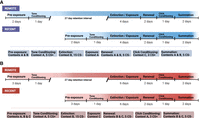
Timeline of behavioral procedures. (A) In Experiment 1, two groups of rats received CS-US pairings in Context A. One group had a 27 day retention interval (Remote group) and one group had a 1 day retention interval (Recent group) prior to extinction training. Extinction (CS alone) for all groups occurred in Context B. On each extinction day, rats were given equivalent exposure to the renewal context (no CS/US). At the completion of extinction, groups underwent renewal testing in Contexts A and B. Following renewal testing, a new cue was paired with shock in Context C, prior to summation testing in B and A. (B) Experiment 2 was similar to Experiment 1, with the following exceptions. There were 3 days of pre-exposure, 6 days of extinction training, renewal and summation testing occurred in B and C, and click conditioning occurred in Context A.
In theory, renewal of responding can occur for several reasons (see Bouton et al. 2021). For instance, if Context B acted as a conditioned inhibitor and/or Context A as a conditioned excitor, then more responding to the CS would be expected in A than in B. Therefore, we conducted summation testing to assess the role of the context in extinction and renewal. To do so, a second CS was first conditioned with the same US in Context C, and then tested in A and B. If the contexts differ in their direct associations with the US (a footshock), we would expect differential responding to the new cue across Contexts A and B. Similar responding to the new cue across contexts would suggest little role for direct context–US associations in renewal, consistent with the notion that during extinction the context acts as a “negative occasion setter” and specifically signals that the CS extinguished there will not be followed by the US (Bouton 1997).
Conditioning
The results from the conditioning phase are presented in Figure 2A. The mean percentage freezing during the CS presentations was analyzed with a 2 (Group: remote vs. recent) × 5 (Trial) mixed
ANOVA. This analysis found a significant effect of Trial, F(4,120) = 54.68, P < 0.001,  = 0.65, with freezing increasing over CS–US pairings. There was no effect of Group, nor Trial × Group interaction, Fs < 1. Freezing during the baseline period did not differ between groups, F < 1. In sum, conditioning proceeded as expected in both groups.
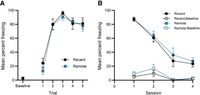
Experiment 1 conditioning and extinction. (A) Mean percent freezing in conditioning during the 20 sec tone CS presentations that preceded footshock and the baseline period. (B) Mean percent freezing during the first five trials of each extinction session and the baseline period of each session. For both graphs, baseline represents the 3 min period prior to the onset of the first CS. Error bars represent ±SEM.
Extinction
Due to a technical error on day 3 of extinction, video recordings for 16 rats evenly divided between the two groups were lost
and could not be scored. The average mean percent freezing of all available data for the first five trials in each extinction
session is presented in Figure 2B. We therefore performed two analyses: first, we analyzed sessions 1, 2, and 4 with a 2 (Group: remote vs. recent) × 3 (Session)
mixed ANOVA. Second, we analyzed the available data from session 3 in a separate one-way ANOVA. The 2 (Group: remote vs. recent)
× 3 (Session) mixed ANOVA found a main effect of Session, F(2, 60) = 196.48, P < 0.001,  = 0.87, with freezing decreasing across sessions. There was no main effect of Group, nor a Group × Session interaction, Fs < 1. The one-way ANOVA for session 3 found no effect of Group F < 1. Baseline freezing in the first 3 min of each session was analyzed in the same manner as above. This analysis of sessions
1, 2, and 4 found a main effect of Session, F(2, 60) = 5.76, P = 0.005,
= 0.87, with freezing decreasing across sessions. There was no main effect of Group, nor a Group × Session interaction, Fs < 1. The one-way ANOVA for session 3 found no effect of Group F < 1. Baseline freezing in the first 3 min of each session was analyzed in the same manner as above. This analysis of sessions
1, 2, and 4 found a main effect of Session, F(2, 60) = 5.76, P = 0.005,  = 0.16, no effect of Group, F(1, 30) = 1.61, P = 0.215, nor a Session × Group interaction, F < 1. The analysis of baseline in session 3 also found no main effect of Group, F < 1. These results show that, despite the difference in retention interval between conditioning and extinction, both groups
exhibited extinction similar to each other and as expected from prior work.
= 0.16, no effect of Group, F(1, 30) = 1.61, P = 0.215, nor a Session × Group interaction, F < 1. The analysis of baseline in session 3 also found no main effect of Group, F < 1. These results show that, despite the difference in retention interval between conditioning and extinction, both groups
exhibited extinction similar to each other and as expected from prior work.
Bayesian analysis supported this conclusion. Model selection clearly favored the model including a Session effect only [BF = 7.92, P(Model|data) = 0.67], relative to all other models including those with Group effects and/or interactions with Group. Analysis of effects, averaging over all models, found definitive support for a Session effect [BF = ∞, P(inclusion|data) = 1], but limited support for either a Group effect [BF = 0.34, P(inclusion|data) = 0.34], or a Group × Session interaction [BF = 0.21, P(inclusion|data) = 0.05].
Renewal
Renewal is sometimes only present on Trial 1 of testing (Frohardt et al. 2000); therefore, we first examined Trial 1 alone. Freezing in the first trial of the renewal test (Fig. 3A) was analyzed with a 2 (Group: remote vs. recent) × 2 (Context: A vs. B) mixed ANOVA. This analysis found a significant
effect of Context, F(1, 30) = 89.87, P < 0.001,  = 0.75, but no main effect of Group, F < 1, nor Context × Group interaction, F(1, 30) = 1.55, P = 0.22. In the Remote group, 14 of 16 animals froze more in the renewal context, and in the Recent group, all 16 animals
froze more in the renewal context. Thus, for Trial 1, freezing was greater in Context A and did not significantly differ between
groups.
= 0.75, but no main effect of Group, F < 1, nor Context × Group interaction, F(1, 30) = 1.55, P = 0.22. In the Remote group, 14 of 16 animals froze more in the renewal context, and in the Recent group, all 16 animals
froze more in the renewal context. Thus, for Trial 1, freezing was greater in Context A and did not significantly differ between
groups.
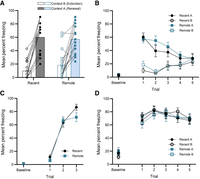
Experiment 1 renewal and summation testing. (A) Mean percent freezing during Trial 1 of the renewal test in Contexts B (extinction) and A (renewal). Circles represent individual subject’s data in each context, with some subjects overlapping. (B) Mean percent freezing across all five trials of the renewal test. (C) Mean percent freezing across all three trials of click conditioning. (D) Mean percent freezing during the summation test in Contexts B and A. Baseline represents the 3 min period prior to the onset of the first CS. Error bars represent ±SEM.
Freezing across all trials (Fig. 3B) was analyzed with a 2 (Group: recent vs. remote) × 2 (Context A vs. B) × 5 (Trial) mixed ANOVA. Results revealed a main
effect of Trial, F(4, 120) = 3.43, P = 0.011,  = 0.10, and a main effect of Context, F(1, 30) = 26.99, P < 0.001,
  = 0.47. The main effect of Group was not significant, F(1, 30) = 1.02, P = 0.32. There was a significant Trial × Context interaction, F(4, 120) = 17.77, P < 0.001,
  = 0.37. No other interactions were significant, largest F(4, 120) = 1.43, P = 0.20. Post-hoc analysis of the Trial × Context interaction, conditional on trial, showed that contexts differed in the
first three (Pbonf < 0.001), but not fourth or fifth, trials. The view conditional on context was more complicated, but freezing in the renewal
context fell after the first two trials (trial 1 differed from all trials except trial 2, Pbonf < 0.01, trial 2 differed from just trial 5, Pbonf < 0.01, and no other comparisons were significant), and freezing in the extinction context was mostly flat (only trial 2
and 5 differed, Pbonf < 0.01). On average over all five trials, in the Remote group, 14 of 16 animals froze more in the renewal context, and in
the Recent group, 13 of 16 animals froze more in the renewal context. Baseline freezing for renewal testing was analyzed with
a 2 (Group: recent vs. remote) × 2 (Context) mixed ANOVA. This analysis showed that there was no difference in baseline freezing
by Group, Contexts, nor an interaction of Group and Context, all Fs < 1. These results reinforce the conclusions drawn from the analysis of Trial 1.
= 0.37. No other interactions were significant, largest F(4, 120) = 1.43, P = 0.20. Post-hoc analysis of the Trial × Context interaction, conditional on trial, showed that contexts differed in the
first three (Pbonf < 0.001), but not fourth or fifth, trials. The view conditional on context was more complicated, but freezing in the renewal
context fell after the first two trials (trial 1 differed from all trials except trial 2, Pbonf < 0.01, trial 2 differed from just trial 5, Pbonf < 0.01, and no other comparisons were significant), and freezing in the extinction context was mostly flat (only trial 2
and 5 differed, Pbonf < 0.01). On average over all five trials, in the Remote group, 14 of 16 animals froze more in the renewal context, and in
the Recent group, 13 of 16 animals froze more in the renewal context. Baseline freezing for renewal testing was analyzed with
a 2 (Group: recent vs. remote) × 2 (Context) mixed ANOVA. This analysis showed that there was no difference in baseline freezing
by Group, Contexts, nor an interaction of Group and Context, all Fs < 1. These results reinforce the conclusions drawn from the analysis of Trial 1.
Bayesian analysis of the full renewal data also supported these conclusions. Model selection clearly favored the model including a Context effect, Trial effect, and their interaction, but not Group effect [BF = 32.94, P(Model|data) = 0.65]. Analysis of effects, averaging over all models, found virtual certain inclusion of Context [BF = 7.59 × 10¹², P(inclusion|data) = 1], Trial [BF = 6.61 × 10⁹, P(inclusion|data) = 1], and Context × Trial effects [BF = 1.97 × 10¹⁰, P(inclusion|data) = 1], but moderate evidence against a main effect of Group [BF = 0.19, P(exclusion|data) = 0.65], and more decisive evidence against Context × Group [BF = 0.23, P(exclusion|data) = 0.90], Trial × Group [BF = 0.05, P(exclusion|data) = 0.98], and Context × Group × Trial [BF = 0.03, P(exclusion|data) = 0.99] interactions.
Summation testing
Conditioning to the click is presented in Figure 3C. Freezing across all trials of click conditioning was analyzed via a 2 (Group: recent vs. remote) × 3 (Trial) mixed ANOVA.
There was a main effect of trial, F(2, 60) = 144.78, P < 0.001,  = 0.83. There was no main effect of Group, F(1, 30) = 1.13, P = 0.30, nor a Trial × Group interaction, F(2, 60) = 2.20, P = 0.12. Freezing during the 3 min baseline period of click conditioning was analyzed with a one-way ANOVA. There was no difference
by Group, F(1, 30) = 1.33, P = 0.26.
= 0.83. There was no main effect of Group, F(1, 30) = 1.13, P = 0.30, nor a Trial × Group interaction, F(2, 60) = 2.20, P = 0.12. Freezing during the 3 min baseline period of click conditioning was analyzed with a one-way ANOVA. There was no difference
by Group, F(1, 30) = 1.33, P = 0.26.
The results of the summation test are presented in Figure 3D. Mean percent freezing across all trials was assessed with a 2 (Group: recent vs. remote) × 2 (Context: A vs. B) × 5 (Trial)
mixed ANOVA. The analysis revealed a main effect of Trial, F(4, 120) = 5.76, P < 0.001,  = 0.16. There was no main effect of Group, no main effect of Context, nor a Group × Context interaction, all Fs < 1. Trial did not interact with Context, nor Group (Fs < 1). Analysis of the 3 min baseline period revealed no main effect of Group or Context, and no Group × Context interaction
(all Fs < 1), suggesting there was no difference in baseline freezing across all groups. Together these results indicate that freezing
to the summation cue did not differ across contexts, suggesting little role for direct context–US associations contributing
to performance in either B or A. Specifically, Context B did not appear to acquire inhibitory properties during extinction
(see Schoenberg et al. 2024) and Context A did not appear to have excitatory properties at the time of test. The lack of excitation in Context A is likely
due to the fact that all rats were repeatedly exposed to Context A in the absence of the US during the extinction/exposure
phase of the experiment.
= 0.16. There was no main effect of Group, no main effect of Context, nor a Group × Context interaction, all Fs < 1. Trial did not interact with Context, nor Group (Fs < 1). Analysis of the 3 min baseline period revealed no main effect of Group or Context, and no Group × Context interaction
(all Fs < 1), suggesting there was no difference in baseline freezing across all groups. Together these results indicate that freezing
to the summation cue did not differ across contexts, suggesting little role for direct context–US associations contributing
to performance in either B or A. Specifically, Context B did not appear to acquire inhibitory properties during extinction
(see Schoenberg et al. 2024) and Context A did not appear to have excitatory properties at the time of test. The lack of excitation in Context A is likely
due to the fact that all rats were repeatedly exposed to Context A in the absence of the US during the extinction/exposure
phase of the experiment.
Experiment 2
In Experiment 1, the Remote group and the Recent group did not differ in their levels of freezing during extinction in Context B. Robust renewal was then observed for both groups when the CS was tested in Context A (so-called ABA renewal). In this form of renewal, Context A can act as a retrieval cue for conditioning and therefore aid performance for renewal (e.g., Harris et al. 2000). With respect to Experiment 1, the benefit of a return to Context A on renewal performance may have potentially masked a difference between the Recent and Remote groups. It thus remains possible that a lengthy retention interval may impact renewal when testing does not occur in the original conditioning context. This design models relapse for humans that occurs outside both the context of extinction and the context of the original trauma. Experiment 2 therefore assessed renewal in a third context. All rats first received conditioning in Context A, extinction in Context B, followed by renewal testing in a familiar, yet neutral, Context C. Because testing occurred in a context where the original conditioning did not occur, it allowed for a test of retrieval in the absence of contextual cues present during the original conditioning that may further aid retrieval. As in Experiment 1, there were two groups of 16 rats (Remote and Recent); each group consisted of eight female and eight male rats. The timeline of the procedure in Experiment 2 is illustrated in Figure 1B.
Conditioning
Freezing during the conditioning phase is presented in Figure 4A. The mean percentage freezing during CS presentations was analyzed with a 2 (Group: recent or remote) × 5 (Trial) mixed
ANOVA. This analysis showed a significant effect of Trial, F(4,120) = 86.80, P < 0.001,  = 0.74, with freezing increasing over CS–US pairings. There was no effect of Group, nor Trial × Group interaction, Fs < 1. Freezing during the baseline period did not differ between groups, F < 1. Thus, as in Experiment 1, conditioning proceeded as expected in both groups.
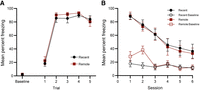
Experiment 2 conditioning and extinction. (A) Mean percent freezing in conditioning during the 20 sec tone CS presentations that preceded footshock and the baseline period. (B) Mean percent freezing during the first five trials of each extinction session and the baseline period of each session. For both graphs, baseline represents the 3 min period prior to the onset of the first CS. Error bars represent ±SEM.
Extinction
The average freezing in the first five trials of each extinction session is presented in Figure 4B. These data were analyzed with a 2 (Group: recent vs. remote) × 6 (Sessions) mixed ANOVA. This analysis showed a main effect
of Session, F(5, 150) = 65.56, P < 0.001,  = 0.69, with freezing decreasing across sessions. There was no main effect of Group, F < 1, nor a Session × Group interaction, F < 1. Baseline freezing was analyzed with a 2 (Group: recent vs. remote) × 6 (Sessions) mixed ANOVA. There was a significant
main effect of Session, F(5, 150) = 9.14, P < 0.001,
= 0.69, with freezing decreasing across sessions. There was no main effect of Group, F < 1, nor a Session × Group interaction, F < 1. Baseline freezing was analyzed with a 2 (Group: recent vs. remote) × 6 (Sessions) mixed ANOVA. There was a significant
main effect of Session, F(5, 150) = 9.14, P < 0.001,  = 0.23, and a significant interaction between Session × Group interaction, F(5, 150) = 5.24, P < 0.001,
  = 0.15. The main effect of Group was not significant, F < 1. Post-hoc analysis of the Session × Group interaction found that groups differed solely on day 2 (Pbonf < 0.01), an effect that was not detected in the prior experiment.
Bayesian analysis supported this conclusion. Model selection clearly favored the model including a Session effect alone [BF = 9.19, P(Model|data) = 0.70]. Analysis of effects, averaging over all models, found definitive support for a Session effect [BF = ∞, P(inclusion|data) = 1], but limited support for either a Group effect [BF = 0.29, P(inclusion|data) = 0.30], or a Group × Session interaction [BF = 0.05, P(inclusion|data) = 0.01]. As in Experiment 1, these results show that both groups exhibited freezing and extinction similar to each other, as expected from prior work.
Renewal
Freezing in the first trial of the renewal test (Fig. 5A) was analyzed with a 2 (Group: remote vs. recent) × 2 (Context: C vs. B) mixed ANOVA. This analysis found a significant
effect of Context, F(1, 30) = 48.49, P < 0.001,  = 0.62, no main effect of Group, F(1, 30) = 3.08, P = 0.089, nor Context × Group interaction, F < 1. In the Remote group, 15 of 16 animals froze more in the renewal context, and in the Recent group, 14 of 16 animals froze
more in the renewal context. Freezing across all trials (Fig. 5B) was analyzed with a 2 (Group: recent vs. remote) × 2 (Context C vs. B) × 5 (Trial) mixed ANOVA. Results revealed main effects
of Context, F(1, 30) = 8.95, P = 0.006,
= 0.62, no main effect of Group, F(1, 30) = 3.08, P = 0.089, nor Context × Group interaction, F < 1. In the Remote group, 15 of 16 animals froze more in the renewal context, and in the Recent group, 14 of 16 animals froze
more in the renewal context. Freezing across all trials (Fig. 5B) was analyzed with a 2 (Group: recent vs. remote) × 2 (Context C vs. B) × 5 (Trial) mixed ANOVA. Results revealed main effects
of Context, F(1, 30) = 8.95, P = 0.006,  = 0.23, Group, F(1, 30) = 4.35, P = 0.046,
  = 0.13, and Trial, F(4, 120) = 4.46, P = 0.002,
  = 0.13. There was an interaction of Context × Trial, F(4, 120) = 11.519, P < 0.001,
  = 0.28, but neither a Group × Context (F < 1) nor a Group × Context × Trial [F(4, 120) = 1.01, P = 0.40] interaction. Post-hoc analysis of the Trial × Context interaction, conditional on trial, showed that contexts differed
in the first two (Pbonf < 0.001), but not final three, trials. Results conditional on context showed that freezing in the renewal context fell after
the first trial (trial 1 differed from all trials, Pbonf < 0.05, but no other comparisons were significant), and freezing in the extinction context was relatively stable and low
until it increased over the last two trials (only trials 2 and 3 differed from trial 5, Pbonf < 0.05). On average over all five trials, in the Remote group, 10 of 16 animals froze more in the renewal context, and in
the Recent group, 11 of 16 animals froze more in the renewal context. Baseline freezing was analyzed between conditions and
contexts with a mixed ANOVA. This analysis found no differences in baseline freezing by Groups, Context, nor interaction of
Group × Context, all Fs < 1.
= 0.28, but neither a Group × Context (F < 1) nor a Group × Context × Trial [F(4, 120) = 1.01, P = 0.40] interaction. Post-hoc analysis of the Trial × Context interaction, conditional on trial, showed that contexts differed
in the first two (Pbonf < 0.001), but not final three, trials. Results conditional on context showed that freezing in the renewal context fell after
the first trial (trial 1 differed from all trials, Pbonf < 0.05, but no other comparisons were significant), and freezing in the extinction context was relatively stable and low
until it increased over the last two trials (only trials 2 and 3 differed from trial 5, Pbonf < 0.05). On average over all five trials, in the Remote group, 10 of 16 animals froze more in the renewal context, and in
the Recent group, 11 of 16 animals froze more in the renewal context. Baseline freezing was analyzed between conditions and
contexts with a mixed ANOVA. This analysis found no differences in baseline freezing by Groups, Context, nor interaction of
Group × Context, all Fs < 1.
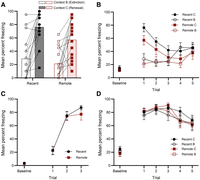
Experiment 2 renewal and summation testing. (A) Mean percent freezing during Trial 1 of the renewal test in Contexts B (extinction) and C (renewal). Circles represent individual subject’s data in each context, with some subjects overlapping. (B) Mean percent freezing across all five trials of the renewal test. (C) Mean percent freezing across all three trials of click conditioning. (D) Mean percent freezing during the summation test in Contexts B and C. Baseline represents the 3 min period prior to the onset of the first CS. Error bars represent ±SEM.
Bayesian analysis of the full renewal data also supported these conclusions. Model selection favored the model including a Context effect, Trial effect, Group effect, and a Context × Trial interaction [BF = 13.59, P(Model|data) = 0.43]. It should be noted that the model excluding the Group effect provided the next best fit to the data [BF = 8.95, P(Model|data) = 0.33]. Analysis of effects, averaging over all models, found virtual certainty regarding Context [BF = 1.28 × 10⁷, P(inclusion|data) = 1], Trial [BF = 5.44 × 10⁶, P(inclusion|data) = 1], and Context × Trial effects [BF = 6.87 × 10⁶, P(inclusion|data) = 1], and relatively weak evidence for a Group main effect [BF = 0.72, P(inclusion|data) = 0.67]. In addition, the effects analysis showed moderately strong evidence against a Context × Group interaction [BF = 0.50, P(exclusion|data) = 0.81], and strong evidence against the Trial × Group [BF = 0.17, P(exclusion|data) = 0.93], and Context × Group × Trial [BF = 0.07, P(exclusion|data) = 0.99] interactions. Together, these analyses suggest that, while there may have been minor differences in the overall level of responding between the two groups, renewal was clearly present in both groups. Furthermore, the degree of renewal observed between the two groups was comparable, suggesting that any differences due to the interval between training and testing were minimal.
Summation testing
Conditioning to the click is presented in Figure 5C. Freezing across all trials of summation conditioning was analyzed via a 2 (Group: recent vs. remote) × 3 (Trial) mixed
ANOVA. There was a main effect of Trial, F(2, 60) = 63.11, P < 0.001,  = 0.68, but no main effect of Group, F < 1, and no Trial × Group interaction, F < 1. Baseline freezing did not differ between groups, F < 1.
The results of the summation test are presented in Figure 5D. Mean percent freezing across all trials was assessed with a 2 (Group: recent vs. remote) × 2 (Context: A vs. B) × 5 (Trial)
mixed ANOVA. The analysis revealed a main effect of Trial, F(4, 120) = 17.40, P < 0.001,  = 0.38. The trial effect did not interact with Context, F < 1, or Group, F(4, 120) = 1.73, P = 0.148. There was also no main effect of Group, no main effect of Context, no Context × Group interaction, and no Context
× Group × Trial interaction, all Fs < 1. Analysis of the 3 min baseline period revealed no main effect of Group or Context, and no Group × Context interaction
(all Fs < 1).
= 0.38. The trial effect did not interact with Context, F < 1, or Group, F(4, 120) = 1.73, P = 0.148. There was also no main effect of Group, no main effect of Context, no Context × Group interaction, and no Context
× Group × Trial interaction, all Fs < 1. Analysis of the 3 min baseline period revealed no main effect of Group or Context, and no Group × Context interaction
(all Fs < 1).
Combined analysis
Given the similar methods for renewal testing, we elected to perform additional analysis on the full data set (Experiments 1 and 2 combined). We reasoned that this would be an especially powerful test that may detect subtle differences between recent and remote memories. We acknowledge the challenge in comparing across experiments and therefore included “experiment” as a factor in our analysis to account for potential differences in the execution of the two experiments.
Freezing in the first trial was analyzed with a 2 (Group: remote vs. recent) × 2 (Experiment: ABA vs. ABC) × 2 (Context: extinction
vs. renewal) mixed ANOVA. This analysis found a significant effect of Context, F(1, 60) = 128.36, P < 0.001,  = 0.68, but no main effect of Experiment, F < 1, nor of Group, F(1, 60) = 1.24, P = 0.27. No interactions were reliable, with Context × Experiment F < 1, Context × Group F(1, 60) = 2.33, P = 0.13, Experiment × Group F(1, 60) = 2.86, P = 0.096, and Context × Experiment × Group F < 1.
Freezing across all trials was analyzed with a 2 (Group: recent vs. remote) × 2 (Exp: ABA vs. ABC) × 2 (Context C vs. B) ×
5 (Trial) mixed ANOVA. Results revealed main effects of Context, F(1, 60) = 32.78, P < 0.001,  = 0.35, Experiment, F(1, 60) = 8.88, P = 0.004,
  = 0.13, and Trial, F(4, 240) = 6.29, P < 0.001,
  = 0.095. There was an interaction of Context × Trial, F(4, 120) = 11.519, P < 0.001,
  = 0.31, and of Experiment × Group, F(1, 60) = 5.01, P = 0.029,
  = 0.077. No other interactions were reliable: Context × Experiment, F(1, 60) = 1.79, P = 0.19, Context × Group, F < 1, Context × Experiment × Group, F < 1, Trial × Experiment, F(4, 240) = 1.76, P = 0.14, Trial × Group, F < 1, Trial × Experiment × Group, F < 1, Context × Trial × Experiment, F < 1, Context × Trial × Group, F(4, 240) = 1.09, P = 0.36, and Context × Trial × Experiment × Group, F(4, 240) = 1.25, P = 0.29. Therefore, while there were some differences in the total level of responding between experiments and/or across groups,
it was only the effect of context and declining freezing over test trials that was robustly observed in both experiments,
and to comparable degrees regardless of group membership.
= 0.077. No other interactions were reliable: Context × Experiment, F(1, 60) = 1.79, P = 0.19, Context × Group, F < 1, Context × Experiment × Group, F < 1, Trial × Experiment, F(4, 240) = 1.76, P = 0.14, Trial × Group, F < 1, Trial × Experiment × Group, F < 1, Context × Trial × Experiment, F < 1, Context × Trial × Group, F(4, 240) = 1.09, P = 0.36, and Context × Trial × Experiment × Group, F(4, 240) = 1.25, P = 0.29. Therefore, while there were some differences in the total level of responding between experiments and/or across groups,
it was only the effect of context and declining freezing over test trials that was robustly observed in both experiments,
and to comparable degrees regardless of group membership.
Bayesian analysis of the combined first-trial renewal data supported this conclusion (analysis of the full five-trial data was omitted due to prohibitive computational expense). Model selection was almost evenly divided between two models, which were much better supported than any other models: the model including an effect of Context and Experiment [BF = 5.10, P(Model|data) = 0.22] and the model including solely the effect of Context [BF = 4.56, P(Model|data) = 0.20]. Analysis of effects, averaging over all models, found virtual certainty regarding an effect of Context [BF = 1.69 × 10¹⁴, P(inclusion|data) = 1], weak support for effects of Experiment [BF = 0.70, P(inclusion|data) = 0.66] and Group [BF = 0.38, P(inclusion|data) = 0.52], stronger evidence against interactions between Experiment and Group [BF = 0.50, P(exclusion|data) = 0.81], Context and Experiment [BF = 0.37, P(exclusion|data) = 0.85], and Context and Group [BF = 0.62, P(exclusion|data) = 0.78], and very strong evidence against an Experiment, Context, and Group interaction [BF = 0.10, P(exclusion|data) = 0.99]. Taken together, these results suggest that while there remains a possibility that the training-to-extinction interval might have some influence on the degree to renewal [i.e., the P(exclusion|data) is 0.78 for this interaction], it is definitely unable to eliminate renewal; renewal occurs, and robustly so, across all of the conditions we examined.
Discussion
In two experiments, we assessed the impact of a lengthy retention interval on extinction and renewal of Pavlovian fear conditioning. To do so, rats first received Pavlovian fear conditioning and then received extinction either the next day or following a 27 day retention interval. In Experiment 1, the retention interval did not impact the level of freezing during extinction, nor did it impact renewal upon a return to Context A. Experiment 2 replicated the extinction findings and extended the renewal findings to demonstrate renewal for both groups in a third, familiar yet neutral context (ABC renewal). Taken together, these experiments indicate that renewal is robust following lengthy retention intervals.
The current experiments tested the effects of extinction following either a 1 day or 27 day retention interval between conditioning and extinction. As noted, prior studies have also examined the timing of extinction relative to conditioning (Maren and Chang 2006; Myers et al. 2006; Woods and Bouton 2008; Chang and Maren 2009). However, these studies often compared time intervals much shorter than those used here. For instance, Woods and Bouton (2008) compared extinction occurring either 10 min (immediate) or 24 h (delayed) after initial conditioning. Thus, in this example, the “delayed” timescale corresponds to our Recent groups. In their experiments, Woods and Bouton (2008) found that immediate extinction produced a faster drop in extinction performance, but that this drop was less durable; there was greater spontaneous recovery following immediate compared to delayed extinction. At the longer timescales reported here, we observed no differences in the levels of responding during extinction, nor any substantial differences in the “durability” of extinction as assessed via renewal. When considered together with the prior literature, the overall pattern thus suggests that although differences may emerge at shorter timescales (comparisons between minutes to days), evidently there are no further behavioral changes at the longer timescales (days to months).
Retrieval of remotely acquired Pavlovian fear memories relies upon neocortical structures that are not needed for the retrieval of recently acquired memories. For instance, the secondary sensory cortices are necessary for retrieval of remotely, but not recently, acquired Pavlovian fear conditioning (see Sacco and Sacchetti 2010; Grosso et al. 2015). Nevertheless, at the behavioral level, both extinction and renewal appear to operate similarly for recently and remotely acquired memories. There are two possible implications of these findings. One possibility is that there are distinct extinction and renewal circuits for recently and remotely acquired memories that incorporate the respective regions necessary for their retrieval. As an example, the extinction and renewal circuit of a remote fear memory might directly interact with the secondary auditory cortex. Perhaps a more parsimonious possibility is that a common extinction and renewal circuit operates downstream from the regions necessary for retrieval of recently and remotely acquired fear memories. For instance, Te2 (a secondary auditory cortical region) activity during remote retrieval is known to drive activity in the basolateral amygdala (BLA) (Cambiaghi et al. 2016). During extinction and renewal of a remote memory, activity in the BLA might then be modulated by the infralimbic cortex, which is known to occur for recently acquired memories (Marek et al. 2018). To our knowledge, extinction and renewal circuits of remote Pavlovian fear memories have not been extensively studied.
In addition to neurophysiological differences between the retrieval of recent and remote memories, our results are surprising in the context of other behavioral studies that have revealed notable effects of retention intervals. For instance, there is evidence that the strength of Pavlovian conditioning increases, or “incubates” over long retention intervals (Randich and Rescorla 1981; Pickens et al. 2009). An increase in fear responses to the CS following a long retention interval could have resulted in higher freezer during extinction, and/or renewal in the remote groups. Neither of these were observed in the current experiments. We note that in both studies, freezing was similar for both groups as it declined across the response scale. Thus, it is unlikely that a ceiling effect impaired the ability to detect differences between groups.
Initial Pavlovian conditioning is often expressed robustly, independent of the context in which it was learned (e.g., Bouton and King 1983). For instance, there is often no difference in conditioned responding for a CS first trained in one Context (A) and then extinguished in another Context (B) relative to if the CS is extinguished in the original context (Bouton and King 1983; Bouton and Peck 1989; Rosas and Bouton 1997). Thus, a context switch after Pavlovian conditioning often has little impact on responding (Rosas et al. 2013). It is common to think of “context” as the physical environment in which learning occurs, but contexts can be a wide variety of stimuli including internal states, drug states, hormone states, and even the passage of time (see Bouton 2002). The findings here suggest that there is little impact of a temporal context change on initial Pavlovian conditioning. Presumably, there was a larger change in the temporal context following a 27 day retention interval, relative to a 1 day retention interval, yet responding during extinction was similar for the two groups. Coupled with the prior literature, this indicates there is little impact of changing the physical or temporal context following initial Pavlovian conditioning. Of course, a change in context does have an important impact following extinction.
A second point regarding the context is that memories for contexts can change following lengthy retention intervals. In particular, memories tend to generalize more after long retention intervals compared to short ones (see Bouton et al. 1999). Such an increase in generalization across contexts might have resulted in higher levels of freezing during extinction in B for the remote versus recent groups. That is, although both groups received extinction in Context B, if generalization from Context A was increased for the remote groups, responding may have been higher for these animals. This was not the result observed. One reason for this has been noted above: initial Pavlovian conditioning typically does not rely upon the context for retrieval. Thus, even if generalization increased across contexts, conditioned responding to the CS itself was apparently not affected.
Renewal is thought to occur because animals encode context-specific information about the CS–US relation during extinction. Specifically, during extinction, a new inhibitory association is formed between the CS and US. This association is gated by the extinction context (Bouton 1997), and therefore when the CS is tested outside the extinction context, the inhibition is not active and responding renews. This behavioral mechanism is often inferred by ruling out other parsimonious explanations. For instance, tests of the associative content of the extinction context routinely fail to detect direct conditioned inhibition (i.e., that the context directly signals the absence of the US; e.g., Bouton and King 1983; Schoenberg et al. 2024). Renewal is also observed in Context A in the absence of evidence for direct context–US excitation, as well as in Context C where the US has never been presented. Thus, renewal does not depend upon either direct contextual inhibition or excitation. The data reported from the summation test phase for the current experiments are entirely consistent with this interpretation and the prior results; tests with a nonextinguished cue failed to detect inhibition in the extinction context, or excitation in the renewal context (Experiment 1). Thus, renewal likely occurred in these experiments because the extinction context operated to signal inhibition between the CS and US, often referred to as “negative occasion setting” (Bouton and Swartzentruber 1986; Bouton 1997; Trask et al. 2017). The fact that the groups did not differ during summation testing suggests that the same behavioral mechanism (negative occasion setting) appears to operate during the extinction of both recently and remotely acquired Pavlovian fear memories.
Last, we turn to the translational significance of these results. As noted in the Introduction, the extinction paradigm in animal behavior has been considered the mechanism of exposure therapy, a common treatment for anxiety disorders, as well as for PTSD. A natural extension of this connection is that renewal may be analogous to undesirable recurrences of symptoms following an otherwise successful exposure therapy treatment. The present experiments suggest that renewal is similarly robust following extinction of recently or remotely acquired conditioning. The translational relevance of that finding is that the phenomenon of renewal is not tied to the conventional short retention intervals used in prior research, bolstering its potential utility for interrogating the neural mechanisms and behavioral manifestations of anxiety disorders. Our results unfortunately suggest that fear reactions may be prone to recover post-therapy even for memories acquired in the distant past. However, these findings can also be viewed from a positive angle. The data suggest that neither extinction nor relapse are expected to be any worse for individuals who wait a long interval post-trauma to seek treatment relative to those that sought treatment relatively quickly.
Materials and Methods
Experiment 1
Subjects
Subjects were 32 naive (16 male, 16 female) Long Evans rats (Charles River, Quebec, CA) that were 56–63 days old at the time of arrival. Rats were kept in a climate-controlled colony room on a 12:12 light–dark cycle, where they were doubly housed and received ad libitum water and rat chow (LabDiet 5P00 Prolab RMH 3000, LabDiet, St. Louis, MO, USA). Animals were given 1 week of acclimation time prior to the beginning of any behavioral procedures. The rats were divided into two groups, either “Recent” or “Remote” depending on the retention interval between the conditioning and extinction phases (eight male and eight female per group). Throughout the experiment, rats were monitored and cared for in compliance with the Association for the Assessment and Accreditation of Laboratory Animal Care guidelines and the University of Vermont Institutional Animal Care and Use Committee.
Apparatus
Behavioral procedures occurred in 12 conditioning chambers (Med Associates, Inc., St. Albans, VT, ENV-007; 24 cm W × 30.5 cm L × 29 cm H), which were modified to create three sets of distinct contexts. All chambers had the following common features. Each chamber was housed in a sound-attenuating cabinet (Med Associates, ENV-017M; 66 cm W × 56 cm L × 56 cm H) outfitted with an exhaust fan to provide airflow and background noise (68 dB). All 12 chambers had a food cup, recessed in the center of the front wall, a retracted lever (Med Associates, ENV-112CM), located on the right of the front wall, and an inactive nose-poke aperture (2 cm in diameter) located 3 cm above the food cup. All chambers were also equipped with two-panel lights (Med Associates, ENV-221M) on either side of the nose-poke aperture (16 cm above the grid floor) and a house light (Med Associates, ENV-215M) centered on the front wall 24 cm above the grid floor, though the different sets of contexts were differentially illuminated for the duration of the experiment (see below). All chambers also had a speaker (Med Associates, ENV-224AM) located 20 cm above and to the right of the food cup. The speaker was used to deliver the 20 sec auditory CSs: for initial conditioning, extinction, and renewal, the CS was a 2000 Hz tone (80 dB); for summation conditioning and testing, the CS was a click (74 dB, 10 Hz) generated by Med Associates stimulus generator (ANL-926). The US was a 2.0 sec, 1.0 mA footshock delivered to the grid floor by a Med Associates shock generator (ENV-414). Security cameras were mounted to the wall outside each sound-attenuating cabinet, and an 8 cm hole in the chamber wall allowed for video recording from the wall opposite the door.
Three sets of four chambers were modified to create the three distinct contexts. The “Anise” context had a laminated gray construction paper with a 4 in black stripe down the middle covering the ceiling and one wall, and the front and back walls were brushed aluminum. There was an additional retracted lever on the left of the front wall. The floor consisted of alternating stainless-steel rods with different diameters (0.48 and 1.27 cm), spaced 1.6 cm apart from center to center, and the tray beneath the floor was painted gray. A 6 in wide plastic geometric insert ran floor to ceiling, cutting off the back right corner. Prior to every session, ∼5 mL of 10% anise extract (McCormick) was placed in a plastic dish outside the door to the chamber. During each session, the house light was illuminated for the duration, but the two-panel lights remained off.
The “Pine” Context was in a different room in the laboratory, and the ceiling and door were covered with laminated black and white checkerboard paper with 3.5 cm black and white squares. There were also three panels on the back wall that were covered in black electrical tape to provide a distinct visual feature. The grid floor was stainless-steel rods (5 mm in diameter) spaced 1.5 cm apart (center-to-center), and the tray underneath the floor was painted black. The house light remained off for the duration of the experiment, but the two-panel lights were illuminated for every session. Approximately 5 mL of Pine-Sol (Clorox) was placed in a plastic dish outside the chamber door. Males and females experienced both the “Anise” and “Pine” contexts, counterbalanced for Contexts A and B within each sex.
All rats also experienced an additional “Coconut” context (i.e., Context C), in which click conditioning occurred. These sets of boxes were housed in the same room of the laboratory as the “Anise” contexts. In these set of boxes, the door and ceiling were covered with rows of blue dots (3 cm in diameter) that were spaced ∼1.75 cm apart, and the rods of the floor were arched such that the center of the floor was ∼1 cm higher than the rods nearest to the walls. Below the grid floor, the tray was stainless steel. There was an additional retracted lever on the left of the front wall, and the two-panel lights were illuminated for the conditioning session, but the house light remained off. A plastic dish with 5 mL of 10% coconut extract (McCormick) was placed outside the chamber doors.
Procedures
Context pre-exposure
On the first day of the experiment, rats were transported in squads of eight to their assigned conditioning context (Context A; Anise or Pine counterbalanced). Rats were placed in the chambers and allowed to freely explore for 15 min before they were transported back to their home cages. Twenty-four hours later, rats were given an identical experience in their alternate context, Context B (Pine or Anise), for 15 min before being returned to the home cage.
Conditioning
All rats received a single session of auditory fear conditioning in Context A. Conditioning consisted of five presentations of the CS, a 20 sec tone, which terminated with the onset of the US, a footshock, with a variable intertrial interval (ITI) that averaged to 120 sec (±25%). The presentation of auditory cues was yoked across groups of rats that received conditioning at the same time. The first trial occurred 3 min after rats were placed in the chambers. Rats were removed from the chambers after a total of ∼15 min (120 sec ±25% after the final trial) and returned to the home cage. For the Remote group, conditioning was followed by a 27 day retention interval in their home cages before entering the extinction phase of this experiment at the same time as the Recent group (see Fig. 1).
Tone extinction and context exposure
On each of the 4 days following conditioning of the Recent group (27 days after the conditioning of the Remote group), there were daily sessions of extinction and context exposure (alternating order). On Day 1, all rats received exposure to Context A in the morning, followed by extinction in Context B; the order was reversed on Day 2, and so on. For extinction sessions, all rats were placed into their Context B, and the tone CS was presented a total of 15 times, in the absence of the shock US, with the first tone onset 3 min after rats were placed in the chamber, and with subsequent CSs distributed using the same variable ITI used during conditioning. Context exposure sessions were the same length as extinction sessions (38 min) and consisted of rats being placed in Context A, without the occurrence of any CSs or USs, with the aim of extinguishing any context fear and ensuring equal familiarity with both Contexts A and B prior to testing renewal.
Renewal test
Renewal was assessed on the 2 days following the final day of extinction/exposure. All rats were placed in either context A or B (order counterbalanced) and presented with five nonreinforced presentations of the tone CS, with the first CS onset at 3 min and the remainder following the same variable ITI used in conditioning and extinction. On the second day, the rats were tested using the same procedure in the other context. The US was not delivered during renewal testing.
Summation testing
One day after the final renewal test, all animals received a new conditioning treatment in a novel context (“Coconut,” Context C). Conditioning consisted of three presentations of a novel, 20 sec click CS, which terminated with a 2 sec, 1 mA shock. We used fewer summation conditioning trials to establish freezing to the click that was within the middle range for the response scale, allowing the possibility for seeing both positive (increased fear) or negative (decreased fear) summation. On the 2 subsequent days after summation training, freezing to the click CS was assessed in Contexts A and B in two summation test sessions (order counterbalanced). The test sessions consisted of five nonreinforced presentations of the click CS. In the training and testing sessions, the first CS presentation occurred 3 min into the session, and the same variable ITI used previously was in effect for these sessions.
Behavioral observation and data analysis
Throughout the experiment, the primary measure of fear was freezing, defined as total motor immobility except for breathing (Bouton and Bolles 1979; Fanselow 1980). For conditioning, extinction, renewal testing, click conditioning, and summation testing, freezing is reported for the 3 min baseline period prior to the onset of the first CS, as well as during CS presentations. Automated scoring of freezing was conducted as detailed in Schoenberg et al. (2022, 2024); briefly, freezing was defined to occur in each second where all frame-to-frame difference scores fell below a video-noise threshold value.
In addition, a trained observer (Travis P. Todd), blind to experimental conditions, scored freezing during the CS for the first trial of renewal testing in each context. This was done for all rats in all experiments. Behavior was time-sampled on a second-by-second basis and classified as freezing or not. This yielded a total of 20 observations for each CS, which was then converted to a “percent freezing” score. Importantly, statistical analysis of time-sampled and algorithmically defined freezing resulted in the same statistical conclusions for each experiment. Freezing data were statistically analyzed using independent sample t-tests, between-subjects analysis of variance (ANOVA), and mixed ANOVA where appropriate. Extinction and renewal test data were also analyzed using Bayesian mixed ANOVAs to allow for calculation of the degree support for, or evidence against, roles for each effect and their interactions. For the latter, we followed the strategy presented in van den Bergh et al. (2023), using JASP defaults (including for priors) except when more samples were required to achieve acceptable numerical accuracy (all error levels <5%) (JASP Team 2024). An initial analysis of the data found that sex was not a significant factor in either experiment, and therefore the data are presented collapsed across male and female rats.
Experiment 2
Subjects
Subjects were 32 naive (16 male, 16 female) Long Evans rats (Charles River, Quebec, CA) that were 56–63 days old at the time of arrival.
Apparatus
Behavioral procedures occurred in the same conditioning chambers described for Experiment 1.
Procedures
The procedure was highly similar to Experiment 1 with a few modifications (see Fig. 1B). During context pre-exposure, rats were exposed to Contexts C, B, and A (in that order). (In Experiment 1, rats were only pre-exposed to Contexts A and B.) The experimental parameters for conditioning and extinction for Experiment 2 were the same as Experiment 1 with the following exceptions. In Experiment 2, rats underwent conditioning in the Coconut chambers (Context A). Extinction and exposure then occurred in the Anise and Pine chambers, counterbalanced as B and C. In Experiment 1, these chambers were counterbalanced as A and B. Thus, extinction and renewal testing for Experiment 2 occurred in the same set of counterbalanced chambers as Experiment 1. In addition, because extinction was slower (for unknown reasons) in Experiment 2 than in Experiment 1, we conducted six sessions of extinction training to ensure that responding at the end of this phase was similar to that observed in Experiment 1. Renewal testing, and click conditioning and summation testing, was identical to Experiment 1.
Behavioral observation and data analysis
Data analysis proceeded as described for Experiment 1.
Acknowledgments
This work was supported by the Office for the Vice President of Research at the University of Vermont and the National Institute of Mental Health of the National Institutes of Health under award number R01MH118734. The content is solely the responsibility of the authors and does not necessarily represent the official view of the National Institutes of Health. We thank Drs. Mark E. Bouton, John T. Green, and Shari A. Steinman for comments on an earlier draft of this manuscript, and Dr. Joshua Woolsey for veterinary consultation.
Footnotes
-
Article is online at http://www.learnmem.org/cgi/doi/10.1101/lm.054103.125.
-
Freely available online through the Learning & Memory Open Access option.
-
↵4 Fournier et al. (2021) inactivated the RSC either 4 days (recent) or 32 days (remote) after conditioning. Sacco and Sacchetti (2010) lesioned secondary sensory cortices either 1 day (recent) or 28 days (remote) after conditioning. In both reports, inactivation/lesions only impaired retrieval of the remotely acquired memory.
- Received February 26, 2025.
- Accepted April 23, 2025.
This article, published in Learning & Memory, is available under a Creative Commons License (Attribution-NonCommercial 4.0 International), as described at http://creativecommons.org/licenses/by-nc/4.0/.