Remembering what we imagine: the role of event schemas in shaping how imagined autobiographical events are recalled
- Corresponding authors: can.fenerci{at}mail.mcgill.ca, signy.sheldon{at}mail.mcgill.ca
Abstract
Much like recalling autobiographical memories, constructing imagined autobiographical events depends on episodic memory processes. The ability to imagine events contributes to several future-oriented behaviors (e.g., decision-making, problem solving), which relies, in part, on the ability to remember the imagined events. A factor affecting the memorability of such events is their adherence to event schemas—conceptualizations of how events generally unfold. In the current study, we examined how two aspects of event schemas—event expectancy and familiarity—affect the ability to recall imagined events. Participants first imagined and described in detail autobiographical events that either aligned with or deviated from an event, expected to occur in a context (e.g., a kitchen) that was either familiar or unfamiliar. This resulted in imaginations ranging from maximally schema-congruent (expected events in a familiar context) to maximally novel (unexpected events in an unfamiliar context). Twenty-four hours later, participants recalled these imagined events. Recollections were scored for the number of reinstated details from the imaginations and the number of newly added details. We found greater reinstatement of details for both the maximally congruent and maximally novel events, while maximally novel events were recalled more precisely than other events (i.e., fewer added details). Our results indicate a complementary benefit to remembering schematic and novel imagined events, which may guide equally important but distinct future-oriented behaviors.
According to the Constructive Episodic Simulation Hypothesis (Schacter and Addis 2007a,b; Schacter et al. 2007, 2017; Schacter 2012), imagining novel autobiographical events requires episodic memory processes to bring together a variety of details into a coherent mental representation (e.g., Schacter and Addis 2007b; Schacter 2012; also see Sheldon and Levine 2016). These imagined events are critical to help shape and guide several future-oriented behaviors, ranging from planning and problem solving to creative and divergent thinking (Buckner and Carroll 2007; D'Argembeau and Demblon 2012; Gaesser and Schacter 2014; Madore and Schacter 2014; Peters et al. 2019; Sheldon et al. 2019). However, for these event imaginations to have an influence on such behaviors, they must be stored in and retrieved from episodic memory (Ingvar 1985). Recent investigations examining how we recollect imagined events (McLelland et al. 2015; van Mulukom et al. 2016; Jeunehomme and D'Argembeau 2017, 2021) suggest that prior event knowledge (i.e., schemas) is a key determinant for how we remember experiences (Greve et al. 2019). The present study aimed to determine if imagined events with varying associations to event schemas are recollected in different ways.
Event schemas are knowledge structures that capture the general understanding about how events are expected to unfold in a given context (Zacks et al. 2007; Baldassano et al. 2018) and play an important role in how we construct past as well as imagined autobiographical events (Addis 2018). For example, an event schema for dining out consists of one's general set of expectations regarding this event (i.e., being seated, ordering, eating, and paying), knowledge of event-relevant objects (e.g., the menu, table, etc.), characters (e.g., server), as well as the spatial context in which it is expected to unfold (i.e., restaurant). When imagining a future dining out experience at a restaurant, it is considered that an individual will use the associated event schema as an organizational scaffold onto which episodic memory processes can integrate imagined details and form a coherent and enriched mental representation of that experience (Fenerci and Sheldon 2022). Thus, it is likely that the presence of event schemas can affect how we encode and store imagined events in memory (Bartlett 1932; Schank and Abelson 1977; Anderson and Pearson 1984; Anderson and Dewhurst 2009; Ghosh and Gilboa 2014).
To form hypotheses for how event schemas might affect recollections of imagined events, we turn to studies that have examined how schemas shape episodic memory (Gilboa and Marlatte 2017; Wing et al. 2022). A key finding from these studies is that information that is schema-congruent or novel (i.e., schema-incongruent) is better encoded to, stored in, and retrieved from memory (Greve et al. 2019; van Kesteren and Meeter 2020). For example, in a recent study by Greve et al. (2019), participants learned, via feedback, schemas about which objects had a higher value (Greve et al. 2019). In the schema-congruent condition, rules for an object's value remained the same. However, for the schema-incongruent condition, rules unexpectedly reversed in later trials. Their results revealed that memory was better for details of events that were either congruent or incongruent with the learned rule (i.e., schema) than irrelevant details, such as the number of items presented on the screen (although see Experiment 4 for an exception). More recently, Quent et al. (2022) manipulated the strength of the associations between spatial contexts and objects, whereby memory was tested for objects presented in either highly expected/typical contexts (e.g., kettle-kitchen counter) or unexpected/atypical locations (e.g., kettle-trash can) (Quent et al. 2022). They found better memory for highly expected, schema-congruent, as well as unexpected objects.
These patterns of results have been explained by the SLIMM (schema-linked interactions between medial prefrontal and medial temporal lobes) model, which suggests that the presence of schemas allows for both schema-congruent and novel information to be encoded in memory, albeit through different mechanisms (van Kesteren et al. 2012). Specifically, information congruent with extant schemas benefits memory via efficient encoding and enhanced consolidation (Frankland and Bontempi 2005; Tse et al. 2007, 2011; Wang et al. 2012). On the other hand, novel information inconsistent with schemas signals a prediction error, triggering systems that support detailed and precise encoding (Kumaran and Maguire 2009; Henson and Gagnepain 2010; Fernández and Morris 2018). Applying these findings and formulations to how imagined events are recollected leads to the hypothesis that imagined experiences that are both highly congruent with a given event schema as well as those that are highly novel will be remembered better than imaginations without such links to extant schemas. This is the hypothesis we test in the current study.
Current study
In the current study, we examined the role of event schemas in remembering imagined autobiographical events by making use of a previously published data set in which event schemas were defined along two dimensions: event expectancy and personal familiarity with a context (Fenerci and Sheldon 2022). These two dimensions are known to guide the construction of and influence memory for imagined autobiographical events (Ghosh and Gilboa 2014). As mentioned, event schemas (1) capture one's expectations regarding how events typically unfold and (2) are rooted in and activated by a given context (e.g., dining out event in a restaurant) (Robin and Moscovitch 2014). In this data set, participants imagined, described, and later recalled (after a 24-h delay) novel autobiographical events that were either expected or unexpected to occur in contexts that were personally familiar or unfamiliar to them, resulting in four different types of imagined events with different relations to schemas (expected, familiar; unexpected, familiar; expected, unfamiliar; unexpected, unfamiliar). Imagining expected events occurring in highly familiar contexts comprises the maximally schema-congruent, and imagining unexpected events unfolding in unfamiliar contexts comprises the maximally novel experiences—with the remaining events comprising the mid-range.
In our previous work (Fenerci and Sheldon 2022), we examined the number of specific details that were used to construct and remember imagined autobiographical events with varying associations to event schemas. We found that event expectancy affected the specificity of the imaginations but neither event expectancy nor context familiarity affected the specificity of the recollections. In the current study, we expand on these findings and examine whether event expectancy and context familiarity affect what content is reinstated from the originally imagined events. To this aim, we developed a novel scoring technique to quantify the number of accurately reinstated details while initially imagining and later recalling the events as well as the number of details spontaneously added during recall. Our main predictions concerned the extreme ends of schema-congruency to the novelty spectrum. Specifically, we predicted that imagining expected events unfolding in familiar contexts will maximally permit access to and use of schemas during imagination, thus, leading to a mnemonic benefit. Moreover, imagining unexpected events unfolding in unfamiliar contexts will maximally benefit from novelty effects to memory.
Results
Before all analyses, any trial in which participants timed out (i.e., failed to come up with or remember with an event in 60 sec) was excluded from the final analysis. Descriptive statistics for all experimental measures across the four event types are provided in Table 1.
Descriptive statistics for experimental measures across the four event types (expected or unexpected events imagined in high and low familiar contexts)
To examine detail reinstatement from imaginations described in Session 1 within the recollections provided in Session 2 (i.e., hits), we created two separate linear mixed-effects models (LMMs), one with the arcsine transformed internal detail hits (reinstated episodic details/episodic details present in the imagined events), and another with the arcsine transformed external hits (reinstated nonepisodic details/nonepisodic details present in the imagined events) as the dependent variables. Both LMMs included event expectancy, context familiarity, their interaction, word count from Session 2 as well as total internal or external details generated during Session 1 as fixed factors with a by-participant random intercept.
The model with the internal hits revealed significant main effects of event expectancy [β = −0.07, SE = 0.03, t(323.14) = −3.46, P < 0.01, 95% CI = −0.10 to −0.03] and context familiarity [β = −0.05, SE = 0.02, t(320.49) = −2.54, P = 0.01, 95% CI = −0.08 to −0.01]. In addition, this model revealed a significant interaction between event expectancy and context familiarity [β = 0.11, SE = 0.03, t(320.07) = 4.08, P < 0.001, 95% CI = 0.06–0.16]. Post-hoc comparisons with Tukey adjustment for multiple comparisons on the interaction effect showed a crossover interaction between the two variables. For expected events, highly familiar contexts led to higher hits than low familiarity contexts [estimated marginal means (EMM)High–Low = 0.04, SE = 0.02, P < 0.05]. For unexpected events, low familiarity contexts led to higher hits than high familiarity contexts (EMMLow–High = 0.06, SE = 0.02, P < 0.01). Finally, we found significant main effects of word count at Session 2 [β = 0.12, SE = 0.02, t(274.96) = 5.29, P < 0.001, 95% CI = 0.07–0.16] and total internal details generated at Session 1 [β = −0.15, SE = 0.03, t(324.50) = −7.31, P < 0.001, 95% CI = −0.19 to −0.11]. The results of this model are presented in Table 2 and depicted in Figure 1A. The model with the external hits revealed no significant effects (all Ps > 0.05; see Table 2 and Fig. 1B).
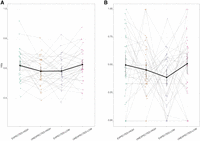
(A) The internal hits (reinstated internal details/internal details present in the imagined events) and (B) the external hits (reinstated external details/external details present in the imagined events), recalled for each of the four conditions that ranged from maximally schema-congruent to maximally novel (expected events in high familiar contexts, unexpected events in high familiar contexts, expected events in low familiar contexts).
The results of the linear mixed-effects model (LMM) with the internal and external hits (reinstated details) as the dependent variable
We examined if there was an effect of event expectancy or familiarity on the inclusion of additional details when retrieving an imagined event. We created two separate LMMs with the number of added internal and external details as the dependent variables. Both models included event expectancy, context familiarity, and their interaction as fixed factors with a by-participant random intercept. We also included the trial-level word count for Session 2 as a covariate to account for participants’ verbosity, which was centered and scaled by 2 SDs. The model with the number of additions classified as internal details revealed a significant interaction effect between event expectancy and context familiarity [β = −1.30, SE = 0.54, t(320.46) = −2.41, P = 0.02, 95% CI = −2.36 to −0.24], recapitulating the above-reported pattern (see Fig. 2A). Post-hoc comparisons with Tukey adjustment on the interaction effect revealed that for unexpected events, low familiarity contexts led to fewer additions than high familiarity contexts (EMMLow–High = −1.01, SE = 0.39, P < 0.01). For low familiarity contexts as well, unexpected events were associated with fewer additions than expected events (EMMUnexpected–Expected = −1.05, SE = 0.38, P < 0.01). The model with the number of additions that were classified as external details showed no significant effects, indicating this pattern is specific to details that require episodic memory (all Ps > 0.20; see Fig. 2B). Fixed-effect coefficients and their associated standard errors, degrees of freedom, test statistics, and P-values are presented in Table 3.
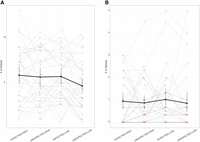
The number of (A) internal and (B) external details that were added when recalling the imagined events (details that were not originally reported during imagination) as a function of the four conditions.
The results of the LMMs with the number of internal and external detail additions as the dependent variables
Finally, to determine if our two measures of retrieval—hits and additions—were related, we averaged participants’ number of internal additions and internal hits for each condition and correlated these two measures separately in our conditions of interest (α = 0.01 with Bonferroni correction). We found a significant negative relationship for expected events, imagined in familiar contexts—such that participants were more likely to provide additional internal details when they reinstated a lower proportion of the imagined content (lower internal hit rates) during Session 2 (r = −0.65, P < 0.01; see Fig. 3).
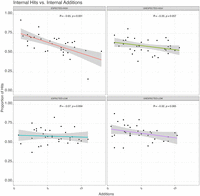
An illustration of the relationship between the number of internal details added and internal hits (reinstated details) within the recollected imagined events.
Discussion
Constructing and mentally simulating novel experiences are critical for how we plan and prepare for future events (Suddendorf and Corballis 2007; Klein et al. 2012; Szpunar and Jing 2013; Szpunar et al. 2013). While the Constructive Episodic Simulation Hypothesis (Schacter 2012) has made it clear that imagining novel autobiographical events rely on episodic memory processes, it is not yet clear how the same imagined events are stored in and retrieved from episodic memory. This is an important knowledge gap to fill given that these simulations need to be remembered to guide future actions. To address this knowledge gap, we examined the role of event schemas in determining the memorability of imagined autobiographical events. This focus on event schemas was rooted in prior work demonstrating that they drive how real-world memories are encoded, consolidated, and retrieved (van Kesteren et al. 2012; Gilboa and Marlatte 2017; Greve et al. 2019; Hebscher et al. 2019; Richter et al. 2019).
We leveraged a previously published data set in which participants imagined and then recalled (24 h later) autobiographical events that varied in schematicity—those that were maximally schematic (expected events occurring in highly familiar contexts) to those that were maximally novel (unexpected events occurring in unfamiliar contexts). We calculated the precise number of details reinstated as well as new details that were added in the event recollections. Confirming our predictions and aligning with proposed models of schema benefits to memory (e.g., SLIMM) (van Kesteren et al. 2012), our main finding was that both the maximally schema-congruent and maximally novel events were recalled with a significantly greater proportion of reinstated details than other event types. These findings expand on our previously published work in important ways (Fenerci and Sheldon 2022). Previously, our analyses were focused on the number of specific details used to remember imagined autobiographical events as a function of expectancy and context familiarity. These analyses revealed no significant effects of these variables on participants’ recollections. In the current study, we instead examined the content participants reinstated from their imaginations to show that both event expectancy and context familiarity determine what content is encoded, stored in, and retrieved from memory.
Our finding of memory benefit for imagined autobiographical experiences that most strongly align with an extant event schema (i.e., those in which participants had expectations for how that event would occur in a familiar location) fits with laboratory-based studies showing that memory is enhanced for information that is congruent with a schema (Craik and Tulving 1975; Greve et al. 2019; Quent et al. 2022). This finding also expands on what we know about the role of personal familiarity and prior knowledge in event memories. Within the context of autobiographical event imagination, studies have so far focused on the role of personal familiarity in how imagined events are encoded and retrieved (Klein et al. 2010, 2012; Martin et al. 2011; van Mulukom et al. 2016). This work has shown that personal familiarity with an imagined event's details enable detailed encoding and retrieval of that event. For example, in Jeunehomme and D'Argembeau (2017), participants imagined plausible, specific future events and after a delay, remembered the events they imagined. The results showed that subsequently remembered imaginations involved more familiar people, pointing to the memory benefits for personal familiarity with an event's constituent details (e.g., people) (Jeunehomme and D'Argembeau 2017). However, in our study, we did not find a main effect of personal familiarity on remembering the imagined episode. Rather, our results showed that how expected an event is and personal familiarity with its components (e.g., context) must both be present to show benefits to episodic memory while remembering imaginations.
We also found that maximally novel events (i.e., unexpected events in unfamiliar contexts) showed enhanced memory. This result aligns with a long line of work showing that novelty strengthens episodic memory formation (Tulving and Kroll 1995; Åberg and Nilsson 2001, 2003; Kormi-Nouri et al. 2005). However, it is important to consider that novelty has been defined along different dimensions across studies. On one hand, studies have defined novelty by virtue of the to-be-learned information being inconsistent with what is already known (i.e., prediction error) (Alba and Hasher 1983; Henson and Gagnepain 2010). On the other hand, in a parallel line of studies, novelty is defined as a lack of personal experience with the to-be-learned information (Tulving and Kroll 1995; Åberg and Nilsson 2001, 2003; Kormi-Nouri et al. 2005; Kumaran and Maguire 2009; Kafkas and Montaldi 2018). In this way, our finding of memory benefits for maximally novel events dovetails with the latter definitions of novelty.
Putting these findings together, much like previous work, we have found that both schema-congruent, familiar, and schema-incongruent, novel imagined events have a privileged status in episodic memory (i.e., higher number of reinstated details contained in recollections of imagined events). To explain these seemingly opposing results, we turn to the neurocognitive framework, the SLIMM (van Kesteren et al. 2012). This model proposes that episodic memory follows a U-shaped function of schema-congruency—with memory benefits for both congruent and incongruent information (Quent et al. 2022; although see Ortiz-Tudela et al. 2023 for an exception). Our results partially align with SLIMM's proposals. To begin, as proposed by SLIMM, we found that memory for maximally schema-congruent imaginations was enhanced. However, we did not find a memory benefit for unexpected events imagined in familiar contexts, which SLIMM would consider to be the most schema-incongruent. This is because familiar contexts likely generate stronger expectations about the events that typically occur in those contexts than novel contexts and these expectations are violated in the imagined events (for a similar conceptualization, see Quent et al. 2022). Instead, in our study, memory benefits emerged for schema-incongruent, novel imaginations. One possibility for this deviation could be that according to SLIMM, information inconsistent with extant schemas signals a prediction error, which is the key mechanism schema-incongruent information enhances memory (van Kesteren et al. 2012, 2014; van Kesteren and Meeter 2020). However, in our study, participants generated the memoranda themselves (i.e., imagined events) and as a result, our design lacked “prediction errors” as they were operationalized in previous work. Future work can integrate prediction errors while examining memory for autobiographical imaginations to test the predictions of SLIMM more systematically.
We found that participants reported fewer additional episodic details for the maximally novel imagined events (i.e., unexpected events in unfamiliar contexts). This finding supports SLIMM's proposal that different processes support schema-congruent and novel events, more specifically, with the notion that novel events are encoded by the medial temporal lobe (MTL) system to form more precise memory representations. Importantly, this finding dovetails with earlier behavioral work showing lower false alarm rates for schema-incongruent compared to schema-congruent information (Graesser et al. 1980; Brewer and Treyens 1981; Stangor and McMillan 1992; Packard et al. 2017). These studies have suggested that this effect is driven by people's tendency to use their event schemas as stand-ins for memories of events, unless the experiences have unexpected, schema-incongruent elements, leading to more “reconstructed” rather than reproduced memories (Hasher and Griffin 1978; Graesser et al. 1979, 1980; Alba and Hasher 1983). In this way, the added details during Session 2 in our study likely index instances of false memory—as participants reconstruct their imaginations, they not only reinstate details from the originally imagined event but also leverage their general knowledge or expectations, which are integrated into the recall (Bartlett 1932). In fact, we found a negative relationship between the number of additional internal details and internal hits (reinstated episodic details) only for maximally schema-congruent imagined events, which potentially suggests that participants relied on event schemas while reconstructing these imagined events, resulting in the production of details that were originally generated as well as schema-relevant additional details that were not originally present.
Why is there a mnemonic benefit for schema-congruent, familiar, and schema-incongruent novel imaginations? One explanation could be that these events confer adaptive benefits for preparing one for the future (Ingvar 1985; Schacter 2012). That is, remembering schema-congruent and novel imaginations is especially beneficial and effective in adaptively guiding future behavior. On one hand, highly familiar schema-congruent events are more likely to be encountered in the future as these events and their contexts have been frequently experienced in the past. Thus, remembering these imaginations could maintain the predictability of these scenarios (Anderson and Schooler 1991). On the other hand, novel events that are schema-incongruent will likely require greater preparation on the occasion that they are encountered, necessitating the detailed retrieval of these imaginations in the future. Taken together, the memory advantage for these events could be rooted in the fact that they confer the most benefits to guide future behavior.
An important avenue for future work is to directly investigate the neural substrates that support the enhanced memory for schema-congruent and schema-incongruent novel imaginations. SLIMM states that the memory advantage for schema-congruent versus incongruent information emerges from different neurocognitive mechanisms. Specifically, schema-congruent events are thought to be rapidly consolidated into cortical structures, whereas novel, schema-incongruent events are encoded by the MTLs (van Kesteren et al. 2012). The tested hypotheses here would be, first, that if the medial prefrontal cortex serves to detect the congruency between new imaginations and extant schemas, then it would be engaged when imagining and recalling highly expected and schema-congruent events. Second, if the MTLs, including the hippocampus, are highly responsive to novel, schema-incongruent information, then this system would be engaged for constructing and recalling the unexpected, schema-incongruent events.
Before concluding, it is important to consider open questions and alternative interpretations of our results. First, rather than facilitated retrieval, an alternative explanation for our finding of mnemonic benefits for maximally schema-congruent events could be that participants were able to use overt retrieval strategies to recapitulate the details initially generated during Session 1. For example, during retrieval, participants could have generated related schema-congruent information, correctly recognize these as ones initially generated, and reported them (generate and recognize strategy) (Watkins and Gardiner 1979). Indeed, our finding of increased internal hits and additions in the maximally schema-congruent condition (i.e., Expected-High) speaks to this possibility. Although it is not possible to determine this in our study, previous work has shown that schema-congruency benefits remain in the absence of generate and recognize strategies. For example, schema-congruency benefits have been reported in forced-choice associative recognition tests, in which details to be recognized are provided to the participants so that they need not generate these details themselves (van Kesteren et al. 2013) or when testing memory for information, which could not have been generated by simply knowing the schema (e.g., number of objects presented on the screen) (Greve et al. 2017, 2019). Based on these studies, future work can examine episodic memory for event imaginations by creating participant-specific recognition memory tasks, testing event specific details under experimental conditions where participants are passively presented rather than generate the details they originally imagined.
As well, it remains unclear whether familiarity with event components other than context (e.g., person, objects, etc.) similarly augments schema-congruency benefits. For example, McLelland et al. (2015) showed that personal familiarity with the people involved in future imaginations augments the memorability of these imaginations (McLelland et al. 2015; for a similar result, see Jeunehomme and D'Argembeau 2017). Thus, an interesting future avenue is to vary the familiarity of different event components and examine its interactions with schema-congruency in predicting the accuracy and precision of memory for imaginations. Finally, it was not possible to conclude whether enhanced memory for schema-congruent and novel imaginations in our study was due to enhanced encoding, consolidation, or retrieval. To this point, previous work predicts that the memory advantage of schema-incongruent events arises at encoding, whereas schema-congruent events augment memory during post-encoding consolidation and retrieval (van Kesteren et al. 2012).
Conclusion
In the current study, we found that imagined autobiographical events that were maximally schema-congruent (i.e., expected events in familiar contexts) as well as maximally novel (unexpected events in unfamiliar places) were associated with improved memory, whereas the latter was associated with fewer added details (i.e., more precise). Together, these results reinforce the role of event schemas in guiding episodic memory processes and provide new insights into what makes an imagined event memorable.
Materials and Methods
Participants
We recruited 40 participants for the experiment. Six participants were excluded from the final analysis due to not complying with the task instructions (n = 3) or attrition (i.e., missing Session 2 data; n = 3). The final sample was comprised of 34 participants (Females = 30; Mage = 21 yr, SD = 2.1; Meducation = 14.9 yr; SD = 1.5). All participants had normal or corrected vision, were free of medical or neurological conditions, and had English as their dominant language. Written informed consent was collected from all participants and the experimental procedures were approved by the McGill University Ethics Board.
Procedure
Full details of the experimental procedures are described in detail by Fenerci and Sheldon (2022). Briefly, participants completed one prestudy, and two in-laboratory experimental sessions. First, they filled out a prestudy questionnaire in which they indicated the number of times as well as the most recent time they visited 24 indoor contexts (e.g., kitchen) in the past year. For each participant, six most and six least frequently visited contexts were selected, creating two levels of context familiarity (high vs. low; for a list of the indoor contexts as well as their associated mean frequency and recency ratings, see Supplemental Table 1; distribution of which is depicted in Supplemental Fig. 1). Second, participants completed an in-person experimental session in which they were presented with the selected context cues one at a time and were asked to imagine specific, novel, and plausible autobiographical events that were either expected or unexpected to occur in the given contexts (Session 1). Here, participants were given the context cue only and generated the events themselves. This manipulation created two levels of schema-congruency for the imaginations with expected events being schema-congruent and unexpected events schema-incongruent. Once they had the event in mind, they were asked to give a short and descriptive title for the event (e.g., Visiting an exhibition), after which they described the event in as much detail as possible (examples of these imagined autobiographical experiences for different conditions are provided in Fenerci and Sheldon [2022]; Appendix C). Participants completed 12 trials in total and were given 120 sec to describe each event and rated their imaginations for phenomenological qualities (n.b. these ratings are not analyzed in the current study).
Participants returned to the laboratory 24 h later and were asked to remember and describe again the imagined events they generated in the previous session (Session 2). To cue retrieval, participants were presented with the context cues they generated from Session 1 in random order for 12 sec, after which they were asked to provide again, the title of the event they imagined the previous day. Following, they were presented with the original event title and were given 120 sec to recall and describe that event as close as possible to the way they imagined it initially. For the task instructions, see Supplemental Material B. The descriptions were recorded and transcribed for later scoring.
Scoring and analysis plan
To score, for each participant and context cue, we created a template from the descriptions of participants’ imaginations by listing all the details they originally generated. Then, we used this template to score participants’ retrievals during Session 2 for the number of (1) “Hits”: details reinstated from the Session 1 during Session 2, either verbatim or retaining the gist of the original detail and (2) “Additions”, which were new details reported in Session 2 but were not part of the original descriptions in Session 1. Next, we classified each hit and additional detail according to the Autobiographical Interview (Levine et al. 2002) scoring protocol. Details directly related to the main event being described by the participant were categorized as “Internal Hits” or “Internal Additions.” Details tangential to the main event or those containing general or personal semantic information were categorized as “External Hits” or “External Additions.” Our main measure of interest for the content reinstatement is the internal or external hits, which are the number of correctly remembered detail segments (internal or external) divided by the total number of details provided in Session 1 (total internal or total external). Two trained scorers implemented this scoring technique and obtained a high interrater reliability established on 12 randomly selected descriptions—such that all intraclass correlation (ICC) values were above 0.80. We present ICC values for all measures of interest along with associated Cronbach's α values in Supplemental Table 2.
To examine content reinstatement from event imaginations (Session 1) during recall (Session 2), we created two separate LMMs fit by restricted maximum likelihood (REML), one with the internal hits as the dependent variable and another with the external hits as the dependent variable—which were arcsine transformed to better approximate normality. Both LMMs included event expectancy (expected vs. unexpected), familiarity (high vs. low), and their interaction as fixed factors with a by-participant random intercept. As well, both LMMs included word count from Session 2 as a covariate to control for participants’ verbosity. Lastly, given that event expectancy influenced the number of details originally generated as part of the imaginations (Fenerci and Sheldon 2022), we additionally controlled for the memory load differences between the conditions. To this end, the LMM with the internal hits and the LMM with external hits included the total number of internal and external details generated during Session 1 as fixed factors, respectively. Before model fitting, all covariates (i.e., word count, Session 1 internal and external details) were centered and scaled by 2 SDs (Gelman 2008).
To examine the effect of event expectancy and familiarity on the inclusion of additional details, not originally reported as part of the imaginations but when retrieving the imagined event, we created two separate LMMs with the number of internal and external additions as the dependent variables. As before, both models included event expectancy, familiarity, and their interaction as fixed factors along with a by-participant random intercept. Since the dependent variable of these models was the raw number of added details, we also included the trial-level word count for Session 2 as a covariate to account for participants’ overall verbosity. Recent work on autobiographical memory has suggested that controlling for verbosity while examining detail counts yields more reliable and valid metrics of recall (Lockrow et al. 2024). As before, this covariate was centered and scaled by 2 SDs before model fitting.
All statistical analyses were conducted in the R programming language (version 4.1.2) (R Core Team 2017). We used the lme4 package to fit LMMs (version 1.1-35.1) (Bates et al. 2015) and tested the statistical significance of the predictors (i.e., obtained P-values) using the Satterthwaite's approximation for degrees of freedom within the lmerTest package (version 3.1-1) (Kuznetsova et al. 2017). We obtained the EMM for the linear mixed models and conducted post-hoc, pairwise comparisons using the emmeans package (version 1.8.9) (Lenth and Lenth 2018). We calculated ICCs using the ICC function in the psych package (version 1.9.12) (Revelle 2021). Deidentified data and analytic code are available at the Open Science Framework (OSF; https://osf.io/7cyfp/). Given that free recall responses contained potentially identifying information, we only provide the scored data.
Acknowledgments
The authors would like to thank Frédérik Crépeau-Hubert for their help with collecting the data and recall scoring.
Footnotes
-
[Supplemental material is available for this article.]
-
Article is online at http://www.learnmem.org/cgi/doi/10.1101/lm.053993.124.
- Received January 20, 2024.
- Accepted March 12, 2024.
This article is distributed exclusively by Cold Spring Harbor Laboratory Press for the first 12 months after the full-issue publication date (see http://learnmem.cshlp.org/site/misc/terms.xhtml). After 12 months, it is available under a Creative Commons License (Attribution-NonCommercial 4.0 International), as described at http://creativecommons.org/licenses/by-nc/4.0/.