Goal orientation shifts attentional focus and impairs reward-motivated memory
- Lena J. Skalaban1,2,
- Allison L. Neeson3,
- Troy M. Houser2,
- Sarah DuBrow2,
- Lila Davachi4 and
- Vishnu P. Murty2
- 1Department of Psychology, Temple University, Philadelphia, Pennsylvania 19122, USA
- 2Department of Psychology, University of Oregon, Eugene, Oregon 97403, USA
- 3Children's Hospital of Philadelphia, Philadelphia, Pennsylvania 19104, USA
- 4Department of Psychology, Columbia University, New York, New York 10027, USA
- Corresponding author: skalaban{at}uoregon.edu
Abstract
While motivation typically enhances memory, some studies show that, in certain contexts, motivation associated with rewards can impair memory. Goal states associated with motivation can impact attention, which in turn influences what information is encoded and later remembered. There is limited research on how different incentive contexts, which manipulate attentional orientation to memoranda, lead to either reward-motivated memory enhancements or impairments in item and relational memory. Here, we test how different reward-motivated states may narrow or broaden attention with downstream consequences on memoranda. In study 1, giving participants a rewarded timed goal during visual search impaired both their item and relational memory relative to un-timed participants who were simply told that they would be rewarded for searching regardless of speed (despite having equated time). In study 2, we show that giving participants an elaborative goal after visual search completion remediates item and relational memory deficits in the Feedback group. Finally, in study 3, we show that elaborative processing of target items during visual search resulted in reward-motivated memory benefits for the item, but not relational memory for the context in which the item was encoded. Together, these findings support a model where the goal-relevant alterations in attentional breadth to reward may ultimately filter what information is remembered or forgotten.
Motivation drives our interest in the surrounding world, influencing what actions we take and subsequently what we learn. But what exactly motivates us to learn? Classic learning theory suggests that external incentives––like monetary rewards––are a powerful tool to induce and enhance learning (Bouton 2007). Indeed, a well-established literature reliably shows that rewarding an action facilitates learning, adaptively increasing the likelihood of repeating that action to receive a reward again in the future (Daw and Doya 2006; Wise and McDevitt 2018). Though, there is also evidence that higher relative to lower monetary rewards can sometimes decrease task performance due to the deleterious effects of attentional narrowing over motivation (Mobbs et al. 2009). Research posits that an individual's motivational orientation and associated attentional breadth governs what they will be motivated to learn (Braver et al. 2014; Cornwell et al. 2014; Dweck 2017). Thus, it is not reward incentives alone that govern subsequent learning, but rather the motivational orientation the incentives induce that ultimately informs our goal state and what we devote attentional resources toward, and thus, what we remember. Reward, in this context, encompasses a mix of attention and motivation invigorated by goal states. Here, we characterize how changing the nature of reward incentives shifts the spotlight of attention and motivational orientation, with long-term consequences for the fate of memories formed during goal pursuit.
Many studies show that incentivizing episodic encoding with rewards enhances memory for the rewarded items as well as relational memory for these items and their surrounding context (Adcock et al. 2006; Murty and Adcock 2014), even when memory encoding is incidental (Murty et al. 2011; Gruber et al. 2016; Loh et al. 2016; Braun et al. 2018). The anticipation of rewards may incite arousal (Miendlarzewska et al. 2016; Gieske & Sommer 2023) and this state of arousal can broaden or narrow the focus of attention to the task itself or even items/contexts coincidental with reward. This broadening/narrowing of attention driven by reward can influence memory for task-irrelevant items known as value-driven attentional capture (VDAC) (Milner et al. 2023). Heightened attention during encoding in particular can enhance episodic memory, whereas divided attention or high working memory load during both encoding (Nachtnebel et al. 2023) and retrieval (Ataseven et al. 2023) can hinder subsequent memory. However, how attention is guided by different motivational goals, and how the timing and scope of reward-motivated goals impacts episodic memory is still yet to be determined.
While reward has primarily been associated with enhanced encoding (Miendlarzewska et al. 2016), there are certain contexts in which reward motivation impairs memory (Murty and Adcock 2017). Research shows that reward motivation can impair memory when it is associated with high self-reports of anxiety during encoding (Callan and Schweighofer 2008), greater skin conductance—a physiological marker of arousal—during goal pursuit (Murty et al. 2011), which have previously been associated with narrowed attention (Elliot 1999; Fredrickson and Branigan 2005). Furthermore, reward-motivated memory impairments also occur when greater reward prediction errors are concurrent with unrelated memoranda (Wimmer et al. 2014). Broadly speaking, these findings suggest that states of high urgency, which are known to narrow the breadth of information processing and attention (Harmon-Jones et al. 2012), can impair episodic memory.
Inspired by these lines of research, we propose that incentives alone do not dictate memory outcomes; rather, what information is remembered or forgotten is determined by the breadth of attention invigorated by motivational state and rewards (Murty and Adcock 2017). Specifically, motivational states broaden or narrow the focus of attention, which in turn influences whether only goal-relevant or broader details are later remembered. For example, though reward is typically thought to enhance motivation to attend to rewarded memoranda, thereby bolstering memory, when reward incentives are directed toward high-priority targets that induce a state of urgency, this could induce a relatively more narrow motivational orientation (i.e., narrowed attention to the goal). This hypothesis makes a yet untested prediction that the same reward incentive (e.g., a monetary reward) can either enhance or impair memory depending on whether the incentive induces a narrow versus broad motivational orientation. We conceptualize these alterations in memory on a hierarchy ranging from increased relational memory, increased item but not relational memory, and either no effect or impairments on item and relational memory. Within this framework, we predict goal orientations associated with attention to the broader context will enhance the highest level of this hierarchy (i.e., increased item/relational memory) while goal orientation associated with narrowed attention will impact the lowest level of this hierarchy (i.e., decreased item and relational memory).
In a relevant recent study by Nachtnebel and colleagues (2023), participants completed a visual search task to identify items hidden in a scene followed up by a memory test for objects and backgrounds. The authors wanted to know how various distractions during the visual search––including listening to audio, counting backward for added working memory load, and time pressure––impacted subsequent memory. Only working memory load interfered with both search behavior and subsequent memory; in their interpretation by dividing attention between search and the working memory task. However, the time pressure manipulation did not provide direct feedback or incentivize participants speeded performance, rather, they informed participants that some trials would be cut short at varying intervals to try to speed their performance. The authors also did not choose to incentivize conditions in varying ways or test item and relational memory separately. In this study, we extend these findings and test our outlined predictions by manipulating the reward incentive structure around finding targets during a similar visual search task and characterizing the downstream consequences on item and relational memory, respectively. To do this, we changed the nature of reward incentives and their relationship with the elaborative processing of targets to manipulate motivational orientation and attentional breadth.
In study 1, we characterized item and relational memory outcomes when the goal was narrowly oriented toward timed actions (Fig. 1A). In study 2, we determined whether memory deficits resulting from a narrowed goal could be remediated by introducing a secondary goal of elaborating on target items after search completion (Fig. 1B). Finally, in study 3, we determined how incentivizing semantic elaborations on the targets of visual search during goal pursuit influenced item and relational memory (Fig. 1C). The results from these findings set the foundation for understanding how goal orientation interactions with attention, rather than the specific incentives alone, dictate memory outcomes.
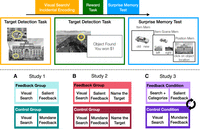
Task design. Across three experiments, participants completed a three-part study. During part 1, participants completed a “training phase” of a target detection task in which they had to visually search and find target items hidden in a complex scene. This target detection task served as an implicit encoding phase, as we later tested memory for target items and their associated contexts. In the next phase, participants completed three trials of a reward version of the task, to help with our condition manipulations in the first phase. Memory was not tested for items in this session. Finally, participants completed a surprise memory test for items, item–scene associations, and item position within the scene from the “training phase.” (A) In study 1, we used a between-subjects design, where the Feedback group was given more salient feedback on their target detection performance compared to the Control group. (B) In study 2, we modified the instructions of study 1, wherein both groups had to semantically elaborate on the target by naming the identity of the target image, although feedback was only given about visual search performance. In study 3, we used a within-subjects design where they performed a block of the Feedback and Control condition, counterbalanced across participants. (C) In study 3, we again changed the instructions such that individuals had to categorize the hidden item to indicate they found them, thus feedback was based on a combination of visual search and semantic elaboration.
Results
Study 1: reward-motivated memory impairments
In study 1, we characterized whether reward incentives that narrow individuals’ attention toward an action goal impair item and relational memory performance. To achieve this, half of the participants (Feedback group) trained for a future rewarded test in which they would earn money for locating hidden items in complex scenes quickly. We gave participants feedback on their speeded performance and incentivized future rewards. Thus, during training, the Feedback group was instructed to try to improve their speed to incentivize a single action-oriented goal. We provided performance feedback (i.e., how long it took them to find the target) for each trial to increase the saliency of their goal. Following visual search training, participants completed surprise memory tests from the training phase only probing for both item (i.e., target item) and relational (i.e., items and their associated scene) memory. Control group participants, on the other hand, were simply told to find the object hidden in the scene without additional feedback aside from successful identification of the target. Importantly, however, both groups were allotted the same amount of time to search, and both groups’ memory was tested for objects/scenes from the visual search training rather than the rewarded task itself. In this way, we hoped to isolate how either an explicitly narrow action-oriented goal state or a broadly defined goal influenced subsequent memory for target items and their respective context.
Search behavior
We first assessed how performance incentives focused on finding target items influenced visual search performance (i.e., the percentage of target objects found and search time). During visual search training, there was equivalent performance in finding objects across motivational groups [Feedback: mean(SE) = 0.85 (0.02); Control: mean(SE) = 0.90 (0.01); Wilcoxon test: W = 544, P = 0.16] (Fig. 2A). However, expectedly, Feedback participants performed faster than Control participants [Feedback: mean(SE) = 5.88 sec (0.24); Control: mean(SE) = 7.13 sec (0.30); t(58) = 3.04; P = 0.004] (Fig. 2B).
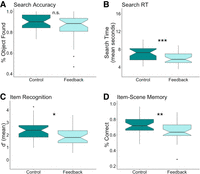
Study 1 results. There were no differences in visual search accuracy across groups (A); however, participants in the Feedback group had a faster search RT (B). During the surprise memory test, participants in the Feedback group had significantly worse item memory (C) and item–scene associative memory (D). (n.s.) Nonsignificant, (*) P < 0.05, (**) P < 0.01, (***) P < 0.005.
Memory behavior
We tested incidental memory encoding by examining the results of three surprise memory tests following the visual search tasks. Memory was tested for the stimuli encountered during the 30 trials of training, and only trials on which participants found the hidden item were included in analyses. Feedback participants had worse item memory than Control participants [Feedback: mean(SE) = 1.87 (0.14); Control: mean(SE) = 2.35 (0.15); t(58) = 2.36, P = 0.02] (Fig. 2C) and item–scene relational memory than did Control participants [Feedback: mean(SE) = 0.65 (0.020); Control: mean(SE) = 0.73 (0.020); t(58) = 2.73, P = 0.008] (Fig. 2D). These results remained significant even when we controlled RT during the search task (item: P = 0.02 and item–scene: P = 0.004). There was no difference in item position memory error between the groups [Feedback: mean(SE) = 365.02 (16.65); Control: mean(SE) = 334.13 (16.99); t(58) = −1.3, P = 0.20], although errors were numerically larger in the Feedback versus Control group. Together, these findings suggest that incentivizing target detection with a specific goal (speeded detection) impaired both item and relational memory encoding during a visual search task despite equivalent performance in accurately identifying the items in the scene.
Study 2: broadening goal orientation after goal pursuit
Study 1 showed that giving participants a timed goal may have narrowed their attention in lieu of broader elaborative processing thus impairing both item and relational memory. However, to test whether these impairments specifically resulted from a narrowing of attention during incentivized visual search, in study 2, we introduced a manipulation to broaden information processing after goal pursuit. If memory deficits in study 1 resulted from narrowed attention to the speeded identification of items, this manipulation should remediate memory deficits. In study 2, we specifically tested this hypothesis by broadening goal orientation via increasing levels of processing of target stimuli following the completion of goal pursuit; specifically, after participants found the target image (i.e., the focus of their attention), they then had to label the identity of the target image. In this way, our intervention directly reflects a broadening of elaborative processing of the memoranda independent of their narrow goal pursuit.
Search behavior
Again, participants in the Feedback and Control group did not differ in their success at finding objects across groups [Feedback: mean(SE) = 0.91 (0.01); Control: mean(SE) = 0.90 (0.01); Wilcoxon test: W = 469.5, P = 0.57] (Fig. 3A). However, again as expected, Feedback participants performed faster than the Control participants [Feedback: mean(SE) = 7.54 sec (0.41); Control: mean(SE) = 9.07 sec 0.41); t(62.0) = 2.65, P = 0.01] (Fig. 3B), but did not differ in their success in finding objects overall. This confirms that our incentive manipulation in study 2 was as effective as the manipulation in study 1.
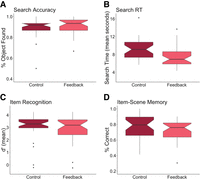
Study 2 results. There were no differences in visual search accuracy across groups (A), however, participants in the Feedback group had a faster search RT (B). During the surprise memory test, there were no differences across groups in item memory (C) or item–scene associative memory (D) when item elaboration was included after goal completion.
Memory performance
We next assessed whether our manipulation of naming each item aloud after the conclusion of goal pursuit remediated the effect of timed-performance feedback on incidental memory encoding. In study 2, there was no difference between the timed-performance Feedback and Control groups for item memory [Feedback: mean(SE) = 2.93 (0.22); Control: mean(SE) = 3.16 (0.19); t(62) = −0.65, P = 0.51] (Fig. 3C) or item–scene relational memory [Feedback: mean(SE) = 0.72 (0.03); Control: mean(SE) = 0.77 (0.03); t(62) = 1.19, P = 0.24] (Fig. 3D), indicating that our intervention of semantic labeling to broaden goal orientation was enough to remediate both item and item–scene relational memory deficits exhibited by Feedback participants in study 1. Notably, as in study 1, all results remain the same when controlling for search reaction-time (item: P = 0.25, item–scene: P = 0.53, respectively). In summary, broadening attention following completion of related, but narrowed goal, equated memory in the timed Feedback group relative to the Control group. Still, we did not see a reward-memory benefit in the Feedback group; a feature we address in study 3.
Study 3: semantic elaboration during goal pursuit aids memory
Study 2 showed that we can remediate memory impairments resulting from a narrow goal by broadening semantic elaboration directed at the target image after the completion of goal pursuit. Still, this intervention only resulted in a remediation back to baseline for reward-motivated memory impairments, rather than inducing reward memory enhancements. One reason why we may not have induced a reward-motivated memory enhancement is that our intervention occurred after individuals completed their incentivized task (after search completion). If reward incentives were directed toward integrating both the goal of finding visual targets and elaborating on the semantic properties of the target, reward should result in memory enhancement, particularly for items. More simply stated, broadening information processing may need to occur during rather than after goal pursuit to enhance memory. To test this hypothesis, in study 3, we modified our visual search paradigm to include a goal that asked participants to not only find the target images, but also semantically categorize the target items by determining which context it would most likely be associated with. Thus, in the Feedback condition, participants were incentivized to find target items to subsequently categorize them as quickly as possible.
Due to the COVID-19 pandemic, we conducted study 3 online. However, we wanted to take a conservative approach given that we piloted and ran the prior two studies in-person and were worried about the potency of reward incentives in an online format. Thus, we used a within-subjects design so we could account for individual differences in motivated behaviors elicited by our Feedback condition, which may be different across individuals during online testing. In this way, the efficacy of reward incentives could be individually determined by participants’ RTs on the categorization task, rather than purely on our task manipulation.
Search behavior
Differing from the prior two studies, participants’ aggregate reaction times for visual search/semantic categorization did not differ across the Feedback versus Control conditions [Feedback: mean(SE) = 11.14 sec (0.31); Control: mean(SE) = 11.31 sec (0.31); t(75) = −0.70, P = 0.49], which suggests that there was a reduction in the efficacy of our incentives. However, these incentives were effective in a subgroup of participants, such that 42 out of 76 participants showed a faster combined visual search and categorization RT in the Feedback versus Control Condition, whereas 34 out of 76 participants either showed a slower RT in the Feedback versus Control condition or no difference. As in study 1, there were no differences in success in finding objects across conditions [Feedback: mean(SE) = 0.66 (0.02); Control: mean(SE) = 0.63 (0.02); t(75) = 1.01, P = 0.32].
Memory performance
We next assessed whether our manipulation of incentivizing visual search and categorization influenced incidental memory encoding. In study 3, there were no group-average differences across conditions in either item memory [Feedback: mean(SE) = 0.91 (0.06); Control: mean(SE) = 0.95 (0.05); t(75) = 0.14, P = 0.88] or item–scene relational memory [Feedback: mean(SE) = 0.53 (0.08); Control: mean(SE) = 0.42 (0.08); t(75) = −0.38, P = 0.70], which was unsurprising given the lack of differences in RT performance. Thus, given the modest effects of our incentives on inducing motivated search behavior at the group level, it is hard to interpret these negative findings.
Thus, we decided to implement an individual differences approach to see whether memory enhancements/impairments emerge depending on the extent to which participants showed reward-motivated increases in RT for visual search/semantic identification. Thus, for each participant, we created a difference score in their visual search behavior and subsequent memory across the Feedback versus the Control condition, and then ran across-subject analyses comparing reward-motivated benefits on each behavior. Interestingly, this analysis revealed that motivated visual search behavior (i.e., faster RTs in the Feedback vs. Control condition) showed a significant relationship with incentivized item memory benefits [i.e., better overall item memory in the Feedback vs. Control condition; r(74) = −0.27, P = 0.02] (Fig. 4A), but showed no influence on relational memory [r(74) = −0.04, P = 0.71] (Fig. 4B). Thus, these findings show that broadening goals to include semantic categorization of visual search targets facilitates item processing and has no influence on relational memory.
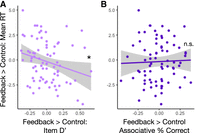
Study 3 results. Decreased reaction time on the visual search task across the Feedback versus Control task, which indicates increased motivated behavior, was associated with greater item memory in the Feedback versus Control condition (A), but not associative memory (B), when semantic elaboration was embedded in goal pursuit. (n.s.) Nonsignificant, (*) P < 0.05.
Discussion
In the current study, we tested the hypothesis that narrowing or broadening individuals’ attention by changing their goal orientation to rewards would result in downstream alterations in incidental memory encoding. In study 1, we found that providing timed performance feedback influenced both their goal pursuit (as evidenced by faster reaction times) and impaired both subsequent item and associative memory. In study 2, we found that modifying this paradigm to include an intervention that broadened information processing after goal pursuit concluded (naming the target after visual search) remediated these memory deficits. However, this intervention still did not result in reward-motivated memory enhancements for the timed Feedback condition. Finally, in study 3, we showed that if we included elaboration (naming and categorizing items) during individuals’ goal pursuit (visual search), there was a relationship between speeded performance (higher RTs) and reward-enhanced memory for target items, but not relational memory for the context. These findings, along with a large literature showing reward-motivated memory enhancements, address how reward incentives may interact with overarching goal states to influence incidental memory leading to increased retention in some cases and forgetting in others.
Evidence from prior work demonstrates that rewards often enhance memory, even when memory tests are given by surprise (Murty et al. 2011; Gruber et al. 2016; Loh et al. 2016; Braun et al. 2018). One theoretical explanation for this memory enhancement posits that reward sharpens attention to the context surrounding reward thus bolstering subsequent memory of rewarded items compared to nonrewarded items (Miendlarzewska et al. 2016; Bergmann et al. 2019; Gieske and Sommer 2023). However, in contrast, there is also literature demonstrating that rewarded tasks can sometimes impair subsequent memory when stakes are too high or participants become stressed (Mobbs et al. 2009). Likewise, difficult tasks can sometimes narrow the spotlight of attention, thus enhancing performance on some aspects of a task at the expense of subsequent memory performance (Nachtnebel et al. 2023). However, the current literature fails to address how and when rewards interact with goal states thereby streamlining attention to sometimes produce memory benefits, and in other cases, memory deficits. In study 1, we show evidence that providing an additional goal of speeded task performance impaired both item and relational memory despite rewarding participants for their performance. However, we further demonstrate in study 2 that this memory decrement could be partially remediated by a target-related elaboration after goal pursuit, which may induce broader attentional orienting, and that in study 3 reward-motivated memory could be rescued even further by including target elaboration during goal pursuit that impacted the relationship between task performance (speed) and enhanced item-level memory.
In study 1, we observed that speeded Feedback participants had impaired associative memory for item–scene pairs encountered during the visual search task compared to the Control group. These findings support the idea that when reward motivation was reinforced by salient performance feedback on action responses (i.e., visual search), individuals would have diminished memory for items extraneous to goal pursuit, such as the identity of target items and relational memory for the surrounding context. In this way, our results support the hypothesis that when individuals’ attentions are oriented toward performance feedback, reward motivation actually impairs subsequent memory rather than bolstering it.
Given that our predictions suggested that narrowed attention caused these memory impairments, we hypothesized that broadening the goal of the visual search environment after goal obtainment would remediate memory deficits by compensating for limited information processing during search. We opted to broaden information processing by specifically having individuals name the visual search target. Prior research has shown that naming target items increases depth of processing resulting in better memory (Kapur et al. 1994; Craik 2002; Schott et al. 2013). After implementing this manipulation in our Feedback group, there were no differences across groups in memory for items or for item–scene relationship thus remediating the memory detriments seen in study 1 for the speeded Feedback group. This expansion of attention via nonincentivized semantic generation could be closely associated with other manipulations of motivational states during learning, including a switch from performance goals to learning goals (Dweck 2017).
Notably, semantic naming in study 2 remediated memory impairments induced by goal orientation oriented toward actions. However, this intervention did not produce reward-motivated memory enhancements shown in prior work (Murty et al. 2011; Gruber et al. 2016; Loh et al. 2016; Braun et al. 2018). One reason this pattern of results may have emerged was that our elaboration manipulation was placed at the end of goal pursuit, postencoding, rather than during goal pursuit. Study 3 tested this hypothesis by introducing semantic elaboration of target images during goal pursuit (via categorization of items). Indeed, the inclusion of elaboration during goal pursuit enhanced item memory for those participants who also engaged in the goal motivation (faster RTs in the Feedback than Control condition). We initially predicted that this elaboration would provide both item and relational memory benefits. This last finding provides evidence that the influence of motivation on reward is specified by the breadth of attention and timing of goal orientation, such that when goals increase attentional breadth during encoding, there are benefits for both item and relational memory, but when it narrows to item-based processing or is applied after goal pursuit, memory benefits are only specific to items. Furthermore, when motivations are focused most narrowly on actions alone, both item and relational memory are impaired. Alternatively, it could be that selecting a likely context in which the item might be found interfered with memory for the actual background in which the item was found during search. Future studies will need to delineate between these two explanations.
There were a few limitations to our study that need to be addressed in future work to strengthen our conclusions. First, we define reward broadly in the context of this paper. We define reward as a mix of motivational and attentional orientation, rather than just the value of the reward received. Accordingly, we give reward incentives only after visual search is completed and to both Control and Feedback groups. What changes between groups instead is the instructions to motivate receipt of reward later. While the goal of this study was to explore motivational orientations as they relate to reward, we acknowledge that we cannot necessarily say whether these results would translate to paradigms where reward receipt occurs during the visual search task. Likewise, it is unclear whether giving the reward to only the Feedback group would change the results reported here. Future studies will have to tease apart the subtle differences between when reward is given compared to changes in goal orientations motivated by reward. Second, our studies manipulated the goal orientation via task instruction, and we did not have additional metrics to confirm the success of our manipulation or the orientation of attention specifically. Critically, some theoretical models make predictions that attentional narrowing should be associated with increased physiological arousal, as well as engagement of the amygdala (Murty and Adcock 2017; Clewett and Murty 2019). Future work using skin conductance, heart rate monitoring, eye tracking, and neuroimaging could bolster support that our task manipulation indeed induced narrowed attention and motivation. Next, our manipulations across studies solely targeted reward incentives, however, the same implications on memory could emerge by broadening motivational orientation to punishment incentives. Thus, future work manipulating goal orientations when using both reward and punishment incentives is necessary to support our conclusions. Last, unlike study 1 and 2, the paradigm in study 3 was conducted within-subjects rather than between-subjects. Although this allowed us to probe the relationships between individual differences in RT and memory, we did not find overall faster RTs in the Feedback group relative to the Control group. This may be because including both Feedback and Control conditions within a single subject decreased the impact of the Feedback trials or let the Feedback motivation carry over to the Control trials. However, the relationship between those subjects that did indeed show faster RTs in the Feedback trials and better item-level memory might hint that similar results would be obtained with separate Feedback and Control Groups. This result may need to be confirmed in further work comparing within- versus between-subject motivational groups.
In sum, the current study extends the literature on motivation by demonstrating how the goal states in a reward context can either enhance or impair reward's influence on memory based on how goal orientation focuses attention onto specific memoranda, and when during a task attentional breadth is manipulated. The results may have interesting implications for our current education systems; if students are incentivized to learn so to achieve the outcome of test scores, we must consider the boundaries this imposes on the broader information that they encode. Or even more directly, encouraging students to focus on the speed of completion may, in some cases, hinder depth of processing and memory for some items or contexts unless students are oriented toward a broader goal. Future work that examines performance goals without feedback and performance feedback without goals is necessary to parse apart exactly how motivation may influence incentive valence to either enhance or impair memory encoding. Furthermore, it will be important to investigate other avenues beyond semantic elaboration to broaden goal orientation to determine multiple routes to facilitate both item and associative memory.
Materials and Methods
Study 1
Participants
In study 1, 61 participants recruited from the New York University (NYU) and surrounding New York City community were randomly assigned to be in the “Feedback” or “Control” groups. One participant was excluded for incorrect key responses during the memory tests, leaving 60 participants included in analyses. A computer error resulted in us not being able to obtain the specific demographic variables of this population, but all participants were within the range of 18–35 years of age. We decided on our sample size prior to the experiment, based on sample sizes previously used in reward memory studies that were able to detect medium effect sizes (Murty et al. 2011; Murty and Adcock 2014). Participants were compensated $10, plus a $5 monetary bonus for performance.
Visual search training task
To test whether a reward incentive that induces a narrow goal orientation results in memory impairments, we manipulated instructions for a visual search task (Feedback vs. Control). First, memory encoding occurred during a visual search “training” period that consisted of 30 trials in which participants had to locate and click on a black-and-white item embedded and hidden in a black-and-white scene (Fig. 1). The object was not part of the original scene and thus did not necessarily contextually or visually match the background enabling participants to find it (i.e., a piece of fruit in an image of the NYC skyline). Participants had 30 sec to locate the hidden item and did not know the identity of the hidden item ahead of time. During this task, Feedback participants were instructed to practice for a later rewarded visual search task on which they would earn money for finding the hidden items quickly and accurately (they were not rewarded for wrong clicks). To enhance the salience of the reward incentive and narrow goal orientation, Feedback participants received feedback on how fast they found each item on training trials as well as how much money they would have earned if they were in the rewarded portion of the task. Feedback was presented as text on the screen at the end of each trial, along with the outcome of the trial (object found, time is up, or wrong click). Critically, participants were informed that they would not receive monetary rewards for this portion of the study and were only practicing for the later test. Control participants were not told about the later rewarded task and were simply instructed to search for items hidden in scenes (Fig. 1A, bottom). At the end of each search trial, Control participants saw the trial outcome but did not receive speed of search feedback during training.
Visual search rewarded task
Following training, both groups completed an identical rewarded version of the task after training, to control for any effects that may result from postencoding reward receipt. Thus, both groups were instructed that they would earn money for finding the hidden items quickly in this portion of the task (Fig. 1). This rewarded visual search task was intentionally designed to be easier than the training task to make sure both groups were at a 100% success rate. The rewarded task consisted of three trials. Items were changed to color pop-outs to make the task effortless and equate reward earnings across groups.
Surprise memory tests
After the visual search tasks, all participants completed three surprise memory tests for the stimuli encountered during visual search training to test for item and relational memory (Fig. 1). We characterized item memory via old/new recognition and characterized relational memory via item–scene relational memory and item position memory encountered in each of the 30 trials of visual search training. Participants completed all the trials of a given memory test before moving to the next test. Item memory was tested first by having participants determine whether an object was previously presented during visual search training. Participants were presented with all 30 items they encountered during visual search and 30 novel foils in an intermixed fashion. After item memory was tested, participants underwent an item–scene memory test. Item–scene memory was tested by a two-alternative forced choice task by showing both the correct scene and a lure scene that they saw during search training but that contained a different item. Participants were asked to choose the correctly associated scene for the item in the task. Given this design, participants viewed each scene image twice, once as a target image and once as a lure. Finally, participants completed a position memory test in which participants clicked where in the scene (selected during item–scene memory) the object appeared (x and y coordinates from their choice were recorded). All memory tests were self-paced. Only trials on which participants found the hidden item during the visual search task were later tested in memory analyses, excluding trials on which participants ran out of time or clicked the wrong spot in the scene, thus ending the trial with a false-item click. Furthermore, for our relational memory tests (item–scene, item position), we only analyzed trials in which participants successfully found the item during visual search and correctly identified the item during the item memory test.
Data analysis
Analyses focused on visual search training behavior and their memory outcomes. To assess group differences in search behavior, we characterized search accuracy and reaction time. Search accuracy was characterized as the number of trials on which participants successfully located the hidden item, and reaction time was the number of seconds participants took to find the item, or 30 sec if they ran out of time. We conducted a nonparametric two-sided Wilcoxon rank sum test for search accuracy, as performance was near ceiling, and a two-sample t-test for search reaction time.
For item memory, we conducted a two-sample t-test comparing d′ between Feedback and Control participants using R. d′ was calculated as the difference between the z-transforms of Hits and z-transforms of false alarms, using the norminv function in MATLAB. Hits are defined as trials on which participants said the item was old when it had been previously identified by the participant during the visual search training and false alarms as trials on which participants said the item was old when in fact they had never seen it before.
For item–scene relational memory, we conducted a two-sample t-test comparing the average item–scene accuracy between groups. Item–scene accuracy was determined by calculating the mean number of trials on which participants correctly paired a remembered item with its scene associate seen during the visual search. For item position memory, we conducted a two-sample t-test comparing the mean distance error between groups. Distance error was calculated by characterizing the Euclidian distance between where in the scene the participant clicked for “item position” memory, and the actual x and y coordinates of the center of the item as it appeared in the scene.
Given that we found differences in overall search time across groups, we characterized whether the time spent searching for items influenced memory outcomes. Specifically, we assessed memory while controlling for search time on a trial-by-trial basis by constructing generalized linear models. In each model, the dependent variable was our memory metric (d′, item–scene accuracy, distance error, etc.) and the independent variable was group (Feedback vs. Control) while controlling for search time. All analyses were performed on R version 4.03. Analyses were considered significant if P-values were <0.05 and trending toward significance if P-values were between 0.05 and 0.10.
Study 2
Participants
For study 2, we predetermined a sample size of 62 participants was necessary to achieve 80% power and detect a medium-sized effect, based on the effect size from study 1. We recruited 65 participants from the Psychology study pool at Temple University to achieve our goal sample of 62. Only one participant had to be excluded for incorrect key responses during the memory tests, so 64 participants (49 females; mean age = 19.57 years, SD = 1.30 years) were included in analyses. All participants provided written informed consent in accordance with the Temple University Institutional Review Boards. Participants were compensated with class credit plus a $5 monetary bonus.
Task design
For study 2, we modified the visual search task. Again, all participants underwent visual search task “training,” a rewarded visual search task, and surprise memory tests. Instructions for Feedback and Control participants remained the same as in study 1. To broaden information processing postgoal, once a participant located an item, we required them to identify the name of the target object after each search trial. We theorized that this would aid elaborative processing of the memoranda itself and shift attention away from the initial goal state of speeded detection thus potentially rescuing item and relational memory.
Data analysis
We ran the same analyses for visual search training behavior and memory outcomes for training stimuli for study 2 as we did in study 1. However, in study 2, item memory appeared to be at ceiling levels of performance. To assess potential ceiling effects, we ran Shapiro tests of which indicated nonnormal distributions in both groups. To remediate the putative effects of ceiling level performance, we reanalyzed our two-sample t-tests using a nonparametric Mann–Whitney test, and a parametric test that corrected for ceiling levels of performance (DACF function as implemented in RStudio 2021.09.2).
Study 3
Participants
For study 3, we recruited a sample size of 80 participants, which was beyond the sample size necessary to achieve power of 80% and detect a medium-sized effect, based on study 1. We oversampled for this study given we did not know the efficacy of our incentive manipulation and the potential of low performance due to conducting this study on an online platform. Of the originally recruited participants from the Prolific Online platform (https://www.prolific.com/), four participants had to be excluded for incomplete submissions. This resulted in a final sample of 76 participants (72 females; mean age = 24 years, SD = 4.3 years) included in analyses. All participants provided written informed consent in accordance with the Temple University Institutional Review Boards. Participants were compensated with $7.50/h and a $1.25 monetary bonus.
Task design
For study 3, we modified the visual search task in study 1 in two significant ways. First, we ran a within-subjects design such that participants completed a block of the timed Feedback condition and a block of the Control condition, in a counterbalanced order during the visual search training task. Second, we modified the task to increase the elaboration of target images during goal pursuit, specifically, to incentivize speeded categorization of the target item rather than the speed of target detection in isolation. To do this, participants were shown six contexts at the bottom of their screen: kitchen, office, toolshed, toy chest, bathroom, and closet. Participants were told to find an object hidden in the scene and upon clicking on this target, immediately were asked to identify which context the object would most likely be found in. In the feedback condition, they were then told how fast they were able to accurately categorize the target image. Notably, participants were still motivated to find the target images in a speeded fashion, because if they did not find the target image, they would not be able to categorize it. Thus, participants were motivated both for speeded visual search and item categorization in the feedback group.
The item memory and item–scene relational memory tests were administered as described in study 1; however, we did not include the item position test given the lack of significance in study 1.
Data analysis
We replicated the same analyses for visual search training behavior and memory outcomes for training stimuli for study 3 as we did in study 1, except we labeled condition differences as a within-subject factor in our model. However, the effect size of reaction time to find and categorize the target items time across Feedback and Control conditions was nonsignificant. This suggests two possibilities: firstly, that our incentive manipulation may have been weaker in the online setting versus in-person testing, or secondly, that having a within-subjects design caused either the motivation or lack thereof from some trials to bleed into others. To harness the benefits of the within-subjects design, however, in a follow-up analysis, we examined how individual differences in incentivized reaction time (a proxy of incentive strength) related to item and relational memory, which would potentially account for individuals in the online platform that did not find the feedback incentive motivating.
Data deposition
The data and materials for this study are available upon request, and none of the experiments were preregistered.
Acknowledgments
We thank our anonymous reviewers for their feedback that strengthened this manuscript and the participants who were a part of this study. The authors did not receive support from any organization for the submitted work. The authors have no relevant financial or nonfinancial interests to disclose. Approval was obtained from an IRB committee of New York University (study 1) and Temple University (study 2 and 3), and adhere to the tenets of the Declaration of Helsinki. Informed consent was obtained from all individual participants included in the study. The data sets generated during and/or analyzed in the current study are available from the corresponding author upon reasonable request.
Footnotes
-
Article is online at http://www.learnmem.org/cgi/doi/10.1101/lm.054020.124.
- Received May 3, 2024.
- Accepted November 26, 2024.
This article is distributed exclusively by Cold Spring Harbor Laboratory Press for the first 12 months after the full-issue publication date (see http://learnmem.cshlp.org/site/misc/terms.xhtml). After 12 months, it is available under a Creative Commons License (Attribution-NonCommercial 4.0 International), as described at http://creativecommons.org/licenses/by-nc/4.0/.