Exploring stress hormone effects on memory specificity and strength in mice using the dual-event inhibitory avoidance task
- 1Department of Cognitive Neuroscience, Radboud university medical center, 6500 HB Nijmegen, The Netherlands
- 2Donders Institute for Brain, Cognition and Behaviour, Radboud University, 6525 EN Nijmegen, The Netherlands
- Corresponding author: Benno.Roozendaal{at}radboudumc.nl
-
↵3 These authors contributed equally to this work.
Abstract
Stressful and emotionally arousing experiences induce the release of noradrenergic and glucocorticoid hormones that synergistically strengthen memories but differentially regulate qualitative aspects of memory. This highlights the need for sophisticated behavioral tasks that allow for the assessment of memory quality. The dual-event inhibitory avoidance task for rats is such a behavioral task designed to evaluate both the strength and specificity of memory. The noradrenergic stimulant yohimbine given systemically immediately after the training session was found to enhance both the strength and specificity of memory, whereas the glucocorticoid corticosterone induced a generalized strengthening of memory. As mice are the preferred species for targeted gene and neural circuit manipulations, we here aimed to set up the dual-event inhibitory avoidance task for mice, and to replicate the effects of systemic yohimbine and corticosterone administration on memory strength and specificity. Whereas noninjected control mice efficiently acquired the task and selectively avoided the test context previously associated with footshock, the introduction of posttraining intraperitoneal injections induced testing order effects and substantially increased variability both within groups and across experiments, precluding a thorough investigation of stress hormone effects on memory specificity. Thus, whereas the dual-event inhibitory avoidance task can be used to test the specificity of memory in mice, our findings indicate that intraperitoneal injections impact performance. Therefore, this task is less suitable to assess stress hormone effects on memory specificity in mice.
Stressful and emotionally arousing experiences are known to create strong and lasting memories (McGaugh 2004, 2013). Upon emotional stimulation, norepinephrine is rapidly released in the brain and from the adrenal medulla and sympathetic nerve endings (Ramey and Goldstein 1957; Mason 1968; Aston-Jones et al. 1984; Galvez et al. 1996), whereas glucocorticoids (corticosterone in rodents, cortisol in humans) are released from the hypothalamic-pituitary-adrenocortical (HPA) axis in a more delayed fashion (McEwen 2003, 2007; Ulrich-Lai and Herman 2009). It is now well established that both norepinephrine and glucocorticoids, in a predominantly synergistic fashion, enhance the consolidation of stressful and emotionally arousing experiences into long-term memory (Joëls et al. 2011; Roozendaal and McGaugh 2011; Roozendaal and Hermans 2017; Bahtiyar et al. 2020). Importantly, more recent studies have reported that stress and emotional arousal, in addition to such memory-strengthening effects, also regulate several qualitative aspects of memory such as its specificity, accuracy, flexibility, and/or context dependency (Dandolo and Schwabe 2016; Pedraza et al. 2016; Atucha et al. 2017; dos Santos Corrêa et al. 2019; Simon-Kutscher et al. 2019; Quaedflieg et al. 2020). These novel findings suggest that stress hormones may affect multiple memory systems by which these different aspects of our experiences are encoded and/or stored (Bahtiyar et al. 2020; Schwabe et al. 2022). Yet, the majority of rodent behavioral studies investigating the neural mechanisms underlying stress hormone effects on memory have employed behavioral tasks in which only quantitative aspects of memory (i.e., memory strength) can be assessed. Given the simplicity of these tasks, the functional contribution of specific brain regions to memory performance and the identification of specific modulatory roles of different stress hormones on each memory system is limited (Bahtiyar et al. 2020). To overcome this limitation, some rodent studies have employed more refined behavioral tasks that allow for the investigation of both quantitative and qualitative aspects of memory. These tasks involve, but are not restricted to, training animals on multiple events (aimed at creating distinct memory “episodes”), testing them in several environments, or at multiple time points to assess time-dependent changes in memory (Mumby et al. 2002; Winocur et al. 2009).
The dual-event inhibitory avoidance task is one such recently developed behavioral task that allows for the assessment of both strength and episodic-like specificity of memory in rodents (Atucha and Roozendaal 2015; Atucha et al. 2017; Colucci et al. 2019; Roozendaal and Mirone 2020). Briefly, animals are trained in two distinct inhibitory avoidance apparatuses with a short interval but only receive a footshock upon entering the dark compartment of the latter context. On a later retention test, retention latencies to enter the dark compartment of these two previously encountered training contexts (i.e., the Shock box and Non-Shock box) as well as a Novel box are assessed. Longer retention latencies in the Shock box reflect a strengthening of memory for the footshock experience per se, whereas longer latencies in the Shock box relative to the Non-Shock box indicate episodic-like specificity of memory for the association of footshock with the correct training context. In previous studies, we showed that the noradrenergic stimulant yohimbine administered systemically immediately after the training session not only enhanced the strength of memory, but also facilitated its episodic-like specificity as indicated by longer retention latencies in the Shock box, but shorter retention latencies in the Non-Shock box (Atucha and Roozendaal 2015; Roozendaal and Mirone 2020). In contrast, posttraining corticosterone administration induced a generalized strengthening of memory across the two training events, increasing retention latencies in both the Shock box and Non-Shock box (Roozendaal and Mirone 2020). These findings thus illustrate that while norepinephrine and corticosterone exert similar enhancing effects on memory strength, they have opposing effects on the episodic-like specificity of memory. This exemplifies the necessity of sophisticated behavioral paradigms to investigate the neuronal circuits that regulate stress hormone effects on qualitative aspects of memory.
The dual-event inhibitory avoidance task was originally developed for rats. However, given the more readily available toolbox in mice for conducting gene manipulations (e.g., optogenetics, chemogenetics or generic gene knockdown or overexpression) to explore the neural circuits involved, rodent research has shifted over the last decades from using rats to mice. It is, therefore, necessary to have such sophisticated behavioral tasks available for mice. Here, we aimed at establishing the dual-event inhibitory avoidance task for mice. We adapted previously identified parameters for rats (Atucha and Roozendaal 2015; Roozendaal and Mirone 2020) and aimed to determine the optimal training and testing settings for mice. To replicate prior findings on the opposite effects of norepinephrine and corticosterone on memory specificity in rats, we additionally examined the effects of posttraining systemic yohimbine and corticosterone administration on the specificity and strength of memory in mice.
Results
Setting up the dual-event inhibitory avoidance task in mice
To examine whether mice are able to acquire the dual-event inhibitory avoidance task, we started off using training settings that would generate a strong and specific memory. Therefore, we trained mice on an easy version of the task with a long interval of 180 sec between the two training events (Atucha and Roozendaal 2015). Based on prior findings with the standard, single-event inhibitory avoidance task in mice, we used a relatively high footshock intensity of 0.4 mA for 1 sec (Pittenger et al. 2006; Bentefour et al. 2015). A schematic overview of the experimental design is shown in Supplemental Figure 1. On the training session, mice readily entered the dark compartment of both the Non-Shock box (8.6 ± 2.6 sec, mean ± SEM) and Shock box (12.6 ± 1.8 sec, see Supplemental Table S1 for training latencies of all experiments). On the 48 h retention test, a linear mixed model for retention latencies in the three test contexts did not reveal a main effect of test context (F2,36.88 = 2.05, P = 0.14, Fig. 1A). Yet, retention latencies in both the Shock box (t9 = 4.68, P = 0.001) and Non-Shock box (t9 = 7.99, P = 0.02) were significantly longer than their entrance latencies during training, indicating that the mice had acquired a memory of the shock experience per se. Remarkably, several mice (n = 7) did not cross to the dark compartment in at least two of the boxes, and were therefore assigned the maximum latency of 600 sec. Instead, they displayed freezing behavior after placing them into the starting compartment. Interestingly, mice were group-housed in this experiment, and this behavior was particularly prevalent in mice that were tested as the last ones of their cage (occurring in 67% of the cases) (shown in red in Fig. 1A), whereas it was only observed once (6%) in the other mice. Potentially, the behavior of these last-tested mice was affected by anticipatory stress caused by the removal and testing of their cage mates.
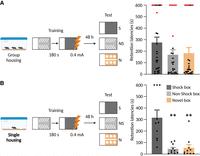
Setting up the dual-event inhibitory avoidance task in mice. (A) In group-housed animals (n = 27), 48 h retention latencies did not significantly differ across the three test contexts. However, group-housing was associated with marked freezing behavior of mice that were tested as the last ones of their cage (n = 6, depicted in red). Consequently, they did not cross to the dark compartment in several or all of the test contexts. Therefore, we switched to single-housing conditions for the next experiment. (B) Training of single-housed mice (n = 10), using the same experimental parameters, induced memory specificity on a 48 h retention test, reflected by longer retention latencies in the Shock box compared to those in both the Non-Shock box (NS) and Novel box (N). Task parameters changed relative to the prior task conditions are depicted in bold. Data represent mean + SEM. Dots indicate individual data points. (**) P < 0.01 different from Shock box.
Therefore, in the next experiment, we switched to single-housing conditions, while the training and test conditions remained unaltered (see Supplemental Fig. 2 for an overview of all task parameters and modifications per experimental group). A linear mixed model for 48 h retention latencies now indicated a significant main effect of test context (F2,15.60 = 8.06, P = 0.004, Fig. 1B). Retention latencies in the Shock box were significantly longer than those in both the Non-Shock box (F1,9.73 = 16.11, P = 0.003) and Novel box (F1,12.04 = 13.28, P = 0.003), whereas retention latencies in the Non-Shock box and Novel box did not differ from each other (F1,21.97 = 0.10, P = 0.76). Retention latencies were not affected by context order (F2,5.73 = 4.13, P = 0.08) or test context × context order interaction (F4,2.08 = 6.44, P = 0.13), indicating that the order in which animals were tested in the three test contexts did not influence retention performance.
Effect of posttraining corticosterone treatment on strength and specificity of memory in the dual-event inhibitory avoidance task
Our previous findings in rats indicated that systemic corticosterone administration given immediately after training on the dual-event inhibitory avoidance task induced a strong, yet unspecific memory, increasing retention latencies in both the Shock box and Non-Shock box, without significantly increasing retention latencies in the Novel box (Roozendaal and Mirone 2020). To examine whether we could replicate these findings in mice, we used the same settings as described above, except for a slight reduction in footshock intensity (0.38 mA) to facilitate the detection of a corticosterone effect on memory strength. Corticosterone (3 or 10 mg/kg) or vehicle was administered intraperitoneally immediately after the training session. Retention of the memory was tested 48 h later (Fig. 2A).
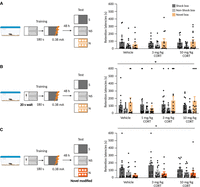
Effect of corticosterone treatment on strength and specificity of memory in the dual-event inhibitory avoidance task in mice. (A) Shock intensity was slightly decreased (0.38 mA) compared to prior settings to facilitate the detection of a memory-enhancing effect of corticosterone, yet all other experimental settings remained the same. No effect of corticosterone treatment or test context was found (vehicle: n = 16, corticosterone 3 mg/kg: n = 12, corticosterone 10 mg/kg: n = 17). (B) To facilitate discrimination of the different training contexts, a 20 sec waiting time in the starting compartment of both inhibitory avoidance boxes during the training session was included. This resulted in a main effect of test context, but no main effect of corticosterone treatment or corticosterone treatment × test context interaction. Instead, long retention latencies were found in the Novel box (vehicle: n = 12, corticosterone 1 mg/kg: n = 16, corticosterone 3 mg/kg: n = 16, corticosterone 10 mg/kg: n = 16). (C) To also facilitate discrimination of the Novel box, we added extra tactile information (sandpaper) to the Novel box. This resulted in a main effect of test context, but no main effect of corticosterone treatment or corticosterone treatment × test context interaction effect (vehicle: n = 15, corticosterone 3 mg/kg: n = 14, corticosterone 10 mg/kg: n = 15). Task parameters changed relative to the prior task conditions are depicted in bold. Data represent mean + SEM. Dots indicate individual data points. (*) P < 0.05: main effect of test context.
A linear mixed model for 48 h retention latencies revealed no significant main effect of corticosterone treatment (F2,71.66 = 1.29, P = 0.28) or test context (F2,50.04 = 2.82, P = 0.07), and no corticosterone treatment × test context interaction effect (F4,49.62 = 0.57, P = 0.69, Fig. 2A). Remarkably, even vehicle-treated mice displayed similar retention latencies in all three test contexts (F2,19.56 = 0.84, P = 0.45), contrary to our earlier observation in noninjected mice. Moreover, unlike in the experiment with noninjected mice, we now found a statistically significant effect of context order (F2,56.57 = 3.15, P = 0.03) and a context order × test context interaction effect (F4,40.22 = 2.79, P = 0.04). These findings indicate that retention performance was influenced by the order in which animals were tested in the three test contexts. This effect was independent of corticosterone treatment (F4,57.33 = 1.49, P = 0.22, Fig. 2A). Further analyses on the main effect of context order revealed that, across all corticosterone treatment conditions, retention latencies in the first test context were significantly longer than those in both the second (F1,46.96 = 4.41, P = 0.04) and third test context (F1,50.44 = 5.69, P = 0.02), whereas retention latencies in the second context and third context did not differ (F1,50.50 = 0.11, P = 0.74). Apparently, retention latencies became progressively shorter by the repeated testing of the animals across the different test contexts. Yet, the significant context order × test context interaction effect indicated that this context order effect differed across the test contexts.
Follow-up tests revealed that mice that were first tested in the Shock box had significantly longer retention latencies in this context than mice that were tested last in this context (F1,19.00 = 6.56, P = 0.02, Fig. 3A). No such context order effect was observed for the Non-Shock box (F1,20.52 = 1.36, P = 0.26) or Novel box (F1,18.99 = 3.62, P = 0.07). To further grasp the functional implications of this context order effect in the Shock box only, we plotted retention latencies in all three test contexts according to the order in which mice were tested in the Shock box (Fig. 3B). When animals were tested first in the Shock box, then retention latencies in this box were significantly longer than those in the Non-Shock box (F1,16.69 = 6.63, P = 0.02) but not in the Novel box (F1,19.96 = 0.09, P = 0.77). This test context effect was, however, absent when mice were tested in the Shock box as second (F1,16.31 = 2.81, P = 0.11) or third context (F1,21.94 = 1.47, P = 0.24).
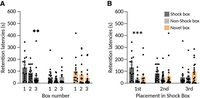
Effect of context order on retention latencies across test contexts. (A) Retention latencies in the Shock box depended on the order in which mice were tested in this box, displaying longer retention latencies when tested there as first versus third test context. (B) Mice that were tested first in the Shock box displayed longer retention latencies in the Shock box compared to those in the Non-Shock box, whereas this difference was not significant for mice that were tested as second or third in the Shock box. Data represent mean + SEM. Dots indicate individual data points. (***) P < 0.001: different from Shock box, (❖❖) P < 0.01: different from first box.
While the memory specificity observed in the noninjected group in the previous experiment indicated that mice are capable of acquiring memory specificity and differentiate between the safe (Non-Shock box/Novel box) and aversive (Shock box) contexts, the vehicle group of the corticosterone experiment did not display this memory specificity. Possibly, the intraperitoneal injection procedure per se was stressful and triggered a glucocorticoid response that could be responsible for this loss of memory specificity (Drude et al. 2011). To facilitate memory specificity, in the next experiment, we added a 20 sec waiting time in the starting compartment of the Shock box and Non-Shock box during the training session before allowing animals to step into the dark compartment (Fig. 2B). Our idea was that this would give the animals more time to encode the aversive and safe environments. With these adapted task settings, we did observe a significant main effect of test context on 48 h retention latencies (F2,45.08.17 = 6.31, P = 0.004), but still no effect of corticosterone treatment (F3,61.65 = 1.13, P = 0.34) or corticosterone treatment × test context interaction (F6,44.56 = 0.42, P = 0.86). Yet, the main effect of test context appeared to be driven by significantly longer retention latencies in the Shock box compared to those in the Non-Shock box (F1,43.99 = 0.09, P = 0.007) but, rather unexpectedly, also significantly longer retention latencies in the Novel box compared to those in the Non-Shock box (F1,44.88 = 7.15, P = 0.01). Furthermore, similar to the first corticosterone experiment, we found a significant main effect of context order (F2,47.76 = 3.58, P = 0.03) and context order × test context interaction (F2,47.76 = 7.95, P = 0.001, Fig. 2B).
To reduce retention latencies in the Novel box, in a next experiment, we made the Novel box more easily distinguishable from the Shock box and Non-Shock box by adding more discriminatory cues (a sandpaper floor), a modification that was maintained in all following experiments. A linear mixed model for 48 h retention latencies revealed a main effect of test context (F2,46.58 = 6.71, P = 0.03), but again no main effect of corticosterone treatment (F2,46.93 = 0.73, P = 0.49) or corticosterone treatment × test context interaction (F4,46.52 = 0.25, P = 0.91, Fig. 2C). Follow-up tests revealed that retention latencies in the Shock box were now significantly longer than those in both the Non-Shock box (F1,36.95 = 8.62, P = 0.006) and Novel box (F1,36.99 = 13.38, P = 0.001), whereas retention latencies in the Non-Shock box did not differ significantly from those in the Novel box (F1,29.29 = 1.58, P = 0.22). We further found again a significant effect of context order (F2,43.41 = 12.77, P < 0.001), in the absence of a significant context order × test context interaction effect (F4,29.95 = 0.19, P = 0.94). This main effect of context order was caused by longer retention latencies in the first test context compared to those in the second (F1,38.18 = 22.58, P < 0.001) or third test context (F1,38.55 = 21.77, P < 0.001).
Effect of posttraining yohimbine treatment on strength and specificity of memory in the dual-event inhibitory avoidance task
In the next series of experiments, we aimed to replicate the yohimbine effect in enhancing both the specificity and strength of memory (Atucha and Roozendaal 2015; Roozendaal and Mirone 2020). As this would require an unspecific memory, i.e., similar latencies in the Shock and Non-Shock box, in saline-treated control animals, we increased task difficulty by having a shorter interval of 90 sec between training in the Non-Shock box and Shock box (Atucha and Roozendaal 2015). Yohimbine (0.3, 1, or 3 mg/kg) or saline control was administered intraperitoneally immediately after the training session, and retention was tested 72 h later. A linear mixed model for retention latencies in the three test contexts indicated a main effect of yohimbine treatment (F3,105.33 = 3.38, P = 0.02) and test context (F2,93.52 = 13.69, P < 0.001), but no significant yohimbine treatment × test context interaction effect (F6,94.29 = 0.27, P = 0.95, Fig. 4A). The main effect of test context was caused by longer retention latencies in the Shock box compared to the Non-Shock box (F1,68.09 = 23.41, P < 0.001) and Novel box (F1,81.52 = 22.59, P < 0.001), whereas retention latencies in the Non-Shock box and Novel box did not differ (F1,70.07 = 0.38, P = 0.54). Despite the short training interval, saline-treated mice also displayed a significant test context effect (F2,21.84 = 7.01, P = 0.004), with longer latencies in the Shock box compared to the Non-Shock box (F1,16.58 = 6.87, P = 0.02) and Novel box (F1,16.57 = 14.02, P = 0.002), without any difference in retention latencies in the Non-Shock box and Novel box (F1,15.15 = 2.48, P = 0.12). The two higher dosages of yohimbine increased retention latencies across boxes compared to saline treatment (1 mg/kg: F1,48.65 = 4.43, P = 0.04; 3 mg/kg: F1,32.57 = 8.90, P = 0.005), whereas the lower dosage of yohimbine (0.3 mg/kg) was ineffective (F1,34.58 = 1.10, P = 0.31). Furthermore, similar to the corticosterone experiments, we observed a main effect of context order (F2,82.08 = 12.60, P < 0.001), without any further interactions (all P’s > 0.09). Again, this effect was caused by shorter retention latencies in the second context compared to the first context (F1,67.82 = 25.28, P < 0.001). Retention latencies did not further reduce from the second to third context (F1,63.09 = 1.71, P = 0.20). Thus, these findings indicate that yohimbine did not enhance memory specificity, whereas its memory-strengthening effect was rather weak and unspecific across boxes.
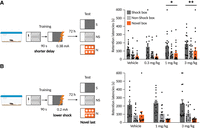
Effect of yohimbine treatment on strength and specificity of memory in the dual-event inhibitory avoidance task in mice. (A) We found a main effect of yohimbine treatment on 72 h retention latencies (following training with a 90 sec interval and 0.38 mA footshock), caused by longer retention latencies across test contexts of mice administered the two higher dosages of yohimbine (1 and 3 mg/kg). No significant yohimbine treatment × test context interaction effect was found (vehicle: n = 17, yohimbine 0.3 mg/kg: n = 16, yohimbine 1 mg/kg: n = 19, yohimbine 3 mg/kg: n = 20). (B) We only counterbalanced the order of retention testing in the Shock box and Non-Shock box (Novel box always last) and lowered the footshock intensity (0.20 mA). Still, we found no effect of yohimbine treatment or yohimbine treatment × test context interaction on retention latencies (vehicle: n = 14, yohimbine 1 mg/kg: n = 15, yohimbine 3 mg/kg: n = 17). Task parameters changed relative to the prior task conditions are depicted in bold. Data represent mean + SEM. Dots indicate individual data points. (❖) P < 0.05, (❖❖) P < 0.01: different from saline.
In the last experiment, we attempted to reduce the impact of context order on retention latencies. As both memory strength and memory specificity are determined only based on retention latencies in the Shock box and Non-Shock box (and not in the Novel box), we here counterbalanced only the order of retention testing in the Shock and Non-Shock box (Fig. 4B). Thus, mice were tested either first or second in the Shock box (and vice versa in the Non-Shock box) and always last in the Novel box. We also further reduced the footshock intensity (0.2 mA) to create more room for a memory enhancement effect by yohimbine. A general linear mixed model for 72 h retention latencies showed no effect of yohimbine treatment (F2,62.48 = 0.07, P = 0.94), but did reveal a significant main effect of test context (F1,43.53 = 43.53, P < 0.001), yet again without a significant yohimbine treatment × test context interaction effect (F2,43.50 = 0.04, P = 0.96). The main effect of test context was caused by longer retention latencies in the Shock box compared to those in the Non-Shock box (F1,43.53 = 39.68, P < 0.001) and Novel box (F1,70.50 = 63.26, P < 0.001), and longer retention latencies in the Non-Shock box compared to the Novel box (F1,77.76 = 4.52, P = 0.04). This latter difference could be related to the significant main effect of context order (F1,43.53 = 39.68, P < 0.001) that we still observed. Retention latencies became progressively shorter upon test context exposures, with retention latencies in the second test context being shorter compared to those in the first test context (F1,43.53 = 43.53, P < 0.001), and retention latencies in the third test context being shorter compared to those in both the second (F1.79.97 = 4.70, P = 0.03) and first test context (F1,72.92 = 66.31, P < 0.001). Thus, we did not replicate the rat findings where yohimbine enhanced both the strength and specificity of memory (Atucha and Roozendaal 2015; Roozendaal and Mirone 2020).
Discussion
We aimed here to set up the dual-event inhibitory avoidance task for mice. This task allows for the assessment of both strength and episodic-like specificity of memory in rodents. In recent years, our laboratory has conducted numerous experiments in rats investigating the effect of stress hormone administration on episodic-like specificity of memory using the dual-event inhibitory avoidance task. In three independent studies, we have previously shown that yohimbine (or norepinephrine) administration enhances both the episodic-like specificity and strength of memory (Atucha and Roozendaal 2015; Atucha et al. 2017; Roozendaal and Mirone 2020), and in one study we have shown that corticosterone administration induces a generalized strengthening of memory in rats (Roozendaal and Mirone 2020). The present study aimed to investigate whether the dual-event inhibitory avoidance task is suitable to investigate stress hormone effects on memory specificity in mice. We observed that mice were capable of acquiring episodic-like specificity of memory, displaying longer retention latencies in the Shock box than in the other two boxes. However, we failed to observe any modulatory effect of corticosterone or yohimbine administration on this episodic-like specificity of memory, as previously reported for rats. We further found only a weak memory-strengthening effect of yohimbine and were not able to replicate the memory-strengthening effect of corticosterone. As doses of corticosterone and yohimbine were selected based on their memory-enhancing effects on other behavioral tasks in mice (Cai et al. 2006; Song et al. 2021; Brosens et al. 2023) and we used a broad spectrum of dosages for both drugs, it appears unlikely that we might have overlooked the effective dose. Particularly, the introduction of intraperitoneal injections in mice appeared problematic, resulting in loss of memory specificity in vehicle-treated mice, test order effects, and interactions that rendered the task impracticable for investigating the effects of stress hormone manipulations on episodic-like specificity of memory in mice.
We first established the training parameters that would generate a specific, episodic-like memory of moderate strength in mice. We started off by group-housing our mice, but during the first experiment noticed substantial freezing behavior of mice that were tested as last from their cage. We considered that the long retention latencies, irrespective of the test context, of these mice were caused by anticipatory stress, as they witnessed the repeated removal of their cage mates, potentially similarly to what they had experienced during the training session. A switch to single-housing was successful in preventing these exceptionally long retention latencies. This aligns with prior research indicating that anxiety-like behavior depends on the testing order of group-housed mice (Lyte et al. 2005). Subsequent findings indicated that mice were able to successfully associate the experience of footshock with the Shock box and distinguish the two training events.
Remarkably, whereas noninjected mice were able to display memory specificity, this effect was no longer observed when mice had received an intraperitoneal injection after the training session using the same training conditions. It is unlikely that the vehicle solution itself (5% ethanol in saline) was the cause of this memory impairment in the corticosterone administration experiments as similar reductions in retention latencies were observed in the vehicle control group (saline only) in the yohimbine experiments. Noteworthy, the brief period of restraint that is required for such injections is stressful to mice, and previously found to activate the HPA axis and induce the endogenous release of adrenocorticotropin and corticosterone (de Kloet et al. 2011; Baek et al. 2015). Although we did not measure corticosterone levels in our animals, a possible effect of injection stress would be consistent with our hypothesis that stress and glucocorticoids impair memory specificity. However, such stress-induced impairment of memory specificity might occlude possible effects of exogenous stress hormone administration on this readout. In rats, systemic injections were not found to affect memory specificity, but here less stressful subcutaneous injections were used (Roozendaal and Mirone 2020), which do not require restraint in rats (Miner et al. 1969; Levin-Arama et al. 2016), but do so in mice (http://research animaltraining.com/articles/subcutaneous-injection-in-the-mouse/). In mice, the procedure of intraperitoneal injection with restraint might therefore be even more aversive and salient than the actual training session. One could speculate that the injection event is inherently distinct from the two training events (including the shock), leading to a linking of memory of the two training events following injection stress. To make the task more salient and facilitate memory specificity, we modified some of the training parameters, including an extension of the time spent in the training boxes and incorporating additional cues into the Novel box. These modifications indeed enhanced memory specificity, but this effect was not very robust.
Another issue that emerged upon introducing the intraperitoneal injections was the context order effects with mice displaying the longest retention latencies in the first box they were tested in. This shortening of retention latencies upon repeated box exposures seems to point toward a rather unspecific extinction of the fear association across testing contexts, and thus might fit the idea of proposedly unspecific memory for the contexts induced by injection stress. Noteworthy, we had attempted to avoid new safety learning during the retention test by always removing mice from each context as soon as they had entered the dark compartment. In some of our experiments, this context order effect interacted with the test context, being most pronounced when the mice were tested first in the Shock box, corroborating the idea of generalized extinction of fear. This context order × test context interaction severely confounded our results. In the first experiment without intraperitoneal injection, no such context order effect was observed. Similarly, also our previous studies in rats did not observe such a context order effect (Atucha and Roozendaal 2015). We attempted to reduce this confounding effect of context order by limiting the potential context order exposures, with either the Shock box or Non-Shock box being presented as the first box (and the Novel box always presented as the third box). We opted for this approach as both memory strength and specificity are solely based on retention latencies in these two boxes, and prior research never revealed any effects of stress hormones on retention latencies in the Novel box. Yet, this did not reduce the order effects.
Noteworthy, in the dual-event inhibitory avoidance task, animals are exposed only once to each of the two training contexts and only receive a single shock in the Shock box. Furthermore, the only outcome measure is retention latency, which is a noisy readout. This makes the results highly variable, and like other inhibitory avoidance tasks, a large number of animals is required to achieve the necessary statistical power (Castellano et al. 1989; Mele et al. 1995; Blake et al. 2008). As such, other, more robust training paradigms might be preferred to assess stress hormone effects on episodic-like specificity of memory in mice. A potentially suitable candidate would be the object-in-context task; an episodic-like memory task in which two object presentation events during a training session are distinguished by the contexts in which they appear (Kanatsou et al. 2015; Morici et al. 2018; Pillai et al. 2018; Sep et al. 2021). During the subsequent retention test, the mice encounter one of each of the objects they explored during training, with one object being novel in the testing context, whereas the other object was already encountered in this test context before. Memory specificity is defined by a preferential exploration of the object that was not previously encountered in the testing context (Barsegyan et al. 2014). Whereas the exact association tested for in this task is different from that in the dual-event inhibitory avoidance task, the object-in-context task similarly tests for the specificity of an associative memory across two consecutive training events that need to be stored separately into memory. The object-in-context task further offers the benefit of a prolonged training duration, that can easily be modified to create a more robust memory (Barsegyan et al. 2014). Another advantage of the object-in-context task is a single context exposure on the retention test, thus avoiding any potential effects of repeated testing. Moreover, behavior on the retention test is less volatile, as it assesses the exploratory behavior of rodents over the course of several minutes.
In conclusion, our findings indicate that mice can acquire episodic-like specificity of memory in the dual-event inhibitory avoidance task. Yet, the introduction of the intraperitoneal injection to assess stress hormone effects severely impacted memory readouts, introducing context order interactions that complicated data interpretation.
Materials and Methods
Subjects
Male adult C57BL/6J mice (8–11 weeks old at the time of the behavioral experiment) from Charles River Breeding Laboratories (France/Germany) were housed in conventional open-lid cages in a temperature-controlled (22°C) vivarium room with a regular 12:12 h light:dark cycle (07:00–19:00 h lights on). The vivarium room had a light intensity of 47 lux and humidity of 72%. Mice had ad libitum access to food and water. In the first experiment, mice were group-housed (three to five animals per cage), but in all subsequent experiments, mice were housed individually, starting 1 week prior to the behavioral experiments, to prevent testing order effects (Lyte et al. 2005). Training and testing were performed during the light phase of the cycle between 10:00 and 15:00 h, at the nadir of the diurnal cycle of corticosterone. All experimental procedures were in compliance with European Union Directive 010/63/EU and were approved by the Central Authority for Scientific Procedures on Animals, The Hague, The Netherlands. All efforts were made to minimize animal suffering and to reduce the number of animals needed.
Dual-event inhibitory avoidance task
Mice were consecutively trained in two distinct inhibitory avoidance apparatuses within a single training session, but footshock was delivered only in the latter context. On the retention test, retention latencies were tested in the two training contexts as well as in a novel context (Supplemental Fig. 1). Each apparatus had the same geometry and consisted of a trough-shaped alley (36 cm long, 8.5 cm deep, 17 cm wide at the top and 4 cm wide at the bottom) divided into two compartments, separated by a sliding door that could be inserted or removed manually. The apparatuses also had a manually operated lid that was closed after placing the animal into the apparatus. The starting compartment (12 cm long) was made of opaque white plastic and was well lit. The shock compartment (24 cm long) was made of two dark, electrifiable metal plates and was not illuminated. The training apparatus in which footshock was given (Shock box) did not have any contextual modifications. The two other apparatuses had some contextual modifications that made them distinctly different training and/or test contexts (Supplemental Fig. 1). The initial modifications closely followed the design used for rats by Atucha and Roozendaal (2015), with adjustments made to the box size. The safe training context (Non-Shock box) had five white stripes (2 cm wide, 8 cm long) taped on each wall of the dark compartment together with tape placed on the floor, closing the gap between the two plates along the entire length of the apparatus. The Novel box (used on the retention test only) had three white circles (4 cm diameter) taped on each wall of the dark compartment, and the gap between both plates was closed with tape. The three inhibitory avoidance apparatuses were located next to one another in a sound and light-attenuated room.
First, mice were handled for 3 min per day for five to seven consecutive days to habituate them to the experimenter. For training, mice were placed into the starting compartment of the first inhibitory avoidance apparatus (i.e., Non-Shock box). Once the mice reached the end of the dark compartment, they were removed from the apparatus without footshock being delivered. After a short interval (i.e., 90 or 180 sec, see below), timed from the moment of crossing to the dark compartment of the Non-Shock box, mice were placed into the starting compartment of the second inhibitory avoidance apparatus (i.e., Shock box). Mice were first trained in the Non-Shock box, followed by the Shock box, based on the assumption that animals are less inclined to explore a new environment shortly after shock delivery, as well as to exclude potential stress effects on new memory encoding. During the interval, they were placed back into their home cage (or holding cage in the case of group-housed animals). When the mice had stepped into the dark compartment of the Shock box, the sliding door was inserted and a single inescapable footshock was delivered for 1 sec. Mice remained in the dark compartment for 30 sec after footshock delivery such that they had time to form a memory of the environment. Afterward, they were placed back into their home cage. Retention testing took place 48 or 72 h after training, and retention latencies were assessed, in a randomized order and without delay, in the two training contexts (i.e., Shock box and Non-Shock box) and in the Novel box. For all three boxes, mice were placed into the starting compartment, facing away from the door, and their latency to enter the dark compartment with all four paws was recorded (maximum latency of 600 sec). Mice were removed from each box as soon as they had fully entered the dark compartment. Longer latencies in the Shock box were interpreted as a stronger memory. Memory specificity was defined as longer latencies in the Shock box relative to the Non-Shock box. Longer latencies in the Novel box were interpreted as generalization of memory beyond the two training events to different environments.
To optimize the experimental procedures of the dual-event inhibitory avoidance task for mice, we adjusted five different task parameters along the progression of experiments (Supplemental Fig. 2). First, we changed the housing conditions from group-housing to single-housing to prevent test order effects (Lyte et al. 2005). Second, we used different footshock intensities (0.20, 0.38, or 0.40 mA) to modify memory strength (Pang et al. 1993; Pittenger et al. 2006; Bentefour et al. 2015; Canto-de-Souza and Mattioli 2016). Third, we placed mice into the starting compartment of the two training boxes with the sliding door initially inserted. Only after 20 sec, the sliding door was removed, allowing the animals to cross to the dark compartment. Thereby, the mice were provided a specific time to encode the starting compartment of the two training contexts. Fourth, we used two different intervals (i.e., 90 and 180 sec) between training in the Non-Shock box and Shock box to manipulate the difficulty of the task (Atucha and Roozendaal 2015). Previous findings have indicated that rats trained with a short interval of 60 sec were unable to associate the shock experience with the correct training context, whereas animals trained with a longer interval of 120 sec successfully acquired this shock-context association (Atucha and Roozendaal 2015; Atucha et al. 2017; Roozendaal and Mirone 2020). Lastly, we provided additional tactile cues to the Novel box (sandpaper floor) to support discrimination of this test environment.
For all experiments, we implemented a maximum training latency of 60 sec to reach the end of the dark compartment for either of the two training boxes, with longer latencies indicating either inattentiveness or excessive anxiety (freezing behavior within the starting compartment). For this reason, 10 mice were excluded. Further, we excluded six mice that escaped from the apparatus during training.
Systemic drug administration
Corticosterone (1, 3, or 10 mg/kg, Sigma-Aldrich) was first dissolved in 100% ethanol and then diluted in saline to reach a final ethanol concentration of 5%. The vehicle contained 5% ethanol in saline. Yohimbine (17-hydroxyyohimban-16-carboxylic acid methyl ester hydrochloride, 0.3, 1.0, or 3 mg/kg, Sigma-Aldrich), an α2-adrenoceptor antagonist that increases norepinephrine levels in the periphery and brain (Szemeredi et al. 1991), was dissolved in saline. Saline was used as a vehicle for the yohimbine experiments. Drugs were administered intraperitoneally, in a volume of 0.1 mL/10 g body weight, during short restraint immediately after the training session. Doses of corticosterone and yohimbine were selected based on their memory-enhancing effect on other behavioral tasks in mice (Cai et al. 2006; Song et al. 2021; Brosens et al. 2023). Drug solutions were freshly prepared before each experiment. Injections took place in a room adjacent to the behavioral room.
Statistical analysis
Statistical analyses were performed using IBM SPSS statistics, version 27. Retention latencies were analyzed using a general linear mixed model with test context (Shock box, Non-Shock box, Novel box) as within-subject factor and drug treatment (if applicable) as between-subject factor. Although the order of testing mice in the different contexts during the retention test was randomized, we also included context order (first, second, or third box) as a within-subject factor to the analysis. Significant main effects of drug treatment, test context or context order were followed up by general linear mixed models comparing two conditions at a time, allowing direct comparison. Significant interaction effects were followed up by isolating one of the interacting factors (e.g., test context) and running a general linear model on the remaining factors (e.g., context order and drug treatment). For all comparisons, P < 0.05 (two-tailed) was accepted for statistical significance. The number of mice per group is indicated in the figure legends.
Acknowledgments
This research was supported by a scholarship from the Donders Institute TopTalent program (to S.B.), Open Research Area grant by the Netherlands Organization for Scientific Research (NWO-ORA grant 464.18.110 to B.R. and M.J.A.G.H.), and personal grants from NWO (Veni grant 212.064 to K.G.K., Vidi grant 203.028 to M.J.A.G.H.). Figures were created with BioRender.com.
Footnotes
-
[Supplemental material is available for this article.]
-
Article is online at http://www.learnmem.org/cgi/doi/10.1101/lm.053956.124.
-
Freely available online through the Learning & Memory Open Access option.
- Received May 31, 2024.
- Accepted November 17, 2024.
This article, published in Learning & Memory, is available under a Creative Commons License (Attribution-NonCommercial 4.0 International), as described at http://creativecommons.org/licenses/by-nc/4.0/.