Pattern separation of fear extinction memory
- 1Department of Psychiatry and Behavioral Sciences, Dell Medical School, University of Texas at Austin, Austin, Texas 78712, USA
- 2Institute for Neuroscience, University of Texas at Austin, Austin, Texas 78712, USA
- 3Department of Neuroscience, University of Texas at Austin, Austin, Texas 78712, USA
- Corresponding author: patrick.laing{at}austin.utexas.edu
Abstract
While fear generalizes widely, extinction is stimulus-specific. Using a hybrid conditioning/episodic memory paradigm, subjects encoded nonrepeating category exemplars during fear conditioning and extinction. Twenty-four hours later, a surprise memory test included old, similar, and novel category exemplars. Results showed strong dissociation between pattern completion (generalization) and pattern separation (discrimination) in episodic memory for items encoded during fear conditioning versus extinction, respectively. These data suggest that directly threat-conditioned stimuli are better recognized at the expense of mnemonic precision, whereas discrimination is enhanced for extinguished stimuli. Overly precise extinction memory may be a contributing factor to fear relapse.
Exposure-based therapies are limited by the specificity of extinction memory relative to the generalizability of fear. Extinction of, rather than “erasing,” fear is thought to produce secondary “stimulus–no threat” associations that are outcompeted by pre-existing fear memories (Bouton 1993). Many studies seek to understand how extinction can be liberated from its context dependence, such that individuals might alleviate anxiety in aversive situations (Lebois et al. 2019). Human studies often quantify extinction based on the return or inhibition of fear responses (e.g., skin conductance) but rarely test precisely what subjects explicitly remember about conditioned stimuli. The effects of Pavlovian conditioning on episodic memory can be approached with category conditioning paradigms, wherein nonrepeated category exemplars (e.g., animals and tool images) are paired (or unpaired) with threat (CS+/CS−) over many trials (Dunsmoor et al. 2011; Dunsmoor and Kroes 2019), allowing episodic memory to be measured for individual items encoded during conditioning versus extinction. Such approaches have demonstrated enhanced recognition memory for CS+ items, even for those occurring before (retroactive enhancement) or after (proactive enhancement) threat conditioning (Dunsmoor et al. 2015; Hennings et al. 2021).
The mnemonic systems of “pattern separation” and “pattern completion” are thought to contribute to adaptive fear (Lissek 2012; Lopresto et al. 2016; Webler et al. 2021). Pattern separation stores information in discrete representations based on finer-grained details (Yassa and Stark 2011), with encoded stimuli kept separate from new inputs that closely resemble them, preventing overlap despite similarities. Completion serves a generalization function (Rudy and O'Reilly 1999), where inputs partially resembling previously encoded stimuli activate their stored representation and influence behavior appropriate to the original stimulus. Each is driven by distinct hippocampal subfields (Leutgeb et al. 2007; Bakker et al. 2008) that overlap with regions integral to fear extinction (Lopresto et al. 2016; Hennings et al. 2022; Laing et al. 2022a). Through a mnemonic similarity test (Stark et al. 2019), Starita et al. (2019) demonstrated generalized episodic fear memory, such that items “similar” to CS+ were appraised as “old,” reflecting pattern completion. Detailed accounts of episodic extinction memory remain forthcoming but could be achieved by integration of pattern separation paradigms, leading to a richer explanatory framework for the expression of safety memory in humans.
Here, we report a within-subject conditioning and memory study (Fig. 1). First, we compared episodic memory for conditioned stimuli encoded during fear conditioning and extinction in terms of pattern separation and completion, and then we investigated whether episodic safety memory would ameliorate fear biases in temporal context memory, which is a known determinant of extinction failure (Maren et al. 2013). Adult volunteers (N = 41; 34 females, mean age = 18.68 yr ± 0.90 yr) provided consent under protocols approved by the University of Texas at Austin Institutional Review Board (IRB:2020020157-MOD08). The first day included preconditioning (Pre-Con), fear acquisition (ACQ), and fear extinction (EXT) phases, featuring 144 unique exemplars from two higher-order semantic categories (animals and tools) serving as CS+ and CS− (24 out of 24 items per phase). Preconditioning involved a category judgement task (“Is this item an animal or tool?”) with no aversive stimulation. During fear conditioning, 50% of the CS+ items were followed by electric shock, with threat expectancy ratings and skin conductance responses recorded for each trial. Fear conditioning was followed by extinction, with unique but semantically related category exemplars. The following day, participants underwent a surprise memory test in the form of a 216-item mnemonic similarity task (MST) (Stark et al. 2019). In addition to 72 old targets (exact repeats) and 72 new foil (novel category exemplars) items, a third of the test items were “similar lures,” which were highly similar to, but perceptually distinct from, items encoded during the three experimental phases of the previous day. Responses were made as “old,” “similar,” or “new” (3AFC). This was followed by a temporal source memory test, in which all 144 day 1 items were rated according to the phase in which they had originally appeared (3AFC: phase 1, 2, or 3). All statistical analyses were conducted using open-source JASP software (https://jasp-stats.org), and data are available on the Open Science Framework (https://osf.io/h4kua). Additional methods and analyses are reported in the Supplemental Material(Supplemental Table S1 and Supplemental Fig. S1).
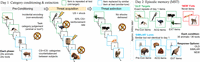
Conditioning and memory paradigm schematic. Participants underwent threat acquisition and extinction on day 1, with items from one category (in this example, CS+ = tools) paired with shock during acquisition, and the other remaining nonreinforced (here, CS− = animals). SCRs were acquired through electrodes attached to participants’ left palms, with signal continuously sampled at 200 Hz, preprocessed via Autonomate (Green et al. 2014), and square-root-transformed. Threat expectancy ratings were made on a 3AFC scale (yes, unsure, and no). On day 2, participants underwent a specialized mnemonic similarity test (MST) involving the exact same images seen on day 1 (old targets), similar but nonidentical images from day 1 (similar lures), and novel category images (new foils). 3AFC MST ratings were made for each item (old, similar, and new).
We first established the success of Pavlovian conditioning and extinction on physiology and threat-expectancy ratings. For
all conditioning analyses, responses were split into early (first 12) and late (final 12) trials for the CS+ and CS− items (24 trials total per CS type). In acquisition, threat expectancy ratings (Fig. 2A) showed the main effects of CS type (CS+/CS−; F(1,40) = 409.44, P < 0.001,  ) and trials (early and late; F(1,40) = 7.30, P = 0.01,
  ) but no CS type × trials interaction (F(1,40) = 3.01, P = 0.09). Post-hoc tests showed that CS+ > CS− discrimination persisted across early (t = 16.54, P < 0.001, 95% CI [0.47, 0.65]) and late (t = 18.30, P < 0.001, 95% CI [0.53, 0.71]) trials. SCRs showed main effects of CS type (CS+/CS−; F(1,40) = 9.20, P = 0.004,
  ), trials (early and late; F(1,40) = 37.49, P < 0.001,
  ), and CS type × trials interaction (F(1,40) = 7.37, P = 0.010,
  ). CS+ > CS− SCR differences occurred in late (but not early; P = 0.94) trials (t = 4.05, P < 0.001, 95% CI [0.02, 0.11]). It is possible that elevated early trial CS− SCRs are a product of initial shock expectations (given task instructions) prior to subjects learning these items are never
reinforced, which is reflected in late trial CS+ > CS− SCRs. For extinction, ratings (Fig. 2B) showed the main effects of CS type (CS+/CS−; F(1,40) = 36.73, P < 0.001,
). CS+ > CS− SCR differences occurred in late (but not early; P = 0.94) trials (t = 4.05, P < 0.001, 95% CI [0.02, 0.11]). It is possible that elevated early trial CS− SCRs are a product of initial shock expectations (given task instructions) prior to subjects learning these items are never
reinforced, which is reflected in late trial CS+ > CS− SCRs. For extinction, ratings (Fig. 2B) showed the main effects of CS type (CS+/CS−; F(1,40) = 36.73, P < 0.001,  ), trials (early and late; F(1,40) = 60.83, P < 0.001,
  ), and a CS type × trials interaction (F(1,40) = 14.91, P < 0.001,
  ). Post-hoc tests showed significant extinction of CS+ ratings (t = 8.24, P < 0.001, 95% CI [0.16, 0.32]) and CS+ > CS− discrimination in early (t = 7.18, P < 0.001, 95% CI [0.18, 0.41]) and late (t = 3.34, P = 0.008, 95% CI [0.03, 0.25]) trials. SCRs had no main effect of CS type (CS+/CS−; F(1,40) = 3.73, P = 0.06) but did have effects of trials (early and late; F(1,40) = 30.98, P < 0.001,
  ) and CS type × trials interaction (F(1,40) = 6.41, P = 0.015,
  ). Both CS+ (t = 6.01, P < 0.001, 95% CI [0.05, 0.13]) and CS− (t = 3.11, P = 0.016, 95% CI [0.006, 0.08]) showed diminished SCR from early to late extinction but with a greater magnitude for CS+. Critically, discrimination was significant in early trials (t = 3.18, P = 0.013, 95% CI [0.005, 0.06]) but had ceased in late trials (P = 0.47), indicating effects of threat extinction (rather than habituation). Together, these support successful fear acquisition
and extinction effects over the course of day 1.
). Both CS+ (t = 6.01, P < 0.001, 95% CI [0.05, 0.13]) and CS− (t = 3.11, P = 0.016, 95% CI [0.006, 0.08]) showed diminished SCR from early to late extinction but with a greater magnitude for CS+. Critically, discrimination was significant in early trials (t = 3.18, P = 0.013, 95% CI [0.005, 0.06]) but had ceased in late trials (P = 0.47), indicating effects of threat extinction (rather than habituation). Together, these support successful fear acquisition
and extinction effects over the course of day 1.
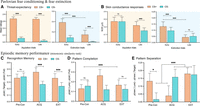
Behavioral assessment of Pavlovian conditioning (day 1) and episodic memory (day 2). Conditioned threat responses during fear acquisition and fear extinction on day 1 in threat expectancy ratings (A) and SCRs (B) were indicative of successful conscious and autonomic fear conditioning (greater CS+ > CS− responses) and extinction learning (decreased responses from early to late trials). Episodic memory performance on day 2 was scored in measures of recognition memory (C), pattern completion (D), and pattern separation (E) for CS+ and CS− category items corresponding to day 1's preconditioning (Pre-Con), threat acquisition (ACQ), and extinction (EXT) phases. Emotional learning produced enhanced recognition memory for threat-conditioned and extinguished CS+ items (vs. CS−). Pattern completion (i.e., generalization) occurred selectively for threat-conditioned items from the ACQ phase. Pattern separation showed a safety effect, with elevated scores for extinguished CS+ and CS− items from ACQ and EXT phases but diminished scores for threat-associated items. (***) P < 0.001, (*) P < 0.05, (ns) P > 0.05. Error bars represent 95% CI.
Next, we assessed three dimensions of episodic memory, starting with corrected recognition memory (Fig. 2C), calculated as the probability of appraising “old targets as old” minus “new foils as old”: P(old|target) − P(old|foil). Recognition showed main effects of CS type (CS+/CS−; F(1,40) = 15.39, P < 0.001,  ), phase (Pre-Con, ACQ, and EXT; F(1,40) = 5.19, P = 0.008,
  ), and a CS type × phase interaction (F(1,40) = 10.86, P < 0.001,
  ). Post-hoc analyses indicated enhanced recognition for CS+ versus CS− in total (CS+ > CS−; M = 0.10, P < 0.001, 95% CI [0.05, 0.15]) and, furthermore, that this effect was specific to fear-conditioned (ACQ CS+ > CS−; M = 0.19, P < 0.001, 95% CI [0.08, 0.30]) and extinguished (EXT CS+ > CS−; M = 0.12, P = 0.014, 95% CI [0.01, 0.23]) items. When examining CS type × phase effects, there was no difference between ACQ and EXT
CS+, and Pre-Con items only evoked greater recognition compared with ACQ CS− (Pre-Con CS− > ACQ CS−; M = 0.12, P = 0.009, 95% CI [0.02, 0.22]) and EXT CS+ (Pre-Con CS+ > EXT CS+; M = 0.12, P = 0.015, 95% CI [0.14, 0.24]) items. Thus, recognition was enhanced for fear-conditioned and extinguished CS+ (vs. CS−) items, replicating general effects of aversive emotional learning on memory from prior studies (Dunsmoor et al. 2015; Hennings et al. 2021), albeit without a selective retroactive enhancement on preconditioning recognition memory (notably, prior studies were not
conducted in the framework of the MST protocol with similar lures).
). Post-hoc analyses indicated enhanced recognition for CS+ versus CS− in total (CS+ > CS−; M = 0.10, P < 0.001, 95% CI [0.05, 0.15]) and, furthermore, that this effect was specific to fear-conditioned (ACQ CS+ > CS−; M = 0.19, P < 0.001, 95% CI [0.08, 0.30]) and extinguished (EXT CS+ > CS−; M = 0.12, P = 0.014, 95% CI [0.01, 0.23]) items. When examining CS type × phase effects, there was no difference between ACQ and EXT
CS+, and Pre-Con items only evoked greater recognition compared with ACQ CS− (Pre-Con CS− > ACQ CS−; M = 0.12, P = 0.009, 95% CI [0.02, 0.22]) and EXT CS+ (Pre-Con CS+ > EXT CS+; M = 0.12, P = 0.015, 95% CI [0.14, 0.24]) items. Thus, recognition was enhanced for fear-conditioned and extinguished CS+ (vs. CS−) items, replicating general effects of aversive emotional learning on memory from prior studies (Dunsmoor et al. 2015; Hennings et al. 2021), albeit without a selective retroactive enhancement on preconditioning recognition memory (notably, prior studies were not
conducted in the framework of the MST protocol with similar lures).
Next, we investigated differences in pattern completion (Fig. 2D), scored as P(old|lure) − P(old|foil) (Yassa et al. 2011; Starita et al. 2019). Completion scores showed main effects of CS type (CS+/CS−; F(1,40) = 5.83, P = 0.02,  ), phase (Pre-Con, ACQ, and EXT; F(1,40) = 3.33, P = 0.041,
  ), and a significant CS type × phase interaction (F(1,40) = 8.02, P < 0.001,
  ). The observed overall CS+ > CS− difference (M = 0.05, P = 0.02, 95% CI [0.01, 0.10]) was entirely due to elevated scores for fear-conditioned CS+, which were greater than Pre-Con CS+ (M = 0.13, P < 0.001, 95% CI [0.04, 0.22]), Pre-Con CS− (M = 0.11, P = 0.022, 95% CI [0.01, 0.11]), EXT CS+ (M = 0.10, P = 0.023, 95% CI [0.01, 0.19]), and EXT CS− (M = 0.14, P < 0.001, 95% CI [0.04, 0.24]). In other words, conditioned threat items produced highly generalized episodic memory, whereas
safe or neutral items had incredibly low generalization (and thereby low pattern completion). This replicates the prior finding
that was specific to fear conditioning (Starita et al. 2019) and extends it to show that this effect is notably absent (i.e., does not carry over) for extinguished CS+. In sum, episodic conditioned fear memory appears to be selectively distinguished by a high degree of pattern completion,
which is specific to directly threat-conditioned stimuli.
). The observed overall CS+ > CS− difference (M = 0.05, P = 0.02, 95% CI [0.01, 0.10]) was entirely due to elevated scores for fear-conditioned CS+, which were greater than Pre-Con CS+ (M = 0.13, P < 0.001, 95% CI [0.04, 0.22]), Pre-Con CS− (M = 0.11, P = 0.022, 95% CI [0.01, 0.11]), EXT CS+ (M = 0.10, P = 0.023, 95% CI [0.01, 0.19]), and EXT CS− (M = 0.14, P < 0.001, 95% CI [0.04, 0.24]). In other words, conditioned threat items produced highly generalized episodic memory, whereas
safe or neutral items had incredibly low generalization (and thereby low pattern completion). This replicates the prior finding
that was specific to fear conditioning (Starita et al. 2019) and extends it to show that this effect is notably absent (i.e., does not carry over) for extinguished CS+. In sum, episodic conditioned fear memory appears to be selectively distinguished by a high degree of pattern completion,
which is specific to directly threat-conditioned stimuli.
Pattern separation (Fig. 2E) was scored via “similar lures as new” minus “old targets as new” [P(new|lure) − P(new|target)] based on prior approaches (Leal et al. 2014; Granger et al. 2021). Main effects were not seen for CS type (CS+/CS−; F(1,40) = 0.64, P = 0.43) but did occur for phase (Pre-Con, ACQ, and EXT; F(1,40) = 5.36, P = 0.007,  ) and the CS type × phase interaction (F(1,40) = 15.48, P < 0.001,
  ). Significant overall differences occurred between phases, with elevated EXT scores versus Pre-Con (but not ACQ; M = 0.075, d = 0.50, P = 0.006, 95% CI [0.018, 0.133]). Post-hoc analyses of CS type × phase interactions showed the greatest pattern separation
for extinguished CS+ items compared with ACQ CS+ (M = 0.14, P < 0.001, 95% CI [0.04, 0.24]) and Pre-Con CS− (M = 0.16, P < 0.001, 95% CI [0.06, 0.27]). ACQ CS− items (which represent a form of safety signal) had greater separation than CS+ items (M = 0.12, P < 0.001, 95% CI [0.02, 0.22]) and Pre-Con CS− items (M = 0.14, P < 0.001, 95% CI [0.05, 0.24]). The only within-phase instance of pattern separation higher for CS+ versus CS− was for Pre-Con (M = 0.12, P = 0.016, 95% CI [0.01, 0.22]). In sum, pattern separation showed safety-selective effects, distinguishing safety-associated
stimuli (extinguished CS+ and acquisition CS−) from threat-conditioned or neutral ones. Notably, there was also retroactive enhancement of pattern separation for CS+ > CS− from preconditioning, mirroring prior retroactive enhancement of CS+ > CS− recognition memory (Dunsmoor et al. 2015; Hennings et al. 2021). This unanticipated outcome may indicate precision for memories related (but encoded prior) to aversive events. Since retroactive
enhancements of neutral events via the proximal occurrence of emotional events is a topic of increasing interest (Dunsmoor et al. 2022), further work could examine retroactive dynamics of pattern separation.
). Significant overall differences occurred between phases, with elevated EXT scores versus Pre-Con (but not ACQ; M = 0.075, d = 0.50, P = 0.006, 95% CI [0.018, 0.133]). Post-hoc analyses of CS type × phase interactions showed the greatest pattern separation
for extinguished CS+ items compared with ACQ CS+ (M = 0.14, P < 0.001, 95% CI [0.04, 0.24]) and Pre-Con CS− (M = 0.16, P < 0.001, 95% CI [0.06, 0.27]). ACQ CS− items (which represent a form of safety signal) had greater separation than CS+ items (M = 0.12, P < 0.001, 95% CI [0.02, 0.22]) and Pre-Con CS− items (M = 0.14, P < 0.001, 95% CI [0.05, 0.24]). The only within-phase instance of pattern separation higher for CS+ versus CS− was for Pre-Con (M = 0.12, P = 0.016, 95% CI [0.01, 0.22]). In sum, pattern separation showed safety-selective effects, distinguishing safety-associated
stimuli (extinguished CS+ and acquisition CS−) from threat-conditioned or neutral ones. Notably, there was also retroactive enhancement of pattern separation for CS+ > CS− from preconditioning, mirroring prior retroactive enhancement of CS+ > CS− recognition memory (Dunsmoor et al. 2015; Hennings et al. 2021). This unanticipated outcome may indicate precision for memories related (but encoded prior) to aversive events. Since retroactive
enhancements of neutral events via the proximal occurrence of emotional events is a topic of increasing interest (Dunsmoor et al. 2022), further work could examine retroactive dynamics of pattern separation.
Finally, we analyzed the effects of conditioning on source memory (Fig. 3A) and whether this was related to pattern separation or completion effects. Source memory was scored by taking proportional
attributions for each response (phases 1, 2, and 3) and quantifying them according to CS type and actual source of origin
(Pre-Con, ACQ, and EXT). A three-way repeated measures ANOVA was conducted with factors of true source (items occurred in
Pre-Con, ACQ, and EXT), attribution response (phases 1, 2, and 3), and CS type (CS+/CS−). A main effect occurred for attribution response (F(1,40) = 31.95, P < 0.001,  ), but there were no effects for phase or CS-type alone or a stimulus × phase interaction. Interactions were observed for
phase × attribution (F(1,40) = 3.21, P = 0.02,
), but there were no effects for phase or CS-type alone or a stimulus × phase interaction. Interactions were observed for
phase × attribution (F(1,40) = 3.21, P = 0.02,  ), CS type × attribution (F(1,40) = 24.33, P < 0.001,
  ), and a three-way interaction of CS type × phase × attribution (F(1,40) = 7.35, P < 0.001,
  ). Post-hoc tests revealed significant overall differences in the rate of attribution responses, with more items attributed
to acquisition (i.e., phase 2) versus preconditioning (M = 0.14, d = 1.13, P < 0.001, 95% CI [0.09, 0.18]) or extinction (M = 0.12, d = 1.02, P < 0.001, 95% CI [0.08, 0.17]). ACQ CS+ items were most robustly attributed to ACQ (vs. CS−) (M = 0.21, P < 0.001, 95% CI [0.13, 0.28]), while ACQ CS− items (vs. CS+) were more attributed to EXT (M = 0.13, P < 0.001, 95% CI [0.04, 0.22]). CS+ items were more often attributed to ACQ than to Pre-Con (M = 0.28, P < 0.001, 95% CI [0.18, 0.38]) or EXT (M = 0.30, P = 0.003, 95% CI [0.02, 0.16]).
). Post-hoc tests revealed significant overall differences in the rate of attribution responses, with more items attributed
to acquisition (i.e., phase 2) versus preconditioning (M = 0.14, d = 1.13, P < 0.001, 95% CI [0.09, 0.18]) or extinction (M = 0.12, d = 1.02, P < 0.001, 95% CI [0.08, 0.17]). ACQ CS+ items were most robustly attributed to ACQ (vs. CS−) (M = 0.21, P < 0.001, 95% CI [0.13, 0.28]), while ACQ CS− items (vs. CS+) were more attributed to EXT (M = 0.13, P < 0.001, 95% CI [0.04, 0.22]). CS+ items were more often attributed to ACQ than to Pre-Con (M = 0.28, P < 0.001, 95% CI [0.18, 0.38]) or EXT (M = 0.30, P = 0.003, 95% CI [0.02, 0.16]).
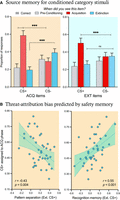
(A) Emotional influences on temporal source memory. CS+ category items were significantly more likely to be attributed to the threat acquisition phase regardless of their actual phase of origin (e.g., Pre-Con or EXT). CS− category items originating from the threat ACQ phase were more likely to be attributed to the EXT phase (compared with ACQ CS+ items). (B) The propensity to attribute CS+ items to ACQ phase regardless of true origin was associated with poorer pattern separation of extinction memory but greater recognition memory for extinction CS+ items. (***) P < 0.001, (ns) P > 0.05. Error bars represent 95% CI.
Three-way interaction of CS type × phase × attribution showed that Pre-Con and EXT CS+ items were attributed to ACQ more than to their true origins (Pre-Con: M = 0.22, P < 0.001, 95% CI [0.08, 0.36]; EXT: M = 0.24, P < 0.001, 95% CI [0.10, 0.38]). Furthermore, a CS+ > CS− effect emerged, with CS+ items judged as belonging to ACQ (Pre-Con CS+ > CS−: M = 0.19, P < 0.001, 95% CI [0.06, 0.31]; ACQ CS+ > CS−: M = 0.29, P < 0.001, 95% CI [0.17, 0.42]; EXT CS+ > CS−: M = 0.15, P = 0.003, 95% CI [0.02, 0.28]). A slight safety bias also emerged, with ACQ CS− items attributed to EXT significantly more than CS+ items (M = 0.20, P < 0.001, 95% CI [0.07, 0.33]).
Correlational and regression analyses investigated whether the above temporal memory biases were associated with the pattern separation of safety memory (Fig. 3B). Pattern separation of extinction was negatively correlated with overall CS+ attribution bias (r(39) = −0.43, P = 0.004, BF10 = 9.66, 95% CI [−0.65, −0.15]). Pattern separation of extinction also correlated with lower CS+ threat bias for items originating from EXT (r(39) = −0.33, P = 0.037, BF10 = 1.60, 95% CI [−0.57, −0.02]) and Pre-Con (r(39) = −0.35, P = 0.026, BF10 = 2.16, 95% CI [−0.59, −0.05]), as well as with correct ACQ CS+ attribution (r(39) = −0.44, P = 0.004, BF10 = 9.75, 95% CI [−0.65, −0.15]). Finally, the misattribution of EXT CS+ (>CS−) items to ACQ was positively correlated with extinction recognition (r(39) = 0.55, P < 0.001, BF10 = 160.08, 95% CI [0.29, 0.73]). Multiple linear regression analyses expanded on correlational outcomes, with total CS+ attribution to ACQ as the dependent variable. Extinction recognition memory (b = 0.40, t = 3.04, P = 0.004, 95% CI [0.07, 0.35]) and pattern separation (b = −0.37, t = 2.78, P = 0.009, 95% CI [−0.51, −0.08]) were covariates, together showing 35% explained variance in threat bias (R2 = 0.35, F(1,38) = 10.15, P < 0.001). Secondary correlation analyses further indicated that threat-biased source memory for Pre-Con CS+ items was associated with lower pattern completion of CS− from both ACQ (r(39) = −0.33, P = 0.034, BF10 = 1.70, 95% CI −0.03, −0.58]) and EXT (r(39) = −0.39, P = 0.013, BF10 = 3.88, 95% CI −0.09, −0.62]) phases, indicating that these biases may be lessened if safety memory becomes more generalizable. To further illustrate the specificity of these effects, no associations met significance for pattern separation of fear conditioning memory (ACQ CS+: P = 0.051; ACQ CS−: P = 0.13) or concerning pattern completion of fear extinction memory (EXT CS+: P = 0.72; EXT CS−: P = 0.14).
Notably, pattern separation of extinction memory selectively predicted source attribution, while separation of other safety memory (e.g., ACQ CS− and EXT CS−) did not. This is likely explained by the greater contextual relevance for CS+ items, which predict threat or safety outcomes based on temporal context (i.e., conditioning or extinction), whereas CS− items are unreinforced regardless. As such, a greater capacity to encode, store, and retrieve extinction memory as distinct nonoverlapping representations corresponds to an ability to encode temporal context with similarly increased discrimination, facilitating accurate source attribution for CS+ items. This may arise from the salient mode of safety learning that extinction incurs, where unreinforced CS+ items evoke expectancy violation and prediction error (Craske et al. 2014; Papalini et al. 2020), while unpaired CS− items remain safe in a more passive sense. In sum, these results imply that poor pattern separation of extinction memory may increase susceptibility to fear interference in temporal context memory.
To conclude, by synthesizing category conditioning and mnemonic similarity paradigms, we were able to highlight novel yet straightforward differences between fear conditioning and extinction in episodic memory. Conditioned threat and extinction items both showed enhanced recognition (CS+ > CS−) but diverged according to the canonical memory systems of “pattern completion” and “pattern separation,” which are well documented across decades of memory research (Marr 1971; Rolls 2016) yet rarely studied in the context of human fear memory. At ∼24 h after conditioning, fear-associated items produced substantial pattern completion, such that items resembling CS+ seen during fear conditioning were rated as “old” (i.e., generalized). Conversely, fear extinction produced poor pattern completion but elevated pattern separation, with similar items discriminated as “new.” Further analyses showed that otherwise substantial threat biases in source attribution (Hennings et al. 2021) were lessened for those with greater pattern separation of extinction memory (Fig. 3B), suggesting that separation of safety could correct for fearful bias in context memory by preventing fear from blurring temporal context recall. Together, fear and safety learning appear to leave symmetrical impressions on episodic memory that extend beyond simple recognition performance.
By integrating mnemonic similarity tests, we identified common and distinct aspects of fear and safety memory beyond binary old/new item recognition judgements. To our knowledge, this represents the first direct evidence for pattern separation operations in extinction memory, replicating and extending evidence for pattern completion following conditioned fear (Starita et al. 2019). Identifying fear and safety with pattern completion and separation could facilitate further advances in extinction research, with broad implications for the characterization of safety learning (Laing and Harrison 2021; Laing et al. 2022b). Our findings cohere with learning theory explanations for extinction relapse (Bouton 1994), wherein fear renewal is caused by generalizability and intransigence of fear (stimulus–threat) value, which outcompetes rigid “stimulus–no threat” (safety) memory. Despite few direct experimental studies, these mechanisms have been posited as relevant to fear overgeneralization (Lopresto et al. 2016). Some have proposed that stimuli partially resembling CS+ initiate pattern completion, activating wider associative fear structures encoded during conditioning (Lissek 2012; Webler et al. 2021). This could lead to widespread generalization seen in affective disorders like PTSD (Morey et al. 2020). On the other hand, encountering stimuli that partially resemble extinguished stimuli evokes the distinction of this new item from the precise stimuli used in extinction training, preventing the underlying associative structure from activation and thereby disrupting the expression of safety-related behaviors (fear–inhibition or positive affect) (Laing et al. 2021, 2022a). Further studies will be needed to examine how pattern separation of extinction memory is affected across development and in clinical populations (Lange et al. 2017; Bernstein and McNally 2018; Bernstein et al. 2020; Neudert et al. 2023), possibly contributing to postextinction relapse of conditioned behavior.
Competing interest statement
The authors declare competing interests.
Acknowledgments
This work was supported by a National Institutes of Health grant to J.E.D. (R01 MH122387). We thank Oluwasemilore Ojerinde for assistance with data collection. Data used in this research are available on the Open Science Framework (https://osf.io/h4kua/).
Footnotes
-
[Supplemental material is available for this article.]
-
Article is online at http://www.learnmem.org/cgi/doi/10.1101/lm.053760.123.
- Received March 17, 2023.
- Accepted June 13, 2023.
This article is distributed exclusively by Cold Spring Harbor Laboratory Press for the first 12 months after the full-issue publication date (see http://learnmem.cshlp.org/site/misc/terms.xhtml). After 12 months, it is available under a Creative Commons License (Attribution-NonCommercial 4.0 International), as described at http://creativecommons.org/licenses/by-nc/4.0/.