Evidence that anterograde learning interference depends on the stage of learning of the interferer: blocked versus interleaved training
- 1Department of Communication Sciences and Disorders, Northwestern University, Evanston, Illinois 60208, USA
- 2Knowles Hearing Center, Northwestern University, Evanston, Illinois 60208, USA
- 3Northwestern University Institute for Neuroscience, Northwestern University, Evanston, Illinois 60208, USA
- Corresponding author: ruijingning{at}u.northwestern.edu
Abstract
Training on one task (task A) can disrupt learning on a subsequently trained task (task B), illustrating anterograde learning interference. We asked whether the induction of anterograde learning interference depends on the learning stage that task A has reached when the training on task B begins. To do so, we drew on previous observations in perceptual learning in which completing all training on one task before beginning training on another task (blocked training) yielded markedly different learning outcomes than alternating training between the same two tasks for the same total number of trials (interleaved training). Those blocked versus interleaved contrasts suggest that there is a transition between two differentially vulnerable learning stages that is related to the number of consecutive training trials on each task, with interleaved training presumably tapping acquisition, and blocked training tapping consolidation. Here, we used the blocked versus interleaved paradigm in auditory perceptual learning in a case in which blocked training generated anterograde—but not its converse, retrograde—learning interference (A→B, not B←A). We report that anterograde learning interference of training on task A (interaural time difference discrimination) on learning on task B (interaural level difference discrimination) occurred with blocked training and diminished with interleaved training, with faster rates of interleaving leading to less interference. This pattern held for across-day, within-session, and offline learning. Thus, anterograde learning interference only occurred when the number of consecutive training trials on task A surpassed some critical value, consistent with other recent evidence that anterograde learning interference only arises when learning on task A has entered the consolidation stage.
Training on one task can interfere with learning on another task. When training on the first task (task A) disrupts learning from subsequent training on the second task (task B), this interference is known as anterograde (or proactive) interference. Anterograde interference has been observed in many forms of learning, suggesting that it reflects processes that are fundamental to learning and memory across domains (e.g., verbal learning [Underwood 1957], associative learning [Bouton 1993], predictive learning [Castro et al. 2002], motor learning [Brashers-Krug et al. 1996; Sing and Smith 2010; Cantarero et al. 2013; Leow et al. 2013; Lerner et al. 2020], and perceptual learning [Shibata et al. 2017; Bang et al. 2019]). Anterograde interference has been proposed to arise because training on task A prevents the formation of a memory of task B (Turvey et al. 1971; Petrusic and Dillon 1972; Carey 1973; Dillon 1973; Pearce and Hall 1980), because a memory of task B cannot be successfully retrieved (Wickens et al. 1981; Bouton 1993; Wixted and Rohrer 1993; Krakauer et al. 2005; Bäuml and Kliegl 2013), and, most recently, because the memory of task B is corrupted (Baudo 2023). These explanations of anterograde interference all focus on the fate of the memory of task B. The focus here, instead, is on task A; namely, whether the ability of training on task A to induce anterograde learning interference on task B depends on the stage of learning that task A has reached when the training on task B begins. The induction of lasting learning is commonly held to consist of two broad stages: acquisition and consolidation (e.g., Dudai 2012). Acquisition occurs during training and is the process by which a fragile and unstable memory is formed. Consolidation is the process that occurs after training is over and by which the fragile memory gets stabilized and enters long-term memory. In the following, we assume that consolidation has occurred if learning is evident >24 h after training. We investigated the possibility that learning on task A has to have entered the consolidation stage to induce anterograde interference on task B.
At first glance, the need for task A to have entered the consolidation stage to induce anterograde interference on task B appears to be the only option, because in standard anterograde interference paradigms all of the training on task A is complete before the training on task B begins. So, the training on task B occurs after the acquisition period of task A is over and the consolidation period of task A has ostensibly begun. This is indeed the case when consolidation on task A is induced by a single or only a few training trials, as can occur in some types of learning, such as associative learning. However, other types of learning, such as perceptual learning (a form of skill learning), can require extensive training to induce consolidation; that is, perceptual learning can fail to persist if there are too few training trials during the training session (Wright and Sabin 2007; Aberg et al. 2009; Little et al. 2017). Therefore, for learning types such as perceptual learning, for which a given training regimen can either keep learning in the acquisition stage or induce consolidation depending on the amount of training, the possibility that the learning on task A has to have entered the consolidation stage to induce anterograde interference on task B is both relevant and testable.
We are aware of only a few previous investigations of the relationship between the stage of learning on task A and anterograde learning interference on task B, all of which involved skill learning in humans. The results consistently point toward a connection between the consolidation of learning on task A and anterograde learning interference on task B, as revealed through four lines of evidence.
First, anterograde learning interference on task B diminished when the consolidation of task A was disrupted by transcranial magnetic stimulation (TMS). For a visual task, administration of TMS immediately after training on task A and 1 h before training on task B reduced anterograde interference as assessed by across-day learning (improvement from one day to another) on task B (Bang et al. 2019). Likewise, for a motor task, administration of TMS during a 30-min break between training on task A and training on task B reduced anterograde interference as assessed by within-session learning (improvement during a training session) on task B (Cothros et al. 2006). Notably, anterograde interference on the motor task was also reduced when TMS was administered 24 h after training on task A and immediately before training on task B, a finding that was interpreted as indicating that the memory on task A was still labile (not consolidated) 24 h after training (Cothros et al. 2006).
Second, the degree of anterograde learning interference on task B was positively correlated with a measure of long-term potentiation (LTP) resulting from training on task A. LTP is a process by which synaptic connections between neurons are strengthened and is associated with consolidation (for review, see Bailey et al. 2015). In this study of motor learning (Cantarero et al. 2013), the extent to which training on task A limited the induction of future LTP, called LTP occlusion, was measured in humans using the excitability to noninvasive brain stimulation after training on task A as the index. The extent of LTP occlusion produced by training on task A positively correlated with the magnitude of across-day learning on task A and with the strength of anterograde interference on across-day learning on task B (measured in two separate experiments). This outcome suggests that the consolidation of learning on task A depleted the LTP resources necessary for learning on task B, leading to anterograde interference on task B.
Third, anterograde interference on task B was still present when task B was trained 1 h after task A, suggesting that anterograde interference requires some lasting influence of task A that potentially reflects the ongoing consolidation of the memory of task A. The persistence of anterograde interference of task A on task B occurred for both across-session learning on task B on a visual task (visual) (Shibata et al. 2017; Bang et al. 2018) and within-session learning on task B on a visuomotor task (Lerner et al. 2020). Moreover, anterograde interference on the same tasks was gone when task B was trained 3–6 h after task A (Shibata et al. 2017; Bang et al. 2018; Lerner et al. 2020), showing an overall time frame for anterograde interference that is consistent with the estimated time frame of consolidation on skill learning (Brashers-Krug et al. 1996; Krakauer et al. 2005; Krakauer and Shadmehr 2006).
Fourth, and of greatest relevance here, anterograde interference only occurred when there was more than enough training on task A to yield across-day learning on that task, suggesting that the learning on task A has to have at least entered the consolidation stage to yield anterograde interference. In an investigation of anterograde interference on a visual orientation detection task (Shibata et al. 2017), eight blocks of training on task A yielded across-day learning on task A (a marker of consolidation) but did not yield anterograde interference on across-day learning on task B. However, 16 blocks of training on task A yielded both across-day learning on task A and anterograde interference of across-day learning on task B. Thus, the induction of anterograde interference on task B required more training on task A than was needed for consolidation on task A (a case of overlearning on task A), suggesting that the learning on task A has to have entered the consolidation stage to yield anterograde interference. In addition, overlearning on task A induced an inhibitory brain state associated with the hyperstabilization of the memory of task A, as revealed through magnetic resonance spectroscopy (MRS). An increase in the amount of anterograde learning interference on across-day learning on task B was correlated with a decrease in the ratio between the concentrations of excitatory and inhibitory neurotransmitters (E/I ratio) in the related brain areas after overlearning on task A, resulting in greater inhibition in those areas.
Finally, in a related investigation from motor learning (Leow et al. 2013), 80 trials, but not 25 trials, of training on task A yielded anterograde interference of within-session learning on task B. In this case, there was no assessment of the consolidation of learning on task A for either training amount. Nevertheless, the outcome again suggests that surpassing some critical amount of training on task A is required for anterograde interference and therefore that there is a division between two stages of learning on task A—one that does not yield anterograde interference and another one (potentially the consolidation stage) that does.
In the current study, we investigated in perceptual learning whether learning on task A has to have entered the consolidation stage to induce anterograde interference on task B using a different behavioral approach: a comparison of learning on task B following blocked versus interleaved training on task A and task B. This design was inspired by two previous reports in perceptual learning showing that different distributions of training trials on two tasks can yield different learning outcomes, even when the number of training trials on each task and the total training time are held constant (Banai et al. 2010; Maidment et al. 2015). In each report, completing all training on one task before beginning training on the other task (referred to here as blocked training) had a markedly different effect than alternating training between two tasks every 60 or 120 trials (referred to here as interleaved training). In one report, blocked training on two auditory amplitude modulation depth discrimination tasks with different standard stimuli disrupted across-day learning on the first task (retrograde interference: A←B) but not on the second task (no anterograde interference: not A→B), while interleaved training of the same two tasks generated learning on both tasks (Maidment et al. 2015). In the other report, conversely, blocked training on two auditory temporal interval discrimination tasks with different standard stimuli led to across-day learning for both tasks, while interleaved training of the same two tasks disrupted learning for both (Banai et al. 2010). The difference in outcomes between blocked and interleaved training within each of these investigations implies that there is a transition between two different learning stages that is related to the number of consecutive training trials on each task, with that number being greater for blocked than for interleaved training. In these reports, the two different learning stages were interpreted to be acquisition (related to interleaved training) and consolidation (related to blocked training). These outcomes suggest that the blocked versus interleaved training paradigm can be used to distinguish between learning stages. However, to date, this paradigm has only been applied in cases in which the blocked regimen generated retrograde interference (Maidment et al. 2015) or no interference (Banai et al. 2010).
Here, we used the blocked versus interleaved training paradigm to examine anterograde learning interference. We trained different groups of listeners on two auditory discrimination tasks (task A and task B) using either blocked or interleaved regimens and compared their learning on task B across these regimens and with the learning of a control group that only received training on task B (Fig. 1B). The two tasks focused on the two primary cues to sound source location on the horizontal plane: interaural time differences (ITDs) and interaural level differences (ILDs). Task A was ITD discrimination and task B was ILD discrimination (Fig. 1A). We selected these tasks for two reasons: (1) In blocked training regimens, training on task A before task B yielded anterograde interference on task B (A→B), but training on task A after task B did not yield retrograde interference on task B (not B←A), enabling the isolation of anterograde interference (Baudo 2023). (2) The number of consecutive training trials on task A that induced anterograde interference on task B in blocked training was sufficient to generate across-day learning on task A alone (see Supplemental Material, Supplement A; Ortiz and Wright 2010), suggesting that learning on task A had entered consolidation when it disrupted learning on task B. Therefore, if interleaved training on task A and task B yields learning on task B, while blocked training does not, it would suggest that there is a transition between two different stages that is related to the number of consecutive training trials on each task, and that anterograde interference is only induced in the stage associated with the greater number of consecutive trials—presumably the consolidation stage.
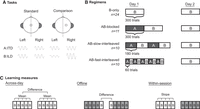
Methods. (A) Tasks. Interaural time difference (ITD) discrimination (task A) and interaural level difference (ILD) discrimination (task B). On each trial, two pure tones of the same frequency were presented, one to each ear, over headphones, in each of two observation periods. The tones created a single intracranial sound image. Listeners selected the observation period in which the sound image was perceived to be farther to the right. The position of the sound image was manipulated by adjusting either the phase difference (ITD) or the level difference (ILD) between the tones presented to the two ears. (B) Regimens. Four groups of listeners were trained in a single session (day 1) on either task B (open rectangles) alone or on task A (filled rectangles) and task B in different regimens in which the primary manipulation was the number of consecutive training trials (60, 180, or 300) on each task. All listeners were then tested on task B the next day (day 2). (C) Learning measures. Learning on task B was assessed (1) between the mean threshold on day 1 and the mean threshold on day 2 (across-day learning; left), (2) between the thresholds on the last block on day 1 and the first block on day 2 (offline learning; middle), and (3) across the thresholds on each block on day 1 using the slope of the thresholds over the log transformed block number (within-session learning; right).
We tested the influence of blocked versus interleaved training on anterograde interference using three measures of learning: across day, within session, and offline (Fig. 1C). Anterograde interference of across-day learning (improvement from day 1 to day 2) has been documented previously for perceptual tasks (Shibata et al. 2017; Bang et al. 2019; Baudo 2023) and motor tasks (Cantarero et al. 2013). Anterograde interference of within-session learning (improvement during the training session) has also been documented for motor tasks (Brashers-Krug et al. 1996; Sing and Smith 2010; Leow et al. 2013; Lerner et al. 2020) but, to our knowledge, has not been assessed for perceptual tasks. Anterograde interference of offline learning (improvement between the end of training on day 1 and the beginning of testing on day 2), to our knowledge, has not been assessed for either perceptual or motor tasks, though interference of offline learning in the retrograde direction has been reported for motor tasks (Friedman and Korman 2016; Handa et al. 2016). Moreover, the different outcomes for blocked and interleaved training regimens for perceptual tasks (Banai et al. 2010; Maidment et al. 2015) have only been reported for across-day learning and have not been assessed for within-session or offline learning. Therefore, by assessing all three learning measures, we had three different tests of the same prediction about anterograde learning interference and consolidation and also added two new measures to the evaluation of anterograde interference on perceptual tasks.
We report that anterograde interference of task A on task B occurred for all three learning measures in the blocked regimen and diminished for all three learning measures in the interleaved regimens, with faster rates of interleaving leading to less interference. This outcome suggests that anterograde interference only arises when the number of consecutive training trials on task A surpasses some critical value, consistent with the idea that anterograde interference only arises when learning on task A has entered the consolidation stage.
Results
Learning produced by practicing task B was susceptible to the anterograde disruption effect of prior blocked training of task A, but fast-interleaved training between task A and task B eliminated that disruption. Training on task B alone for 300 total trials (B-only regimen; n = 24) (Fig. 2A [white bars, all rows {group}], B [white circles, all rows {individual}]) yielded improvement on task B on three different measures of learning: (1) across days (mean threshold of day 1 minus mean threshold of day 2; top row: multivariate t-test following analysis of covariance [ANCOVA], mean difference = 1.26 dB, t(50) = 6.93, P < 0.0001, Cohen's d = 1.96), (2) offline during the training break between day 1 and day 2 (mean of the last threshold estimate of day 1 minus the first threshold estimate of day 2; middle row: mean difference = 1.08 dB, t(50) = 4.36, P < 0.001, Cohen's d = 1.23), and (3) within the session on day 1 (slope across five threshold estimates on day 1; bottom row: slope = −0.58, t(50) = 3.47, P = 0.004, Cohen's d = 0.98) (also see Supplemental Material, Supplement C for block-by-block thresholds). This learning was disrupted by preceding training on task A, manifesting on all three measures of learning. Training on task B for 300 total trials after training on task A for 300 total trials (AB-blocked regimen; n = 12) (Fig. 2A [black bars {group}], B [black circles {individual}]; see learning on task A generated with 300 trials of training on task A from Ortiz and Wright [2010] in Supplemental Material, Supplement A) yielded no improvement on task B across days (top row: mean difference = 0.01 dB, t(50) = 0.05, P = 1.00, Cohen's d = 0.01), offline (middle row: mean difference = −0.44 dB, t(50) = −1.20, P = 0.65, Cohen's d = 0.12), or within the session on day 1 (bottom row: slope = −0.05, t(50) = 0.19, P = 0.99, Cohen's d = 0.05). However, fast-interleaved training on task A and task B released this interference, again manifesting on all three measures. Alternating training on task A and task B every 60 trials for 300 total trials each (AB-fast-interleaved regimen; n = 10) (Fig. 2A [light-gray bars {group}], B [light-gray circles {individual}]) yielded improvement on task B across days (top row: mean difference = 1.43 dB, t(50) = 5.00, P < 0.0001, Cohen's d = 1.41), offline (middle row: mean difference = 1.86 dB, t(50) = 4.85, P < 0.0001, Cohen's d = 1.37), and within the session on day 1 (bottom row: slope = −0.91, t(50) = 3.54, P = 0.003, Cohen's d = 1.00).
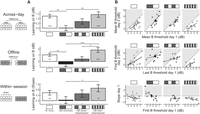
Learning on ILD discrimination (task B). (A) Group-level learning. Mean across-day (top row), offline (middle row), and within-session (bottom row) learning on task B for each of the four training regimens: B-only (white bars), AB-blocked (black bars), AB-slow-interleaved (dark-gray bars), and AB-fast-interleaved (light-gray bars). Learning magnitude is adjusted using the day 1 threshold as a covariate. Error bars represent plus or minus one standard error. Asterisks within a bar indicate statistically significant learning within a trained group. Asterisks between bars indicate a statistically significant difference in learning magnitude between trained groups. (+) P < 0.10, (*) P < 0.05, (**) P < 0.01, (***) P < 0.001. (B) Individual-level learning. Scatter plots of the individual (circles) and group mean (triangles) performance on task B showing the mean threshold across blocks on day 1 versus day 2 (across-day learning; top row), the last threshold on day 1 versus the first threshold on day 2 (offline learning; middle row), and the first threshold on day 1 versus the slope of the thresholds across all blocks on day 1 (within-session learning; bottom row). Results are shown separately for each training regimen: B-only (white symbols), AB-blocked (black symbols), AB-slow-interleaved (dark-gray symbols), and AB-fast-interleaved (light-gray symbols). Black lines represent the linear model fitted to the individual values in each panel. The dashed diagonal lines in the top two rows have a slope of 1, indicating no across-day and no offline learning. The dashed horizontal lines in the bottom row have an intercept of 0, indicating no within-session learning. Points below the dashed lines (unshaded regions) therefore represent individuals and groups that improved, while points above the dashed lines (shaded regions) represent individuals and groups that got worse.
The better learning by the B-only and fast-interleaved groups than by the AB-blocked group was also evident in direct comparison. The B-only and AB-fast-interleaved groups improved by similar amounts for all three measures (pairwise comparisons following ANCOVA; all: t ≤ 1.73, P ≥ 0.32, Cohen's d ≤ 0.49). The B-only group improved more than the AB-blocked group for the across-day (t(50) = 3.82, P = 0.002, Cohen's d = 1.08) and offline (t(50) = 3.41, P = 0.006, Cohen's d = 0.96) measures, though not for the within-session measure (t(50) = 1.79, P = 0.29, Cohen's d = 0.51). The AB-fast-interleaved group also improved more than the AB-blocked group for the across-day (t(50) = 3.58, P = 0.004, Cohen's d = 1.01) and offline (t(50) = 4.29, P < 0.001, Cohen's d = 1.21) measures and marginally so for the within-session measure (t(50) = 2.40, P = 0.09, Cohen's d = 0.68). Thus, particularly for the across-day and offline measures, the anterograde interference of blocked training of task A on learning on task B appeared to be largely prevented by alternating training between task A and task B.
To help determine whether the release from anterograde interference in the AB-fast-interleaved regimen arose from the reduction in the number of consecutive trials per task or merely from the interleaving of the two tasks, we examined the learning on task B with a slower rate of alternation between the training on task A and task B. Alternating training on task A and task B every 180 trials for 360 total trials each (AB-slow-interleaved regimen; n = 10) (Fig. 2A [dark-gray bars {group}], B [dark-gray circles {individual}]) yielded performance that showed some of the characteristics of the B-only and AB-fast-interleaved training and some of the characteristics of the AB-blocked training. Like the B-only and AB-fast-interleaved groups, the AB-slow-interleaved group improved across days and within day 1, albeit marginally for both measures (across day: top row, multivariate t-test following ANCOVA: mean difference = 0.70 dB, t(50) = 2.45, P = 0.068, Cohen's d = 0.69; within day 1: bottom row, slope = −0.50, t(50) = 1.89, P = 0.064, Cohen's d = 0.53). However, like the AB-blocked group, the AB-slow-interleaved group did not improve offline (middle row: mean difference = 0.41 dB, t(50) = 1.05, P = 0.75, Cohen's d = 0.30). Moreover, the improvement that was shown by the AB-slow-interleaved group was of an intermediate magnitude between the no-learning group (AB-blocked) and the good-learning groups (B-only and AB-fast-interleaved). In direct comparison, the improvement of the AB-slow-interleaved group did not differ from that of either the no-learning group or the two good-learning groups for any of the three measures (slow vs. blocked: t(50) ≤ 1.76, P ≥ 0.30, Cohen's d ≤ 0.50; slow vs. B-only and fast: t(50) ≤ 1.91, P ≥ 0.29, Cohen's d ≤ 0.54), with one exception: The AB-slow-interleaved group showed less offline learning than the AB-fast-interleaved group (t = 2.64, P = 0.05, Cohen's d = 0.75). Thus, the slow-interleaved training appeared to have an intermediate effect between blocked and fast-interleaved training, suggesting that the release from anterograde interference in the fast-interleaved regimen arose at least in part from the reduction in the number of consecutive trials per task.
Discussion
We investigated the possibility that the learning on an initially trained task (task A) has to have entered the consolidation stage to induce anterograde learning interference on a subsequently trained task (task B). To do so, we compared the effects of blocked versus interleaved training on a pair of auditory perceptual tasks that were known to yield anterograde learning interference on task B (A→B), but not retrograde interference on task B (not B←A), when they were trained in a blocked regimen (Baudo 2023). The two tasks were interaural time difference (ITD) discrimination (task A) and interaural level difference (ILD) discrimination (task B). For each of three different measures of learning (across day, offline, and within session), completing all training on task A before beginning training on task B (AB-blocked training) did not generate learning on task B, while alternating training between the two tasks (AB-fast-interleaved training) did. The restoration of learning on task B when the training was interleaved was not due to the interleaving per se, because slowing the alternation rate between the two tasks (AB-slow-interleaved training) yielded an intermediate amount of learning between the blocked and the fast-interleaved regimens, even though more total trials were trained on each task in the slow-interleaved regimen (360 trials per task) than in the other two regimens (300 trials per task). Rather, the different learning outcomes on task B for the different regimens appear to be related to the different numbers of consecutive training trials on each task in the different regimens—more specifically, related to the number of consecutive training trials on task A as opposed to task B. The different learning outcomes on task B cannot be attributed solely to the different numbers of consecutive training trials on that task, because learning occurred on task B both when all of the trials on task B were consecutive, as in the B-only regimen, and when there were multiple smaller subsets of consecutive trials on task B, as in the fast-interleaved regimen. In contrast, the number of consecutive training trials on task A did affect learning on task B: When all of the trials on task A were consecutive, as in the AB-blocked regimen, no learning occurred on task B, but when there were multiple smaller subsets of consecutive trials on task A, as in the fast-interleaved regimen, learning on task B occurred. Thus, it appears that surpassing some critical number of consecutive training trials on task A was required for anterograde interference of learning on task B to occur. This outcome suggests that anterograde interference on task B occurred only after the learning on task A had reached a specific stage. Moreover, that stage appears to be associated with consolidation, because the number of consecutive training trials on task A in the blocked regimen was known to be sufficient to lead to across-day learning on task A, a sign of consolidation (see Supplemental Material, Supplement A; Ortiz and Wright 2010).
Here, we consider two possibilities as to the relationship between the consolidation of learning on task A and the induction of anterograde learning interference on task B. One possibility is that learning on task A had to transition from the acquisition stage to the consolidation stage, in line with the interpretation proposed for previous cases in which interleaved and blocked training had different effects (Banai et al. 2010; Maidment et al. 2015). Another possibility is that the learning on task A had to transition from the consolidation stage to an overlearning (overtraining) stage that was induced by training beyond the critical amount required for consolidation, in line with data showing that overlearning on task A led to anterograde interference on task B, while a lesser amount of training on task A that still led to the consolidation of learning on task A did not (Shibata et al. 2017). Both options are possible in the current case. Although we know that the number of consecutive training trials on task A in the regimen that induced anterograde interference (300 trials) was sufficient to lead to consolidation on task A, we do not know whether the number of consecutive trials on task A in regimens that induced little or no anterograde interference (180 and 60 trials) was also sufficient to lead to consolidation on task A. If neither 180 nor 60 trials yielded consolidation of learning on task A, it would indicate that the critical amount of training on task A required for consolidation was between 180 and 300 trials, about the same as the number of trials required for anterograde interference, supporting the acquisition-to-consolidation transition. In contrast, if 180 but not 60 trials or both 180 and 60 trials led to consolidation of learning on task A, it would indicate that the critical amount of training on task A required for consolidation was below 180 trials and thus that more trials were required for anterograde interference than for consolidation, supporting the consolidation-to-overlearning transition. In either case, the present results suggest that anterograde interference only arises after learning on task A has entered the consolidation stage.
Blocked vs. interleaved contrasts
The current results echo the outcomes of the two previous reports in perceptual learning on which the current blocked versus interleaved training paradigm was based (Banai et al. 2010; Maidment et al. 2015). Here, like in the previous studies, blocked and interleaved training yielded contrasting outcomes. The current results are thus consistent with the previous evidence of the sensitivity of perceptual learning to the distribution of training trials between two tasks and with the idea that the different trial distributions lead to interactions in different learning stages (see above).
The current results also expand the scope of the observed blocked versus interleaved contrast in two respects. First, the current results extend the observed blocked versus interleaved contrast to a case in which the learning interference on task B observed in the blocked regimen was isolated to anterograde interference. In the two previous reports, there was either no interference in the blocked regimen (Banai et al. 2010) or there was retrograde interference of task B on task A (A←B) but no anterograde interference of task A on task B (not A→B) in the blocked regimen (Maidment et al. 2015). It is also noteworthy that, in those investigations, the influence of blocked training was only assessed in one condition order: task A followed by task B. Because there were no tests of potential interference in the opposite condition order, task B followed by task A, the evaluation of anterograde interference of task B on task A (B→A) and retrograde interference of task A on task B (B←A) was precluded. Thus, the different outcomes between blocked and interleaved training within each of those investigations cannot be isolated to a particular direction of interference. Here, instead, we knew from previous work that task A yielded anterograde interference on task B (A→B) and that task A did not yield retrograde interference on task B (not B←A) in blocked regimens (Baudo 2023). Thus, the current release from learning interference on task B during interleaved training can be clearly ascribed to a release from anterograde interference.
Second, the current results extend the observed blocked versus interleaved contrast from across-day learning to offline and within-day learning. In the two previous reports, only across-day learning was evaluated (Banai et al. 2010; Maidment et al. 2015). The closest reports of an influence of blocked versus interleaved training on offline and within-session learning of which we are aware come from motor learning. In a motor learning phenomenon referred to as contextual interference, offline learning is enhanced when training switches among tasks on each trial in a fixed order compared with when training is blocked (Shea and Morgan 1979; Lin et al. 2011; Kim and Wright 2020), similar to the current results. However, within-session learning is sometimes hindered by switching by trial compared with blocked training (Shea and Morgan 1979; Kim and Wright 2020), which is different from the current results. One possible contributor to that difference in within-session learning could be the rate of task switching in the interleaved regimens, which was far higher for contextual interference (trial by trial) than for the current study (every 60+ trials). If so, it would suggest that within-session learning is particularly susceptible to disruption in the continuity of performance on a task.
Finally, it is worth noting that the direction of the blocked versus interleaved contrast in perceptual learning differs across reports. Two reports showed interference for blocked training and learning for interleaved training (Maidment et al. 2015; this study), while the third showed interference for interleaved training and learning for blocked training (Banai et al. 2010). The differences in the direction of the blocked versus interleaved contrasts suggest that the susceptibility of learning on a given task to interference from training on another task depends on both the particular learning stage and the particular combination of tasks. This difference also implies that the current greater learning from interleaved compared with blocked training did not arise solely from task-general factors attributable simply to the switching between tasks, such as the increase in task novelty, which could help to enhance attention and reduce fatigue. If such factors were sufficient to induce learning, then interleaved training should be consistently better than blocked training, but it is not.
Aside from the reports of blocked versus interleaved contrasts, it is also worth noting that an effect of “block size” on learning has been documented for much shorter blocks than used here. Learning on a visual contrast discrimination task at four standard contrast levels was disrupted when the standard contrast level was selected randomly trial by trial, but learning occurred when the standard contrast was selected randomly after every five or more trials (Zhang et al. 2008). That outcome demonstrates a clear influence of the temporal distributions of different training trials on learning, like the current results and other cases of blocked versus interleaved training (Banai et al. 2010; Maidment et al. 2015). However, the benefit to learning from increasing the block size from one to five trials was attributed to an increased ability to identify the stimulus, thereby guiding attention and aiding encoding (Zhang et al. 2008). It therefore appears that the outcomes with short blocks (fewer than approximately five trials) may reflect different processes than the outcomes with longer blocks (60+ trials)—as in blocked versus interleaved training—because with longer blocks there is no uncertainty about the training itself.
Relationships among the across-day, offline, and within-session measures
In addition to extending the observation of a blocked versus interleaved contrast from across-day learning to offline and within-session learning, the current results also appear to provide the only documentation of anterograde interference on across-day, offline, and within-session learning in the same setting in skill learning. As mentioned above, to our knowledge, anterograde interference has been previously documented on across-day learning for perceptual and motor tasks (Cantarero et al. 2013; Shibata et al. 2017; Bang et al. 2019; Baudo 2023) and on within-session learning for motor tasks (Brashers-Krug et al. 1996; Sing and Smith 2010; Leow et al. 2013; Lerner et al. 2020) and has not been demonstrated on offline learning for either perceptual or motor tasks. Therefore, the current data offer a unique example of anterograde interference between the same two tasks across three different learning measures.
The presence of anterograde interference across all three learning measures also provides an opportunity to examine how the interference for a given measure relates to the interference across other measures. Examinations of the correlations among the three measures suggest that separable mechanisms could underlie the anterograde interference of between-session (across-day and offline) and within-session learning; namely, across all regimens and listeners, the magnitude of improvement was correlated between the across-day and offline measures (R = 0.60, P < 0.001) but was not correlated between the within-session measure and either of the other two between-session measures (R ≤ 0.21, P ≥ 0.12). The idea that anterograde interference can affect between-session and within-session learning separately is consistent with prior evidence that between-session learning is separable from within-session learning in the absence of interference. For example, in perceptual learning, across-day learning can occur without within-session learning (Ortiz and Wright 2009; Sand and Nilsson 2014) or even with within-session worsening (Mednick et al. 2002, 2005, 2008; Huyck and Wright 2011, 2013), and within-session and across-day learning can be affected differently by manipulations of the temporal structure of the task (Censor et al. 2016). Similarly, in motor learning, within-session learning can occur without offline learning (e.g., Abe et al. 2011; Kim and Wright 2020).
There is also some indication that the present anterograde interference of between-session learning primarily stemmed from the disruption of offline learning. This idea arises because (1) the magnitude of learning across all regimens and listeners was correlated between the offline and across-day measures, as mentioned above; (2) the magnitude of the offline improvement was similar to that of the across-day improvement for each regimen; and (3) the statistical conclusions were the same for both measures for the blocked regimen (no learning on task B) and the fast-interleaved regimen (learning on task B). It is the case that the statistical conclusions for the slow-interleaved regimen differed between the offline measure (no learning on task B) and the across-day measure (learning on task B). However, that difference could be attributed to the inherently lower reliability of the offline measure, which was based on one threshold estimate per listener per day, compared with the across-day measure, which was based on the mean of five to six threshold estimates per listener per day.
Theoretical implications
The present conclusion that anterograde interference is associated with the consolidation of learning on task A has implications for how training on task A exerts its disruptive influence on learning on task B. The consolidation of learning on task A could induce anterograde interference on task B in at least two ways. First, the consolidation process for learning on task A could temporarily place the system in a state that is not optimal for learning a new task. For example, the consolidation of task A could deplete a resource that is necessary for learning (Cantarero et al. 2013) or create an inhibitory brain state that impedes learning (Shibata et al. 2017). Second, the memory formed from the consolidation of learning on task A could actively engage with new learning during the training of task B. Both of these paths are consistent with the standard proposals about the fate of learning on task B in anterograde interference—that memory on task B is not encoded or cannot be retrieved (Turvey et al. 1971; Petrusic and Dillon 1972; Carey 1973; Dillon 1973; Pearce and Hall 1980; Wickens et al. 1981; Bouton 1993; Wixted and Rohrer 1993; Krakauer et al. 2005; Bäuml and Kliegl 2013). However, only the second (interaction) path could potentially account for the recent idea that anterograde interference leads to the formation of a retrievable but corrupted memory of task B (Baudo 2023).
Materials and Methods
Listeners
Data from 55 young adult listeners (37 females) with a mean age of 21–24 yr (SD = 3.85 yr) are reported. Data from an additional 11 listeners were excluded from all analyses (see below). All listeners had self-described normal hearing and no previous experience with psychoacoustic tasks. Listeners were paid for their participation. All procedures were approved by the Institutional Review Board at Northwestern University. Portions of the results from the B-only (n = 24) and AB-blocked (n = 11) groups (see below) were reported previously (Baudo 2023).
Tasks
There were two tasks: interaural time difference (ITD) discrimination (task A) and interaural level difference (ILD) discrimination (task B) (Fig. 1A). For each task, each trial consisted of two observation periods, during which a standard stimulus and a comparison stimulus were presented in random order. Each stimulus comprised two pure tones of the same frequency that were presented simultaneously over headphones, one to each ear, creating an intracranial sound image. The lateral position of the sound image was determined by the relative phases (interaural time differences [ITDs]) or levels (interaural level differences [ILDs]) of the tones to the two ears. In the standard stimulus, the two tones had a fixed ITD of 0 µsec and a fixed ILD of 0 dB, placing the sound image on or near the midline. In the comparison stimulus, the two tones had either an ITD that was >0 µsec (comparison ITD, for ITD discrimination) or an ILD that was >0 dB (comparison ILD, for ILD discrimination). The comparison stimulus always favored the right ear, placing the sound image to the right of the midline. Listeners were instructed to select the sound that was farther to the right (the comparison stimulus) by pressing a key on a computer keyboard. Feedback (“Correct!” or “Wrong”) was provided after every trial. The two observation periods in each trial were separated by 650 msec.
Stimuli
For the ITD discrimination task (task A), the tones presented to the left and right ears both had the same frequency (0.5 kHz), duration (300 msec), onset time, and level (70 dB SPL, so an ILD of 0 dB). For the standard stimulus, the two tones had the same ongoing phase (ITD = 0 µsec). For the comparison stimulus, the ongoing phase of the tone to the left ear was delayed by the comparison ITD relative to that to the right ear (ITD > 0 µsec).
For the ILD discrimination task (task B), the tones presented to the left and right ears both had the same frequency (4 kHz), duration (300 msec), onset time, and ongoing phase (so an ITD of 0 µsec). For the standard stimulus, both tones were presented at 70 dB SPL (ILD = 0 dB). For the comparison stimulus, to maintain a constant overall sound level across different ILDs, the tone to the right ear was presented at 70 dB SPL plus 0.5 times the comparison ILD, and the tone to the left ear was presented at 70 dB SPL minus 0.5 times the comparison ILD (ILD > 0 dB).
All of the tones were digitally generated using a Roland Cakewalk US-25EX audio interface (sampling rate of 44,100 Hz, bit rate of 16), were gated using 10-msec raised cosine rise/fall ramps (included in the total stimulus duration), and were presented through Sennheiser HD265 headphones in circumaural cushions. For both tasks, the starting phase of the tone presented to the right ear was randomized across trials, with the phase in the right ear determining the phase in the left ear. Listeners were tested in a sound-attenuated booth.
Threshold estimation
For both tasks, the value of the comparison stimulus (the comparison ITD or the comparison ILD) was adjusted adaptively using a three down, one up rule to estimate the discrimination threshold. Within each block of 60 trials, the comparison value decreased after every three consecutive correct responses and increased after each incorrect response. Each trial on which the comparison value switched from increasing to decreasing or vice versa was marked as a reversal trial, and the comparison values on those trials were recorded. The first three or four reversal values for each block were discarded, and the mean of the largest remaining even number of reversal values was calculated. This procedure yielded an estimate of the comparison value that the listener needed in order to achieve 79.4% correct performance (Levitt 1971), referred to as the discrimination threshold. No estimate was computed from blocks with fewer than seven total reversals. For ITD discrimination (task A), the starting comparison value was 1 µsec, and the step size was 0.2 log ITD units until the third reversal and 0.05 log ITD units thereafter (Saberi 1995). For ILD discrimination (task B), the starting comparison value was 6 dB, and the step size was 0.5 dB until the third reversal and 0.25 dB thereafter. The starting values and step sizes were chosen to be consistent with previous investigations (e.g., Wright and Fitzgerald 2001; Zhang and Wright 2007; Ortiz and Wright 2010).
Regimens
Listeners completed one of four regimens: B-only (n = 24), AB-blocked (n = 11), AB-fast-interleaved (n = 10), and AB-slow-interleaved (n = 10), where A refers to the ITD discrimination task and B refers to the ILD discrimination task (Fig. 1B). All regimens consisted of a training session on day 1 and a testing session on day 2. Training and testing were always on consecutive days. The B-only training consisted of five blocks (300 trials) of task B. The AB-blocked training consisted of five blocks of task A followed by five blocks of task B (one A–B cycle). The AB-fast-interleaved training consisted of five blocks of task A and five blocks of task B, with the two tasks alternating every block (60 trials; five A–B cycles). The AB-slow-interleaved training consisted of six blocks (360 trials) of task A and six blocks of task B, with the two tasks alternating every three blocks (180 trials; two A–B cycles). Training on task A preceded training on task B in each cycle for both the fast-interleaved and the slow-interleaved regimens. The testing on day 2 consisted of five blocks of task B for all four groups.
Data analysis
Prior to data analysis, we omitted the data of 11 listeners. The mean individual ILD discrimination thresholds on day 1 were all <6 dB for the AB-fast-interleaved and the AB-slow-interleaved groups, but were both >6 dB and <6 dB for the B-only and the AB-blocked groups. To help match the starting thresholds across groups, we removed the data of the listeners in the B-only (n = 5) and AB-blocked (n = 6) groups whose starting thresholds were >6 dB. Those listeners were not included in the overall n (n = 55) or in the n for each regimen. The exclusion of those listeners did not affect the outcomes of the analyses.
The learning on task B induced by the four training regimens was assessed using three different measures: across day, offline, and within session (Fig. 1C). All three measures were analyzed using the same basic protocol. Learning outcomes were compared across all groups using an analysis of covariance (ANCOVA), with starting performance as the covariate. Post-hoc analyses based on the ANCOVA also were conducted: Multivariate t-tests (Hothorn et al. 2008) were used to determine which groups improved, and Tukey tests of pairwise comparisons were used to compare learning across groups.
The across-day measure reflected the overall mean improvement between days. For that measure, the dependent variable was the
mean of the five or six threshold estimates on task B (six estimates for the slow-interleaved group and five for the other
groups) for each listener for each day. The day 2 thresholds on task B were compared across all groups using ANCOVA, with
the day 1 threshold on task B as the covariate. The day 1 threshold was included as a covariate because there was a significant
linear effect for this factor (F(1,47) = 74.52, P < 0.001,  ). There was a main effect of the training group (F(3,50) = 6.01, P = 0.001,
  ), indicating that the different training regimens had different effects on performance. In post-hoc analyses, the day 2 threshold
was compared with the day 1 threshold for each group (multivariate t-tests), and the day 2 thresholds were compared pair-wise between groups (Tukey tests).
), indicating that the different training regimens had different effects on performance. In post-hoc analyses, the day 2 threshold
was compared with the day 1 threshold for each group (multivariate t-tests), and the day 2 thresholds were compared pair-wise between groups (Tukey tests).
The offline measure reflected the improvement attributable solely to the time between the training and testing sessions. For
that measure, the dependent variable was the threshold estimates of the last block of task B on day 1 and the first block
of task B on day 2 (two total estimates) for each listener. The first day 2 thresholds on task B were compared across all
groups using ANCOVA, with the last day 1 threshold on task B as the covariate. The last day 1 threshold was included as a
covariate because there was a significant linear effect for this factor (F(1,47) = 23.41, P < 0.001,  ). There was a main effect of the training group (F(3,50) = 6.84, P < 0.001,
  ). In the post-hoc analyses, the first day 2 threshold was compared with the last day 1 threshold for each group (multivariate
t-tests), and the first day 2 thresholds were compared pairwise between groups (Tukey tests).
). In the post-hoc analyses, the first day 2 threshold was compared with the last day 1 threshold for each group (multivariate
t-tests), and the first day 2 thresholds were compared pairwise between groups (Tukey tests).
The within-session measure reflected the improvement that occurred during the initial training session. For that measure,
the dependent variable was the regression slope of the threshold estimates of all blocks of task B on day 1 (five or six estimates)
across the log transformed block number for each listener. The log transformed block number was used because plotting a power
function (the typical shape of a learning curve) (e.g., Ritter and Schooler 2001) on a log scale yields a straight line. The day 1 slopes for task B were compared across all groups using ANCOVA, with the
first day 1 threshold on task B as the covariate. The first day 1 threshold was included as a covariate because there was
a significant linear effect for this factor (F(1,47) = 18.64, P < 0.001,  ). The main effect of training group was not significant (F(3,50) = 2.01, P = 0.12,
  ). Nevertheless, for consistency with the other two measures, post-hoc tests were performed to determine which groups improved
within session on task B (multivariate t-test) and whether the amount of within-session improvement differed between particular groups (Tukey test).
). Nevertheless, for consistency with the other two measures, post-hoc tests were performed to determine which groups improved
within session on task B (multivariate t-test) and whether the amount of within-session improvement differed between particular groups (Tukey test).
For analysis and depiction of day 1 thresholds on task A, see Supplemental Material, Supplements B and C.
All data analyses were performed in R (R Core Team 2021) using packages including emmeans (https://CRAN.R-project.org/package=emmeans) and multcomp (https://CRAN.R-project.org/package=multcomp). Data and analysis code for this study are available at https://github.com/aldasil/interleaved_training.
Acknowledgments
This work was sponsored by the Defense Advanced Research Projects Agency (DARPA) Biological Technologies Office (BTO) ElectRx program under the auspices of Dr. Doug Weber and Eric Van Gieson through the Space and Naval Warfare Systems Center (Pacific Grant/contract no. N66001-17-2-4011). We thank Paul J. Reber and Adriana Weisleder for helpful comments on a previous version of this paper.
Footnotes
-
↵4 Present address: Department of Behavioural Sciences and Learning, Linköping University, 581 83 Linköping, Sweden.
-
[Supplemental material is available for this article.]
-
Article is online at http://www.learnmem.org/cgi/doi/10.1101/lm.053710.122.
- Received December 22, 2022.
- Accepted June 7, 2023.
This article is distributed exclusively by Cold Spring Harbor Laboratory Press for the first 12 months after the full-issue publication date (see http://learnmem.cshlp.org/site/misc/terms.xhtml). After 12 months, it is available under a Creative Commons License (Attribution-NonCommercial 4.0 International), as described at http://creativecommons.org/licenses/by-nc/4.0/.