Serial reversal learning in an olfactory discrimination task in 3xTg-AD mice
- Department of Psychology and Neuroscience, Dalhousie University, Halifax, Nova Scotia B3H 4R2, Canada
- Corresponding author: rebrown{at}dal.ca
Abstract
Male and female 3xTg-AD mice between 5 and 24 mo of age and their B6129F2/J wild-type controls were tested on a series of 18 olfactory discrimination and reversal tasks in an operant olfactometer. All mice learned the odor discriminations and reversals to a criterion of 85% correct, but the 3xTg-AD mice made fewer errors than the B6129F2/J mice in the odor discriminations and in the first six reversal learning tasks. Many mice showed evidence of near errorless learning, and on the reversal tasks the 3xTg-AD mice showed more instances of near errorless learning than the B6129F2/J mice. There was no evidence of an age effect on odor discrimination, but there was a decrease in errorless reversal learning in aged B6129F2/J mice. In long-term memory tests, there was an increase in the number of errors made but no genotype difference. The high level of performance indicates that the mice were able to develop a “learning to learn” strategy. The finding that the 3xTg-AD mice outperformed their littermate controls provides an example of paradoxical functional facilitation in these mice.
Although the most salient behavioral symptoms of Alzheimer's disease (AD) are deficits in learning and memory (Weintraub et al. 2012; Toepper 2017; Scheltens et al. 2021), one of the earliest symptoms of AD is a loss of olfactory function (Alves et al. 2014; Devanand et al. 2015; Son et al. 2021). Reduced olfactory sensitivity is well documented in the elderly population (Murphy et al. 2002; Schubert et al. 2011) and can be the result of age-related reductions in the number of olfactory receptors (Doty et al. 1984), an overall thinning of the olfactory epithelium (Naessen 1971; Paik et al. 1992), a reduction in olfactory bulb volume (Buschhüter et al. 2008), or synaptic dysfunction (Daulatzai 2015). In Alzheimer's patients, deficits in odor identification occur before deficits in odor detection, which do not occur until the disease is relatively advanced (Serby et al. 1991). Olfactory dysfunction in AD is the result of neural dysfunction and has been proposed as a predictor of the severity of cognitive impairment leading to AD (Zou et al. 2016; Murphy 2019; Yan et al. 2022).
There are several methods for measuring olfactory processes in mice, including habituation–dishabituation, Pavlovian, and instrumental conditioning (Slotnick and Restrepo 2005; Schellinck 2018; Zhang et al. 2022), and olfactory deficits have been shown in a number of different mouse models of AD (Tzeng et al. 2021; Zhang et al. 2022). For example, both the Tg2576 and the APP/PS1 mice have olfactory deficits accompanied by Aβ pathology in the olfactory pathways (Wesson et al. 2010; Yao et al. 2017; Zhang et al. 2022). In the APP/PS1 mice, olfactory dysfunction precedes visuo–spatial learning deficits (Li et al. 2019). Olfactory deficits have also been reported the Tα1-3RTτ transgenic mice (Macknin et al. 2004), 3xTg-AD mice (Roddick et al. 2016; Mitrano et al. 2021), and 5xFAD mice (Mariani et al. 2017; Roddick et al. 2022).
However, there is a dissociation between olfactory sensitivity and olfactory performance, as mice might have normal odor perception but show a dysfunction in performing olfactory learning and memory tasks (Zhang et al. 2022). For example, young 5xFAD mice show no deficits in odor detection (Roddick et al. 2014) and no deficits in olfactory learning and memory (Roddick et al. 2014; O'Leary et al. 2020), but a signal detection analysis showed deficits in 12-mo-old female 5xFAD mice in olfactory learning (Roddick et al. 2022).
The 3xTg-AD mouse model of Alzheimer's disease has three mutations: the Swedish (K670N/M671L) mutation to amyloid precursor protein (APP), a mutation to presenilin-1 (PS1; M146V), and a τ mutation (P301L) resulting in the development of both amyloid β plaques and τ neurofibrillary tangles, two hallmarks of AD (Oddo et al. 2003). Amyloid deposits occur in the olfactory bulbs of 3xTg-AD mice as early as 13 wk of age, appearing first in the granule layer and then the external plexiform layer (Mitrano et al. 2021). Female 3xTg-AD mice show more amyloid plaques and neurofibrillary tangles than male 3xTg-AD mice, as well as increased activation of microglia and astrocytes (Yang et al. 2018). The 3xTg-AD mice also show increased microglia density in the hippocampus by 12 mo of age (Rodríguez et al. 2010, 2015).
The 3xTg-AD mice show no deficits in visual acuity (King et al. 2018) but show reduced sensitivity to low odor concentrations (Roddick et al. 2014). Behaviorally, the 3xTg-AD mice show impaired working and reference memory in an eight-arm radial maze as early as 2 mo of age (Stevens and Brown 2015) and retention deficits in the Morris water maze as early as 4 mo old, showing impaired performance on the first trial of a test day compared with the last trial of the previous day (Billings et al. 2005). By 6 mo of age, the 3xTg-AD mice also show impaired short- and long-term retention of contextual fear conditioning (Billings et al. 2005) and by 7 mo of age show impaired performance in the Barnes maze (Fertan et al. 2019). By 9 mo of age, performance in the Morris water maze is severely impaired in 3xTg-AD mice (Baazaoui and Iqbal 2017). In terms of motor function, the 3xTg-AD mice show a complex phenotype, performing better than wild-type mice on some tasks, such as the accelerating rotarod, but poorer on others, such as grip strength (Stover et al. 2015; Garvock-de Montbrun et al. 2019).
Since we found that the 3xTg-AD mice showed reduced sensitivity to low odor concentrations (Roddick et al. 2014), we hypothesized that they would have deficits in olfactory learning and memory tasks. Because deficits in cognitive processes in transgenic AD mice might not be expressed if tasks are too easy (Fertan and Brown 2022), we used a series of olfactory discrimination and reversal learning tasks to determine the ability of the 3xTg-AD mice to develop a learning “set” in a “learning to learn” paradigm. Learning set formation occurs when the presentation of multiple pairs of discriminations results in an increased rate of learning on the later pairs, sometimes approaching one trial learning. First shown in monkeys (Harlow 1949) and initially thought only to occur in higher mammals, learning set formation has been shown in pigeons (Zeigler 1961), mink, ferrets, skunks, cats (Doty et al. 1967), dolphins (Herman et al. 1969), and great apes (Rumbaugh and Rice 1962). Both rats (Slotnick and Katz 1974) and mice (Larson and Sieprawska 2002) demonstrate learning set formation when presented with sets of olfactory discriminations.
Reversal learning involves training animals to discriminate between a rewarded stimulus (S+) and a nonrewarded stimulus (S−), and then once they have learned the task, the discrimination is reversed such that the rewarded stimulus becomes the S− and the nonrewarded stimulus becomes the S+ (Johnson and Wilbrecht 2011). Reversal tasks can be performed in a variety of apparatuses—from the Morris water maze (Vorhees and Williams 2006) to visual discrimination tasks (Chudasama and Robbins 2003), as well as on olfactory tasks (Mihalick et al. 2000)—and have been used as a measure of cognitive flexibility (Kesner and Churchwell 2011). Serial reversal learning has been shown in male C57BL/6JRj mice (Caglayan et al. 2021) that were trained on four pairs of odor discriminations, each followed by a reversal. Mice showed a decrease in errors across both discrimination and reversal pairs, with more errors in reversal learning than in the original odor discriminations.
There is some evidence of impaired reversal learning in AD mouse models. Tg2576 mice, which overexpress human APP with the Swedish familiar AD mutation, show impaired reversal learning in a set-shifting task at 6 mo of age (Zhuo et al. 2007, 2008). APPNL-F/NL-F mice, which develop an increased ratio of Aβ42:Aβ40, showed impaired reversal learning on the Morris water maze (Shah et al. 2018), while APPPS1-21 mice show impaired reversal learning in a visual discrimination task (Van den Broeck et al. 2019). There are age effects in reversal learning. Juvenile C57BL/6 mice perform better in an odor-guided reversal task than adult mice (Johnson and Wilbrecht 2011), and the reversal learning ability of 14-mo-old Tg2576 and wild-type mice deteriorated greatly compared with 6-mo-old mice, indicating an age-dependent decline in reversal learning ability (Zhuo et al. 2007).
In the present experiment, male and female 3xTg-AD and wild-type B6129F2/J mice between 5 and 24 mo of age were tested in operant olfactometers on 18 two-odor discrimination tasks followed by reversals. It was hypothesized that the mice would show learning set formation on the discrimination trials and that, similar to rats (Slotnick and Katz 1974), they would reach very high levels of performance on the later discriminations. It was also hypothesized that there would be poorer performance on the reversal trials than on the discrimination trials. As 3xTg-AD mice show impaired working and reference memory as early as 2 mo of age in an eight-arm radial maze (Stevens and Brown 2015) and impaired reversal and less improvement in performance across days in a Barnes maze (Fertan et al. 2019), it was predicted that the 3xTg-AD mice, particularly females, would show poorer performance than the B6129F2/J mice. Finally, it was hypothesized that there would be a decline in reversal learning performance with age, which would be greater in the 3xTg-AD mice than in the B6129F2/J mice.
Results
Discrimination learning on the first odor pair
All mice learned the first odor discrimination (odor pair 0), but the B6129F2/J mice made more errors prior to reaching criterion (58 ± 42) than the 3xTg-AD mice (24 ± 6.8; F(1,30) = 9.8, P = 0.004, η2G = 0.25) (Fig. 1; Supplemental Fig. S1).
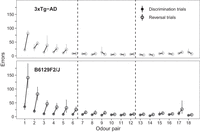
Mean number of errors (±95% CI) made by 3xTg-AD and B6129F2/J mice on the discrimination and reversal trials for each odor pair. The difference scores (reversal errors − discrimination errors) are indicated by the lines connecting each odor pair.
Total errors during odor discrimination and reversal learning pairs
For each odor pair, we analyzed the number of errors during discrimination and reversal learning and the difference in the total number of errors between reversal and discrimination learning.
An ANCOVA with age as the covariate found no significant difference between the total number of errors made per mouse by the B6129F2/J mice (171 ± 60) and the 3xTg-AD mice (180 ± 70) during the discrimination trials (F(1,30) = 0.18, P = 0.68, η2G = 0.006) (Fig. 2A). The variances did not differ between genotypes on the total errors made during discrimination trials (W(1,31) = 0.015, P = 0.903); thus, the variability within genotypes did not differ. However, the B6129F2/J mice made significantly more total errors (481 ± 160) than the 3xTg-AD mice (283 ± 121) during the reversal trials (F(1,30) = 12, P < 0.001, η2G = 0.29) (Fig. 2B).
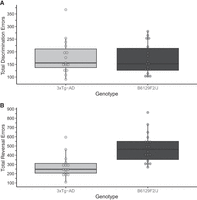
Number of errors made during odor discrimination learning (A) and reversal learning (B) by 3xTg-AD and B6129F2/J mice. The boxes represent the interquartile range (IQR), the bars in the middle of each box show the medians, the borders of each box show the 25th and 75th percentiles, and the whiskers extend to the furthest points within 1.5 interquartile ranges.
Age effects on total errors during discrimination and reversal trials
There was no significant correlation between the number of errors made on discrimination learning trials across all odor pairs and the age of either the B6129F2/J (r = 0.042, P = 0.87) or the 3xTg-AD (r = −0.037, P = 0.895) mice (Fig. 3A). There was also no significant correlation between total errors and age on the reversal learning trials for either the B6129F2/J (r = 0.11, P = 0.66) or the 3xTg-AD (r = −0.11, P = 0.685) mice (Fig. 3B).
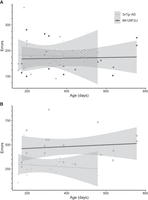
Correlation between mouse age and the number of errors made across all 18 discrimination learning pairs (A) and all 18 reversal learning trials (B).
Learning to learn
The sequence of odor pairs (Fig. 1) was divided into thirds, and ANCOVAs with age as the covariate were used to analyze the number of errors on the odor discrimination and reversal learning trials in each third.
There were no significant effects of genotype or odor pair and no significant interactions between genotype and odor pair in the first (pairs 1–6), second (pairs 7–12), or last (pairs 13–18) third of the odor pairs on the discrimination learning trials (Ps ≥ 0.058) (Fig. 1).
In the first third of odor pairs (pairs 1–6), there was a significant effect of genotype on the number of errors in reversal learning (F(1,23) = 8.2, P = 0.009, η2G = 0.057), with the B6129F2/J mice (60 ± 67) making more errors than the 3xTg-AD mice (36 ± 41), but no significant effect of odor pair (F(2.6,59) = 1.3, P = 0.27, η2G = 0.046) or an interaction between genotype and odor pair (F(2.6,59) = 1.1, P = 0.34, η2G = 0.039) (Fig. 1). There were no significant effects of genotype or odor pair on the number of errors in the second third (pairs 7–12) of reversal odor pairs (Ps ≥ 0.12) or the final third of reversal trials (Ps ≥ 0.09).
Difference scores in errors between the discrimination and reversal learning
ANCOVAs with age as the covariate were conducted to examine the differences between the errors on the discrimination and reversal trials in each third of the odor pairs (Fig. 1). In the first third of odor pairs (pairs 1–6), there were significant effects of genotype (F(1,22) = 15, P < 0.001, η2G = 0.094), with the B6129F2/J mice (45 ± 64) having greater difference scores than the 3xTg-AD mice (20 ± 41). There was no significant effect of odor pair (F(2.3,50) = 1.4, P = 0.25, η2G = 0.051) or a significant interaction between genotype and odor pair (F(2.3,50) = 0.68, P = 0.53, η2G = 0.025). There were no significant genotype or odor pair effects on the second third of odor pairs (pairs 7–12; Ps ≥ 0.12) or on the last third of odor pairs (pairs 13–18; Ps ≥ 0.09). Pearson's correlations between the age of the mice and the difference scores were not significant for either the B6129F2/J (r = 0.043, P = 0.454) or the 3xTg-AD (r = −0.024, P = 0.703) mice (Fig. 4).
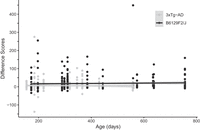
Correlations between mouse age and the difference scores (reversal − discrimination) for 3xTg-AD and B6129F2/J mice across all 18 odor pairs.
Near errorless learning on discrimination and reversal trials
There were 35 times where mice made a single error on the initial discrimination of the odor pair and three times where a mouse made zero errors (Fig. 5A), with 21 different mice learning at least one discrimination with only one or zero errors. One B6129F2/J mouse had one or fewer errors on the initial discrimination of six odor pairs. The effect of odor pair was significant (χ217 = 43, P < 0.001), with the majority of errorless discriminations occurring on odor pairs 8–18. As shown in Figure 5A, the number of errorless odor pair discriminations increased from four in the first third of trials to 12 in the second third and 22 in the last third of the odor pairs. Although the 3xTg-AD mice made fewer errors on the discrimination learning trials than the B6129F2/J mice, there was no significant genotype difference on the frequency of errorless learning (χ21 = 3.4, P = 0.064).
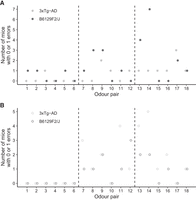
The number of 3xTg-AD and B6129F2/J mice showing errorless learning on each odor pair during discrimination learning (A) and reversal learning (B).
There were 30 instances of mice making a single error on the reversal trials and eight instances of mice making zero errors (Fig. 5B), with 18 mice learning at least one reversal with one or zero errors. The effect of genotype was significant (χ21 = 3.9, P = 0.0479), with more 3xTg-AD mice than B6129F2/J mice having errorless reversal learning. One 3xTg-AD mouse had one or fewer errors on the reversal learning of five odor pairs. The effect of odor pair was significant (χ217 = 49, P < 0.0001), with the majority of errorless discriminations occurring on odor pairs 8–18. The number of errorless odor pairs increased from zero in the first third of odor pairs to 19 in the second third and 19 in the final third.
Age and errorless learning
There was no significant correlation between the age of the mice and the number of near errorless odor discriminations across all odor pairs for either the B6129F2/J (r = −0.33, P = 0.174) or the 3xTg-AD (r = −0.45, P = 0.089) mice (Fig. 6A). There was no significant correlation between the age of the mice and the number of near errorless odor pairs made on reversal learning across all odor pairs for the 3xTg-AD mice (r = −0.22, P = 0.432) but there was for the B6129F2/J mice (r = −0.54, P = 0.0209) (Fig. 6B), indicating that the B6129F2/J mice made fewer errorless reversal discriminations as they got older.
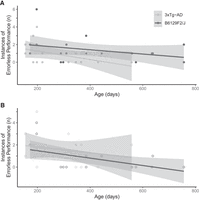
Correlation between mouse age and the number of instances of near errorless performance across the 18 discrimination learning trials (A) and all 18 reversal learning trials (B).
Long-term memory retest
Because 3xTg-AD mice have a shorter life span than B6129F2/J mice (Rae and Brown 2015), fewer 3xTg-AD mice (nine out of 15) than B6129F2/J mice (15 out of 18) survived to be given the retest. This also resulted in different age ranges on the retest, with the 3xTg-AD mice having ages from 287 to 571 d while the B6129F2/J mice had ages ranging from 275 to 888 d. An ANCOVA with age as the covariate found no significant effect of genotype on the number of errors made during the retest (F(1,21) = 1.3, P = 0.26, η2G = 0.06) (Fig. 7A). A paired t-test showed that the mean number of errors made during the retest (3xTg-AD: 47 ± 30; B6129F2/J: 36 ± 19) was significantly higher than the number of errors made on the final odor discrimination (3xTg-AD: 10 ± 12; B6129F2/J: 4.6 ± 4.8) for both genotypes (3xTg-AD: t8 = 4.8, P = 0.00143; B6129F2/J: t14 = 6.9, P < 0.0001) (Fig. 7A).
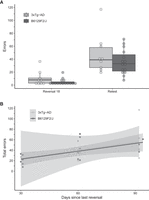
(A) Errors made during reversal learning of odor pair 18 and the retest by 3xTg-AD and B6129F2/J mice. The boxes represent the interquartile range (IQR), the bars in the middle of each box show the medians, the borders of each box show the 25th and 75th percentiles, and the whiskers extend to the furthest points within 1.5 interquartile ranges. (B) Correlation between days since the reversal learning of pair 18 and the number of errors made on the retest for 3xTg-AD and B6129F2/J mice.
Age effects on the retest
Pearson correlations showed no significant relationship between the age of the mice and the number of errors made on the retest for the B6129F2/J mice (r = 0.34, P = 0.214), but the 3xTg-AD mice showed a significant decrease in errors as age increased (r = −0.67, P = 0.05).
Time from last test effect
All mice showed an increase in the number of errors on the retest, and when the time since last reversal was binned into 30-, 60-, and 90-d groups, an ANCOVA showed no significant genotype or time until retest effects (Ps ≥ 0.14). There was no significant difference in the number of days between the last reversal task and the retest for the B6129F2/J (55 d ± 24 d) or 3xTg-AD (75 d ± 23 d; t18 = 2, P = 0.062) mice. However, Pearson correlations showed a significant, positive correlation between the number of errors made on the retest and the days since the final reversal for the B6129F2/J mice (r = 0.62, P = 0.013) but not for the 3xTg-AD mice (r = 0.4, P = 0.286) (Fig. 7B).
Discussion
The number of errors made on both the discrimination and the reversal trials decreased as the mice progressed through the odor pairs. This result supports prior research that showed decreasing errors on a series of four odor discriminations and reversals (Caglayan et al. 2021). What is unique about the present study is that the decrease in errors reached near errorless performance in both the discrimination trials and the reversal trials, though this high level of performance was apparent earlier in the discrimination than the reversal trials. The high level of performance suggests that the mice were able to develop a learning strategy during the earlier discrimination pairs and apply this to the later pairs. The instances of one or fewer errors in both the discrimination and reversal trials suggests that both the 3xTg-AD and B6129F2/J mice were able to form learning sets. As the mice had no information regarding which odor would be rewarded on the discrimination trials, this is the highest level of performance that could theoretically be achieved. The poorer performance on the long-term memory retest than in the final reversal trial suggests that by the end of the odor pairs, the mice were not necessarily remembering which odor was rewarded between days.
Contrary to our hypothesis that the 3xTg-AD mice would have poorer performance, they actually showed better performance than the wild-type B6129F2/J mice on many measures.The 3xTg-AD mice made fewer errors on the initial training than the B6129F2/J mice and made fewer errors on the first third of odor pairs during the reversal trials. They also displayed more instances of near errorless learning on the reversal trials than the B6129F2/J mice and made fewer total errors across all discrimination and reversal trials. It appears that the better performance by the 3xTg-AD mice was largely due to their having less difficulty with the reversal trials compared with the B6129F2/J mice. This is supported by the lack of differences between the 3xTg-AD and B6129F2/J mice on their performance on the discrimination trials and the greater difference scores between the errors made on the discrimination and reversal trials of each odor pair among the B6129F2/J mice compared with the 3xTg-AD mice. It is possible that the 3xTg-AD mice did not have as strong a memory of the reward pairings from the initial discriminations of the odor pairs, which could make the reversal trials easier for them, while a stronger memory among the B6129F2/J mice could have resulted in greater perseveration and thus more errors on the reversals.
We did not have enough male mice in this study to examine sex differences in depth, but the very small effect size (η2G = 0.004) that we saw when examining sex differences on the initial training suggests that sex differences did not play a major role. The large range in ages of the mice (5–24 mo) allowed us to examine the effects of age on learning. A significant effect of age was a decrease in instances of errorless reversals among the B6129F2/J as age increased, an effect that was not present in the 3xTg-AD mice. Aged rats have been shown to have a moderate impairment compared with young rats on an olfactory reversal task but not on the initial discrimination (Schoenbaum et al. 2002).
The other significant effect of age was a decrease in errors on the retest among the 3xTg-AD mice as age increased, while there was no such effect among the B6129F2/J mice. However, this effect should be interpreted with caution due to the decreased life expectancy of the 3xTg-AD mice compared with the B6129F2/J mice (Rae and Brown 2015), resulting in fewer of the 3xTg-AD mice remaining to test on the retest and a decreased range of ages on the retest among the 3xTg-AD mice (287–571 d) compared with the B6129F2/J mice (275–888 d). Mice of both genotypes showed a great deal of variability in performance across the tests. We did not find differences in the variability of mice between genotypes, but some individual mice stood out, such as the 3xTg-AD mouse, which made one or fewer errors on the reversal learning of five different odor pairs, or the B6129F2/J mouse, which made 231 errors on the reversal of odor pair 17. These mice highlight the broad range of performance among the mice and even between odor pairs within mice.
One limitation of this study, resulting from the way the program compiled results, is that we could not look at the accuracy on the second trial of each discrimination and reversal pair. This information would have been valuable to gauge the performance of the mice once they received the feedback on the first trial and had some information through which they could base their second response. We have since modified the program to allow us to collect such data.
Overall, this study demonstrates that mice are capable of near errorless learning on olfactory discrimination and reversal tasks, a level of performance not previously shown. We did not observe poorer performance in the 3xTg-AD mice compared with the wild-type B6129F2/J mice; in fact, the 3xTg-AD mice performed better than WT mice on some measures, such as errors during initial discrimination training, reversal pairs with errorless learning, and total errors. We also found no evidence of deficits in the older mice tested.
Brain damage and neurodegenerative disorders such as AD are normally equated with the impairment of sensory, motor, cognitive, or other brain functions. However, there are cases in which certain cognitive skills, musical memories, and motor learning skills are preserved in Alzheimer's disease (Eslinger and Damasio 1986; Beatty et al. 1994; Baird and Samson 2009; Vanstone and Cuddy 2009; Groussard et al. 2019). These may be considered as cases of “lesions without symptoms” (Gómez-Isla and Frosch 2022), but there are also cases in which brain lesions may result in improved cognitive functions. Paradoxical functional facilitation (PFF) occurs when brain damage facilitates behavioral functions. This can occur in two general ways: (1) PFF can be restorative, such as when brain damage brings a previously impaired behavior back to normal, or (2) PFF can be enhancing, such as when brain damage results in an increase in performance above that of control subjects (Kapur 1996). There are many case studies in which humans with brain damage, including frontotemporal dementia, primary progressive aphasia, Parkinson's disease, dementia with Lewy bodies, and Alzheimer's disease, have developed new artistic or musical skills (Miller et al. 1998, 2000; Crutch and Rossor 2006; Chakravarty 2011; Cipriani et al. 2019; Filippi et al. 2020; Geser et al. 2021).
There are numerous examples of PPF following lesions in animal studies. McDonald and White (1993, 2013) found that lesions of the fornix facilitated learning of a win–stay task, a task that was impaired following lesions of the dorsal striatum. These results suggested that the hippocampal system interfered “with learning simple stimulus–response contingencies” (McDonald and White 1993). Behavioral facilitation following hippocampal lesions has been found in numerous test paradigms, with numerous species and various mechanisms for causing hippocampal damage (for review, see Schwarting and Busse 2017). Lesions to the fornix in rats (Eichenbaum et al. 1986) and monkeys (Zola and Mahut 1973), as well as lesions to the entorhinal cortex in rats (Yee and Rawlins 1998), have been found to facilitate reversal performance. Using diffusion MRI, Falangola et al. (2020, 2021) found age-related cholinergic abnormalities in the basal forebrain and hippocampus (fimbria and fornix) of 3xTg-AD mice between 2 and 15 mo of age compared with age-matched control mice. Chen et al. (2023) found age-related changes in synaptic excitatory/inhibitory ratios in the medial entorhinal cortex of 3xTg-AD mice, with increased excitability of medial entorhinal stellate neurons in 10-mo-old mice due to impaired inhibitory synaptic transmission.
It is rare to find reports of functional facilitation in transgenic Alzheimer model mice. To our knowledge, this is only the third report of paradoxical functional facilitation in transgenic mouse models of AD, and all three findings are in the 3xTg-AD mice. Davis et al. (2014) reported increased hippocampal excitability in the 3xTg-AD mice, and we have reported facilitation of motor coordination, learning, and memory on the accelerating rotarod in 3xTg-AD mice (Stover et al. 2015; Garvock-de Montbrun et al. 2019). Now, we report the facilitation of olfactory discrimination reversal learning in the 3xTg-AD mice.
What neural mechanisms might underlie these examples of paradoxical functional facilitation in the 3xTg-AD mouse model? Kapur (1996) provided an extensive list of possible mechanisms, including the removal of inhibitory mechanisms, the alteration of E/I imbalance, alteration of neural circuits (cell assemblies), alteration of neural plasticity, disinhibition of latent neural connections, changes in synaptic sensitivity, and formation of new synaptic connections. Given the wide-ranging paradoxical functional facilitation effects that occur after hippocampal lesions (Schwarting and Busse 2017) and the focus on hippocampal deterioration underlying Alzheimer symptoms (Vyas et al. 2020; Babcock et al. 2021; Rao et al. 2022), the impairment of hippocampal function in AD may disinhibit other memory circuits in the brain, resulting in paradoxical functional facilitation. It would be interesting to learn about similar findings in other mouse models of AD.
Materials and Methods
Subjects
Male and female 3xTg-AD [B6;129-Tg(APPSwe,τP301L)1Lfa Psen1tm1Mpm/Mmjax; JAX 004807] and B6129F2/J mice (JAX 101045) were bred at Dalhousie University from parents purchased from the Jackson Laboratory. The 3xTg-AD mice have three mutations: the Swedish (K670N/ M671L) mutation to amyloid precursor protein (APP), a mutation to presenilin-1 (PS1; M146V), and a τ mutation (P301L) (Oddo et al. 2003). The B6129F2/J mice are the offspring of an F1 × F1 mating, itself the product of a cross of C57BL/6J females and 129S1/SvImJ males, and are the suggested controls for 3xTg-AD mice. Pups were weaned at 21 d of age and housed in same-sex groups of two to four in transparent polyethylene cages (35 × 12 × 12 cm) with ad libitum food (Purina rodent chow 5001) and tap water. Housing cages contained pine chip bedding and a polyvinyl chloride tube (5 cm diameter and 8 cm long) for enrichment. The housing room was on a 12:12-h reversed light/dark cycle with lights off at 9:30 a.m. Mice were genotyped using polymerase chain reaction by Dr. Chris Sinal (Department of Pharmacology, Dalhousie University) from ear punches taken at the time of weaning for individual identification. There were 33 mice included in this study and mice were randomly selected from the colony for testing, resulting in a wide range of ages tested (Table 1). All test procedures were approved by the Dalhousie University Committee on Animal Care (protocol 13-044).
Number (N), sex, and age of mice of each genotype tested
Apparatus
Two liquid dilution olfactometers (Knosys Olfactometers, Inc.), which were previously described (Slotnick and Restrepo 2005; Roddick et al. 2014, 2016, 2022), were used. Air was sent through a charcoal filter, after which it was split into two pathways: one with clean air, and the other through a manifold that controlled the air flow through saturation bottles and into a T-junction, where clean and odorized airflows were mixed. A final valve diverted the airflow to the exhaust or to the odor sampling port, which was open to the animal chamber. The odor sampling port contained an infrared beam to detect nose pokes, a reinforcement tube delivering the water reward, and a sensor that detected when the mice were licking the reinforcement tube.
Odors
All odorants (Table 2) were purchased from Aldrich Chemical Company, Inc., and diluted in heavy mineral oil. For each mouse, the rewarded (S+) and nonrewarded (S−) odors were randomly assigned during each discrimination task.
Odor pairs used for each discrimination task
Water restriction
Ten days prior to the start of testing, mice were individually housed and placed on water restriction. Mice were weighed daily and given measured amounts of mash (powdered food pellets mixed with water) to maintain their weight at ∼85% of free-feeding weight. They had ad lib access to food during water restriction.
Behavioral testing
All behavioral testing was done during the dark phase of the light/dark cycle. Behavioral testing was done in four phases: response training, odor discrimination training, odor discrimination and reversal learning set formation, and a retest for long-term memory.
In response training, the mice were initially trained for 20 trials to lick the reinforcement tube and received a water reward for simply licking the tube. The intertrial interval increased from 0.1 to 12 sec over the 20 trials. During the next stage of training, a rewarded stimulus (S+) odor was introduced, and the mice were required to keep their head in the odor sampling port while the final valve diverted the odor into the port. The length of time the mice were required to keep their head in the odor sampling port increased from 0.1 to 1.1 sec over 120 trials. This stage of training was completed when the mice performed 20 trials with the final valve on for 1.1 sec.
Odor discrimination training involved introducing the unrewarded (S−) odor. During this stage of training, the mice were presented with a stimulus odor—either rewarded (S+) or unrewarded (S−)—when they inserted their head into the odor sampling port. When the mice were presented with the S+, they received a water reward (3 µL) for licking the reinforcement tube. Trials were initiated by the mice poking their nose into the odor sampling port, with a minimum intertrial interval of 4 sec. They were first presented with 20 trials of the S+ odor. If they did not respond to at least 85% of these S+ presentations, they were placed back on the response training. They were then presented with blocks of 20 trials consisting of 10 S+ and 10 S− trials. This continued until the mice achieved 85% correct responses on a block.
Mice were then moved to the discrimination and reversal learning stage, which consisted of a two-odor discrimination problem using odor pair 1. They were given blocks of 20 trials (10 S+ and 10 S−) until they achieved 85% correct. They were then presented with a reversal problem using odor pair 1 (in which the S+ odor became the S− odor and vice versa) and given blocks of 20 trials (10 S+ and 10 S−) until they achieved 85% correct. This pattern of presenting a discrimination task followed by a reversal task was repeated with each of the 18 odor pairs.
Mice were retested on the last odor pair (pair 18) 1, 2, or 3 mo after finishing the reversal learning of odor pair 18 to assess long-term memory of that odor pair. The mice were given blocks of 20 trials (10 S+ and 10 S−) until they achieved 85% correct.
Statistical analyses
Data were analyzed using R version 4.2.2 (https://www.R-project.org) using the “tidyverse” (Wickham et al. 2019) and “rstatix” (https://CRAN.R-project.org/package=rstatix) packages. The number of errors made prior to reaching criterion was used as the measure of learning. Due to the small number of male mice included, the lack of a significant sex difference, and the small effect size in the number of errors made on training (F(1,28) = 0.12, P = 0.73, η2G = 0.004), sexes were pooled together for analyses. The 3xTg-AD mice (283 d ± 118 d) were significantly younger than the B6129F2/J mice (409 d ± 197 d; t28 = −2.3, P = 0.0304). This difference in ages is likely the result of the random selection of mice from the colony, combined with the fact that 3xTg-AD mice have a shorter life span than B6129F2/J mice (Rae and Brown 2015). Due to this difference in ages, ANCOVAs with age as a covariate were used to control for age differences, and age was correlated with errors made to examine age-related changes in error rates. Greenhouse–Geisser corrections were applied when Mauchly's test for sphericity detected that within-subject factors violated sphericity. Pearson's χ2 tests, with Yate's continuity corrections for examining the genotype effects, were run on the number of mice showing errorless learning, defined as making only zero or one errors on a discrimination task or reversal. To assess the effects of age, Pearson's correlations were used. Levene's tests were used to assess equality of variances between genotypes.
Data deposition
The data set used in this study are available at https://doi.org/10.5683/SP3/4M5IIB.
Competing interest statement
The authors declare no competing interests.
Acknowledgments
This work was supported by a Discovery Grant from the Natural Sciences and Engineering Research Council of Canada (RG7441) to R.E.B.
Author contributions: K.M.R. and H.M.S. conceived the study. K.M.R. collected and analyzed the data. K.M.R. and R.E.B. wrote the manuscript.
Footnotes
-
[Supplemental material is available for this article.]
-
Article is online at http://www.learnmem.org/cgi/doi/10.1101/lm.053840.123.
- Received June 21, 2023.
- Accepted October 23, 2023.
This article is distributed exclusively by Cold Spring Harbor Laboratory Press for the first 12 months after the full-issue publication date (see http://learnmem.cshlp.org/site/misc/terms.xhtml). After 12 months, it is available under a Creative Commons License (Attribution-NonCommercial 4.0 International), as described at http://creativecommons.org/licenses/by-nc/4.0/.