Loss of BDNF or its receptors in three mouse models has unpredictable consequences for anxiety and fear acquisition
- The Lundbeck Foundation Research Centre, MIND, Danish Research Institute of Translational Neuroscience DANDRITE, Nordic EMBL Partnership, Department of Biomedicine, Aarhus University, DK-8000C Aarhus, Denmark
Abstract
BDNF-induced signaling is essential for the development of the central nervous system and critical for plasticity in adults. Mature BDNF signals through TrkB, while its precursor proBDNF employs p75NTR, resulting in activation of signaling cascades with opposite effects on neuronal survival, growth cone decisions, and synaptic plasticity. Accordingly, variations in the genes encoding BDNF and its receptors sometimes have opposing influences in psychiatric disorders, and despite the vast literature, consensus is lacking about the behavioral consequences of disrupting the activity of the BDNF system in mice. To dissect the behavioral traits affected by dysfunctional BDNF/TrkB vs. proBDNF/p75NTR activity, we studied Bdnf+/−, Ntrk2+/−, and Ngfr−/− mice in parallel with respect to exploratory behavior, anxiety, startle, and fear acquisition. Our data reveal that the effect of proBDNF/BDNF and its receptors on behavior is more complex than expected. Strikingly, receptor-deficient mice displayed increased risk-taking behavior in the open field and elevated plus maze, whereas lack of proBDNF/BDNF had the opposite effect on mouse behavior. On the other hand, although TrkB signaling is instrumental for acquisition of fear memory in an inhibitory avoidance experiment, lack of p75NTR or proBDNF/BDNF conferred increased memory in this task. Importantly, none of the genotypes displayed any deficits in startle reflex, indicating unimpaired response to shock. The combined data illustrate an apparent paradox in the role of the BDNF system in controlling complex behavior and suggest that the individual components may also engage independently in separate signaling pathways.
Brain-derived neurotrophic factor (BDNF) stimulates a variety of neuronal populations in the developing and adult central nervous system (CNS). BDNF belongs to the neurotrophin family also encompassing nerve growth factor (NGF), neurotrophin-3 (NT-3), and neurotrophin-4 (NT-4), and potently induces survival and neurite outgrowth of developing CNS neurons (Chao 2003). On the other hand, BDNF acutely affects synaptic transmission and potentiation in a number of adult circuitries involving, for example, the hippocampus, amygdala, and the mesolimbic system (Minichiello 2009; Musumeci and Minichiello 2011). BDNF-induced signaling is mediated by the receptor tyrosine kinase TrkB, activating signaling cascades involving Akt, Erk, and PLCγ (Huang and Reichardt 2003). NT-3 and NT-4 can also activate TrkB, but coexpression with the pan-neurotrophin receptor p75NTR refines ligand fidelity and increases the affinity toward BDNF (Chao 2003).
BDNF is produced in a proform denoted proBDNF. Although maturation can take place both intracellularly by furin-like proprotein convertase cleavage and outside the cell by plasmin or matrix metalloproteinases, a significant amount of proBDNF is present in the extracellular fluid (Pang et al. 2004; Yang et al. 2009). Here, it can bind to and activate p75NTR independent of TrkB, resulting in the induction of cellular signaling with the opposite effects of mature BDNF. Thus, proBDNF/p75NTR initiates cascades leading to apoptosis of neurotrophic factor deprived neurons (Teng et al. 2005), and affects axon guidance by signaling growth cone collapse (Sun et al. 2012). The bidirectional effects of proBDNF/BDNF are beautifully illustrated in hippocampal plasticity; both proBDNF and mature BDNF are released in an activity-dependent manner, and extracellular conversion of proBDNF to mature BDNF by plasmin and subsequently TrkB activation is essential for sustaining late-phase long-term potentiation (LTP) (Pang et al. 2004). Conversely, in the absence of conversion, proBDNF signaling through p75NTR is a prerequisite to the induction of long-term depression (LTD) (Rosch et al. 2005; Woo et al. 2005).
To delineate how these opposing biological roles of proBDNF/BDNF translate into behavioral traits, we have studied how BDNF and its receptors contribute to anxiety and fear conditioning in mice (Table 1).
Animal number in the six experimental groups for each of the four behavioral tests
Results
BDNF, TrkB, and p75NTR deficiency has opposing impact on exploratory behavior
We first monitored p75NTR knockouts (Ngfr−/−), BDNF heterozygotes (Bdnf+/−), and TrkB heterozygotes (Ntrk2+/−) together with their respective wild-type control mice in an open field for 20 min to assess basal activity levels (Fig. 1). The distance travelled by BDNF heterozygous mice was markedly reduced (46.2 ± 2.87 m vs. 59.5 ± 4.08 m, P = 0.01) and the mice displayed fewer entries (11.8 ± 3.29% vs. 19.3 ± 2.11%, P = 0.0009) and time spent in the center of the field (2.18 ± 0.43% vs. 4.38 ± 0.55%, P = 0.007), indicating increased anxiety levels compared to their wild-type littermates (Fig. 1A–C). Surprisingly, this phenotype was not present in mice lacking one allele of the BDNF receptor TrkB or in mice devoid in the proBDNF receptor p75NTR. Ntkr2+/− animals showed normal motor activity and exploratory behavior (Fig. 1D–F), whereas Ngfr null mice were highly hyperactive, traveling ∼1.5-fold longer than wild-type mice (91.7 ± 5.65 m vs. 59.0 ± 6.76, P = 0.01). Furthermore, contrasting the BDNF heterozygotes, p75NTR knockouts were more eager to enter the center of the field, indicating increased risk-taking behavior (21.2 ± 4.86% vs. 7.24 ± 0.66% of wild-types, P = 0.02) (Fig. 1G–I).
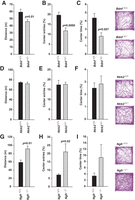
Motor activity is reduced in Bdnf+/− but increased in Ngfr−/− mice. BDNF heterozygotes and wild-type littermates (both n = 8), TrkB heterozygotes and wild-type littermates (n = 5 and n = 4, respectively), and p75NTR knockout and wild-type mice (n = 3 and n = 4, respectively) were tested in the open field test. (A–C) Anxiety-like behavior of BDNF heterozygotes illustrated by reduced (A) distance traveled (P = 0.01), (B) entries into the center of the open field relative to entries into the periphery (P = 0.0009), and (C) time spent in the center (P = 0.007). (D–F) Normal open field behavior of TrkB heterozygotes. (G–I) p75NTR knockouts are hyperactive, showing marked increase in (G) the distance traveled (P = 0.01), (H) entries into the center of the open field relative to entries into the periphery (P = 0.02), and (I) time spent in the center of the open field. Representative track plots are presented to the right.
Because these behavioral phenotypes could point toward differences in anxiety levels, we subjected the three transgenic lines to the elevated plus maze, a well-established paradigm to study anxiety-related behavior. BDNF heterozygous mice showed normal anxiety levels as the time in the open arms and the number of entries was comparable to that obtained for their wild-type littermates (Fig. 2A,B). Remarkably, reduced TrkB expression or lack of p75NTR translated into increased exploration of the open arms of the maze, a trait interpreted as reduced anxiety and increased risk-taking behavior (Fig. 2C–F). Thus, TrkB heterozygotes spent approximately twice as much time in the open arms compared to their littermate controls (P = 0.04) (Fig. 2C,D). Similarly, p75NTR knockouts displayed 48.5 ± 5.22% entries (P = 0.05) and spent 38.6 ± 7.14% time (P = 0.01) in the open arms as compared to 36.8 ± 3.09% and 17.1 ± 2.04%, respectively, for the wild-type animals (Fig. 2E,F). These findings illustrate that anxiety in response to a novel environment is affected in a paradoxical manner by proBDNF/BDNF and its receptors.
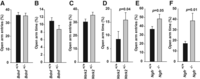
Loss of TrkB and p75NTR expression reduces anxiety. Testing sessions of 10 min in an elevated plus maze were carried out for each mouse and the number of entries and the time spent in the open arms measured. (A,B) Bdnf+/− mice display unchanged anxiety levels compared to controls (n = 8 of both genotypes). (C,D) TrkB heterozygotes (n = 11) exhibit reduced anxiety compared to wild-type littermates (n = 4) evidenced by the increased time spent in the open arms (P = 0.04). (E,F), p75NTR knockouts (n = 12) show markedly reduced anxiety levels compared to wild-type controls (n = 11) (E, P = 0.05; F, P = 0.01).
Contrasting roles of TrkB vs. BDNF and p75NTR in fear acquisition
Anxiety is an emotional state not directed against any specific object or context, as opposed to the related emotional state of fear, which is evoked by a specific stimulus. Dysfunction of the BDNF system has been critically linked to abnormal response to fear (Musumeci and Minichiello 2011), and we therefore subjected mice to the fear conditioning paradigm inhibitory avoidance. This experiment takes advantage of the natural preference of mice for the dark, and consists of a brightly lit room and a dark room separated by a guillotine door. On the training day, the mouse is placed in the bright room. When entering the dark room, the door closes and the mouse receives an electric shock (0.4 mA for 1 sec). One hour or 24 h later, the mouse is returned to the bright room and the latency to enter the dark room is interpreted as short-term and long-term fear memory, respectively. Importantly, 1 h after receiving the shock, the latency to enter the dark room was markedly increased, and to a similar extent for all genotypes (Fig. 3A–C), indicating that the BDNF system is dispensable for the acquisition of short-term fear memory. However, 24 h after training, Ntrk2+/− mice entered the dark room almost immediately with a latency of only 28.13 ± 13.10 sec, remarkably lower than the 209.39 ± 44.36 sec of their littermate controls (P = 0.008) (Fig. 3D), suggesting severely impaired formation of long-term fear memory. Intriguingly, both Bdnf+/− and Ngfr−/− mice displayed significantly increased fear memory as illustrated by latencies to enter the dark room on the test day of 309.97 ± 81.91 sec (P = 0.05) and 452.15 ± 80.72 sec (P = 0.02), respectively, compared to 163.23 ± 39.03 sec and 166.54 ± 35.63 sec for the corresponding wild-type controls (Fig. 3E,F). This suggests that reduced expression of proBDNF/BDNF or p75NTR may lead to the formation of stronger fear memory engram and enhanced retrieval.
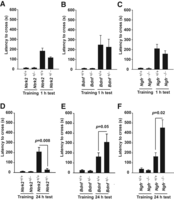
Fear memory is increased in BDNF and p75NTR deficient mice but impaired in TrkB heterozygotes. (A–C) All genotypes display normal acquisition of short-term fear memory (1-h test) (n = 5–13 of each genotype). (D) TrkB+/− mice are severely impaired in long-term fear memory (24-h test) (+/−, n = 6; +/+, n = 10) (P = 0.008). (E,F) Twenty-four hours post shock, Bdnf+/− and Ngfr−/− mice have increased fear memory compared to wild-type controls: (E) +/−, n = 7 and +/+, n = 9 (P = 0.05); (F) p75NTR KO, n = 6 and wild-type, n = 13 (P = 0.02).
To exclude that the observed phenotypes were due to abnormal immediate response to shock in general, we measured the startle reflex from the weight transduction of restrained animals exposed to varying sound intensities presented at random time intervals (Fig. 4). The startle response was of a similar absolute magnitude and increased in an identical manner with increasing dB for p75NTR knockouts and Bdnf+/− mice compared to control mice, demonstrating normal fear reaction (Fig. 4A,B). Curiously, TrkB heterozygotes displayed stronger startle response compared to littermate controls, indicating increased immediate reaction to fear-inducing events (Fig. 4C). Taken together, these results clearly show an opposing role of proBDNF/BDNF and p75NTR compared to TrkB in the acquisition of fear memory and in its retrieval.
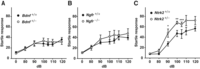
Stronger sound-induced startle response in TrkB heterozygous animals. (A–C) Restrained mice of the indicated genotypes were presented seven series of sound pulsed in random order at an inter-trial interval of 30 sec. Between four and nine animals of each genotype were used for experiments. Significance was assessed using one-tailed t-test. (*) P = 0.03, (**) P = 0.01, (***) P = 0.05.
Discussion
Synaptic plasticity in the hippocampus and amygdala is considered to be a central mechanism in the regulation of anxiety and fear conditioning. The BDNF system is critical for synaptic function and a vast number of studies have associated single nucleotide polymorphisms in the encoding genes with psychiatric disorders (Juhasz et al. 2011; Rakofsky et al. 2012; Park and Poo 2013). Unfortunately, behavioral studies in genetically engineered mouse models have, for the most, part yielded inconsistent results. For instance, Kernie et al. (2000) reported that BDNF heterozygotes display markedly increased locomotor activity compared to controls. However, this observation is questioned by several studies reporting unaltered activity levels in Bdnf+/− mice (MacQueen et al. 2001; Chourbaji et al. 2004, 2008; Liu et al. 2004; Koizumi et al. 2006; Zhu et al. 2009). Similarly, both normal anxiety levels (Chourbaji et al. 2004; Koizumi et al. 2006) and increased anxiety-related behavior (Chen et al. 2006; Chourbaji et al. 2008) have been reported to result from lack of one Bdnf allele. Controversial findings have also been reported regarding spatial memory in BDNF heterozygotes (Linnarsson et al. 1997; Montkowski and Holsboer 1997), but several studies have reported reduced contextual memory in context and cue-dependent fear conditioning (Liu et al. 2004; Chen et al. 2006) while one study found no memory impairment in the related fear conditioning paradigm inhibitory avoidance (MacQueen et al. 2001). Even more contradictory, transgenic overexpression of BDNF leads to severe deficits in inhibitory avoidance (Croll et al. 1999). Strikingly, conditional knockout (cKO) of BDNF in the forebrain region of adult mice results in loss of context-dependent fear conditioning (Monteggia et al. 2004), whereas forebrain-specific cKO of TrkB has no effect on fear memory formation but mice do show reduced spatial learning (Minichiello et al. 1999). In the case of p75NTR knockouts, some studies have observed increased spatial memory accompanied by reduced anxiety (Catts et al. 2008; Barrett et al. 2010) while other studies have reported both impaired spatial memory function and performance in an inhibitory avoidance task (Peterson et al. 1999) in addition to marked anxiety (Martinowich et al. 2012).
Some of these inconsistencies may potentially result from exposure of the animals to different stabling environments and stress from experimental handling. For example, environmental enrichment has been reported to significantly impact on the behavior of BDNF heterozygous mice (Chourbaji et al. 2008, 2011; Zhu et al. 2009). Moreover, p75NTR knockouts have deficit in coping and recovering from stressful experiences (Martinowich et al. 2012). Another critical factor is differences in genetic background between studies, as exemplified by the p75NTR KO phenotypes described by Peterson et al. (1999), Barrett et al. (2010), and Martinowich et al. (2012). Also, in the case of BDNF transgenic mice, gender differences have been reported for their response to environment and stress (Autry et al. 2009; Chourbaji et al. 2012). Regardless the reason, it has been close to impossible to draw any firm conclusions about the behavioral consequences from interfering with the BDNF system using genetically modified mice.
To minimize the influence from these confounding factors, we have here compared male littermates of Bdnf+/−, Ntkr2+/−, and Ngfr−/− mice on C57/BL6J genetic background, housed in the same stable, analyzed in parallel, and handled during experimentation by the same person.
We found that proBDNF/BDNF signaling is critically involved in acquisition of long-term fear memory and in controlling anxiety-related behavior. However, we also observed that the role of the individual components is more complex than might have been expected. The inability of TrkB heterozygotes to convert short-term into long-term memory in the inhibitory avoidance task is noteworthy considering that forebrain-specific TrkB cKOs display intact memory in this task (Minichiello et al. 1999). Efficient conditional TrkB deletion in these mice does not occur until P15, suggesting that loss of TrkB is critical for formation of fear memory circuits during embryonic and early postnatal development. In fact, full TrkB knockouts surviving until the early postnatal days display some deficits in hippocampal synaptogenesis and neuronal survival (Alcantara et al. 1997; Silos-Santiago et al. 1997; Martinez et al. 1998). As deficient fear memory is not recapitulated in BDNF heterozygotes, it is possible that alternative mechanisms are involved. Indeed, mice devoid in the TrkB ligand NT-4, like the Ntkr2+/− animals, display intact short-term but impaired long-term fear memory (Xie et al. 2000). Also, there is increasing evidence of TrkB activation in a manner that is independent of neurotrophins. Thus, a recent study reported that cortical development requires neurotrophin-independent TrkB transactivation (Puehringer et al. 2013).
Surprisingly, BDNF heterozygotes and p75NTR knockouts displayed a fear memory phenotype opposite to that of TrkB heterozygous mice, suggesting that lack of proBDNF/p75NTR activity leads to an abnormal increase in fear independent of TrkB. The neuronal mechanism remains unclear, but the induction of LTD is known to be proBDNF/p75NTR dependent, and is highly facilitated by both acute and chronic stress (Xu et al. 1997; Holderbach et al. 2007). Future studies should reveal the specific role of these molecules in the wiring and plasticity of fear circuitries, but it is tempting to speculate that reduced proBDNF/p75NTR activity may contribute to the development of psychiatric conditions characterized by abnormal fear such as phobia and post-traumatic stress disorder syndrome.
The present study also reveals unexpected roles of BDNF and its receptors in anxiety-related behavior. Unlike Bdnf+/− mice, TrkB heterozygotes and p75NTR knockouts share a significantly increased risk-taking behavior, a phenotype also reported for TrkB cKO mice (Zorner et al. 2003), suggesting that this trait may be affected by postnatal activation of the TrkB/p75NTR receptor complex by proteins other than BDNF, possibly NT-3 and NT-4.
However, some of these surprising phenotypes of BDNF and receptor mutant mice may also be due to differential compensatory reactions, both during development and in adult mice, potentially involving a myriad of environmental, genetic, and epigenetic interactions. This may affect neuronal systems in a different and unpredictable manner leading to a highly complex effect on behavior of the three mouse models used in the present study.
Taken together, our data illustrate that lack of the individual components of the proBDNF/BDNF signaling complex has unexpected and often opposing effects on specific behavioral traits, suggesting that ligands and receptors may participate in separate signaling cascades independent of each other. For instance, BDNF knockout mice lack expression of both proBDNF and BDNF, but the relative balance between the two may well be regulated by the behavioral challenge to which the animals are subjected. Thus, in some paradigms the behavioral response may copy those of TrkB heterozygotes while in other situations the phenotype more resembles that of p75NTR knockouts. To increase complexity further, proBDNF can also bind to sortilin and this receptor can heterodimerize with both p75NTR and Trk receptors to modify their functions (Nykjaer et al. 2004; Teng et al. 2005; Vaegter et al. 2011). Thus, it appears that BDNF, TrkB, and p75NTR engage in an intricate network with co-receptors that may well be by far more complicated than previously appreciated. Not only may the number of interactors be large but also the dynamics of their expression may be subject to context dependent regulation.
Materials and Methods
Animal experiments
Bdnf+/− (Ernfors et al. 1994), Ntrk2+/− (Klein et al. 1993), and Ngfr−/− (Lee et al. 1992) mice were from the National Cancer Institute, Bethesda, MD (Lino Tessarollo), Cornell University Medical College, New York, and Jackson Laboratories, Maine, respectively. In the presented experiments, all mice lines had been backcrossed for 10 generations into C57/BL6Jbom (Taconic) and littermate controls were used for experiments (Table 1). All experiments were approved by the Danish Animal Experiments Inspectorate under the Ministry of Justice (Permit 2011/561-119) and carried out according to institutional and national guidelines. All animals were bred and housed at the Animal Facility at Aarhus University. Animals were housed in groups of up to five mice per plastic cage (42 × 25 × 15 cm) under pathogen-free conditions with a 12-h light/12-h dark schedule and fed standard chow (Altromin #1324) and water ad libitum. Cages were cleaned every week and supplied with bedding and nesting material, a wooden stick, and a metal tunnel. Behavioral experiments were carried out using 12- to 16-wk-old male mice during their light cycle between 9 a.m. and 5 p.m. Each of the behavioral tests described below was carried out using naïve animals tested in a randomized order by an investigator blinded to the mouse genotype. No animals were excluded from the subsequent analysis. At the end of the experiment, animals were sacrificed by cervical dislocation.
Exploratory and anxiety-related behavior
For locomotor activity and anxiety-related behavior, mice were tested in an open field test consisting of a 40 × 40 × 35-cm clear Plexiglas arena. Mice were placed in the corner of the arena and their activity was recorded over a 20-min session. The percentage of time in the center quadrant of the open field (13 × 13 cm) was calculated and also the percentage of entries into the center quadrant was calculated as center entries/(center entries + periphery entries) × 100. Mice were also tested in an elevated plus maze raised 40 cm above the floor, and consisting of two opposite enclosed arms with 15-cm-high opaque walls and two opposite open arms of the same size (35 × 5 cm). Testing sessions of 10 min were carried out for each mouse and the number of entries and the time spent in the open arms measured. The percentage of entries into the open arms was calculated as open arm entries/(open arm entries + closed arm entries) × 100. Both tests were set up in a dimly lit room under a video camera connected to a computer under the control of the Any-maze tracking system.
Inhibitory avoidance
The experimental setup for inhibitory avoidance (Gemini Avoidance System, San Diego Instruments) consists of a brightly lit room and a dark room separated by a guillotine door. The mouse is placed in the bright room. When entering the dark room, the door closes and the mouse receives an electric shock (0.4 mA for 1 sec). The mouse is returned to the bright room 1 h or 24 h later, respectively, and its latency to enter the dark room is recorded.
Startle response
Experiments measuring startle response to varying sound pulses were performed essentially as described in Fadok et al. (2009) using a StartFear apparatus from Panlab. Restrained mice were first habituated to the apparatus for 5 min and then exposed to seven series of sound pulses (0, 80, 90, 100, 105, 110, 120 dB) presented in a random order with an inter-trial interval of 30 sec.
Statistics
Naïve mutant mice and littermate controls were used once. As the three controls groups were obtained by heterozygous breeding, the behavior of the controls should only be compared to their mutant littermates and not across groups. Error bars are standard error of mean. Unless mentioned otherwise, significance was evaluated using two-tailed t-test.
Acknowledgments
This study was funded by the Lundbeck Foundation (A.N. and S.G.); the Danish Council for Independent Research, Medical Research (O.S. and S.G.); the Danish Council for Technology and Innovation (D.O.); and Fonden til Forskning af Sindslidelse (S.G.). We thank Benedicte Vestergaard and Anja Aagaard Pedersen for excellent technical assistance.
Footnotes
-
↵1 Corresponding authors
E-mail sg{at}biokemi.au.dk
E-mail an{at}biokemi.au.dk
- Received June 7, 2013.
- Accepted July 10, 2013.
- © 2013, Published by Cold Spring Harbor Laboratory Press
This article is distributed exclusively by Cold Spring Harbor Laboratory Press for the first 12 months after the full-issue publication date (see http://learnmem.cshlp.org/site/misc/terms.xhtml). After 12 months, it is available under a Creative Commons License (Attribution-NonCommercial 3.0 Unported), as described at http://creativecommons.org/licenses/by-nc/3.0/.