Neuronal nitric-oxide synthase deficiency impairs the long-term memory of olfactory fear learning and increases odor generalization
- Department of Anatomy and Neurobiology, University of Tennessee Health Science Center, Memphis, Tennessee 38163, USA
Abstract
Experience-induced changes associated with odor learning are mediated by a number of signaling molecules, including nitric oxide (NO), which is predominantly synthesized by neuronal nitric oxide synthase (nNOS) in the brain. In the current study, we investigated the role of nNOS in the acquisition and retention of conditioned olfactory fear. Mice lacking nNOS received six training trials, each consisting of an odor-CS co-terminating with a foot shock-US. Mice showed reduced freezing responses to the trained odor 24 h and 7 d after training, compared to wild-type mice. Pretraining systemic injections of the NO donor, molsidomine, rescued fear retention in nNOS knockout mice. In wild-type mice, pretraining systemic injections of L-NAME, a nonspecific nNOS blocker, disrupted odor-CS fear retention in a dose-dependent manner. To evaluate whether NO signaling is involved in generalization of fear memories, nNOS knockout mice and wild-type mice receiving L-NAME were trained to one odor and tested with a series of similar odors. In both cases, we found increased generalization, as measured by increased freezing to similar, unpaired odors. Despite the impairment in fear memory retention and generalization, neither mice receiving injections of L-NAME nor nNOS knockout mice showed any deficits in either novel odor investigation time or odor habituation, suggesting intact olfactory perception and short-term memory olfactory learning. These results support a necessary role for neuronal NO signaling in the normal expression and generalization of olfactory conditioned fear.
The ability to learn and retain memories is dependent on several transmitters. Currently, there is much interest in the involvement of nitric oxide (NO) signaling in long-term memory formation (Bredt and Snyder 1992; Hawkins et al. 1994; Garthwaite 2008; Kelley et al. 2011). NO is generated from the amino acid L-arginine by the enzyme NO synthase (NOS) and functions as a retrograde neurotransmitter. Due to the diffusible nature of NO and its relationship with NMDA receptor activation, neurons containing the neuronal isoform of NOS (nNOS) could be involved in driving synaptic strength changes during learning processes such as long-term memory (Hawkins et al. 1994; Zhuo et al. 1994; Garthwaite 2008).
Fear conditioning is a useful tool in studying the neuronal mechanisms involved in the formation of long-term memory and fear-related systems. Rodents can quickly and reliably learn a fear association between a conditioned stimulus (CS) and an aversive stimulus (US), such as a foot shock (Young and Fanselow 1992). The role nNOS plays in fear learning has been investigated using contextual fear conditioning, as well as visual and auditory cues as the CS (Schafe et al. 2005; Kelley et al. 2010, 2011; Overeem et al. 2010). And although the nNOS inhibitor 7-nitroindazole showed no disruption in the acquisition and expression of the contextual fear conditioning (Maren 1998), it was demonstrated that animals lacking the nNOS gene (Nos1or nNOS knockout) have shown deficits in fear conditioning paradigms to both contextual and cued associations (Kelley et al. 2009, 2010). Furthermore, the blockade of nNOS signaling in limbic areas involved with aversive learning decreased the fear responses to the CS (Schafe et al. 2005; Resstel et al. 2008).
In addition to cognitive and emotional memories associated with NO signaling, odor processing information can also be related to nNOS, which is expressed in the olfactory system (Gotti et al. 2005). Highly developed, the rodent olfactory system is involved in social interaction, feeding behavior, and protection during threatening situations. nNOS activation has been associated with olfactory memories that play a role in social and maternal recognition (Kendrick et al. 1997; Juch et al. 2009). However, the role of nNOS transmission in an aversive learning to odors is still unknown. Recent studies have shown that odors can be associated with foot shock in the Pavlovian fear conditioning paradigm, and the odor-CS acquires aversive valence to induce fear responses, such as freezing and potentiated startle responses (Otto et al. 2000; Paschall and Davis 2002; Jones et al. 2005). Olfactory fear processing may differ from contextual or auditory/visual fear. It is well established that olfactory projections from olfactory bulb to limbic and cortical areas lack thalamic relay (see Slotnick 2001) and fear learning modulation using the olfactory system can have unique characteristics for acquisition and retention studies.
The aim of this study was to investigate whether mice lacking the nNOS gene exhibit deficits in the olfactory fear learning paradigm and memory generalization. Furthermore, we also investigated if the absence of nNOS in mice is able to disrupt the odor detection and olfactory habituation. We found that nNOS knockout mice show deficits in fear memories to olfactory cues. The administration of an NO donor (molsidomine) can rescue the fear learning deficits in nNOS knockout mice, while the NO signaling blockade by L-NAME impairs olfactory fear association in wild-type mice, demonstrating that the nNOS activation is involved with long-term memory to olfactory fear learning. Furthermore, we showed that the NO deficiency increased generalization to similar odors. In contrast, nNOS may not be necessary for odor perception or short-term memory.
Results
Knockout mice lack nNOS neurons in olfactory and associative areas in the brain
For behavioral experiments, animals were genotyped for the nNOS gene using standard PCR methods (Fig. 1A) and immunohistochemistry to nNOS was performed in wild-type and knockout mice. As demonstrated in Figure 1, wild-type mice expressed nNOS neurons in the lateral amygdala (Fig. 1B) and the dorsal hippocampus (Fig. 1C), areas know to be associated with aversive learning. Additionally, nNOS positive cells were found in the piriform cortex (Fig. 1D) and in the glomerular layer of the olfactory bulb (Fig. 1E), which are necessary for olfactory learning (McNamara et al. 2008). Knockout mice failed to express the nNOS cells in these areas, which is in accordance with previous studies (Kelley et al. 2009).
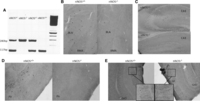
(A) Genotyping to the nNOS by standard PCR reveals the absence of mutant band (280 bp) in the wild-type (nNOS+/+) and the absence of the wild-type band (117 bp) in the nNOS knockout (nNOS−/−). (B) nNOS neurons immunolabeled in wild-type, but not knockout, mice in lateral amygdala, (C) dorsal hippocampus, (D) piriform cortex, and (E) glomerular layer in the olfactory bulb. (BLA) Basolateral amygdala, (BMA) basomedial nucleus, (Pir) piriform cortex, (Gl) glomerular layer in the olfactory bulb, (GrO) granular cell layer.
Mice lacking the nNOS show impairment in the olfactory fear learning
The aim of the first experiment was to investigate if mice lacking the nNOS gene show differences in olfactory fear learning. For this purpose, homozygous (nNOS+/+ and nNOS−/−) and heterozygous (nNOS+/−) mice were grouped by sex and submitted to a fear conditioning paradigm pairing a novel odor with foot shock. During the training session, all animals showed a significant increase in freezing responses following the CS + US presentation (Fig. 2A,B), and these responses were similar in both males and females (males, F(5,150) = 25.77, P < 0.0001; females, F(5,138) = 23.50, P < 0.0001). No statistical differences in the percentage of freezing were detected between the different genotypes (males, F(2,150) = 0.75; females, F(2,138) = 0.88).
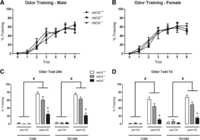
nNOS knockout mice show reduced freezing responses during an odor cued test 24 h and 7 d after training. Animals received six pairings of odor and foot shock during the training session. (A) Percent freezing per minute across successive trials on acquisition in males and (B) in females. The amount of the freezing increases during the session in wild-type (•), heterozygous (▪), and nNOS knockout (▴) mice. (C) Mean time spent freezing across the trained odor for each group. nNOS knockout mice show reduced freezing to the odor 24 h and (D) 7 d after the training. (*) Significant difference from the control wild-type group, (#) significant difference from the pre-CS to post-CS presentation, P < 0.05.
To analyze memory retention, the animals were submitted to two test sessions, 24 h and 7 d after training. During each test session, animals received five trials of the CS odor (E5) and the total percentage of the freezing was recorded. None of the groups exhibited freezing before the CS presentation. All groups showed increased freezing responses to the CS presentation (F(3,96) = 123.57, P < 0.0001). The nNOS+/+ mice displayed high levels of freezing to E5 24 h after training (males, 76.36 ± 4.95% time freezing, n = 10; females, 74.18 ± 4.12% time freezing, n = 10). A significant genotype factor effect was detected in the percentage of freezing during the test (F(2,48) = 36.24, P < 0.0001), but not in the gender factor (F(1,48) = 0.04, P = 0.84). Heterozygous nNOS mice showed similar levels of freezing to E5 odor (males, 60.78 ± 9.02% time freezing, n = 8; females, 63.21 ± 4.88% time freezing, n = 8) compared with wild-type mice. No statistical differences were detected in the post hoc analysis between nNOS+/+ and nNOS+/−. However, post hoc analysis revealed a significant difference in freezing responses between nNOS+/+ and nNOS−/− groups. Both male and female knockout mice showed reduced freezing levels to the E5 24 h after the training (males, 25.11 ± 7.99% time freezing, n = 10; females, 21.73 ± 6.41% time freezing, n = 8), demonstrating decreased fear memory retention in the knockout mice (Fig. 2C).
In the 7-d test session, all animals showed higher levels of freezing to the CS odor compared to the pre-CS (F(3,96) = 84.74, P < 0.0001). The wild-type mice still showed high levels of freezing to E5 (males, 61.54 ± 6.80% time freezing, n = 10; females, 67.59 ± 5.07% time freezing, n = 10). ANOVA detected a significant effect of genotype between groups (F(2,48) = 44.93, P < 0.0001), but not of gender (F(1,48) = 1.17, P = 0.28). Post hoc analyses showed no statistical differences between the nNOS+/− group (males, 44.53 ± 7.15% time freezing, n = 8; females, 48.79 ± 6.70% time freezing, n = 8) and nNOS+/+. However, significantly reduced freezing responses were detected in nNOS−/− mice (males, 11.18 ± 2.73% time freezing, n = 10; females, 15.67 ± 3.91% time freezing, n = 8) (Fig. 2D). Although nNOS−/− mice showed no deficits in the acquisition of the odor-fear memory, they displayed reduced fear to the trained odor both 24 h and 7 d later, suggesting that nNOS enzyme is involved in olfactory associative memory.
Molsidomine rescues olfactory fear learning deficits nNOS−/− mice
This experiment was conducted to determine if the deficits in the fear learning in knockout mice could be rescued by recovery of NO production. Thus, nNOS+/+ and nNOS−/− were injected with either the NO donor molsidomine (20 mg/kg) or saline 20 min before the acquisition, and the long-term memory retention was analyzed after 24 h and 7 d. Wild-type mice receiving molsidomine before the training showed freezing times similar to control experiments during the 24 h after test session (males, 70.49 ± 7.09 n = 8; females, 73.81 ± 5.37, n = 8). A significant difference in the treatment factor (F(2,45) = 33.21, P < 0.0001), but not in the gender effect (F(1,45) = 0.11, P = 0.74), was detected. Post hoc analyses revealed a significant reduction in freezing times in nNOS−/− mice that received saline (males, 24.37 ± 6.01%, n = 8; females, 23.19 ± 6.57%, n = 8) to the CS odor compared with nNOS+/+ and nNOS−/−+molsidomine groups (Fig. 3A). No differences were detected between wild-type mice and knockout mice treated with NO donor (males, 57.16 ± 4.61% time freezing, n = 10; females, 50.26 ± 5.48% time freezing, n = 9). These results show that olfactory fear learning deficits observed in the knockout mice can be rescued with an NO donor given during the acquisition.
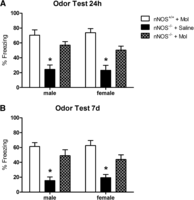
Pretraining nitric oxide donor molsidomine in nNOS knockout mice increases the freezing response during the test. Mice received molsidomine or saline 20 min before the training with odor and foot shock. (A) Mean time spent freezing across the trained odor for each group 24 h and (B) 7 d after the training. (*) Significant difference from the control wild-type group, P < 0.05.
The 7-d retention test also showed a statistically significant main effect of genotype (F(2,45) = 24.84, P < 0.0001), but not for gender (F(1,45) = 0.01, P = 0.99). nNOS+/+ mice showed higher levels of freezing (males, 61.35 ± 5.20%, n = 8; females, 62.59 ± 6.84%, n = 8) compared with nNOS−/− receiving saline treatment (males 15.55 ± 4.81%, n = 8, females 19.44 ± 4.21%, n = 8). No differences were detected between nNOS+/+ and nNOS−/− mice receiving molsidomine (males, 49.06 ± 7.87%, n = 10; females, 43.91 ± 6.27%, n = 9) (Fig. 3B), demonstrating that NO donor injections also improve the retention of the fear learning 7 d after the training. These results together demonstrate that the impairment in the fear expression in nNOS knockout mice can be rescued with the NO donor during acquisition, confirming the role of nNOS activation during olfactory fear learning.
L-NAME impairs the olfactory fear learning in wild-type mice
The next experiment was performed in wild-type mice to analyze if blocking endogenous nNOS activation during training disrupts the fear learning memory retention. For this aim, mice received injections of the nonspecific nNOS inhibitor L-NAME 20 min before training. Control mice received injections of D-NAME, an inactive isomer of L-NAME. Wild-type mice injected with D-NAME expressed typical freezing levels 24 h after training (males, 67.88 ± 4.90%, n = 8; females, 73.23 ± 5.63%, n = 8) during the test 24 h after the training (Fig 4A). ANOVA detected a significant difference in the treatment factor (F(3,52) = 42.29, P < 0.0001), but not for gender (F(1,52) = 3.39, P > 0.07). Post hoc analyses revealed significant differences in the 60 mg/kg and 100 mg/kg groups compared to the control group. L-NAME injections reduced the freezing to the CS odor 24 h after the training (60 mg/kg group: males, 33.44 ± 4.48%, n = 7; females, 62 ± 6.14%, n = 8. 100 mg/kg group: males, 28.10 ± 5.43%, n = 8; females, 18.09 ± 2.68%, n = 8).
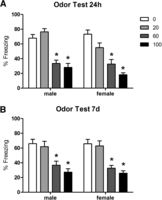
Pretraining nNOS blocker L-NAME in wild-type mice reduces freezing responses during an odor cued test. Mice received D-NAME (white bar) or L-NAME injections 20 min before the training with odor and foot shock. (A) Mean time spent freezing across the trained odor for each group 24 h and (B) 7 d after the training. The higher doses of L-NAME significantly decreases the amount of freezing to the odor during the odor test. (*) Significant difference from the control D-NAME group, P < 0.05
The 7-d retention test showed similar results to the 24-h test. A significant effect of treatment factor (F(3,53) = 27.43, P < 0.0001), but not for gender (F(1,53) = 0.09, P = 0.76), was found. Animals receiving D-NAME showed higher levels of freezing (males, 65.98 ± 5.94%, n = 8; females, 65.91 ± 5.91%, n = 8) than animals receiving 60 mg/kg (males, 36.70 ± 5.43%, n = 7; females, 32.63 ± 3.77%, n = 9) and 100 mg/kg of L-NAME (males, 27.31 ± 4.60%, n = 8; females, 25.89 ± 3.34%, n = 8) (Fig. 4B). These results demonstrate that the blockade of nNOS during training impaired the fear memory recall 24 h and 7 d later, further confirming that NO signaling is involved in olfactory fear memory retention.
Olfactory fear generalization is affected by nNOS activation
Generalization is an event where animals respond to novel cues or contexts in a similar manner as the trained stimulus. For odors, it has been demonstrated that following olfactory fear conditioning to one odor, animals generalize to structurally similar odorants (Pavesi et al. 2012). Considering that NO signaling is involved with fear learning, we tested if stimulus generalization is also affected by nNOS activity. First, knockout and wild-type mice were treated with L-NAME and trained with E5. One group of wild-type mice was submitted to shock training without the odor presentations (shock-only group) to analyze the basal level of fear to the odors during the test. On the following day, the mice were presented with the trained odor as well as structurally similar odors in the same session. The similar odors differed from E5 by one more (E6) or less (E4) carbon in carbon chain length. During the test session, the odors were presented randomly. Since no gender differences were found in the previous experiments, males and females were grouped in this experiment. As observed previously, wild-type mice showed fear responses to E5 (64.75 ± 3.51%, n = 9). A one-way ANOVA applied to the control group showed a significant effect of odor (F(2,26) = 3.73, P < 0.05). The animals showed reduced freezing responses to E4 (36.94 ± 6.48%, P < 0.05) compared with the trained odor, while the fear responses to E6 odor (58.45 ± 3.76%) were not significantly different than freezing to E5 (Fig. 5A). As previously reported (Pavesi et al. 2012), these results show that animals submitted to olfactory fear conditioning generalized fear responses toward the longer E6 than to E4. In nNOS knockout mice, the levels of the freezing to the trained odor were reduced compared with wild-type, as described above. However, one-way ANOVA detected no statistical differences to the freezing responses between the odors (F(2,29) = 0.72, P = 0.7). The animals expressed similar levels of freezing to the E5 (18.40 ± 5.54% time freezing, n = 9), E4 (13.74 ± 3.87% time freezing), and E6 (18.15 ± 3.66% time freezing) during the test (Fig. 5A). Furthermore, comparing with shock-only group (E5 5.36 ± 2.53% time freezing, n = 6), statistical differences in the freezing responses to the trained odor were found (F(1,13) = 7.22, P < 0.05) demonstrating that the fear memory retention was decreased, but it is not absent in nNOS knockout mice, potentially leading to the generalization of the odors.
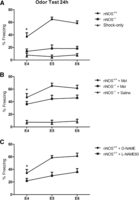
Nitric oxide activation modulates olfactory fear generalization. All mice were trained with E5 odor and foot shock and tested with the trained odor, E5, as well as with one of the two structurally similar odors, E4 or E6. (A) Wild-type mice display significantly less freezing to E4 compared with E5. Knockout mice show reduced freezing to the trained odor compared with wild-type group, with no statistical differences to similar odors, suggesting increased generalization. (B) Pretraining injections of nitric oxide donor molsidomine increase freezing in knockout mice, with no significant differences in freezing levels between odors. (C) Pretraining injections of the nNOS blocker L-NAME in wild-type mice decrease the amount of freezing with no statistical differences between odors. (*) Significant difference from the E5 group, P < 0.05.
Since we demonstrated that molsidomine can rescue fear learning deficits in the nNOS−/− mice, we next tested whether stimulus generalization could be modified by the NO transmission. Wild-type mice treated with molsidomine showed higher levels of freezing to E5 during the test (65.19 ± 4.36%, n = 9). ANOVA detected a statistical difference between the odors during the test (F(2,26) = 3.45, P < 0.05). Similar to the previous experiment, the amount of time freezing to E4 was reduced (46.92 ± 6.16%) and no statistical difference was observed for the E6 (61.38 ± 4.89%) when compared to freezing to E5, indicating that the generalization was not affected by the nitric oxide donor injections in wild-type mice (Fig. 5B). In knockout mice that received molsidomine, we observed increased time freezing during the test compared with the knockout saline group (E5: 7.23 ± 3.40%; E4: 7.50 ± 2.90%; E6: 9.25 ± 2.97% time freezing, n = 7). However, no statistical differences were observed in the amount of freezing between odors (F(2,26) = 1.22, P = 0.31). The expression of freezing in the nNOS−/−+molsidomine group to the E5 odor (44.65 ± 5.67%, n = 9) was similar to the E4 odor (36.10 ± 4.38%) and to the E6 odor (46.09 ± 4.51%) (Fig. 5B).
We next investigated if generalization can be affected in wild-type mice receiving L-NAME 60 mg/kg during the training, since this concentration has been shown to interfere with the fear learning retention. The control group treated with D-NAME showed statistical differences in the freezing to the odors (F(2,26) = 9.72, P < 0.05). The amount of freezing to the E5 odor was higher (58.54 ± 3.50%, n = 9) compared with that evoked by the E4 odor (34.10 ± 5.80%). No statistical differences were found between E5 and E6 odors (61.11 ± 4.76%) (Fig. 5C), which is in agreement with previous results in wild-type mice. The L-NAME group showed reduced freezing to the odors during the test. No statistical difference was detected by ANOVA in the percent of time freezing between odors (F(2.26) = 1.87, P = 0.17). Freezing to the E5 odor (29.88 ± 5.71%, n = 9) was similar to that with E4 (21.76 ± 4.0%) and with E6 (35.78 ± 5.53%) (Fig. 5C).
Olfactory function is not disrupted when nNOS reduced
The above results demonstrate impairment in olfactory fear memory expression in both nNOS knockout mice and wild-type mice treated with L-NAME. It is possible that the deficits in fear memory expression and generalization could be related to an inability to detect olfactory information during the training and test sessions. To determine this, animals were tested in an olfactory habituation–cross habituation paradigm. Each mouse was allowed to investigate an odorized wooden bead for three trials (H1 to H3) of 1 min each, with a 1 min inter-trial interval (ITI) to quantify olfactory habituation. On trial 4, they were presented with a similar odor (SC, E6). On trial 5, they were presented with a dissimilar odor (DC, 2H). This paradigm allowed us to simultaneously measure basic odor detection, short-term memory, and discrimination.
In wild-type mice receiving D-NAME, a significant effect of investigation trial was detected by ANOVA (F(4,64) = 5.89, P < 0.05). Bonferroni post hoc analysis showed reduced investigation times from the first trial (H1) to the third trial (H3) (P < 0.05) demonstrating significant habituation to the odor. Compared to H3 time, mice spent significantly more time investigating both the similar odor (SC) and the dissimilar odor (DC) (P < 0.05) (Fig. 6). Wild-type mice treated with L-NAME 100 mg/kg showed a similar significant effect of investigation trial (ANOVA F(4,39) = 10.10, P < 0.05). Bonferroni analysis detected a significant difference first habituation trial (H1) and the third trial (H3) (P < 0.05). Similar to the D-NAME treated mice, L-NAME treated mice spent significantly more time investigating both the similar odor (SC) and the dissimilar odor (DC) (P < 0.05) (Fig. 6). nNOS knockout mice submitted to the habituation–cross habituation paradigm showed a significant effect of investigation trial demonstrating similar levels of habituation (ANOVA F(4,44) = 10.80, P < 0.05). Furthermore, discrimination of similar and dissimilar odors was not affected in nNOS knockouts (P < 0.05) (Fig. 6).
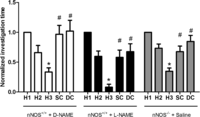
Nitric oxide activation does not disrupt the habituation and cross-habituation paradigm. The graphs depict the normalized time investigating the odor from the first H1 trial. All mice investigated the E5 odor during three trials (H1 to H3), the similar E6 odor (SC), and the dissimilar 2H odor (DC). (*) Difference between H3 and H1, characterizing habituation to the odor, (#) difference between SC and DC to H3, suggesting the ability to discriminate the odors from the habituated odor.
Discussion
In the present study we demonstrated that nNOS is involved in olfactory-cued fear learning. Mice lacking the nNOS gene showed deficits in the long-term fear learning retention and expressed increased generalized stimulus. The deficits in fear memory retention, but not generalization, could be rescued by systemic injections of an NO donor, while nNOS blockade in wild-type mice caused similar olfactory fear learning deficits as knockout mice. Together these results point to an important role for NO signaling in olfactory associative learning. Although previous studies have demonstrated the necessity of NO production in other forms of olfactory learning (Kendrick et al. 1997; Juch et al. 2009), this study is the first to demonstrate the importance of NO signaling in olfactory fear learning and generalization.
Olfactory fear learning impairment due to reductions in nNOS
Similar to our findings, prior studies using other sensory cues have demonstrated that nNOS production and functional NO signaling are important for the long-term memory retention. Regarding fear conditioning, it has been shown that nNOS knockout mice display deficits in fear learning to both contextual and visual cues (Kelley et al. 2009, 2010), and that nNOS blockade leads to decreased fear association (Kelley et al. 2010; Overeem and Kokkinidis 2012). Similar to contextual fear, we confirmed that the deficits in olfactory fear learning were due to decreased NO production in the knockout mice, since administration of an NO donor was able to rescue fear memory impairments. Although the molsidomine was unable to rescue visual fear conditioning deficits in nNOS knockout mice (Kelley et al. 2011), our results show that for olfactory cues, nNOS knockout mice can retain and recall fear memories when NO is present during the training session, indicating potentially different modulation for different types of associative learning.
We also evaluated whether or not blocking nNOS activation during the acquisition stage in wild-type mice can block olfactory fear memory retention. We demonstrated that L-NAME before acquisition decreased the fear responses to the CS odor in male and females, 24 h and 7 d after the training. At concentrations known to significantly reduce cerebral NOS activity (Moreno-Lopez et al. 2004), L-NAME treatment during the acquisition significantly reduced freezing the following day. In accordance with these findings, fear conditioning to contextual, visual, or auditory cues has been shown to be impaired with nNOS inhibitors (Resstel et al. 2008; Kelley et al. 2009, 2011; Ota et al. 2010; Overeem and Kokkinidis 2012). Furthermore, associative olfactory learning in pups was blocked by L-NAME when given before training (Samama and Boehm 1999), and administration of a nNOS blocker prevented maternal memory formation (Kendrick et al. 1997). Overall, these results reveal an important role for NO signaling in the consolidation and retention of long-term memory to olfactory cues.
Particularly interesting is the finding that pretest nNOS inhibition following normal learning conditions does not appear to impair memory expression (Kendrick et al. 1997; Schafe et al. 2005), suggesting that NO signaling is involved in the acquisition and consolidation of memory, but not in the recall once the memory has been acquired. In our study, we investigated the effect of nNOS enzyme activation during olfactory fear acquisition; however, further studies are needed to investigate whether nNOS activation during testing of olfactory fear memories can affect expression.
Finally, the deficits in fear learning in nNOS-reduced animals are most likely not related to the inability to react to the unconditioned stimulus. It has been shown that nNOS knockout mice, or wild-type mice administered L-NAME, display normal pain response thresholds and vocalization induced by foot shock (Kelley et al. 2009; Overeem and Kokkinidis 2012). Furthermore, our findings show that nNOS knockout mice exhibited similar freezing during the training session. Thus, the fear learning deficits promoted by the nNOS blockade are related to sensory-associative systems dependent of NO signaling.
Odor discrimination and olfactory memory generalization
Generalization is a process where responses to nonassociated stimuli are similar to that of the associated stimulus. Recent studies have shown that olfactory fear conditioning leads to generalized fear of similar odors (Chen et al. 2011; Pavesi et al. 2012). Additionally, it has been shown that this generalization is related to impairments in olfactory cortical odor discrimination (Chen et al. 2011). Animals submitted to our generalization paradigm received pairings of E5 odor and foot shock, and were then tested with the trained and similar odors randomly in the same session. As previously reported, wild-type mice generalized their learned fear of E5 to a longer chained odor E6, but not to the shorter chained E4 (Pavesi et al. 2012).
In nNOS knockout mice, despite the increased freezing to the CS odor compared with shock-only group (Fig. 5A), the fear responses to all odors were reduced compared with wild-type animals. Furthermore, they showed similar freezing to all odors suggesting increased generalization. Similarly, wild-type mice receiving L-NAME during the training showed both reduced freezing to all odors as well as increased generalization. These results suggest that both the strength and specificity of olfactory learning are disrupted with reduced NOS levels. Since the strength of the fear learning in knockout mice was increased to control levels by treatment with an NO donor, we tested if similar treatment could rescue generalization in these mice as well. Although knockout mice that received molsidomine during training did show significant increases in freezing, their level of generalization was comparable to saline injected knockout controls. This partial rescue of the learning suggests that the specificity of the learning may be more sensitive to NOS levels than is the strength of the learning. Alternatively, since molsidomine injections did not bring freezing levels in knockouts up to that of controls, it is possible that memory strength and specificity are related such that very stronger memories of the CS lead to less generalization. However, more studies need to be addressed to understand how nNOS activation interferes with the specificity of aversive memories.
Another possible explanation for the deficits in retention and generalization observed in the nNOS deficient mice could be mere disruption in olfactory sensory processing in these animals. To test whether or not decreased NO levels can affect olfactory detection and discrimination, we used a well-established habituation–cross habituation paradigm (Cleland et al. 2002; McNamara et al. 2008). In this task, mice are presented with a novel odor for three trials to determine the amount of habituation. On the fourth and fifth trials, other similar and dissimilar odors are presented to measure discriminatory ability. Similar to other studies, control mice displayed significant levels of olfactory habituation, as measured by H3 investigation times, as well as the ability to discriminate both similar and dissimilar odorants (Cleland et al. 2002; McNamara et al. 2008). Both knockout and wild-type mice with reduced nNOS also displayed similar levels of habituation and discrimination as control mice. These results suggest that reduced NO transmission does not affect basic olfactory perception. In line with this conclusion, previous studies have also demonstrated that odor perception is not altered by NO blockade. Specifically, NO did not impair maternal recognition in the lambs (Kendrick et al. 1997), nor did it affect the time adult rats spent investigating the novel juvenile (Bohme et al. 1993). As our habituation task serves as a measure of olfactory short-term memory, these results also suggest that this specific type of memory remains intact in NO deficient animals. Similar results have also been reported in a social recognition study in which long-term, but not short-term, memory was impaired in nNOS knockouts (Juch et al. 2009). Based on this, our results demonstrate an important role of NO in the development of long-term associative memory.
Mechanisms and targets of NO signaling in the olfactory system
The olfactory system, including the olfactory bulb and cortex, has been shown to have high nNOS expression levels (Davis 1991). In the olfactory bulb, nNOS can be found in a variety of cell types, including GABAergic interneurons that form reciprocal synapses with output mitral/tufted cells (Kishimoto et al. 1993; Crespo et al. 2003; Kosaka and Kosaka 2007). Long-term modification of these synapses through changes in neurotransmitter release, as well as activation of the cAMP/CREB pathway in these cell types, has been shown to be important for normal olfactory learning to occur (Kendrick et al. 1997; Funk and Amir 2000; Yuan et al. 2003; Wilson et al. 2004). In other systems, NO signaling is known to interact with similar pathways involved in synaptic plasticity and to lead to extracellular signal-regulated kinase (ERK) cascade activation (Ota et al. 2010; Gallo and Iadecola 2011), activation of cGMP-dependent protein kinase (PKG) that enhances neurotransmitter release (Hawkins et al. 1993) and regulates gene transcription (Garthwaite 2008), and to promote the overexpression of CREB (Kelley et al. 2011). Additionally, NO has also been shown to regulate neurogenesis within the olfactory bulb, controlling the proliferation rate of undifferentiated precursor cells into functional neurons (Moreno-Lopez et al. 2004), a process that can also affect olfactory learning (Breton-Provencher and Saghatelyan 2012). Taken together, it is possible that reduction of nNOS signaling within the olfactory pathway is at least partially responsible for the deficits in olfactory learning that we observed. However, future studies involving intracranial injections are needed to further separate the role of nNOS in olfactory circuits from fear circuits.
Overall, the results from this study demonstrated that nNOS activation is involved with Pavlovian fear conditioning to olfactory cues. Using knockout mice and pharmacology we have demonstrated that the long-term retention of the fear association is reduced with the deficiency of nNOS activation and NO production. However, the NO signaling appears to not be necessary for basic olfactory detection and discrimination. Taken together, these results illustrate that NO appears to be a significant transmitter in mediating long-term olfactory fear memories.
Materials and Methods
Animals
Experiments were performed in adult (≥8 wk) male and female B6.129S4-Nos1tm1Plh/J mice. Heterozygous genotype males and females were used as breeders to generate one of the possible homozygous or heterozygous genotypes, nNOS+/+, nNOS+/−, and nNOS−/−. All animals were kept in the Animal Facility at the University of Tennessee Health Science Center on a 12-h light–dark cycle with all experimental procedures occurring during the light portion of the cycle. Mice were group-housed with food and water available ad libitum. All protocols were approved by the University of Tennessee Institutional Animal Care and Use Committee.
Pups were weaned at 21 d of age, genotyped, and kept in groups of four to five mice per cage. For genotyping, a 1-mm segment of the tail was taken for DNA extraction. PCR amplification was performed using the gene-specific primer sets for wild-type (forward 5′-TCAGATCTGATCCGAGGAGG-3′ and reverse 5′-TTCCAGAGCGCTGTCATAGC-3′) and for knockouts (forward 5′-CTTGGGTGGAGAGGCTATTC-3′ and reverse 5′-AGGTGAGATGACAGGAGATC-3′). The PCR products, wild-type bands (117 bp), and knockout bands (280 bp) were analyzed in agarose gel (2%) (Fig. 1A).
Drugs
Molsidomine (20 mg/kg; Sigma-Aldrich), an NO donor, was dissolved in saline and injected in nNOS+/+ and nNOS−/− mice. NG-nitro-L-arginine methyl ester (L-NAME, 20, 60, and 100 mg/kg; Sigma-Aldrich), a nonspecific inhibitor of nNOS, was diluted in saline and administered in nNOS+/+ mice, and the control group received an injection of D-NAME (100 mg/kg; Sigma-Aldrich), an inactive isoform of the L-NAME enzyme. All injections were administered intraperitoneally at a volume of 0.1 mL/10 g body weight and were given 20 min before training. The concentrations used were based on those from previous studies (Moreno-Lopez et al. 2004; Kelley et al. 2010).
Odorants
For all fear conditioning studies, ethyl valerate (E5) was used as the conditioned odor during the training session. Mice were presented with E5 or with structurally similar odorants, ethyl butyrate (E4) or ethyl hexanoate (E6) (Sigma-Aldrich). The odors were dissolved in mineral oil to achieve an approximate vapor phase concentration of 150 ppm in the chamber, as measured by a volatile organic compound (VOC) gas detector (MiniRae 3000, Rae Systems). The choices of odor and of concentration were based on those used in previous studies (Pavesi et al. 2012) that showed increased freezing responses to E5 as the conditioned odor. For the habituation experiment, ethyl valerate (E5), ethyl hexanoate (E6), and 2-heptanone (2H) were dissolved in mineral oil at 150 ppm concentrations.
Immunohistochemistry
After the end of the behavioral experiments, wild-type (n = 4) and knockout (n = 4) were injected with urethane 6% (10 mL/kg) and perfused transcardially with phosphate-buffered saline and 4% paraformaldehyde in 0.1 M phosphate buffer at pH 7.4. The brains were removed and left overnight in a solution of 20% sucrose in 0.1 M phosphate buffer at 4°C. Coronal sections of 40-μm thickness were serially cut with a freezing microtome and then submitted to immunohistochemistry for the nNOS. The slices were incubated overnight with a rabbit anti-nNOS polyclonal antibody (1:2000, R-20; Santa Cruz Biotechnology, lot# K0512), and diluted in 5% normal horse serum and triton 0.3%. After primary antibody incubation, sections were rinsed and incubated in donkey antiserum directed against rabbit IgG (1:200, anti-rabbit; Rockland antibodies) and subsequently were rinsed and incubated in rabbit peroxidase–antiperoxidase (1:1000, rabbit PAP; Jackson ImmunoResearch Laboratories). The labeling was visualized using diaminobenzidine tetrahydrochloride (DAB) and peroxidase 0.03% in buffer at pH 7.2–7.4. The sections were then rinsed, mounted, air-dried, dehydrated, and coverslipped with Permount (Fisher Scientific). The sections were examined with an Olympus BHS microscope with standard transmitted light.
Olfactory fear conditioning protocol
All mice were trained inside a modular mouse test cage (Coulbourn Instruments) equipped with a floor of parallel steel bars connected to a precision animal shocker (Coulbourn Instruments). Prior to training, mice were placed in the conditioning chamber for a 10-min habituation period. Fear conditioning took place in a single session in which the mice received six trials of a 10-sec odor pulse, immediately followed by a 0.4-mA foot shock lasting 0.25 sec. All trials were separated by an inter-trial interval of 2 min. Following training, mice were placed back into their home cages until testing the following day. Odorants were presented through small holes in the side of the training and testing chambers at a flow rate of 1 L/min using a custom olfactometer. Each session was recorded with a video camera mounted on top of the chamber and analyzed offline using FreezeFrame software (Coulbourn Instruments).
To study fear memory retention, each animal was tested 24 h and 7 d after the training. Mice were placed in the test chamber for a 5-min habituation period. Mice were tested in a different test chamber (Med Associates), fitted with a Plexiglas floor and under red illumination, in order to avoid contextual fear between 24-h and 7-d odor tests. Following the habituation period, mice received five presentations, 20 sec each, of the trained odorant at 1-min intervals, starting at the second minute.
For the generalization test experiments, the animals were tested 24 h after the training in a test chamber equipped with a vacuum system on the opposite side from the odor source. After 5 min of habituation period, mice received six trials of 10-sec presentation of E5, E4, and E6 odor randomly, with two presentations of each odor in the session, in 4-min intervals that were considered sufficient to eliminate any remaining odor from the chamber. A video camera mounted on top of the chamber was used to record the test session and analyzed offline using FreezeFrame software (Coulbourn Instruments).
During the acquisition and test sessions, the learning was quantified through a widely used fear behavior in rodents, freezing, defined as the absence of all motor activity in the presence of the conditioned cue (Fanselow and Bolles 1979; Fendt and Fanselow 1999; Jones et al. 2005). In this paradigm, freezing was defined as a period of complete immobility lasting for at least 2 sec. Freezing was measured during each minute of the training and testing sessions. The results were expressed as either the percent time freezing per minute (training), the total percentage of freezing after the CS (test), or the percent time freezing in the first minute after the CS (generalization test).
Olfactory habituation and cross-habituation protocol
This experiment was conducted to verify whether or not the ability to detect and discriminate odors can be modified by the genetic strain or the drug treatment in mice. It has been well documented that animals can habituate to odor stimulus in a short-term memory paradigm (Cleland et al. 2002; McNamara et al. 2008). Mice were placed in a standard mouse cage with a wooden bead (1 cm diameter; Craftparts) containing a small piece of filter paper saturated with 0.02 mL of E5 dissolved in mineral oil that was placed in the center of the cage. For 1 min, the time each mouse spent actively investigating a 2 cm diameter area surrounding the bead was measured. Each animal was allowed to investigate the same odor two more times, with 1-min ITI. On the fourth trial, the structurally similar odor, E6, was presented to evaluate the ability to discriminate between similar odors. Finally, on the fifth trial a structurally dissimilar odor, 2H, was presented to evaluate the ability to discriminate between different odors. Each session was recorded with a video camera mounted on top of the chamber and analyzed offline using ANY-maze software (Stoelting). For drug groups (L-NAME and molsidomine treatment), injections were given 20 min before the investigation task.
Statistical analysis
The results were analyzed using Prism software (GraphPad Software). For the acquisition data, two-way ANOVAs were performed in males and females separately, with genotype and training as factors and results expressed in percentage of the freezing responses in each trial. For the odor test, 24 h and 7 d, the results were analyzed by two-way ANOVAs, with genotype or treatment and gender as factors, and results expressed as percentage of the total CS presentation time. Bonferroni post hoc analysis was performed when necessary. The generalization data were analyzed using one-way ANOVAs in each group of animals, with the odors as factors, and Duncan post-hoc analysis was performed when necessary to compare differences with the trained E5 odor. The results were expressed as the average of percentage time freezing during the first minute of each odor presentation. For the habituation–cross habituation test, a one-way ANOVA was performed with trial as the factor, followed by Bonferroni post hoc tests to determine if the time investigating the habituated odor was different from the first habituation trial, as well to investigate if the times investigating the similar and the dissimilar odor were different from the last habituation trial. The values were expressed in the normalized time investigating the odor compared with the first trial. Error values are reported as mean ± SEM. In all analyses, P < 0.05 was considered statistically significant.
Acknowledgments
We thank Amanda Fitzgerald for the technical assistance. The work was supported by NIH NIDCD grant DC009853 (M.L.F) and the Neuroscience Postdoctoral/Research Associate Award from the Neuroscience Institute at UTHSC (E.P.).
- Received April 15, 2013.
- Accepted June 25, 2013.
- © 2013, Published by Cold Spring Harbor Laboratory Press
This article is distributed exclusively by Cold Spring Harbor Laboratory Press for the first 12 months after the full-issue publication date (see http://learnmem.cshlp.org/site/misc/terms.xhtml). After 12 months, it is available under a Creative Commons License (Attribution-NonCommercial 3.0 Unported), as described at http://creativecommons.org/licenses/by-nc/3.0/.