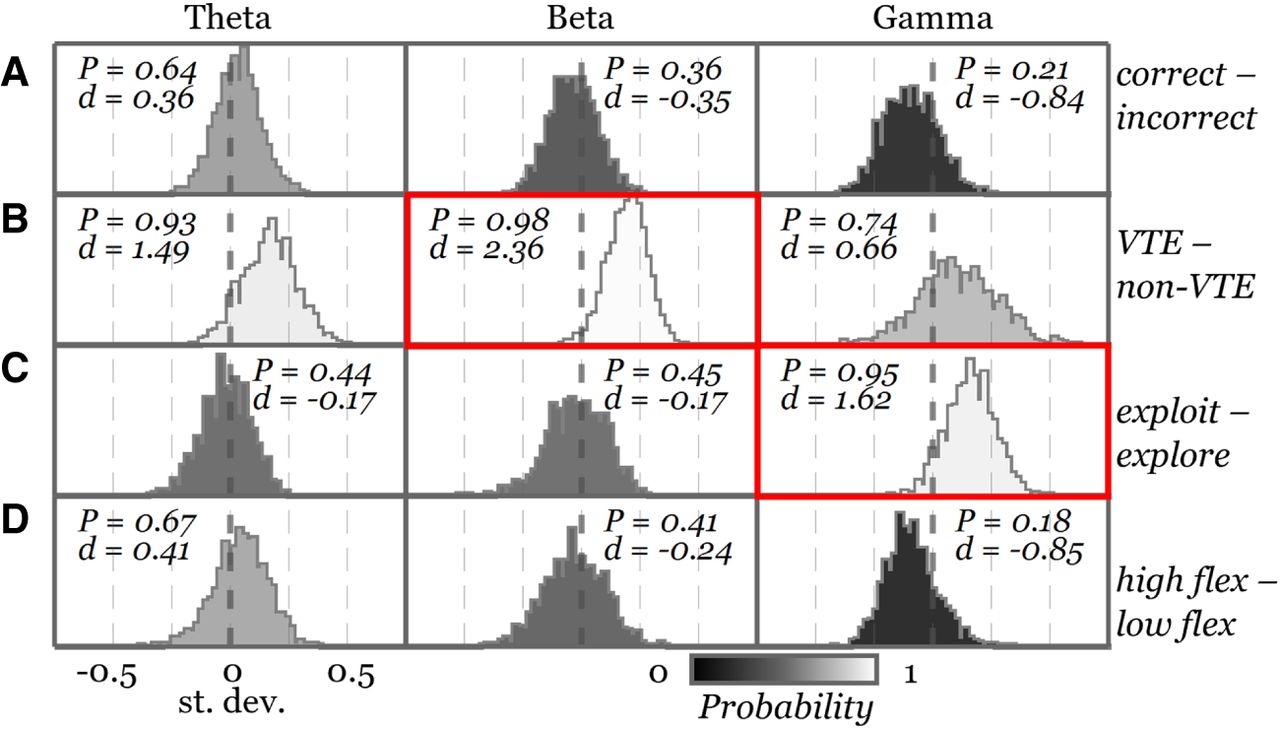
mPFC rhythms vary based on contextual components. Each box in the grid shows the distribution of differences for hierarchically sampled trial comparisons. The type of trial comparison is shown on the right side of the figure, outside the grid of distributions. The left column shows comparisons for the theta rhythm, the middle for the beta rhythm, and the right for the gamma rhythm. The probability of the distribution falling above zero is indicated by P in one of the upper corners of each plot, and one sample analog to Cohen's D is indicated by d underneath. Each distribution is shaded according to its Probability value, as shown by the gradient below the grid. Distributions outlined in red have P ≥ 0.95 and d ≥ 1.5 and are considered to represent strong evidence for a difference between groups. (A) There are no clear differences in the strength of any rhythm for correct compared to incorrect trials. (B) VTE trials have stronger beta activity than non-VTE trials. (C) Exploit trials have stronger gamma activity than explore trials. (D) There are no clear differences in the strength of any rhythm on high-flexibility trials compared to low-flexibility trials.