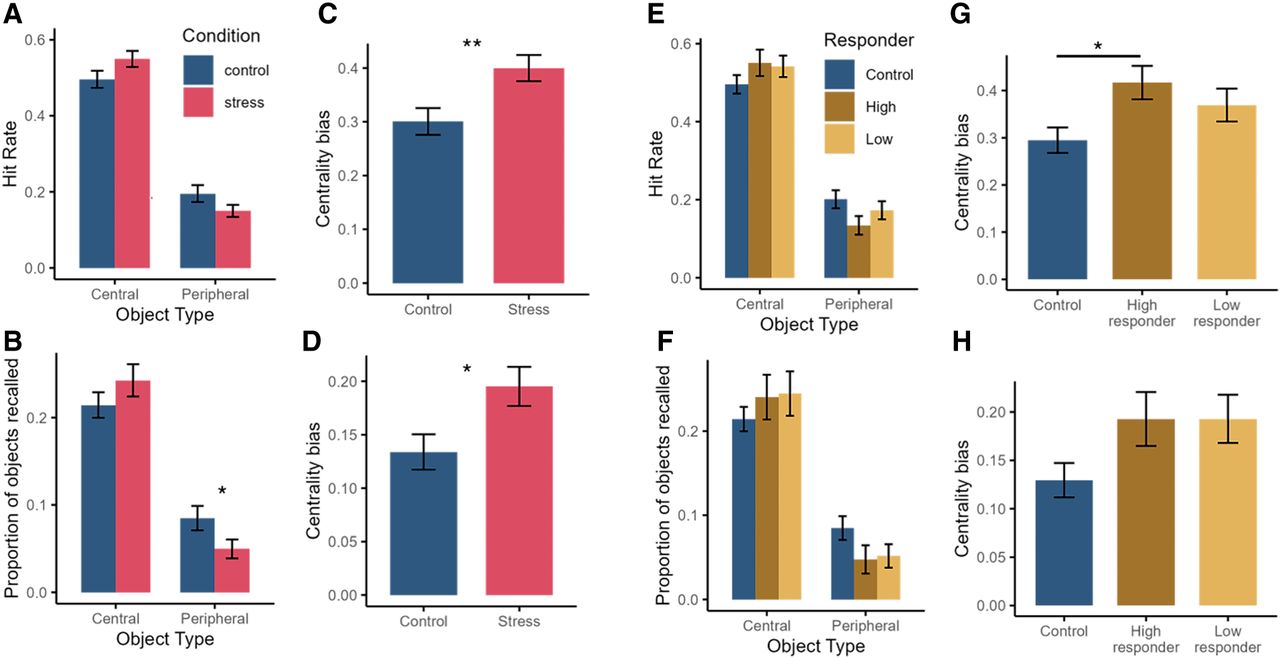
Memory for the stressful episode. Participants in the stress condition tended to remember more central and less peripheral objects in a recognition task (A,E) and free recall task (B,F) than those in the control group. There was a significantly higher centrality bias (difference between recognized or recalled central and peripheral objects) in the stress group than in the control group, both in the recognition test (C) and in the free recall test (D). Specifically, stressed participants with a high salivary cortisol response had a significantly higher centrality bias compared to participants in the control group (G). A similar, but nonsignificant, pattern was also shown in the free recall task (H). Error bars represent SEM. (*) P < 0.05, (**) P < 0.01.