Targeted memory reactivation during slow-wave sleep vs. sleep stage N2: no significant differences in a vocabulary task
- Anna Wick and
- Björn Rasch
- Corresponding author: bjoern.rasch{at}unifr.ch
Abstract
Sleep supports memory consolidation, and slow-wave sleep (SWS) in particular is assumed to benefit the consolidation of verbal learning material. Re-exposure to previously learned words during SWS with a technique known as targeted memory reactivation (TMR) consistently benefits memory. However, TMR has also been successfully applied during sleep stage N2, though a direct comparison between words selectively reactivated during SWS versus N2 is still missing. Here, we directly compared the effects of N2 TMR and SWS TMR on memory performance in a vocabulary learning task in a within-subject design. Thirty-four healthy young participants (21 in the main sample and 13 in an additional sample) learned 120 Dutch–German word pairs before sleep. Participants in the main sample slept for ∼8 h during the night, while participants in the additional sample slept ∼3 h. We reactivated the Dutch words selectively during N2 and SWS in one single night. Forty words were not cued. Participants in the main sample recalled the German translations of the Dutch words after sleep in the morning, while those in the additional sample did so at 2:00 a.m. As expected, we observed no differences in recall performance between words reactivated during N2 and SWS. However, we failed to find an overall memory benefit of reactivated over nonreactivated words. Detailed time–frequency analyses showed that words played during N2 elicited stronger characteristic oscillatory responses in several frequency bands, including spindle and theta frequencies, compared with SWS. These oscillatory responses did not vary with the memory strengths of individual words. Our results question the robustness and replicability of the TMR benefit on memory using our Dutch vocabulary learning task. We discuss potential boundary conditions for vocabulary reactivation paradigms and, most importantly, see the need for further replication studies, ideally including multiple laboratories and larger sample sizes.
Slow-wave sleep (SWS) is characterized by slow-wave activity (0.5–4.5 Hz), occurs mainly in the first part of the night, and is assumed to play an important role for sleep-associated memory processes (Walker and Stickgold 2004). The synaptic down-selection hypothesis, for example, postulates that selected synaptic weights are scaled down by slow oscillations during SWS, affecting signal to noise ratios and retrieval access after sleep. In this notion, spontaneous or induced reactivations of memory networks can bias downscaling, protecting memory traces from being forgotten (Tononi and Cirelli 2020). According to the active system consolidation hypothesis, memory traces are spontaneously reactivated during SWS, leading to a memory trace reinforcement in different memory systems, including cortical long-term memory networks. This process of system consolidation occurs mainly during SWS and depends on a fine-tuned interaction between hippocampal sharp-wave ripples, thalamo–cortical sleep spindles, and cortical slow oscillations (Diekelmann and Born 2010). While an 8-h night of sleep typically consists of 90 min of SWS, we spend 4–5 h in the stable sleep stage N2 (Carskadon and Dement 2011). Slow waves also occur in N2, but this sleep stage is dominantly characterized by single K-complexes and sleep spindles, suggesting that at least some slow waves/spindle-related memory functions might be retained during sleep, albeit to a lesser extent than during SWS. However, most sleep and memory models do not explicitly address the role of N2 in memory processes during sleep.
Empirically, both SWS and N2 sleep are involved in memory processes during sleep (Ackermann and Rasch 2014). SWS is most consistently related to processes of declarative memory consolidation; for example, consolidation of verbal or spatial information (Diekelmann et al. 2009). Several half-night studies consistently showed that early, SWS-rich sleep favors the consolidation of declarative memories as compared with the second half of the night. For example, in the study by Plihal and Born (1997), 10 subjects learned a declarative memory task and a procedural memory task before the retention interval. On two nights, the sleep group learned the tasks either before a 3-h sleep period or after a 3-h sleep period during the night before going back to sleep for 3 h. The investigators found that declarative memory consolidation was better after the first SWS-rich half of the night, while procedural memory consolidation benefited more from the second half of REM-rich sleep. Importantly, the amount of N2 sleep was equal between the two halves of the night, suggesting that N2 sleep in the second half of the night is not sufficient to promote declarative memory consolidation during sleep (Gais and Born 2004). Note that, theoretically, forgetting processes in REM sleep might have counteracted the positive effects of N2 sleep on memory in the second half of the night (Crick and Mitchison 1983). Furthermore, the coupling between slow waves and sleep spindles appears to be essential for successful memory consolidation during sleep (Antony et al. 2018; Cairney et al. 2018), which may occur more frequently during SWS due to the higher rate of slow waves.
In contrast to SWS, N2 sleep has been related to the consolidation of procedural and motor skills (Walker et al. 2002; Smith et al. 2004). However, evidence for an involvement of N2 sleep in the consolidation of verbal information also exists: Lahl et al. (2008) found that an ultrashort 6-min nap containing only N2 already promoted memory performance after sleep. Moreover, Ruch et al. (2012) found that the rate of sleep spindle, delta, and slow oscillations during N2 promoted recall performance.
In recent years, targeted memory reactivation (TMR) has become an established method to investigate memory processes during sleep. TMR assesses memory processes by presenting reminder cues (e.g., scents, clicks, tones, and words) during sleep that are coupled to previously learned material before sleep (Hu et al. 2020; Cordi and Rasch 2021). Thereby, memory consolidation can be externally manipulated, and reactivation of memory traces is specifically reinforced and its effect on postsleep memory performance can be directly measured (Oudiette and Paller 2013). TMR typically improves memory measures after sleep, and successful reactivation during sleep is associated with an event-related increase in theta and spindle oscillations, which are more pronounced for later-remembered versus nonremembered words (Schreiner and Rasch 2017). This was found in a study by Schreiner et al. (2015a). In this particular study, participants learned 120 Dutch–German word pairs in the evening, and recall was tested immediately afterward. Participants then slept for 3 h. During sleep, half of the words were reactivated, and half of the words were not reactivated. After 3 h, the memory performance of subjects was tested again. Based on their performance, the words were divided into remembered and nonremembered words and analyzed accordingly in the time–frequency dimensions.
In a meta-analysis on TMR during sleep, Hu et al. (2020) identified a small to medium effect size on behavioral memory performance in >73 TMR studies. A considerable number of these studies presented reminder cues selectively during SWS, providing substantial evidence that induced memory reactivations during SWS promote memory formation. Another subset of studies presented reminder cues during both SWS and N2 sleep, with a similar positive effect on memory performance after sleep. While extensive TMR research has been conducted on SWS alone and N2 and SWS combined, there are limited data on declarative memory cues exclusively presented during N2. Tilley (1979) delivered TMR cues in either N2 or REM sleep and found that the declarative memory performance improved in subjects assigned to the N2 but not the REM condition. Furthermore, Sterpenich et al. (2014) reactivated presleep learned sound–image associations in either REM or N2 sleep and found that subjects in the REM condition benefited from the reactivations, but not subjects in the N2 condition.
Interestingly, stimuli are more likely to be perceived and processed during stage N2 sleep as compared with SWS (Andrillon and Kouider 2020), which might lead to a facilitated reactivation of associated memory representations. However, the unique contribution of N2 sleep on reactivated memories and sleep-associated memory consolidation processes is still unclear, as a direct comparison of TMR cues presented selectively during N2 and SWS has never been conducted before.
To investigate this important research question, in this TMR study, we presented reminder cues in the same night selectively during N2 or SWS. Success of sleep stage-specific TMR was compared with stimuli not presented during sleep in a within-subject design. We used a Dutch vocabulary task, which has been used in our laboratory to induce increased memory performance after reactivation during sleep (Schreiner and Rasch 2015; Schreiner et al. 2015a,b; Göldi et al. 2019). Following these studies, we also controlled for the number of recalled and nonrecalled word pairs within each condition for each subject individually. We hypothesized that the reactivation of word pairs during N2 would have a memory-enhancing effect similar to that of the application of TMR during SWS. In addition, we predicted that theta and spindle activity is induced during successful memory reactivation in both N2 and SWS.
Results
To test our hypothesis, 21 participants spent one night in the sleep laboratory (see the Materials and Methods for more details). Prior to sleep, participants learned 120 Dutch–German word pairs. During nighttime sleep, we reactivated a separate list of Dutch words selectively during N2 and another list of Dutch words during SWS. Forty control words were not cued. Each condition consisted of the same amount of remembered and not remembered words. In the morning, we asked participants to recall the German translations of the Dutch words again. The procedure is visualized in Figure 1A. Due to technical problems in some test runs, we excluded one word pair from the 120-word list and performed all analyses based on 119 word pairs. Next, we analyzed the effects of N2 TMR versus SWS TMR versus control words. Here, we report mean ± SEM.
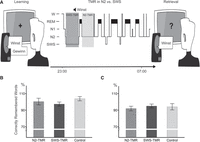
Experimental procedure and behavioral results. (A) Experimental procedure of the main study. After preparation, participants studied 120 Dutch–German word pairs in the evening. Afterward, participants went to bed and slept for 8 h. During stable N2 and SWS, we presented two separate lists of 40 Dutch words. Forty words were not presented. In the morning, participants were tested on the German translation of the Dutch words again. (B) Behavioral results of the main study. We did not detect any memory differences between selective reactivation during N2 sleep (N2 TMR) and slow-wave sleep (SWS TMR). In addition, we did not observe a general memory benefit for reactivated versus not reactivated words (control). In addition, retrieval performance is reported as a percentage of correctly retrieved German translations, with performance set to 100% before sleep. Values are mean ± SEM. (C) Behavioral results of the additional study (n = 13; identical design except 3 h of sleep instead of 8 h). Similar to our main study, we were not able to find any memory differences between selective reactivation during N2 sleep (N2 TMR) and during slow-wave sleep (SWS TMR). Analogously, we did not observe a general memory benefit for reactivated versus not reactivated words (control). Retrieval performance is reported as a percentage of correctly retrieved German translations, with performance set to 100% before sleep. Values are mean ± SEM.
Effects of sleep stage-specific TMR on memory performance
Consistent with our hypothesis, sleep stage-specific reactivation of word pairs during N2 or SWS did not result in a significant
difference in memory performance tested after sleep. Participants remembered 100.4% ± 4.0% of the translations to the Dutch
words in the morning after TMR during N2 (with performance during encoding in the evening set to 100%). When words were presented
during SWS, participants recalled 97.3% ± 2.5% of the translations they had recalled before sleep. The difference between
TMR during N2 and during SWS was not significant (t(20) = 0.59, P > 0.50) (see Fig. 1B). However, contrary to our prediction, N2 TMR or SWS TMR did not lead to an improved memory performance compared with words
that were not presented during sleep (uncued control word pairs: 103.9% ± 2.6%). The overall ANOVA, including the within-subject
factor “condition” (N2 TMR, SWS TMR, and control), was not significant (F(1.64,32.80) = 0.98, P = 0.37,  ). Thus, we were unable to replicate the overall beneficial effect of reactivating words during sleep, irrespective of the
sleep stage. Table 1 provides a detailed overview of the recall performances during the learning and retrieval phases for each TMR category. The
post-hoc calculated statistical power to detect a medium effect size of f = 0.25 was 34% (α = 0.05, n = 21). This particularly low statistical power in spite of the within-subject design and n = 21 is due to the low and, on average, negative correlation between the three measurements (i.e., N2 TMR, N3 TMR, and control;
average ρ = −0.15).
). Thus, we were unable to replicate the overall beneficial effect of reactivating words during sleep, irrespective of the
sleep stage. Table 1 provides a detailed overview of the recall performances during the learning and retrieval phases for each TMR category. The
post-hoc calculated statistical power to detect a medium effect size of f = 0.25 was 34% (α = 0.05, n = 21). This particularly low statistical power in spite of the within-subject design and n = 21 is due to the low and, on average, negative correlation between the three measurements (i.e., N2 TMR, N3 TMR, and control;
average ρ = −0.15).
Recall performance in learning and retrieval phases
Our failure to find an enhancing effect of TMR on memory cannot be due to memory performance during encoding: Participants
recalled 41.7% ± 1.3% of German translations of the 119 word pairs (49.7 ± 1.6 words; word range 37–64). Thus, the encoding
level in our study group was on a medium encoding level, which is considered optimal for detecting sleep-associated memory
effects (Groch et al. 2017). Furthermore, we did not detect a significant difference in encoding levels between the three conditions (N2 TMR: 16.9 ±
0.5 words; SWS TMR: 16.2 ± 0.6 words; control: 16.4 ± 0.5 words; F(1.90,37.90) = 2.83, P = 0.074,  ). To further ensure that encoding levels did not affect our measure of overnight memory consolidation, we inspected possible
correlations between encoding performances and overnight memory consolidation. Overall, we observed no significant correlation
(r(61) = −0.075, P > 0.50). We also did not find any significant correlation within each condition, excluding possible confounding influences
of different encoding levels on our main results (N2 TMR: r(19) = −0.058, P > 0.80; SWS TMR: r(19) = −0.15, P > 0.50; control: r(19) = −0.057, P > 0.80). In addition, we controlled for the number of word repetitions within N2 (9.21 ± 0.23) and SWS (9.09 ± 0.42), by
introducing them as covariates. However, we did not find a significant difference in memory performance (P > 0.05).
). To further ensure that encoding levels did not affect our measure of overnight memory consolidation, we inspected possible
correlations between encoding performances and overnight memory consolidation. Overall, we observed no significant correlation
(r(61) = −0.075, P > 0.50). We also did not find any significant correlation within each condition, excluding possible confounding influences
of different encoding levels on our main results (N2 TMR: r(19) = −0.058, P > 0.80; SWS TMR: r(19) = −0.15, P > 0.50; control: r(19) = −0.057, P > 0.80). In addition, we controlled for the number of word repetitions within N2 (9.21 ± 0.23) and SWS (9.09 ± 0.42), by
introducing them as covariates. However, we did not find a significant difference in memory performance (P > 0.05).
Next, we analyzed the influence of TMR on behavioral performance during SWS or N2 sleep in more detail by separating between
gained words (words remembered during recall after sleep but not during the encoding before sleep), maintained words (words
remembered during encoding and postsleep recall), lost words (words remembered during encoding but not during postsleep recall),
and never recalled words (words not remembered during either encoding or recall). TMR during SWS resulted in a significant
higher number of lost words (3.52 ± 0.31) compared with TMR during N2 (2.71 ± 0.38) and control words (2.10 ± 0.30; F(1.57,31.34) = 5.59, P = 0.013,  ). Also, the number of maintained words was lower after TMR during SWS (12.71 ± 0.72) compared with TMR during N2 (14.29 ±
0.66) and the no-TMR control condition (14.33 ± 0.69; F(1.53,30.56) = 8.52, P = 0.002,
). Also, the number of maintained words was lower after TMR during SWS (12.71 ± 0.72) compared with TMR during N2 (14.29 ±
0.66) and the no-TMR control condition (14.33 ± 0.69; F(1.53,30.56) = 8.52, P = 0.002,  ). No significant difference occurred between the three conditions for gained words (P > 0.738) and never recalled words (P > 0.785). This detailed analysis showed that in our study, TMR during SWS appeared to have an interfering effect on memory
consolidation, increasing the number of lost words and decreasing the number of maintained words. These results are presented
in Table 2.
). No significant difference occurred between the three conditions for gained words (P > 0.738) and never recalled words (P > 0.785). This detailed analysis showed that in our study, TMR during SWS appeared to have an interfering effect on memory
consolidation, increasing the number of lost words and decreasing the number of maintained words. These results are presented
in Table 2.
Recall performance within different word categories
Additional data
To strengthen our conclusion and partly overcome the low statistical power in the current study, we also analyzed data from a small study conducted during the pilot phase of the current study. Thirteen healthy young subjects took part in this study (mean age M = 22.14 yr, SD = 2.87 yr). The TMR paradigm and experimental design were identical to the main study, except that participants slept only 3 h between encoding and recall.
The analysis of this study showed no sleep stage-specific differences in the TMR effect on memory consolidation over 3 h of sleep: Participants recalled 91.97% ± 2.81% of words reactivated during N2 (N2 TMR condition), 94.99% ± 2.36% of words after SWS TMR, and 94.14% ± 3.83% of control words (with memory performance during encoding set to 100%). The differences were not significant (P > 0.70) (see Fig. 1C).
In the next step, we combined the data from the pilot and the main studies and performed the analyses with all 34 participants.
After N2 TMR, N2 subjects recalled 96.1% ± 2.6% of the translations to the Dutch words. When the words were presented during
SWS, participants recalled 98.3% ± 2.8% of the translations they had remembered before sleep. The difference between TMR during
N2 and during SWS was not significant (t(36) = −0.49, P > 0.63). In addition, neither N2 TMR nor SWS TMR resulted in improved memory performance compared with control words not
presented during sleep (control word pairs: 101% ± 2.2%). The overall ANOVA was not significant (F(1.95,70.35) = 0.83, P = 0.437,  ). By combining the two data sets, we were able to increase the observed statistical power to detect a medium effect of f = 0.25% to ∼55% (average correlation between conditions ρ = −0.08; n = 34; three measurements, α = 0.05).
Oscillatory correlates of reminder presentation and successful reaction during sleep
On average, participants slept 455.90 min ± 4.32 min (see Table 3 for general sleep characteristics). Presenting words during sleep evoked characteristic responses in the sleep including K-complexes and spindle oscillations. This well-known pattern is reflected in the time–frequency spectrum as increases in the SWA band (1–4.5 Hz), theta band (5–7 Hz), and alpha band (8–12 Hz), followed by increases in responses in the spindle band (slow spindles 11–13 Hz; fast spindles 13–15 Hz) and beta activity (15–25 Hz) (see Fig. 2A for word-evoked response during N2 and SWS combined, Fig. 2B for responses during N2 only, and Fig. 2C for responses during SWS only). Focusing our analyses on a cluster of frontal electrodes (F3, F4, Fz, F7, and F8), responses in all these different bands were more pronounced after word presentations during N2 than in SWS (all P < 0.028) (see Fig. 2D).
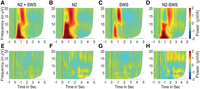
Averaged oscillatory responses to words presented during N2 and SWS in the time–frequency spectrum recorded at all frontal channels (F3, F4, Fz, F7, and F8) for memory-independent and memory-dependent processes. (A) Oscillatory power changes to all words presented during N2 and SWS show characteristic increases in the delta, theta, and alpha bands, followed by increases in the spindle and beta bands. (B) Oscillatory responses to all words presented in N2. (C) Oscillatory responses to all words presented during SWS. (D) Difference between the neural responses of all words in N2 and SWS. Responses in all different frequency bands were more pronounced after word presentations during N2 than in SWS (see the text for significant clusters). (E) For memory-dependent oscillatory processes, we did not observe any significant cluster when comparing oscillatory responses for all remembered words irrespective of the sleep stages when words were presented. (F) Similarly, there was no difference between the oscillatory responses of all remembered and nonremembered words during N2. (G) Also, there was no significant difference between the neural responses of all remembered and nonremembered words during SWS. (H) Consistently, we could not detect any significant increase or decrease between memory-dependent oscillatory processes after reactivation in N2 versus SWS.
Overview of times spent in the different sleep stages
In the next step, we categorized the words into “remembered” and “nonremembered” based on morning retrieval to measure neural correlates associated with successful memory reactivation. Differences in this measure have been linked to memory processes during sleep (Schreiner and Rasch 2017). Higher values on this comparison indicate increased oscillatory responses for later-remembered versus nonremembered words. Because theta power has been repeatedly associated with successful memory reactivation during sleep (Osipova et al. 2006; Nyhus and Curran 2010), we examined theta power (5–7 Hz) in the time window of 500–800 msec after cue onset as described by Schreiner et al. (2015a). In contrast to previous findings, we were not able to detect significant clusters within this particular time window independent of the sleep stage (P > 0.05) (see Fig. 2E–G). When contrasting oscillatory correlates of successful memory reactivation during N2 and SWS, we observed a mild increase in theta power in a later time window (2500–3000 msec) (see Fig. 2H). Nevertheless, this cluster also did not reach significance.
Discussion
In the current study, we specifically compared the influences of reactivating words selectively during stage N2 sleep and slow-wave sleep (SWS). While targeted memory reactivation (TMR) did not differ during N2 and SWS, we found no beneficial effect of TMR on memory compared with words not reactivated during sleep. We observed this pattern of results in both our main study sample (8-h sleep duration) and our additional sample (3-h sleep duration). Also, combining the two samples did not alter our results. On a neurophysiological level, words presented during sleep elicited the well-known responses, including K-complexes and increases in spindle oscillations, with significantly higher responses after reactivation during N2. However, we observed no memory-specific increases in theta or spindle oscillations for successfully remembered versus nonremembered words.
The fact that we could not replicate the memory-enhancing effect of TMR independently of sleep stages was unexpected. We used exactly the same task and procedures as reported in our previous studies. For example, we reported a memory-enhancing effect in a sample of healthy young adults applying TMR during N2 and SWS using the identical Dutch vocabulary task (Schreiner and Rasch 2015). In addition, we replicated the memory benefits of TMR (again in N2 and SWS combined) in three separate groups in a subsequent study using the same task (Schreiner and Rasch 2015). While the experimental and task procedures, the stimuli, the sleep laboratory, and the sample characteristics were highly comparable, and the sample size was even higher than in the previous studies, we can only speculate on possible reasons for our failure to replicate the TMR benefits on memory consolidation during sleep: First, one procedural difference between the studies was that words were reactivated selectively during N2 and SWS in the current study and not during SWS only or SWS and N2 sleep combined as in previous studies (e.g., see Schreiner and Rasch 2015). Thus, it could also be that reactivation in both sleep stages is necessary to induce memory benefits by TMR. However, we also observed nonsignificant findings in previous studies reactivating in both sleep stages N2 and SWS together (e.g., see Cordi et al. 2018; Wilhelm et al. 2020). Conversely, some studies reported memory-enhancing effects of TMR after selective reactivation during N2 sleep (see meta-analysis in Hu et al. 2020). Sleep duration between encoding and recall did not appear to be critical, as we did not find sleep stage-specific memory benefits after 8 or 3 h of sleep. Moreover, also in the meta-analysis, the TMR benefit was not dependent on the sleep duration and occurred equally for nighttime and nap studies (Hu et al. 2020). Another problem may be that we did not control for the influence of REM sleep. Recent studies suggest that the integration of TMR-triggered information depends on the occurrence of REM sleep and thereby influences the strength of memory consolidation (Tamminen et al. 2017). However, this still did not explain our pattern of results.
Another difference between the current study and former studies is that a larger portion of learned words was reactivated. In the current study, 67% were reactivated and not 50% as in studies before. This may have increased the probability of the reactivation generalizing to the noncued words. However, Schreiner et al. (2015b) also reactivated 67% of the items and reported positive TMR effects on memory consolidation during sleep.
Additionally, we conducted a within-subject comparison for one night. Therefore, we cannot exclude a possible competition in reactivation between stages, resulting in a lack of effect.
Another critical point is that we started to reactivate during N2 (but not SWS) in all our participants, as N2 sleep typically occurs before SWS. Therefore, we cannot exclude an effect of sequence on sleep stage-specific TMR benefits on memory. However, participants reached SWS already after 21.5 min ± 2.24 min; thus, many N2 words were also played after the first SWS period, assuring some counterbalance between TMR during N2 and SWS. Finally, the sample could have been different in basic characteristics compared with former studies.
Another important explanation of our failure to find a memory-enhancing effect of TMR may lie in our low statistical power. Although the effects of TMR on memory were statistically significant in the meta-analysis (Hu et al. 2020), the effect size was in the small to medium range. Importantly, within-subject comparisons typically have a higher statistical power than between-subjects experiments because fewer participants are usually required. However, the actual power of within-subject comparisons is strongly dependent on the correlation between measurement points. In our combined sample, the average correlation between measurement points was small and negative (ρ = −0.08; statistical power ∼55% with n = 34; 3 measurements; medium effect f = 0.25; α = 0.05), which greatly reduces statistical power compared with plausible positive and medium-sized correlations in similar designs (e.g., with a typically assumed ρ = 0.5, the statistical power would reach ∼89% in our study). It might be worth collecting average ρ-values from existing TMR studies that have used within-subject designs to obtain a better estimate of plausible ρ-values, which may facilitate the sample size planning in the future (e.g., average ρ-values varied from −0.15 to 0.53 in our recent verbal TMR studies) (Schreiner and Rasch 2015; Schreiner et al. 2015b; Göldi et al. 2019).
Improving the quality of our study planning (including sample size estimation, preregistration of hypotheses, etc.) is also an important issue in TMR research, as Hu et al. (2020) reported a publication bias in their meta-analysis: More positive studies and fewer negative studies seem to have been published in this area. Generally, larger sample sizes and studies involving collaborations with multiple laboratories are indispensable to improve reproducibility in the field, together with the need for the publication of all available negative or zero findings. Our recent call for replications and larger sample sizes in the field of sleep and memory (Cordi and Rasch 2021) has already stimulated the publication of some studies with large samples (e.g., see Denis et al. 2022).
Since we were unable to observe a memory-enhancing effect of TMR compared with nonreactivated words in our current study, a clear interpretation of the sleep stage-specific TMR results is not possible. Nevertheless, it is interesting that we did not find a significant difference between words reactivated in N2 and in SWS. Additionally, in the TFA, we observed that words presented during N2 elicited stronger responses in all frequency ranges including theta and spindle oscillations. The increased neurophysiological responses are consistent with the assumption that sounds presented during N2 sleep are more likely to be processed compared with SWS (Andrillon and Kouider 2020). As spindle oscillations have been functionally implicated in memory processes during sleep (Fogel and Smith 2011), one might predict that enhanced processing associated with increased spindle oscillations should also lead to better memory reactivation/consolidation during sleep. A similar conclusion could be drawn for theta oscillations. However, increases in theta oscillations following TMR also occur independently of the memory-enhancing effect of TMR, suggesting that increases in theta oscillations might reflect successful reactivation rather than successful consolidation after stimulus presentation during sleep (see the working model in Schreiner and Rasch 2017). Only increased theta followed by increased spindle activity could be beneficial for the consolidation of reactivated memories during sleep. However, this pattern was actually more pronounced in N2 than in SWS, which did not lead to a better memory after TMR during N2. Importantly, the overall increase in oscillatory power after stimulus presentation in N2 compared with SWS was independent of memory; that is, it occurred for both remembered and nonremembered words. In contrast to previous reports, we were not able to observe memory-specific increases in theta and spindle oscillations in our study. However, this could be explained by the missing behavioral effect of TMR in our study. Additionally, when comparing oscillatory power changes between words presented in N2 and SWS, our results may be biased by differences in baseline activity between the two sleep stages. In our analyses, we applied a baseline correction from −1 to 0 sec before the word presentation. This might have limited the extent of power enhancement by words in the lower-frequency bands during SWS compared with N2 sleep because, for example, SWA in the baseline period is higher in SWS than in N2 sleep. However, in an exploratory analysis without baseline correction, the large difference in SWA power overshadowed any event-related power changes of word presentation during sleep for this comparison. Thus, we believe that a baseline correction is necessary to describe event-related power changes in different sleep stages. Furthermore, we have successfully used baseline-corrected time–frequency data to detect TMR-related power changes in N2 and SWS (see the supplemental material of Schreiner and Rasch 2015).
In sum, we were not able to replicate the memory-enhancing effect of TMR in the Dutch vocabulary task and therefore were unable to answer the question of whether N2 TMR or SWS TMR contributes to reactivation-induced memory benefits during sleep. However, the topic should not decrease in relevance due to our nonexisting significances. Overall, there is a need to investigate the boundary conditions for TMR, as they are of great importance. Future studies could use the same experimental design to test the still important question with a different memory task, as we could not draw a meaningful conclusion because our task seemed to not have worked properly. In addition, presleep learning strength might have affected the benefits of TMR during sleep, as the general effects of sleep on memory also depend strongly on memory strength and prior knowledge (e.g., see Cordi et al. 2023). Furthermore, it could be interesting to examine whether incorrect answers given during encoding before sleep are maintained and consolidated during sleep. Moreover, the next studies could consider the two halves of the night. Since Rasch and Born (2013) have suggested that it is not a quantitative but a qualitative difference of the N2 sleep during the two halves of the night, it would be interesting to reactivate different sets of items during SWS in the first half of the night and in N2 in the second half of the night. This could provide deeper insights into whether or to what extent the memory processes during N2 within the first half of the night depend on the processes of the SWS. In addition, a following study could even compare the memory consolidation process during N2 of the first and second halves of the night.
Materials and Methods
Participants
The sample consisted of 24 young, healthy participants (14 females) aged 18–30 yr (M = 23.38 yr; SD = 3.63 yr). All subjects were German speakers, had no prior knowledge of the Dutch language, were free of any physical and mental disease, and reported a healthy wake–sleep cycle. Due to errors in list generation (see “Reactivation of Vocabulary During the Night” for details), we had to exclude three participants from all analyses. Therefore, the final sample consisted of 21 individuals (12 females) aged 18–30 yr (M = 23.29 yr; SD = 3.52 yr).
We conducted an a priori power analysis using G*Power version 3.1.9.6 (Faul et al. 2007) to determine an adequate sample size for ANOVAs, including three repeated measures. To achieve 80% power to detect a medium effect (f = 0.25) at a significance level of α = 0.05 and a correlation among measurements of ρ = 0.6, the required sample size was n = 23. Subjects were recruited via a newsletter sent to psychology students and advertisements on various Internet platforms. Two days before each session, subjects received a reminder e-mail containing the instruction to refrain from consuming alcohol for 2 d prior to the experiment. Additionally, they were asked to get up at least at 7:00 a.m. on the morning of the experimental day and to stop consuming caffeine from 2:00 p.m. on.
The local ethics committee approved the study, and all subjects gave written informed consent at the beginning of the experimental night. Moreover, subjects received an expense allowance of 50 CHF for participation.
Design and procedure
The study took place in one experimental night. Subjects arrived at 8:30 p.m. in the sleep laboratory of the University of Fribourg, filled out various questionnaires, and prepared for the night. Once the experimenter attached the electrodes for polysomnographic recordings, subjects performed the Dutch–German word pair task (details in “Vocabulary Learning Task”). At approximately 11:00 p.m., the subjects went to bed and the lights were turned off for 8 h. After sleep onset and entering NREM sleep, the experimenter manually started the reactivation of previously learned Dutch words. For each of the two sleep stages, N2 and SWS, a separate list of 40 Dutch words was played (cued words) (see “Reactivation of Vocabulary During the Night” for details). After ∼400 words were played in each sleep stage (N2 TMR: M = 369.32, SE = 8.99; SWS TMR: M = 364.86, SE = 16.02; no significant difference detected; t(20) = 1.09, P = 0.29), the experimenter stopped the reactivation procedure, and the subject slept for the remaining time. After 8 h, the experimenter turned on the light and woke the subject. Again, subjects completed questionnaires and recalled the German translations of the Dutch words (see “Cued Recall Testing” for details). In the end, the experimenter detached the electrodes, and the subjects left the laboratory between 7:00 a.m. and 8:00 a.m. The procedure is illustrated in Figure 1A.
Questionnaires
Prior to the experimental session, subjects filled out various questionnaires to obtain information about demographics and general health. We used the Edinburgh Handedness Inventory to identify the handedness of the subjects (Oldfield 1971). Moreover, we used Buysse et al. (1989) to gain information about the subjective sleep quality and habits of the last 4 wk.
After sleep, subjects filled out the SF-A/R questionnaire (http://ub-madoc.bib.uni-mannheim.de/29052) to gauge subjective sleep quality (general sleep characteristic [ASC]) of the previous night. The scores of these individual questionnaires are shown in Table 4.
Overview of questionnaire data
Vocabulary learning task
The vocabulary learning task was created and used in a previous work by Schreiner and Rasch (2015) using E-Prime software 2.0.10 (Psychology Software Tools, Inc.). It contained 120 Dutch–German word pairs and consisted of three parts in the learning phase before sleep: (1) passive encoding, (2) immediate retrieval with feedback, and (3) immediate retrieval without feedback. In all parts, words were presented acoustically via loudspeaker (range of word duration: 450–700 msec) in a randomized order (word pairs and lists are in Supplemental Tables S1–S3). Due to technical problems in some test runs, we excluded one word pair of the word list. During the first part (passive encoding), each Dutch word was presented, followed by its German translation. An inserted affixation cross between the Dutch and German translation of 200 msec and an interval of 1000–3000 msec between each word pair reduced the presentation speed of words. Within this phase, subjects tried to memorize as many word pairs as possible. In the second phase (immediate retrieval with feedback), the subjects only heard the Dutch word again, and said the German translation or indicated that they did not know it. Irrespective of whether it was remembered correctly or incorrectly, the correct German translation was presented again. During the third part (immediate retrieval without feedback), the subjects heard the Dutch words one last time, but contrary to the second phase, no feedback was given about the correct German translation. The experimenter manually coded the correctness of each answer with “1” for correct and “2” for incorrect. The performance level of the final part built the baseline of memory performance before sleep.
Reactivation of vocabulary during the night
Based on the individual final memory performance during the evening, a Matlab (Mathworks) algorithm generated a separate 40-word list consisting of prior known and unknown words for each sleep stage (N2 and SWS). Forty Dutch words were not presented during sleep (uncued control words). In each word list, the number of previously known and unknown words was equally distributed. On average, the range of known words in all three categories was 11–22 words.
We used E-Prime 2.0.10 (Psychology Software Tools, Inc.) to acoustically play the words from both lists at a volume of 50 dB via loudspeakers and presented them in a random order at the appropriate sleep stage. Cues were separated by an interstimulus interval of 5000–7000 msec.
During the night, an experimenter monitored the sleep of the subject. As soon as signs of stable N2 or SWS appeared (as given by the American Association of Sleep Medicine [AASM]) (Iber et al. 2007), the experimenter manually started the reactivation of the corresponding word list and paused immediately when signs of arousals, awakenings, or transitions to N1 or REM sleep were detectable. Due to the typical pattern of sleep architecture, TMR of N2 words was started earlier than TMR with SWS words. As soon as the SWS became apparent by a higher occurrence of delta waves, the experimenter switched to the SWS list.
Once 400 words had been played in each sleep stage (each word was played 9.01 times + 13.58 times), the experimenter terminated the reactivation procedure. This was the case after approximately two or three sleep cycles.
Cued recall testing after sleep
Following 8 h of sleep, we confronted the subject with the third phase of the vocabulary task (retrieval without feedback) again. After listening to the Dutch word, subjects said the German translation without any feedback being given.
Polysomnographic recordings
We collected electrophysical data during sleep with different polysomnographic components: For the electroencephalogram (EEG), we used 18 single gold cup electrodes, which we positioned in accordance with the international 10–20 system (C3, C4, Cz, F3, F4, F7, F8, Fz, Fpz, P3, P4, Pz, M1, M2, O1, O2, T5, and T6) (Chatrian et al. 1985). Moreover, we affixed the electromyogram (EMG), the electrooculogram (EOG), and the electrocardiogram (ECG) according to the international recommendation by the AASM (Iber et al. 2007). The EEG was derived referentially, whereas the EMG, EOG, and ECG were derived bipolar. However, we set all low- and high-frequency recording filters of each component to the recommended level of the AASM (EEG: 0.3 Hz/35 Hz; EOG: 0.3 Hz/35 Hz; EMG: 10 Hz/100 Hz; ECG: 0.3 Hz/70 Hz) (Iber et al. 2007) and kept all impedances <5 kΩ.
Sleep scoring
The electrophysiological data were first rereferenced to the contralateral mastoid and filtered as recommended by the AASM (Iber et al. 2007) using the software BrainVisionAnalyzer 2.2 (Brain-Products, Inc., GmbH). Next, we segmented the 8 h of bed time (from “lights off” to “lights on”) into 30-sec epochs, and two independent sleep scorers visually classified the epochs with the different stages: “wake,” “REM,” “N1,” “N2,” or “SWS.” In case of disagreements, we consulted a third expert scorer.
Time–frequency analyses
To gain further insights into the oscillatory activity of TMR during N2 and SWS, we conducted a time–frequency analysis (TFA). For this purpose, we first preprocessed EEG data using BrainVisionAnalyzer 2.2 (Brain-Products, Inc., GmbH) and removed artifacts from the data. In the beginning of this process, we imported sleep stage markers to serve as segmentation markers. Once cues were separated into equally sized segments with boarders set to 3 sec before and 5 sec after a cue, the following steps were done according to the procedure described by Ackermann et al. (2015). A high-pass filter was set to 0.1 Hz, a low-pass filter was set to 40 Hz, and a notch filter was set to 50 Hz. Finally, data were rereferenced to the averaged value of both mastoids. Based on the sleep stages, equally sized sections of 2048 data points of 4 sec each with a 100-point overlap were created. To ensure analysis of only artifact-free sections, an automatic artifact rejection excluded segments if the maximal difference in EMG activity was >150 µV and the maximal difference in each EEG channel was >500 µV. Next, artifact-free segments were exported and further analyzed with the Fieldtrip toolbox (Oostenveld et al. 2011). The TFA was done by adapting the procedure of Beck et al. (2021). Similarly, the baseline was normalized with a period of −1 to 0 sec before stimulus onset. In the next step, we averaged overall data—per subject, per sleep stage, and per morning performance—to compare oscillatory power in different frequencies (1–20 Hz) in a time window of 0–4.5 sec after cue onset averaged across all frontal channels (F3, F4, Fz, F7, and F8). Results were compared using cluster-based permutation tests for dependent samples as implemented in the FieldTrip toolbox (Oostenveld et al. 2011). For the cluster-level statistic, we used the maximum sum of t-values within every cluster. The cluster-level statistic was calculated for each of 1000 randomly drawn data partitions, which exceeded the actually observed test statistic, resulting in a Monte Carlo P-value controlling for multiple comparisons. The alpha level was set to 0.05 and corrected for two-sided testing.
We compared words played during N2 and during SWS. We also compared remembered and nonremembered words based on morning recall. We did this for all words overall but also separately for each sleep stage.
Statistical analyses
We performed all analyses based on 119 words using R Studio software 4.3.1 (https://posit.co). In order to determine the effects of TMR in N2 and SWS, several sets of mixed-design analyses of variances (ANOVAs) were run. Effect patterns were further explored by post-hoc t-tests. For all analyses, the significance level was set to P ≤ 0.05. When Mauchly's tests revealed a violation of sphericity, the correction proposed by Greenhouse–Geisser was used. In the Results, we report mean ± SEM.
Additional data
During the piloting phase of the main study, we conducted a small study with 13 subjects (mean age M = 22.14 yr; SD = 2.87 yr). The TMR paradigm and the experimental design were identical to our main study except for the sleep duration. In this study, subjects slept only 3 h in total, and TMR stimuli were delivered in the first 90 min (N2: 303.70. ± 34.68; SWS: 376.54 ± 79.93; words did not differ; P > 0.35). The recall of the words took place between 2:00 a.m. and 3:00 a.m.
Competing interest statement
The authors declare no competing interests.
Acknowledgments
We thank Robin Girardin and Korian Wicki for help with the data collection. This study was conducted at the Department of Psychology, Division of Cognitive Biopsychology and Methods, University of Fribourg and was supported by the Swiss National Science Foundation (SNSF) (100014_162388).
Footnotes
-
[Supplemental material is available for this article.]
-
Article is online at http://www.learnmem.org/cgi/doi/10.1101/lm.053683.122.
- Received March 31, 2023.
- Accepted July 24, 2023.
This article is distributed exclusively by Cold Spring Harbor Laboratory Press for the first 12 months after the full-issue publication date (see http://learnmem.cshlp.org/site/misc/terms.xhtml). After 12 months, it is available under a Creative Commons License (Attribution-NonCommercial 4.0 International), as described at http://creativecommons.org/licenses/by-nc/4.0/.