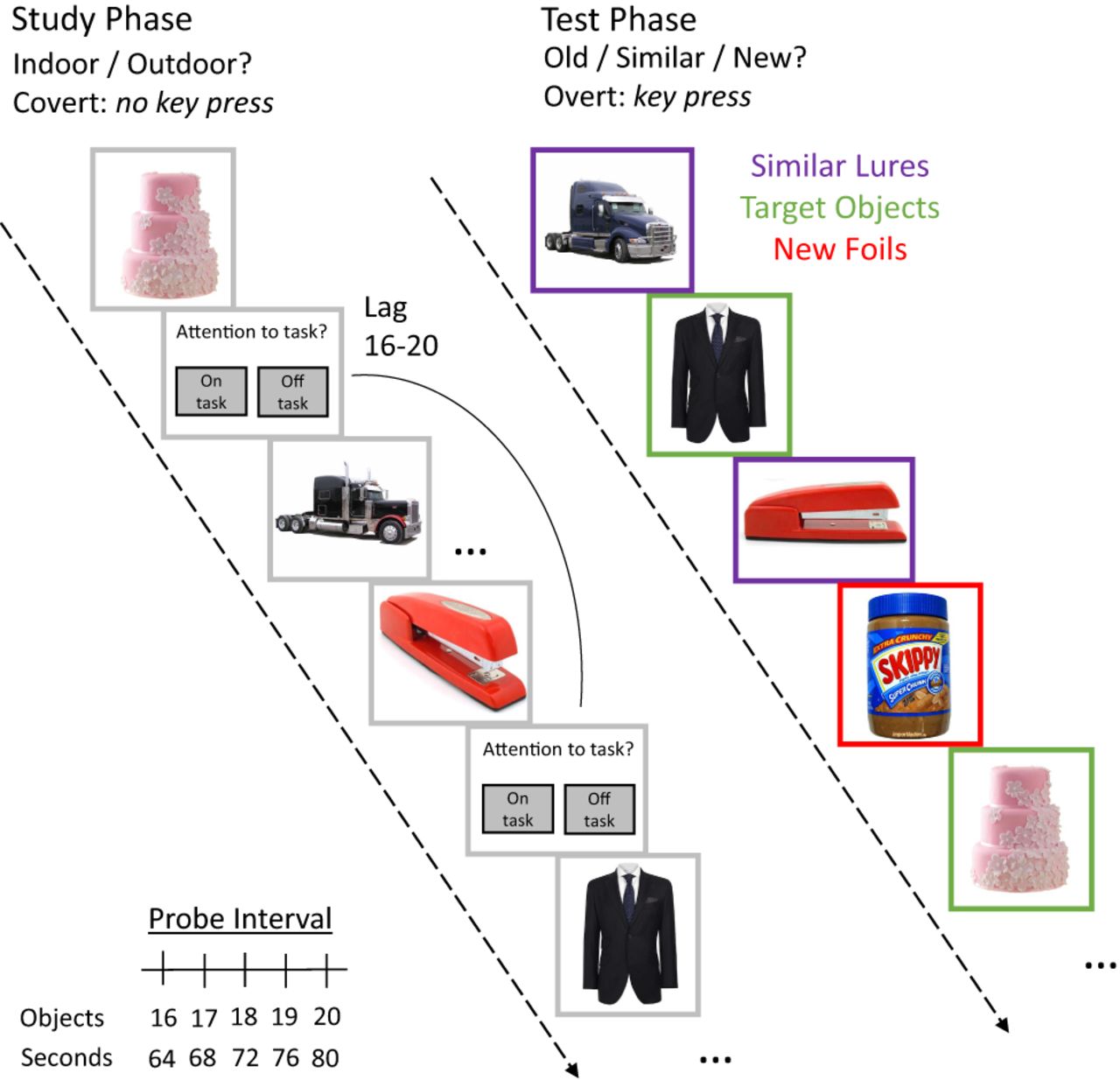
Figure 1.
Participants studied pictures of objects and took a modified recognition test in separate phases. They completed two identical study–test procedures with unique objects in each. During study, participants covertly considered whether the object belonged indoors or outdoors. Thought probes appeared pseudorandomly after repeated target and similar lure objects with a lag of 16–20 objects. Probes appeared immediately after objects, and participants indicated being on-task or off-task. At test, participants overtly classified objects as old, similar, or new with a key press.