Cover image
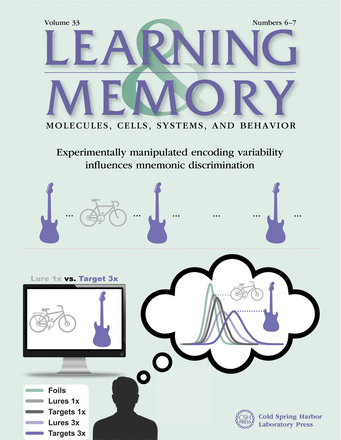
Global matching models hypothesize that encoding variability, defined as differences in the number of encoded features on a given trial, can account for differences in memory performance across forced-choice test formats with targets, similar lures, and novel foils. In this issue of Learning & Memory, Huffman et al. (LearnMem a054218.126) experimentally manipulated encoding variability by altering the number of times a stimulus was presented to test novel predictions of global matching models. The cover shows the experimental manipulation of encoding variability (top panel; a guitar is presented three times and a bike is presented one time), and one example of their eight forced-choice test formats, here with 3-repetitions of the target (the same guitar) and 1-repetition of the noncorresponding lure (a similar bike; bottom panel). The inset shows the memory activation values from MINERVA 2, which accounts for the finding that memory performance is generally improved by repetition of the original target item (e.g., as in the comparison of the guitar and the bike here) but is subject to greater interference when the original version of the noncorresponding lure is presented three times and the target is presented one time during learning. (Cover art created by Derek Huffman with feedback from Leslie Rollins.)