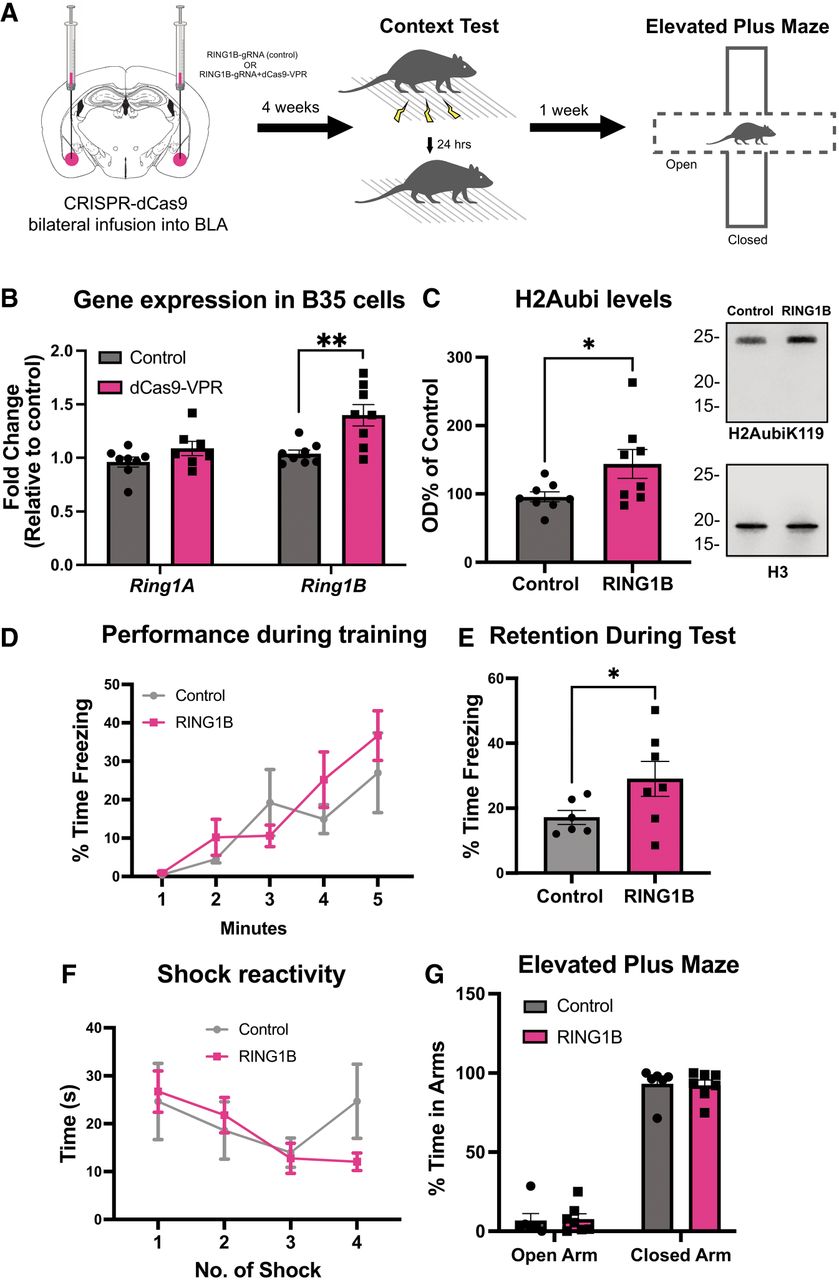
CRISPR–dCas9 mediated upregulation of H2Aubi ligase Ring1b in the amygdala enhances contextual fear memory. (A) Schematic of experimental design for CRISPR–dCas9 infusion in the amygdala followed by contextual fear conditioning and elevated plus maze. (B) The gRNA plasmid targeting Ring1a and Ring1b alone (control) or with dCas9-VPR transcriptional activator were transfected into rat B35 neuroblastoma cells and collected 48 h later. RT-qPCR analysis revealed an increase in Ring1b, but not Ring1a. Subsequent in vivo experiments used the Ring1b gRNA. (C) Western blot analysis revealed that upregulation of Ring1b in the amygdala increased H2Aubi levels 4 weeks later. H2Aubi was normalized to H3. The representative image is H2Aubi (top) and H3 (bottom). (D) During training, there was no effect of treatment on performance. (E) During testing, the gRNA + dCas9-VPR group had increased memory retention compared to the control group. (F) Shock reactivity analysis showed no effect for treatment. (G) During the elevated plus maze test, we found no difference in time spent in the open or closed arms (n = 6–7 per group, males only, 8- to 9-week-old). (*) P < 0.05 from Control. (**) P < 0.01 from Control.