Cover image
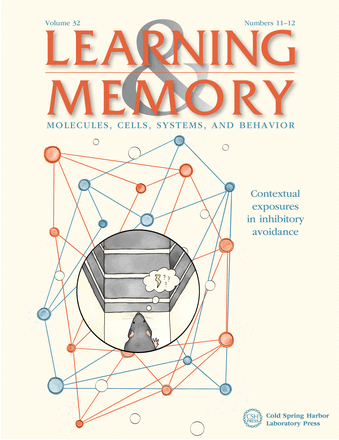
In this issue, Holm et al. (LearnMem a054104.125) used a type of context-footshock association task known as inhibitory avoidance to simultaneously assess memory strength and precision. They report that contextual pre-exposure to the neutral chamber decreased memory precision at a recent retention test, whereas pre-exposure to the aversive (training) chamber promoted memory strength and precision in a recent and remote retention test. This cover illustration depicts a rat in the neutral chamber, unsure if it was the same context in which they received a footshock (denoted by the footshock and question marks in the thought bubble). The background shows illustrations of neuronal ensembles, one representing each context in the task, which relates to the idea that perhaps the effects of pre-exposure are due to overlapping ensembles at the time of pre-exposure and training. (Cover image created by Aspen R. Holm.)