Cover image
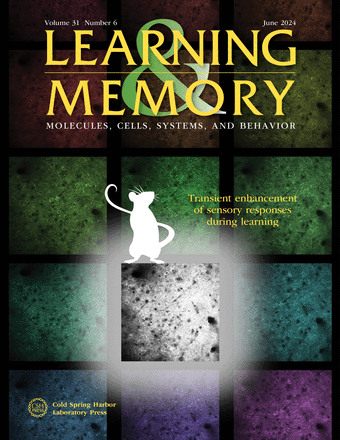
Learning about the association of sensory inputs with rewarding outcomes has been linked to synaptic plasticity in the primary sensory cortex. To test whether this plasticity is reflected in altered stimulus-evoked activity, Zhu et al. (LearnMem a053870.123) used longitudinal Ca-imaging in the primary somatosensory cortex to monitor pyramidal cell activity during learning. They found that stimulus-evoked Ca signals are transiently enhanced at the onset of training in a whisker-dependent reward association task and suppressed when stimuli and rewards are uncoupled. (Cover illustration by Mo Zhu.)