Cover image
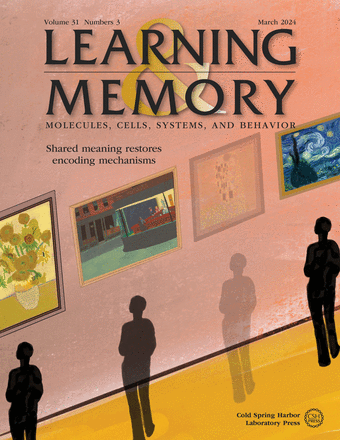
When multiple events are encountered in succession, memory is typically better for events encountered earlier relative to later. This primacy effect may be due to a depletion in the neural resources underlying successful encoding across positions. In this issue of Learning & Memory, Moore and Long (LearnMem a053996.123) recorded scalp electroencephalography while human participants performed a delayed free recall task and demonstrate that shared meaning between events can counteract declines in encoding resources. The cover illustration represents the depletion in encoding resources (fading person) and decline in memory (fading artworks) as multiple artworks are encountered in succession in an art gallery. Because the last painting shares meaning with the first—both are by Van Gogh—encoding resources and memory are restored, represented by a return to full color. (Cover art designed and created by Dr. Nicole Long.)