Cover image
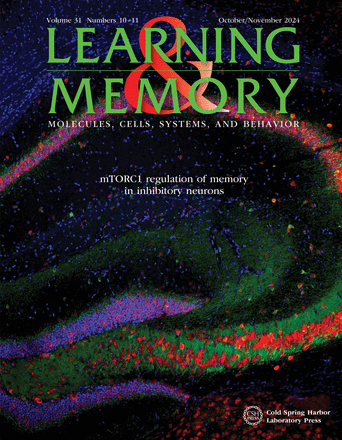
Memory formation is contingent on functional and structural changes in neurons in response to learning stimuli—a process known as neuronal plasticity. The initiation step of mRNA translation is a gatekeeper of long-term memory by controlling the production of plasticity-related proteins in the brain. mTORC1 is a complex containing the mTOR Ser/Thr kinase and other proteins that controls mRNA translation, promotes synaptic plasticity, and facilitates long-term memory formation. Huang et al. (LearnMem a054018.124) investigated the role of mTORC1 signaling in excitatory and inhibitory neurons in long-term memory and provided evidence that either up- or down-regulation of mTORC1 in inhibitory interneurons, but not excitatory neurons, results in object recognition and object location memory deficits. The cover is an immunofluorescence image of the adult mouse hippocampus. Inhibitory neurons are labeled in green, phosphorylation of S6 (an indicator of mTORC1 activity) in red, and nuclei in blue. The overlapping green and red fluorescence underscores the role of mTORC1 signaling in inhibitory neurons and its connection to memory.