Cover image
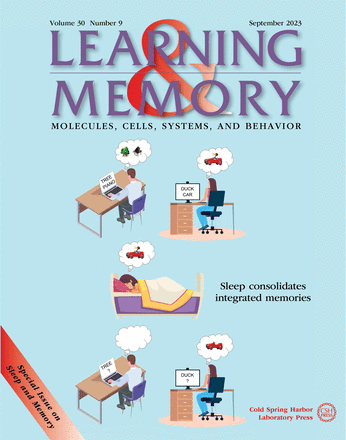
Learning new associations between previously unrelated pieces of information is a critical function of learning and memory. Binding together discrete pieces of information into a single mental representation is one powerful way to aid in the formation of new associative memories, compared with forming separate representations of each individual item. During subsequent sleep, newly formed memories are strengthened and stabilized through a process of memory consolidation. In this issue of Learning & Memory, Denis et al. (LearnMem 185–191) report an interaction between the type of strategy used while learning new associative memories and the benefit of sleep on memory consolidation. Compared with staying awake, a night of sleep appeared to selectively stabilize only those memories that were formed using an integrative encoding strategy. Therefore, both successful integration during encoding and subsequent consolidation during sleep are essential for the long-term formation of new associative memories. (This cover was designed using assets from Freepik.com.)