Cover image
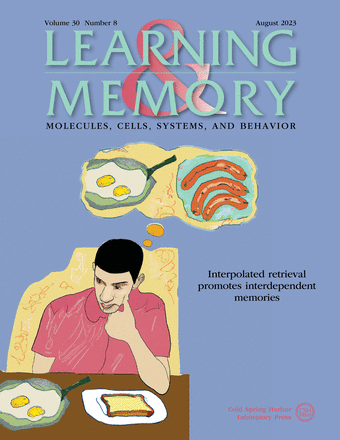
Retrieving existing memories before new learning can improve those memories and prevent interference from new information. Investigations of this interpolated testing benefit have often concluded that retrieval of existing memories differentiates them from new information by creating separate memory representations. However, studies of memory reinstatement stimulated by features of study events have shown evidence to the contrary—retrieving existing memories allows them to become simultaneously associated with and distinguishable from new information. Wahlheim et al. (LearnMem 151–163) show that initiating retrieval of existing memories in a phase before new information is learned not only enhances existing memories but also promotes associations with new information. Thus, interpolated retrieval cannot exclusively lead to separate memories but can instead lead to more complex memories, including features from separate episodes. The cover illustrates an example of this type of episodic memory updating. As the actor perceives his current breakfast including eggs and toast, he is reminded of a previous breakfast that also included eggs but also included bacon instead of toast. The coactivation of such perceptual and mnemonic information could then help the actor remember what breakfast combinations he ate on specific occasions. (Cover illustration generated by Robert W. Wiley with the assistance of Dall-E 2.)