Cover image
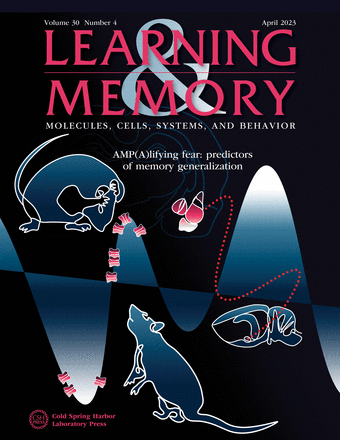
During auditory fear conditioning, rodents, such as rats, are trained to fear a tone by pairing it with an electric footshock in a conditioning chamber. Although rats readily learn this association, they often also become fearful of environments that resemble the conditioning chamber. Moraes and Hardt (LearnMem 74–84) explore behavioral and biochemical parameters that might predict whether rats will develop this type of fear generalization. They found that certain behaviors during training, such as freezing and rearing, as well as the expression of AMPA receptors in the amygdala, can account for the extent of fear generalization. The cover art shows a sound wave, referring to the tone used in auditory fear conditioning, with crests and troughs reminiscent of amygdala synapses and their embedded AMPA receptors. As the rats on the cover illustrate, the larger number of AMPA receptors in crests is associated with freezing during training (which leads to stronger generalization of fear), while the lower number of AMPA receptors in troughs refers to rearing and exploring the environment (leading to less fear generalization). Finally, the coronal cut shows the location of the amygdala in a rat brain. (Cover illustration by Sofia Vilar.)