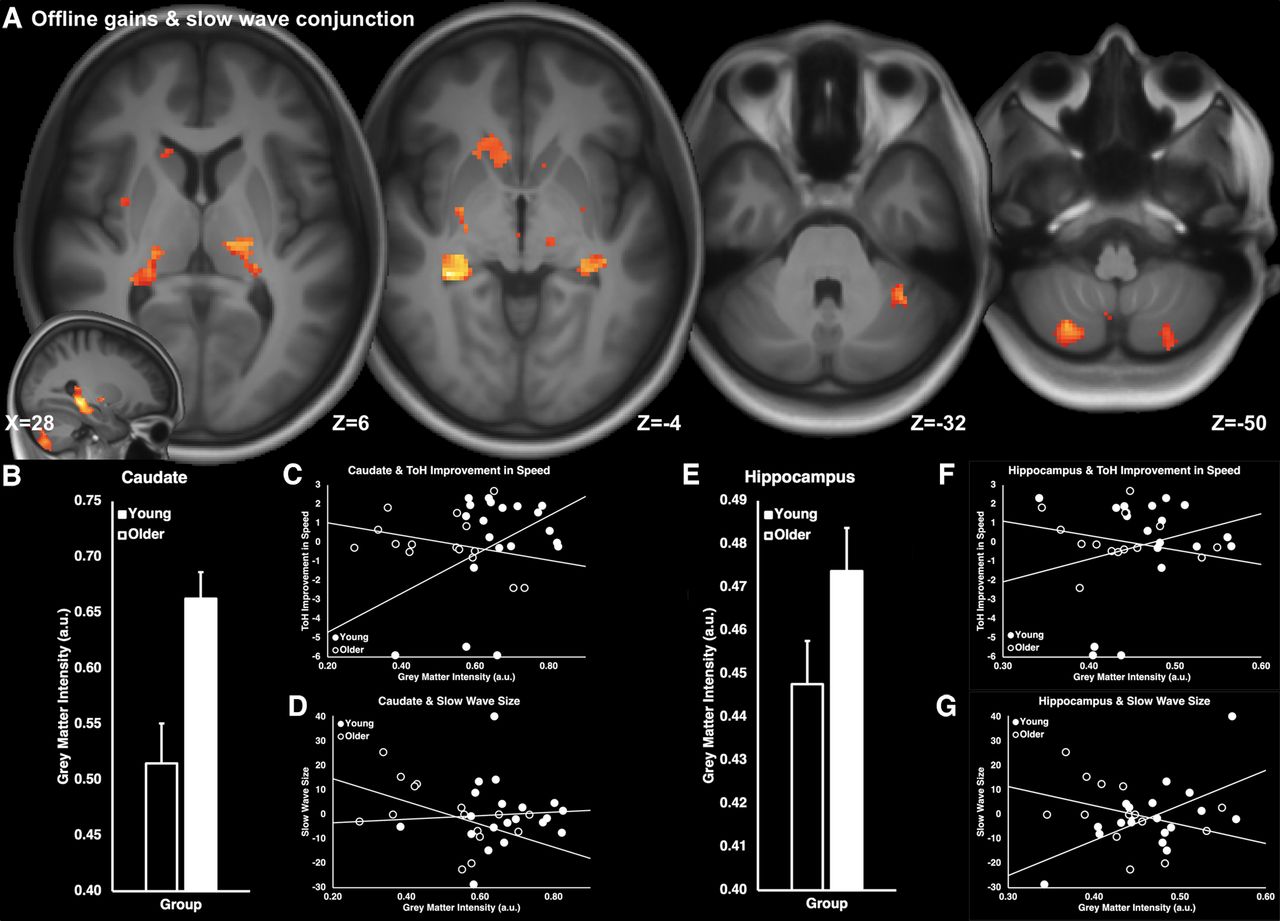
(A) Significant clusters of gray matter positively correlated with offline changes in performance in conjunction with slow wave size in the hippocampus, caudate, putamen, and cerebellum in young versus older adults (Table 5). The relationship between gray matter and the conjunction of the covariates of interest (e.g., performance improvements and slow waves) differed significantly between young (i.e., more positive correlation) and older (i.e., more negative correlation) adults. (B,C) Mean gray matter density in the caudate was higher (P < 0.005, FWE) on average in young versus older adults (B) and was more negatively correlated with offline changes in performance in older individuals than in young participants, who showed a positive relationship between changes in performance and gray matter (C). (D) A similar pattern of differences between correlations in young versus older adults was observed between gray matter and slow wave size. (E–G) The same overall pattern was observed for the hippocampus. (Inset) Sagittal view at X = 28. X, Y, and Z coordinates are given in MNI coordinates, displayed in radiological orientation.