Cover image
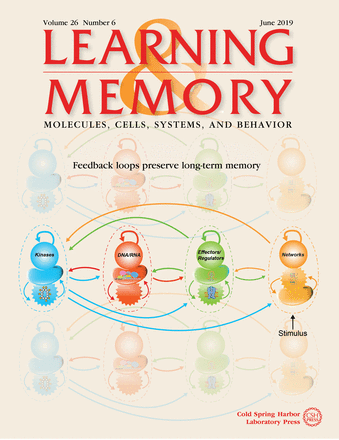
Organization of classes of feedback loops hypothesized to maintain long-term memory. A stimulus activates neuronal circuits (bottom right), with subsequent spike activity and transmitter release activating kinases at the level of synapses (left column). Some kinases may remain persistently active, either by autoactivation (CaMKII) or positive feedback between kinases (e.g., ERK↔Raf). At the level of a neuron, synaptic activity induces gene expression, which may be prolonged due to autoactivation of transcription factor genes (in particular creb), or due to prolonged activation of kinases such as ERK that phosphorylate transcription factors, inducing transcription. In each vertical column, the varying shapes point to the diversity of elements within a level (e.g., diverse genes and kinases). At the level of secretion from a neuron and effects on itself or neighboring cells, neurotrophins such as BDNF or ApNT act through receptors such as TrkB, activating kinases including ERK. In turn, kinase activity can enhance neurotrophin release (e.g., ERK→BDNF) generating positive feedback. Finally, at the level of neuronal networks, repeated reactivation of neuron assemblies, or engrams, appears to play a key role in memory maintenance. For example, in the CA3 region, recurrent neural circuitry appears designed to facilitate reentrant circuit and synaptic reactivation, enabling positive feedback and plausibly reinforcing synaptic strength and long-term memory. See Smolen et al. (LearnMem 26: 133–150) for the full article.