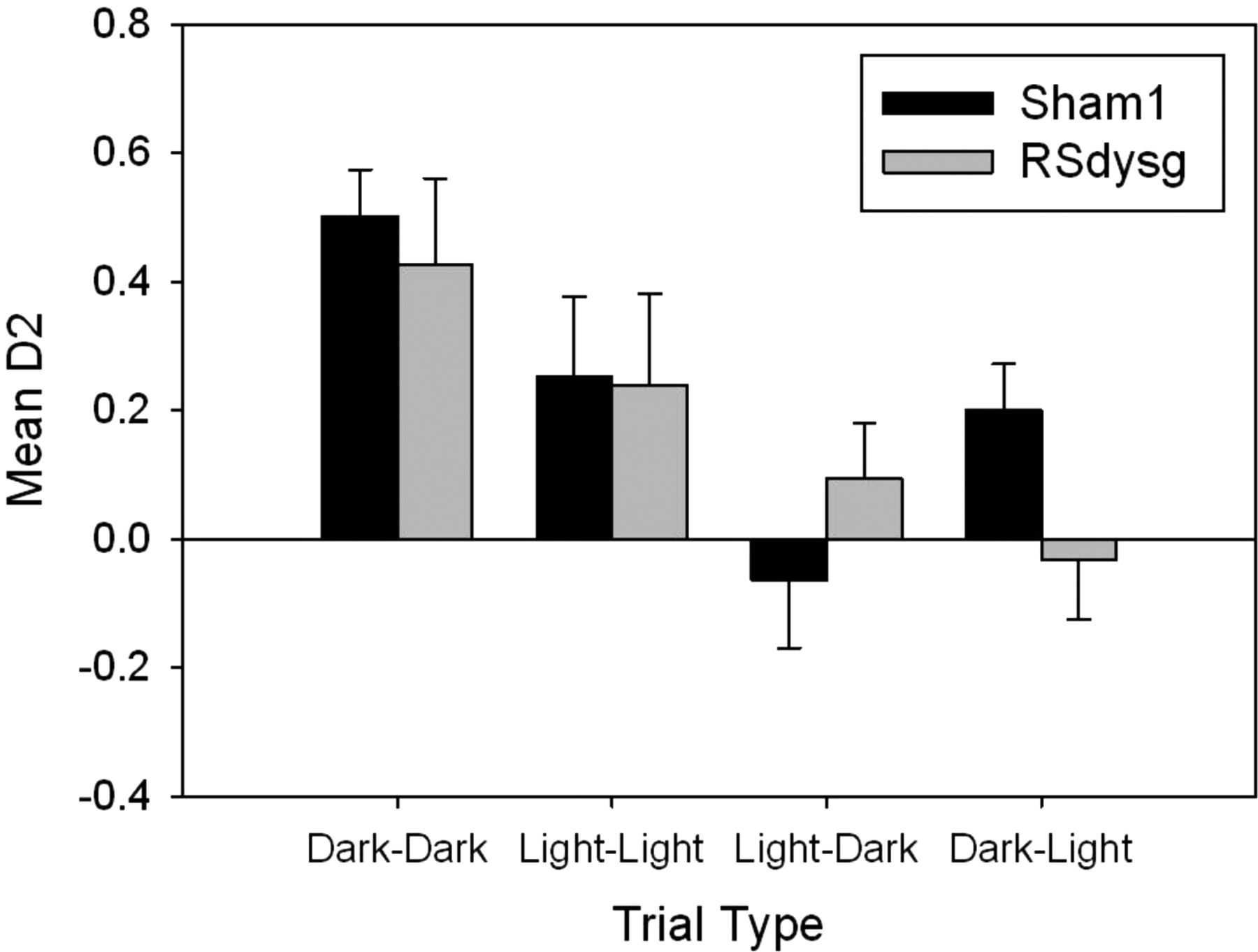
Figure 4.
Cohort 1: mean recognition (D2) scores seen at test for the four trial types. Two trial types (dark–dark and light–light) did not require a switch between cue modalities as the same cue types were available at both sample and test. The other two trial types were designed to force the rats to switch between different cue modalities between the sample and the test phases (light–dark and dark–light). Both the Sham 1 and RSdysg groups performed above chance levels on the light–light and dark–dark trials, but only the Sham1 animals were above chance for the dark–light switch. Error bars, SEM.