Cover image
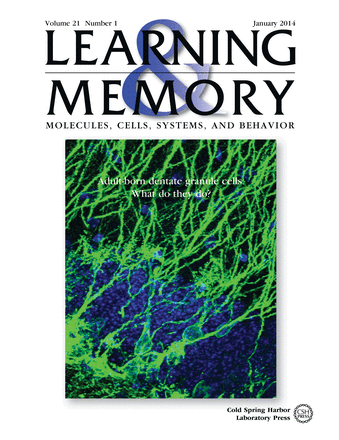
In the 1990s, the dogmatic notion that the adult mammalian brain did not generate new neurons was overturned. Since then, the biology of adult neurogenesis in the olfactory bulb and the hippocampal dentate gyrus has been studied extensively, but still the precise function of adult-born neurons remains enigmatic. In their review article, Drew et al. (2013) (LearnMem 20: 710–729) summarize the progress made in understanding the unique neurophysiology of adult-born granule cells and what has been learned from behavioral studies of rodents in which neurogenesis has been altered in some way. Emphasizing the need to understand the logic of the dentate's complex circuitry and various facets of dentate granule cells’ structure and function, the authors consider current hypotheses and future trends in this field. The cover image shows expression of channelrhodopsin2-eYFP fusion proteins in neural stem cells and 0- to 6-wk-old adult-born granule cells; the ectopic expression of effector molecules for the rapid and reversible control of activity in adult-born neurons will play an essential role in further elucidating their function.